Curry's MRI Has Golden State on Edge. The Warriors' Eight-Game Run Just Ended.
GOATIFYGolden State finally lost a game on Wednesday night. The result was uncomfortable; what happened to Stephen Curry was potentially far more consequential. The Warriors' eight-game winning streak ended in a 115-108 defeat to Houston, but their star guard had already disappeared into the locker room in the first quarter, holding his right side after a sequence involving Rockets center Alperen Sengun.
By Thursday, November 12, coach Steve Kerr had confirmed an MRI to investigate right abdominal soreness. The club had not announced the results or a timetable for Curry's return. Those two unknowns matter considerably more than a single loss: Golden State entered the game with one of the league's most productive attacks, a resurgent supporting cast and a difficult run of fixtures immediately ahead.
There are two honest ways to read this moment. The first is that the Warriors cannot simply manufacture Curry's shooting gravity if he misses time. The second is that their young contributors have offered more convincing evidence of resilience than they did a season ago. Both can be true, and Wednesday's game supplied examples of each.
What happened to Curry, and what the MRI can actually establish
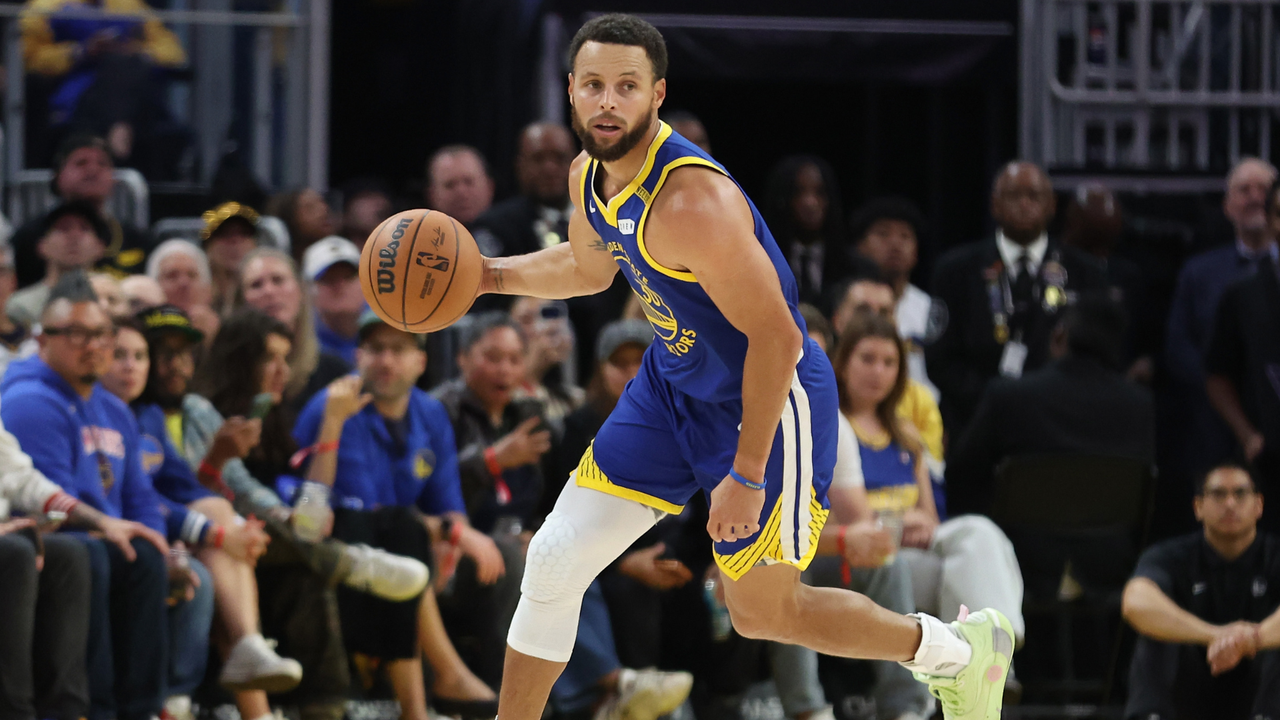
The initial warning came midway through the first quarter in Houston. Curry became entangled with Alperen Sengun during live play and then reached toward the right side of his torso. He stayed on the floor long enough to make a three-pointer, but the shot did not appear to settle the issue. After turning to run back on defense, he again reacted to the same area. At the next stoppage he approached Kerr and left for the locker room.
Golden State ruled him out for the rest of the contest. His final line was three points, all from that single long-range basket, in approximately six minutes. The number is startling for a guard who had been averaging more than 30 points a game entering the night, but it also helps explain why the team's medical assessment immediately became the biggest story. This was not a poor shooting performance or a normal rest night. The player who organizes so much of the Warriors' offense was suddenly unavailable.
Kerr described Curry as having felt something in his abdominal area and said the guard had not experienced precisely that sensation before. The coach's most telling remark was about uncertainty rather than a diagnosis: concern was high, but he did not yet know the extent of the problem. He confirmed that Curry underwent an MRI. As of Thursday morning's reporting, no official interpretation of that scan had been announced.
That distinction should guide every discussion of a possible return. Right abdominal soreness is a team-reported symptom. An oblique strain, a significant muscle tear and other explanations are not interchangeable medical findings. The visible sequence on the broadcast cannot determine a grade of injury, and a confident timetable based only on the way Curry held his side would be guesswork.
Comparable NBA abdominal or oblique injuries have produced markedly different absences. Austin Reaves and Joel Embiid each missed roughly 25 days with reported oblique strains in 2026; other players have returned sooner, while more serious tears have taken substantially longer to recover from. Those examples show the range of possibilities, not the expected outcome for Curry. None of those players' medical reports is a substitute for Golden State's findings.
Even an injury officially categorized as minor would pose practical questions. Does discomfort affect Curry's ability to rotate through a shot, fight over a screen, accelerate into a change of direction or absorb contact around a rebound? Can he practice at something close to game intensity before a quick turnaround? Does the club prioritize one November fixture or the larger schedule? Those are basketball decisions that follow medical clearance; they cannot be solved by reading a headline about an MRI.
GOATIFY
GOATIFY Basketball
The stakes of Curry's health touch every Warriors fan. Explore GOATIFY Basketball designs inspired by the league's game-changing stars.


Basketball Stephen Curry GOAT Champion Sweatshirt
A basketball fan design for everyday wear.
Shop Now ↗

Basketball Stephen Curry GOAT Champion Muscle Tank
A basketball fan design for everyday wear.
Shop Now ↗
Basketball Stephen Curry GOAT Champion Trophy Sticker
Add basketball personality to your favourite gear.
Shop Now ↗
There is a separate temptation to turn this into a debate over the physicality of the contact with Sengun. The play is relevant to reconstructing the sequence, but a collision on video does not establish intent or a final cause of injury. It is more useful to stick to the timeline: Curry reacted to his side, made one three-pointer, reacted again, left the game and did not return. Kerr acknowledged concern and the team sought imaging.
Golden State's next update will therefore carry more weight than another replay. The key details are the medical designation, whether any structural damage has been diagnosed, the team's assessment of Curry's day-to-day availability and whether he can take part in basketball activities. Until that information exists, the most responsible outlook is neither a predicted multiweek layoff nor a promise that he will be back Friday. It is an unresolved injury question involving the most difficult player on Golden State's roster to replace.
Eight wins, a changed supporting cast and the size of Curry's absence

A week earlier, the Warriors' season could have been described as a remarkable turnaround. They opened 0-3, an uncomfortable start for a veteran team with high expectations. Then came eight consecutive victories, their longest winning streak since the 2022 championship season. The surge pushed Golden State into a much stronger early Western Conference position and suggested that Kerr had found a lineup balance that did not depend entirely on one hot night from his superstar.
The crucial qualification is that Curry had still been the centerpiece of the transformation. Entering the Houston game he ranked near the top of the league's scorers, producing about 30 points per contest with exceptional three-point efficiency. He had led the Warriors in scoring in six of those eight wins. Defenses were not merely reacting to the shots he made; they were responding to the possibility of a Curry three every time he crossed into dangerous space.
That creates a particular kind of offensive advantage. A defender who follows Curry around a screen cannot simultaneously sit in a passing lane. A second defender who shades toward him opens a short-roll opportunity or a driving path for somebody else. Even the possessions in which Curry never touches the ball can be shaped by the pressure he exerts. Simply transferring his shot attempts to another guard does not reproduce that geometry.
The Warriors' 2026-27 improvement has also had another source: actual production from players who are not Curry. Rookie Yaxel Lendeborg has quickly become a serious creation option, capable of scoring without first waiting for the defense to collapse on a veteran. Brandin Podziemski has become more assertive, while Draymond Green remains central to directing traffic and connecting offensive possessions. Those are important developments because they give the team several ways to initiate an attack instead of falling back on a single play call.
Before the Houston game, the NBA's November 11 Rookie Ladder placed Lendeborg at No. 1 among first-year players. Through 11 games he was averaging 21.4 points, 7.2 rebounds and four assists. Those numbers do not automatically translate into a winning offense without Curry, but they do explain why this roster looks different from versions that seemed to lose all their identity whenever the star guard sat down.
Lendeborg's skill set is especially relevant. He can generate a shot from a catch, create an advantage against a defender and find a teammate when help arrives. A productive rookie is rarely a perfect late-game decision-maker, and he will encounter more difficult coverages once opponents have extensive film. Nevertheless, there is a difference between asking a rookie to carry a veteran team and asking him to keep the offense functional while other contributors share the burden.
GOATIFY
GOATIFY Basketball
Golden State's mix of veterans and rising talent is reshaping its season. Browse GOATIFY Basketball pieces for fans who follow every shift in the NBA.


Stephen Curry GOAT 3 Pointer Basketball Decal Sticker
Add basketball personality to your favourite gear.
Shop Now ↗


Stephen Curry G.O.A.T. - Steph Curry Greatest Mug
Add basketball personality to your coffee break.
Shop Now ↗After Wednesday's defeat, Green argued that the team's internal trust and understanding are stronger than a year ago. He singled out Lendeborg's ability to create an advantage and Podziemski's improved play as reasons Golden State is in a better position to compete if Curry misses time. That optimism is worth taking seriously precisely because it comes with evidence: the Warriors remained competitive in Houston after losing their leading scorer in the first quarter.
But the injury list limits how much comfort that evidence should provide. Jimmy Butler and Moses Moody were already unavailable because of knee problems. Kristaps Porziņģis had stepped away amid a health issue, while other role players had also been managing absences or physical limitations. Depth looks more impressive on a graphic than it does when the rotation is reduced to the players who can actually suit up.
The practical challenge for Kerr is not merely to find another 30 points. It is to decide which lineups can keep opposing defenses occupied, which creators can handle late-clock possessions, and which combinations preserve enough shooting without sacrificing stops. Green's passing becomes even more valuable if teammates cut and move with purpose. Podziemski's willingness to attack matters more if opponents no longer have to fear Curry pulling a defender two steps outside the arc.
Golden State can survive an ordinary bad night from its star. That is different from reshaping every possession for several games without him. The eight-game streak demonstrated a healthier collective identity; Curry's exit will test whether the habits behind that run remain useful when the player who makes the entire system harder to guard is absent.
Houston's 115-108 win revealed both a lifeline and a looming schedule problem
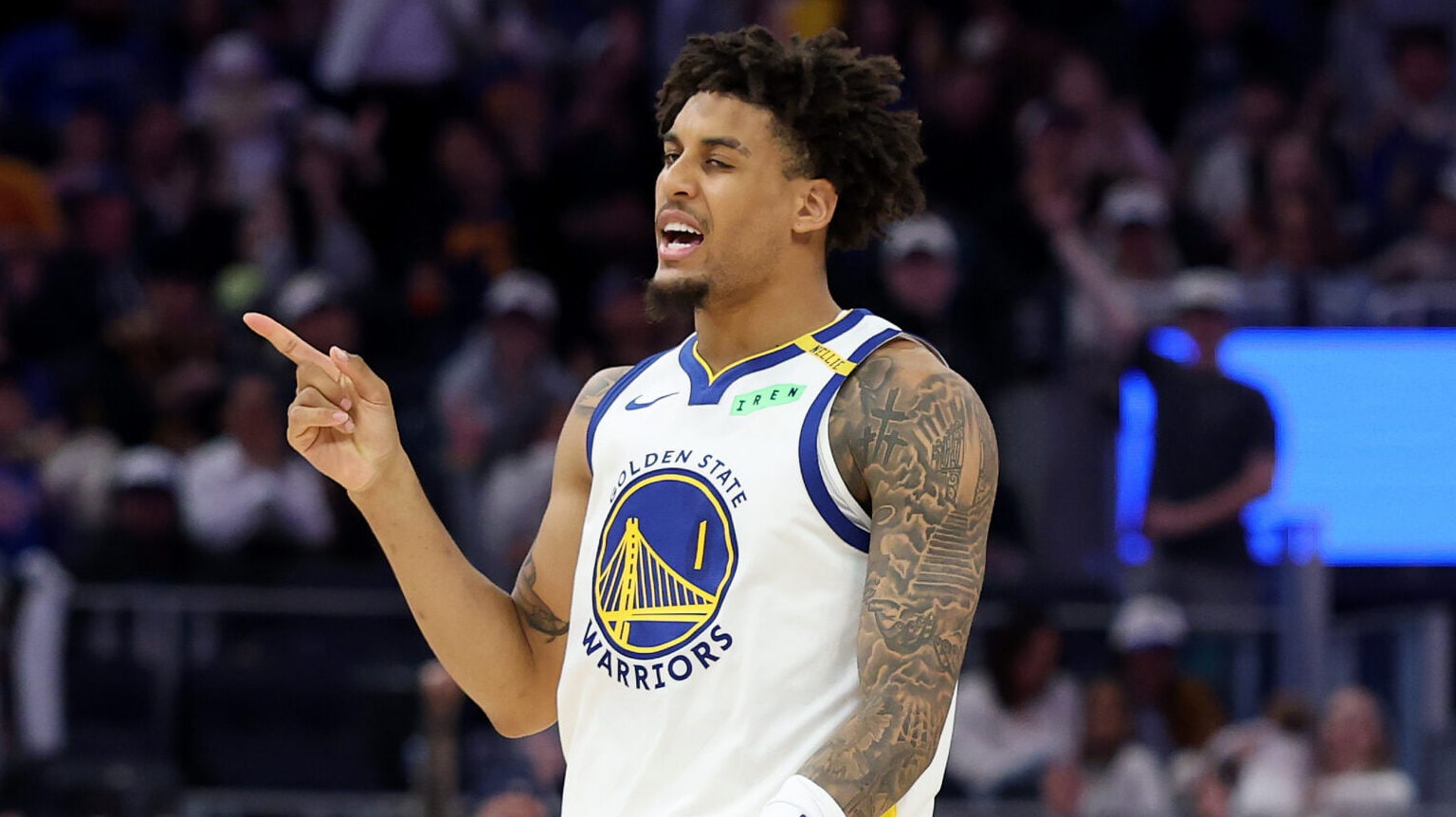
The final score in Houston does not tell the whole story of Golden State's response. Without Curry for most of the night, the Warriors still gave the Rockets a contest. Lendeborg finished with 25 points and 10 rebounds. Podziemski scored 22. Those contributions were not meaningless statistics accumulated after the result was settled; they kept pressure on an opponent that had the benefit of playing against a radically altered Warriors offense.
Houston, however, had enough answers. Kevin Durant supplied 20 points against his former team, while Alperen Sengun and Amen Thompson added 19 each. The production was distributed rather than concentrated in one overwhelming scorer. It also illustrated the strategic contrast: the Rockets could continue leaning on multiple established options, while Golden State was improvising around the unexpected absence of the player whose presence had organized its offensive hierarchy.
There were signs of resistance late in the game. The Rockets led by nine early in the fourth quarter, but Golden State answered with three-pointers from Georges Niang and De'Anthony Melton to close the margin to three. That response mattered. It showed the remaining players were prepared to make decisive offensive plays rather than immediately concede that losing Curry meant losing the game.
There was also a disruptive third-quarter confrontation involving Houston's Marcus Smart and Golden State's Charles Bassey. Officials ejected Smart with a Flagrant 2 after he threw a punch. It was a dramatic incident, but it should not displace the central sporting point of the night: even with a heated atmosphere and enough contributions to stay within reach, Golden State could not fully overcome Houston's scoring balance and the loss of its most influential offensive player.
GOATIFY
GOATIFY Basketball
The next Warriors games will test a new lineup and a rookie's confidence. See GOATIFY Basketball designs for following the season's defining moments.

Kobe Bryant – Mamba Mentality GOAT Pullover Hoodie
A basketball fan design for everyday wear.
Shop Now ↗
Michael Jordan – Repeat 3-Peat GOAT Basketball Tank
A basketball fan design for everyday wear.
Shop Now ↗

Michael Jordan Crying Jordan Decal Gift
Add basketball personality to your favourite gear.
Shop Now ↗

Crying LeBron – NBA Basketball Laptop Decal Sticker
Add basketball personality to your favourite gear.
Shop Now ↗The seven-point defeat ended the Warriors' longest winning streak in four years and left them 8-4. It also put Wednesday's scoring into perspective. Golden State had entered the matchup averaging more than 120 points a game, but produced 108 against the Rockets. Houston deserves credit for that result; it is equally reasonable to note that the Warriors had to change their approach after barely six minutes. A one-game offensive total cannot tell us how the team will perform over an extended stretch with prepared lineups and a full practice.
That adjustment period may be short. The Warriors are scheduled to visit the San Antonio Spurs on Friday, November 13, before continuing into road games with Dallas and New Orleans, including a back-to-back. The sequence presents a challenge even for a healthy team: travel, varied opponents and limited recovery time reduce opportunities to make elaborate adjustments between games.
San Antonio is the immediate decision point, but an MRI result does not automatically translate into a playing-status decision. Golden State must first know what Curry is dealing with. Next comes whether he can tolerate normal basketball movement and contact. Only then can Kerr make a meaningful choice about which combinations to run on Friday. If the guard is unavailable, the offense will need a clearer plan from the opening tip than the emergency reshuffle seen in Houston.
Expect the Warriors to distribute responsibility rather than appoint a replacement Curry. Lendeborg can take more possessions in the middle of the floor or attack favorable matchups. Podziemski can assume more on-ball work and look for early scoring opportunities. Green can help organize cuts and quick decisions when defenses load up on the first creator. Each change is plausible, but each also has a counter: opponents can switch assignments, crowd driving lanes or force secondary players into rushed late-clock attempts.
There is a defensive trade-off as well. Kerr cannot simply stack the floor with additional ballhandlers and shooters if that group struggles to protect the paint or rebound. Houston's scoring from Durant, Sengun and Thompson was a reminder that the opponent still has to be contained while the Warriors are sorting out offense. The roster's current injury problems make those two priorities harder to reconcile.
Perhaps the most revealing test will come if Golden State loses another close game while Curry is sidelined. The eight straight victories created confidence, but they also reduced the urgency to examine every weakness in the rotation. Adversity will reveal whether the supporting cast can maintain the habits it built during the winning streak: communicate on defense, trust the next pass, find useful shots and avoid making every possession a referendum on the missing superstar.
For now, the useful evidence is balanced. The Warriors did not collapse against Houston; Lendeborg and Podziemski made sure of that. They also did not win, and neither a courageous comeback attempt nor Green's optimism can erase how demanding the next few fixtures could become if Curry's absence continues.
For the first time in weeks, the Warriors are measuring their progress against a question that has nothing to do with the standings. Curry's MRI may eventually bring reassuring news, or it may force Kerr to rely on an emerging generation sooner and more heavily than planned. Until the team releases its findings, either outcome is possible.
The encouraging part is that Lendeborg, Podziemski and their teammates made Houston work for the win. The uncomfortable part is that the Rockets still ended Golden State's streak and the upcoming road stretch offers little breathing room. The Warriors have built genuine depth; now they need to discover how much of it functions without the player who makes everyone else's job easier.
GOATIFY
GOATIFY Basketball
Shop GOATIFY basketball shirts, hoodies and stickers.

Alperen Sengun GOAT - Basketball Casual Top Tee
A basketball fan design for everyday wear.
Shop Now ↗
Dwyane Wade G.O.A.T. - Basketball Decal Sticker
Add basketball personality to your favourite gear.
Shop Now ↗
LeBron James – King of Philly 76ers Sweatshirt
A basketball fan design for everyday wear.
Shop Now ↗
Wemby G.O.A.T. - Victor Wembanyama Basketball Hoodie
A basketball fan design for everyday wear.
Shop Now ↗
Michael Jordan – Bulls G.O.A.T. Basketball Tank
A basketball fan design for everyday wear.
Shop Now ↗
Ja Morant Gun Suspension Memphis Grizzlies NBA Mug
Add basketball personality to your coffee break.
Shop Now ↗