Igor Shesterkin’s Goalie Goal Was Historic — The Rangers’ 5-1 Reset Mattered More
GOATIFYIgor Shesterkin’s shot traveled the length of Madison Square Garden, dropped into Tampa Bay’s empty net and instantly became a piece of New York Rangers history. No Rangers goaltender had ever scored before. Shesterkin became the 18th NHL goalie credited with a goal, finished the night with 24 saves and put the final exclamation point on a 5-1 home-opening win.
The goal is the clip everyone will remember, but it should not obscure why the night mattered. New York had been shut out 3-0 in Boston two nights earlier. Last season, the Rangers did not score at home until their fourth game and finished 14-20-7 at Madison Square Garden. Against Tampa Bay, they looked like a team determined to make home ice feel different immediately: they scored first, received production from new and young pieces, killed all seven Lightning power plays and protected Shesterkin well enough that the final period became a celebration instead of another nervous Garden finish.
The goalie goal was history, but Shesterkin’s control came first
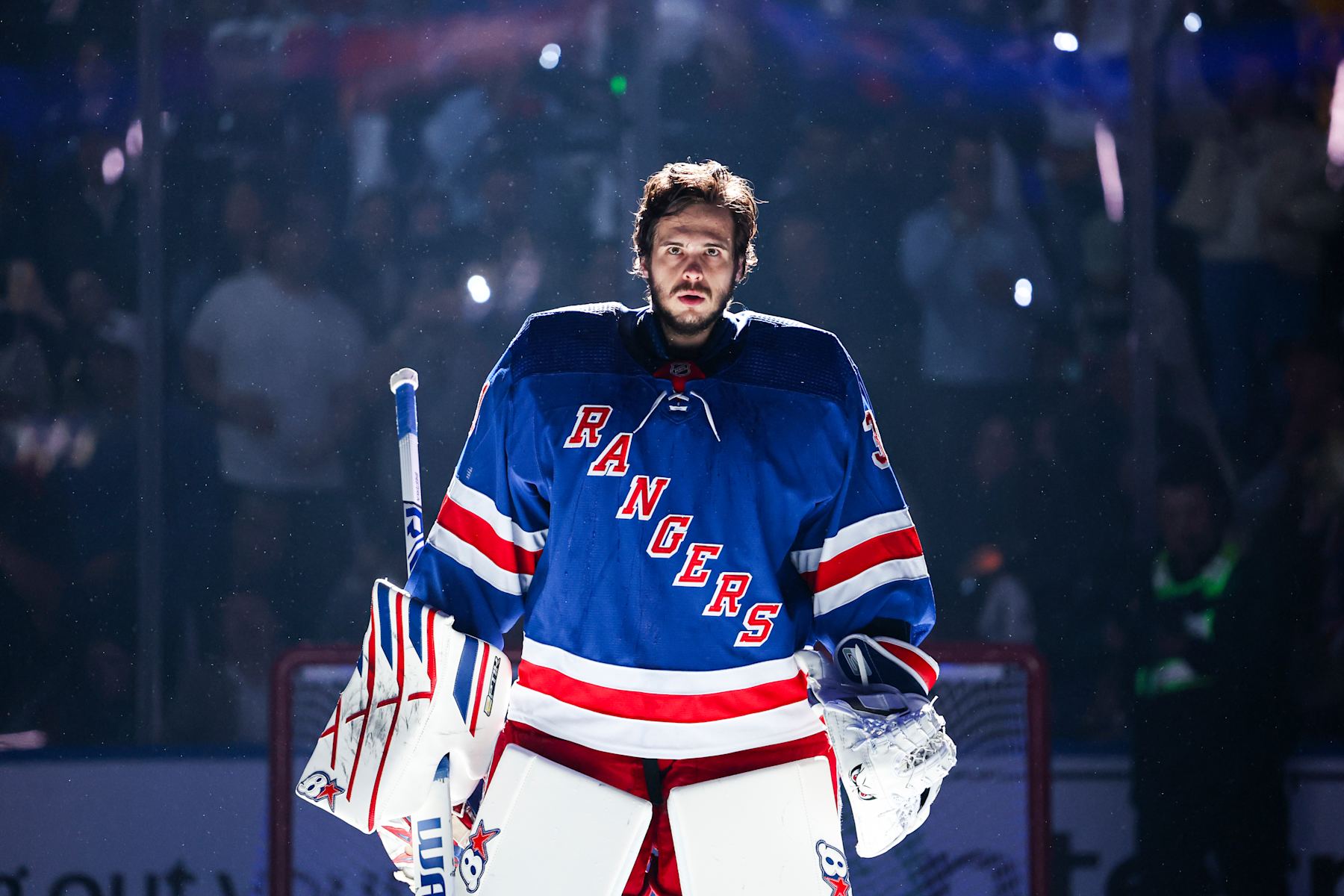
The empty-net goal was the perfect ending because it turned one of Shesterkin’s quieter strengths into a historic result. He has always been aggressive with the puck, and the Rangers have long benefited from his ability to stop rims, move pucks past the first forechecker and start exits before opponents can establish pressure. On Thursday, that skill produced the rarest possible payoff: an unassisted goal from his own end with 2:34 remaining.
It would be easy to reduce his night to that one shot. The more important work happened before it. Shesterkin stopped 24 of 25 shots and gave New York the stability required to play from in front. Tampa Bay’s only goal came from Nikita Kucherov in the second period, and the Lightning never turned it into a sustained push. Shesterkin’s positioning stayed calm while the game around him became increasingly emotional.
The goal also came at a useful moment for the relationship between star goalie and retooled team. Shesterkin is entering the season as one of the Rangers’ foundational players, not merely the last line of defense. New York needs him to erase breakdowns, help the breakout and set a competitive standard. Scoring is obviously not part of the weekly expectation. Handling the puck confidently and turning saves into clean possessions absolutely is.
That is why the celebration felt bigger than a statistical curiosity. The Rangers had done the hard work to control the game, and their goalie got to finish it himself.
New York’s fast start came from exactly the kind of depth it needed

The Rangers’ first home goal last season did not arrive until 57 seconds into their fourth game at Madison Square Garden. This time Mika Zibanejad needed only 5:34. His power-play finish did more than open the scoring; it removed the uncomfortable possibility that last year’s home-ice anxiety might immediately creep into a new season.
Pavel Dorofeyev doubled the lead less than six minutes later, finishing a one-timer from Oliver Bjorkstrand for his first goal as a Ranger. That sequence matters because New York’s retool cannot work if the same familiar stars are responsible for every dangerous shift. Dorofeyev was acquired after leading Vegas with 37 goals last season, then signed long term. Eeli Tolvanen, another new piece, made it 3-0 early in the second. Those are not decorative additions if the Rangers are serious about changing their offensive floor.
Zibanejad still has to be a major driver, and his opening power-play goal was a useful sign. But the healthier version of this roster is one where he does not need to manufacture the entire night. Dorofeyev’s shot gives New York another legitimate finishing threat. Tolvanen adds directness. Bjorkstrand can connect plays. Suddenly the opponent has to defend more than one familiar pattern.
Against Tampa Bay, the distribution of scoring made the Rangers look deeper than they did in Boston. The next step is making that depth repeatable rather than treating a four-goal outburst as proof the problem is solved.

Gabe Perreault turning promise into useful NHL minutes changes the ceiling

Gabe Perreault’s second-period redirection did not carry the novelty of a goalie goal, but it may matter more to the Rangers’ long-term direction. Adam Fox’s shot found Perreault at the net, and the young winger redirected it home to restore a three-goal cushion after Kucherov had given Tampa Bay a path back into the game.
That is exactly the kind of contribution New York needs from its younger core. A retool only becomes meaningful if prospects graduate from interesting names into players a coach can trust in moments that affect games. Perreault does not need to become the focal point immediately. He needs to make smart reads, arrive in scoring areas, connect with skilled teammates and force the staff to keep giving him responsibility.
His development also changes how the Rangers can allocate resources. If Perreault can provide offense on an entry-level contract while Dorofeyev, Zibanejad and Fox occupy expensive core roles, New York gains flexibility. If the young players stall, the front office is forced back into the market for solutions and the retool becomes slower and more expensive.
The Tampa Bay goal was a small example of the preferred path. Fox created the initial threat, Perreault found the right piece of ice, and a young player converted a chance without needing the entire offense built around him. Those are the incremental wins that can turn a roster transition into an actual competitive team.
The 7-for-7 penalty kill is the part that can travel beyond one night
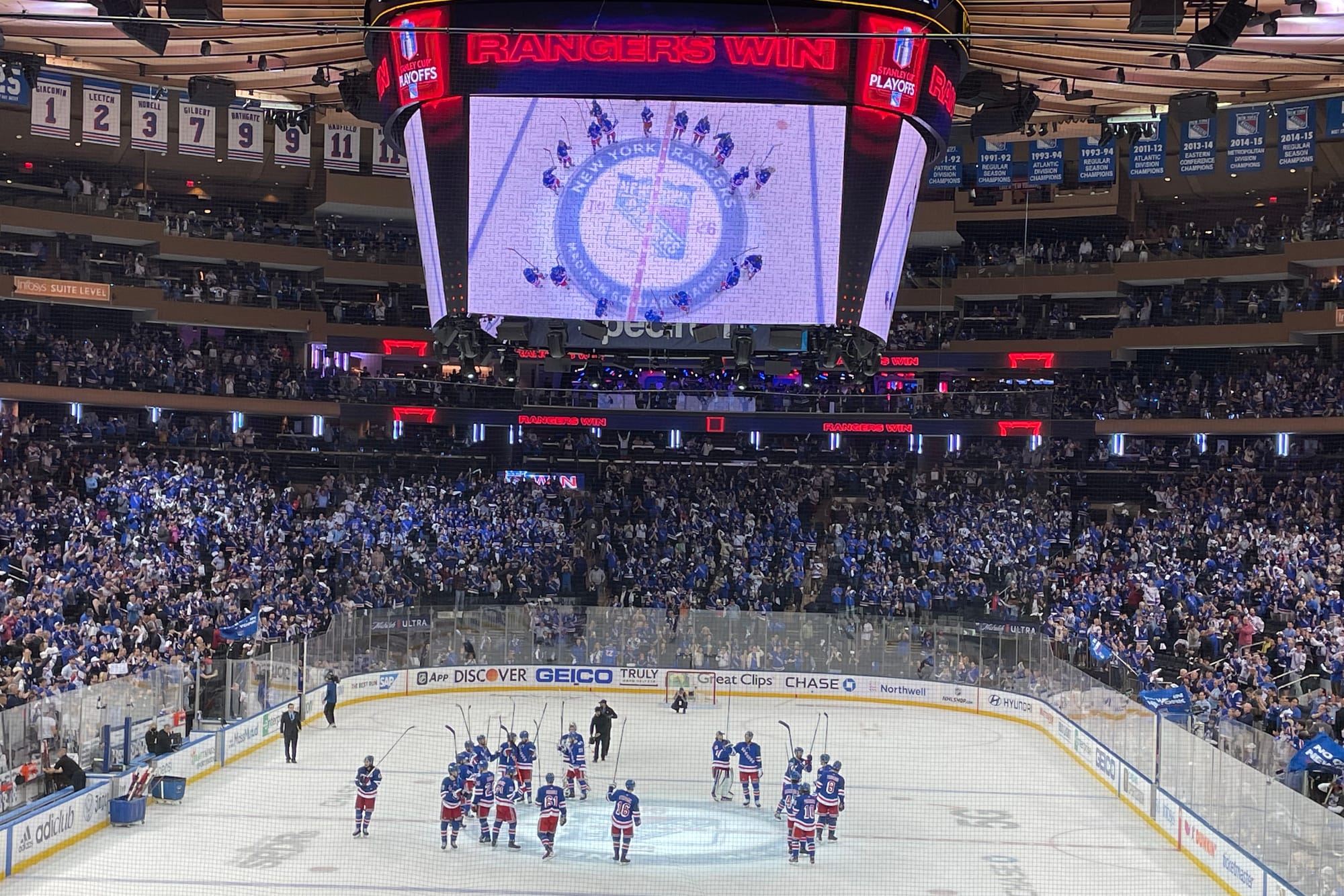
If there is one number from the home opener that deserves to survive after the goalie-goal clips fade, it is 7-for-7. Tampa Bay spent nearly seven minutes of the third period on the power play and twice used Andrei Vasilevskiy as an extra attacker to create six-on-four situations. The Rangers still did not concede on special teams.
That is meaningful because Tampa’s power play is built around elite decision-makers, especially Kucherov. Killing penalties against that group requires more than Shesterkin making desperation saves. The four skaters have to protect the middle, win enough loose pucks to clear pressure and avoid the kind of second and third breakdowns that turn one dangerous pass into an open net. New York did that repeatedly.
The performance also connected directly to a problem that followed the Rangers throughout last season: Madison Square Garden stopped functioning like an advantage. A 14-20-7 home record is not just a scheduling oddity for a team with playoff ambitions. It means too many visiting teams were able to settle into games, survive the opening push and make the building anxious. Thursday reversed that script. New York scored early, kept extending the lead and gave the crowd reasons to stay engaged.
There is an obvious caution. One excellent penalty-killing night can be followed by a poor one, and a 5-1 score can hide mistakes that tighter games expose. The useful standard is not winning every home game by four. It is making opponents work for clean entries, protecting the slot, getting contributions across the lineup and allowing Shesterkin to be the difference rather than the rescue plan. That formula can travel.
There is another reason the penalty kill matters for a team trying to rebuild trust. Special teams compress the game into repeated high-leverage decisions. A clean clear, a blocked passing lane or a won board battle can settle a building just as quickly as a goal can ignite it. Against Tampa Bay, New York kept making those small decisions correctly even when the Lightning had extra attackers and every incentive to turn the third period chaotic. That composure is a better indicator of sustainable progress than Shesterkin scoring from 180 feet. The Rangers will not get a goalie goal again every week. They can, however, reproduce connected pressure, disciplined sticks and urgent clears every night.

Shesterkin’s goal will live on highlight reels because goalie goals are absurdly rare and because no Rangers netminder had ever done it. The more useful takeaway is what happened before the puck rolled into the empty net. New York played with structure, got immediate returns from new pieces, trusted a young scorer in Perreault and survived seven Tampa Bay power plays without breaking.
One home win cannot erase last season or guarantee that this retooled roster is ready to contend. It can establish a standard. The Rangers spent too much of last year making Madison Square Garden feel comfortable for visitors. Their first home game of 2026-27 delivered the opposite message. If they can reproduce the details that created the 4-1 lead, Shesterkin’s historic goal may eventually be remembered as more than a novelty. It may be the moment a new Rangers season finally started to feel different.