Reaves and Kessler Are Out. Luka's 12–2 Lakers Face Their First Real Depth Test.
GOATIFYAt 12–2 with eight straight wins, the Los Angeles Lakers have earned the right to feel good about their opening month. They also have an immediate problem that their record cannot solve for them. Austin Reaves and Walker Kessler have both been ruled out of Tuesday's home game against the Charlotte Hornets, taking away a starting guard who creates offense and a starting center who makes the entire structure easier to defend. Luka Dončić is available, but the question is no longer simply how many points the NBA scoring leader can supply.
Reaves is missing a second consecutive game because of a left heel bruise, after sitting out Sunday's 131–123 victory over Phoenix. Kessler, dealing with right lower-leg soreness, had appeared in every one of the Lakers' first 14 games. The timing matters. Charlotte comes first on Tuesday, November 17, before Los Angeles hosts Kessler's former team, Utah, on Wednesday. Two games in two nights do not automatically mean an injury is serious, but they do compress the coaching staff's decisions about minutes, matchups and the number of healthy bodies available.
The Lakers just proved they can win one game without Reaves. They have not yet shown what their spacing, rebounding and back-line defense look like without Reaves and Kessler at the same time. This is the first useful stress test for the roster behind its headline talent: whether a brilliant start has produced a system deep enough to survive a changing lineup, or whether the winning streak has depended on a balance that is harder to replicate than it appears.
Reaves' absence removes the pressure valve next to Luka
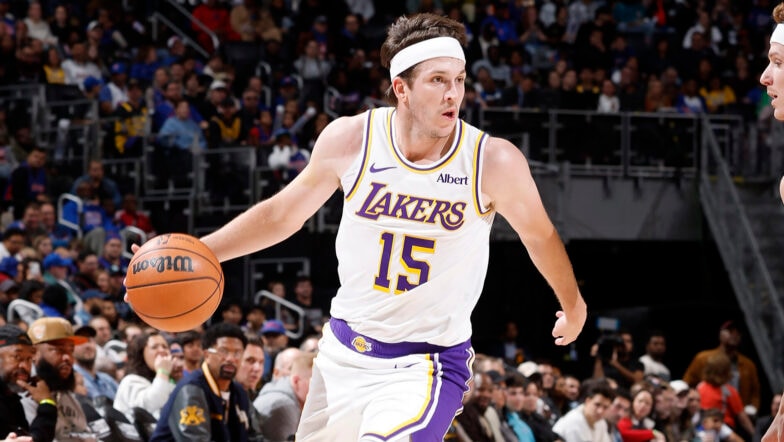
Reaves' 24.7 points per game tell only part of the story. His 4.7 assists and willingness to operate with or without the ball allow the Lakers to avoid a simple trap: asking Dončić to create every advantage, then hoping the remaining four players can capitalize on it. Reaves can punish the defense that loads toward Luka, run a possession when the star rests and attack the second defender when the first action stalls. That blend has become particularly important in a season shaped around a new Lakers core rather than the previous era's personnel.
Without Reaves, defenses have an easier starting instruction. They can crowd Dončić, make a less established ball handler initiate the offense or force wings to catch the ball outside the spots in which they are comfortable. None of those choices guarantees stops; Dončić has beaten every imaginable coverage. But all of them increase the number of hard decisions he needs to make in a game, and that is different from allowing him to choose when he wants to dominate a possession. A team can win those possessions while still paying an energy bill.
Quentin Grimes is a natural candidate for more responsibility because he offers perimeter shooting, defense and a recent reminder that he can score when given room. Collin Sexton can provide more direct, downhill creation; Ziaire Williams gives another option for wing minutes. The question for JJ Redick is not which player can become Reaves for an evening. The question is which combination can replace the smaller jobs he performs: a trustworthy first pass, a second pick-and-roll creator, a cutter who understands when to get out of Luka's way and a shooter whose defender cannot freely abandon the weak side.
Phoenix showed one way this can work. In Sunday's victory, Dončić scored 43 and handed out nine assists while Grimes contributed 22 points, including five three-pointers in six attempts. Those figures prove Los Angeles has alternatives, not that a replacement guard will shoot like that every night. A run of extreme efficiency can win a single matchup. For the system to be dependable, the same players must generate acceptable shots even when the first several attempts miss and an opponent starts switching the actions designed to free them.
GOATIFY
GOATIFY Basketball
When the Lakers need someone other than Luka to run a possession, the next guard matters. Explore basketball-inspired shirts, hoodies and stickers from GOATIFY.

Luka Doncic G.O.A.T. - Basketball Decal Sticker
Add basketball personality to your favourite gear.
Shop Now ↗
Austin Reaves G.O.A.T. - Basketball - Greatest Sweatshirt
A basketball fan design for everyday wear.
Shop Now ↗
Fat Luka Doncic Los Angeles Lakers NBA Mug
Add basketball personality to your coffee break.
Shop Now ↗

Fat Luka Doncic Los Angeles Lakers NBA Sticker
Add basketball personality to your favourite gear.
Shop Now ↗
Luka Doncic G.O.A.T. - Basketball - Greatest Hoodie
A basketball fan design for everyday wear.
Shop Now ↗Reaves' diagnosis is comparatively clear: a bruise, with Redick describing progress and no structural problem beyond the bruise. That does not establish a date for his return, and there is no reason to convert a day-to-day outlook into a prediction. The immediate basketball problem is more concrete. Against Charlotte, can the Lakers find enough secondary playmaking to keep Luka from carrying a full night's offensive organization? If they can, the injury absence becomes a challenge the group managed rather than an argument that the winning streak depended on perfect health.
Kessler's 14-game run explains why the center absence matters so much
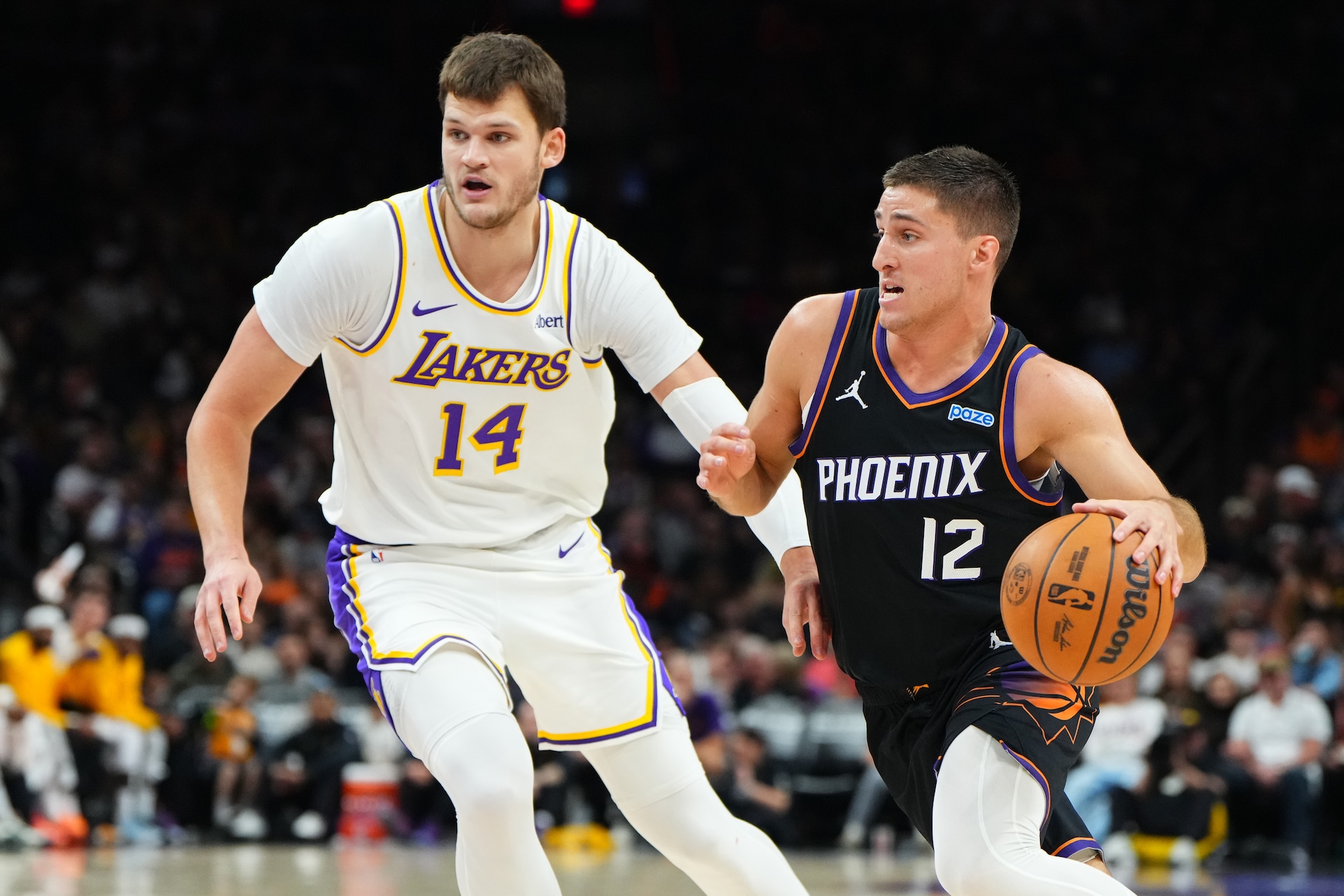
Kessler's absence is different because it changes what the Lakers are allowed to be, not merely who starts an offensive set. Through 14 appearances, the center was averaging 14.5 points, 10.9 rebounds and 2.2 blocks while hitting 68 percent of his field-goal attempts. His scoring efficiency matters because most of his best opportunities are the product of doing the physical work first: screening with force, running into open space, occupying a defender near the rim and finishing a pass that would be much less valuable to a smaller teammate.
Even when he does not touch the ball, a credible lob threat changes how an opponent guards Dončić. The defender responsible for the roller is asked to choose between protecting the basket and helping contain the ball. Lose that threat and a switch, trap or hard show can become more attractive. This is why a player who averages fewer shots than the stars can be central to the efficiency of the whole offense. The Lakers have to replace the geography he creates as much as the points he scores.
The defensive cost may be even harder to disguise. Blocking 2.2 shots per game is the visible part of Kessler's presence, but rim protection also includes shots an opponent declines to take. A driver who sees a seven-foot-two body waiting can pull up for a contested jumper or kick a pass toward a less dangerous location. Redick can ask another big to challenge the same shots, yet the exact deterrence is not simply transferable by assigning Kessler's minutes to someone else.
Kevon Looney offers experience, rebounding instincts and familiarity with physical interior play. Sandro Mamukelashvili can change the offensive feel of a lineup, especially if the Lakers want movement and spacing rather than one fixed target by the basket. Jarred Vanderbilt can make the defense more active across several positions, although he does not replicate the height of a traditional center. Those are possible responses, not a confirmed replacement starting five. Each combination strengthens one area and asks the coaches to protect another.
Consider what happens after a missed jumper. With Kessler, the Lakers can often trust a true center to contest without immediately surrendering the defensive glass. With a smaller or more mobile arrangement, a help defender may need to pinch into the paint earlier, opening a pass to a shooter. On offense, the same arrangement can pull an opposing big away from the rim and give Dončić a different attack. Redick's actual decision is a balance sheet: how many second-chance points and paint attempts are worth trading for additional pace or spacing? One lineup will not answer every opponent.
Kessler's right lower-leg soreness is newly reported, and Tuesday is set to be his first missed game of the season. That is the known injury status, nothing more. No reliable timetable has been established for the Wednesday game. The appropriate response is to watch who handles the opening center minutes, whether Charlotte attacks the paint early and whether the Lakers are able to close defensive possessions with a rebound. Those are meaningful indicators without turning a short absence into an invented medical narrative.
GOATIFY
GOATIFY Basketball
Rebounding and protecting the paint get harder without Kessler. Browse GOATIFY Basketball designs for the fans who follow every possession.

Kobe Bryant – Mamba Mentality Trophy Pullover Hoodie
A basketball fan design for everyday wear.
Shop Now ↗
Crying LeBron – NBA Basketball Crewneck Game Sweatshirt
A basketball fan design for everyday wear.
Shop Now ↗
LeBron James – Lakers Dunking GOAT Graphic Tee
A basketball fan design for everyday wear.
Shop Now ↗
Trae Young G.O.A.T. - Atlanta Hawks Basketball Sticker
Add basketball personality to your favourite gear.
Shop Now ↗
Michael Jordan – Repeat 3-Peat GOAT Basketball Tank
A basketball fan design for everyday wear.
Shop Now ↗
Kobe Bryant G.O.A.T. - Settle the Debate Mug
Add basketball personality to your coffee break.
Shop Now ↗Luka can rescue possessions. The supporting cast has to rescue the structure.
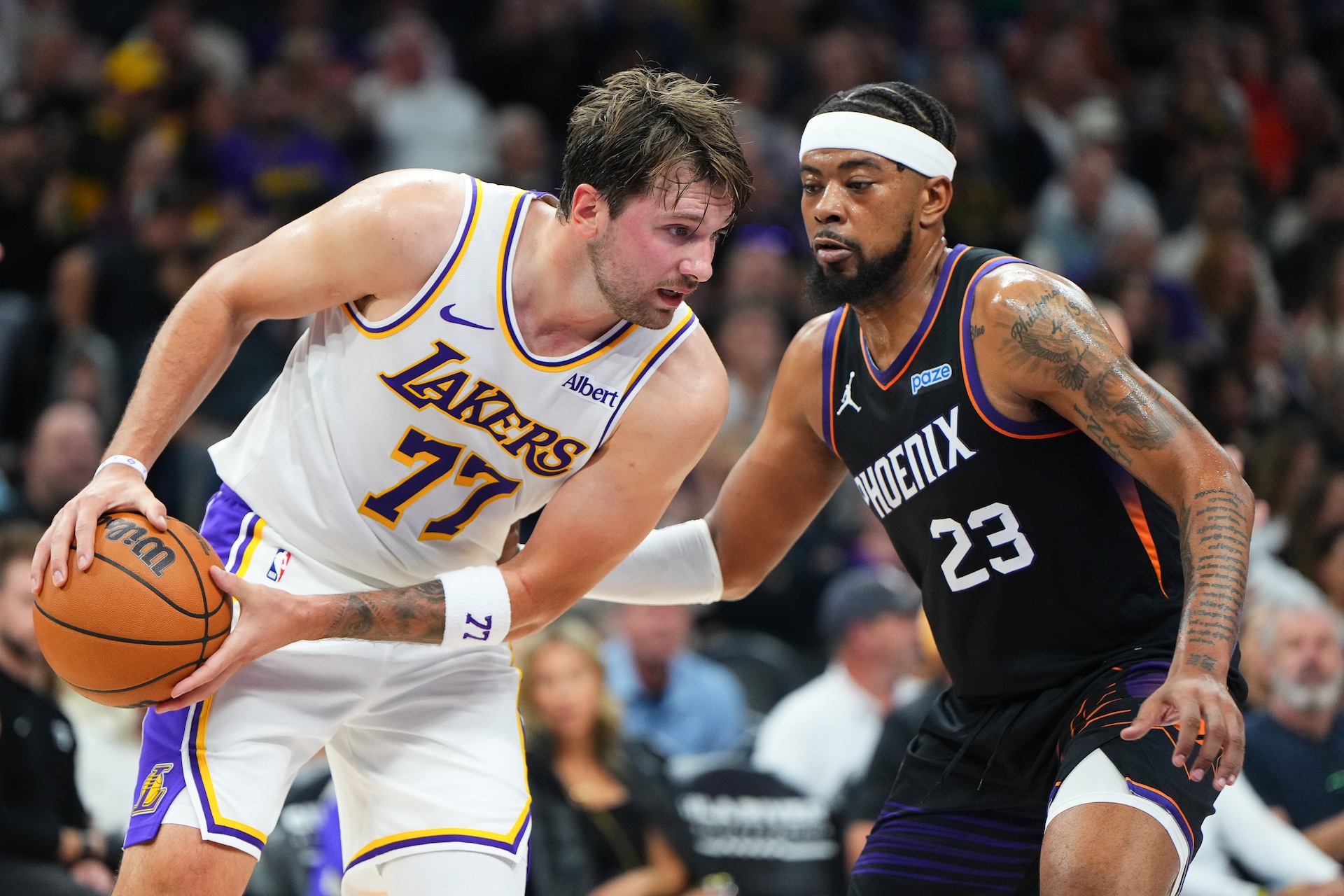
Dončić's availability makes Los Angeles the favorite to solve many ordinary offensive problems. He is the league's leading scorer at this point in the season, and his 43-point, nine-assist performance against Phoenix is a useful example of what happens when an opponent cannot keep him out of the spots he wants. He can create a step-back jumper, force a switch, slow the tempo or punish a single careless help rotation. None of that should be mistaken for an instruction to run the same high-difficulty play for 48 minutes.
The reason is simple: possession creation and team organization are related but not identical. Dončić can repeatedly deliver the first one. A championship-caliber offense also needs to know where the weak-side shooter should stand, who screens a second time when the first action fails and who sprints back when an aggressive pass is intercepted. Those habits are difficult to keep when two starters suddenly disappear from a regular rotation, particularly when one normally handles the ball and the other often controls the space around the basket.
Grimes' Phoenix outing was the clearest short-term argument for confidence. He finished with 22 points on seven makes in ten field-goal attempts and went five-for-six from long range. The final three, with less than a minute remaining, helped shut down the Suns' comeback. That is the kind of timely contribution a team needs when its other scoring guard sits out. It also creates a trap for evaluating a replacement: the value of Grimes cannot be judged solely by whether he repeats an unusually accurate shooting night.
Sexton supplies a different tool. His direct attacks can force a defender to move laterally and make the Lakers less predictable when Luka gives up the ball. Williams can provide length in the wing rotation, while Jake LaRavia is another option whose movement can keep an offense from becoming static. No one should assume those minutes will be distributed evenly. A rotation is a set of tactical answers: a small group for an opponent's quick guards, a sturdier group when the glass becomes a problem, and enough ball handling on the floor that a rest period does not become a scoring drought.
The Lakers' real advantage is that they do not have to guess whether Dončić can be the primary engine. They know. The uncertainty is how to keep everything around that engine connected. If the Hornets put two defenders near him, will the pass out become an open three rather than a hurried reset? If Charlotte refuses to double, can he score efficiently without every possession becoming slow and isolating? If Los Angeles gets ahead, can the reserves defend well enough to avoid another frantic fourth-quarter finish?
There is also a defensive responsibility for the guards taking extra minutes. Reaves' absence may shift assignments, and Kessler cannot erase every mistake behind them. A late closeout or a lost screen matters more when there is less familiar protection at the rim. That makes the productive supporting-cast night more than a points column. Grimes, Sexton and the wings need to do the ordinary, unglamorous work that keeps a Doncic scoring burst from being followed by two easy Hornets baskets.
Charlotte is the test. Wednesday's Jazz game is why the answers must last.
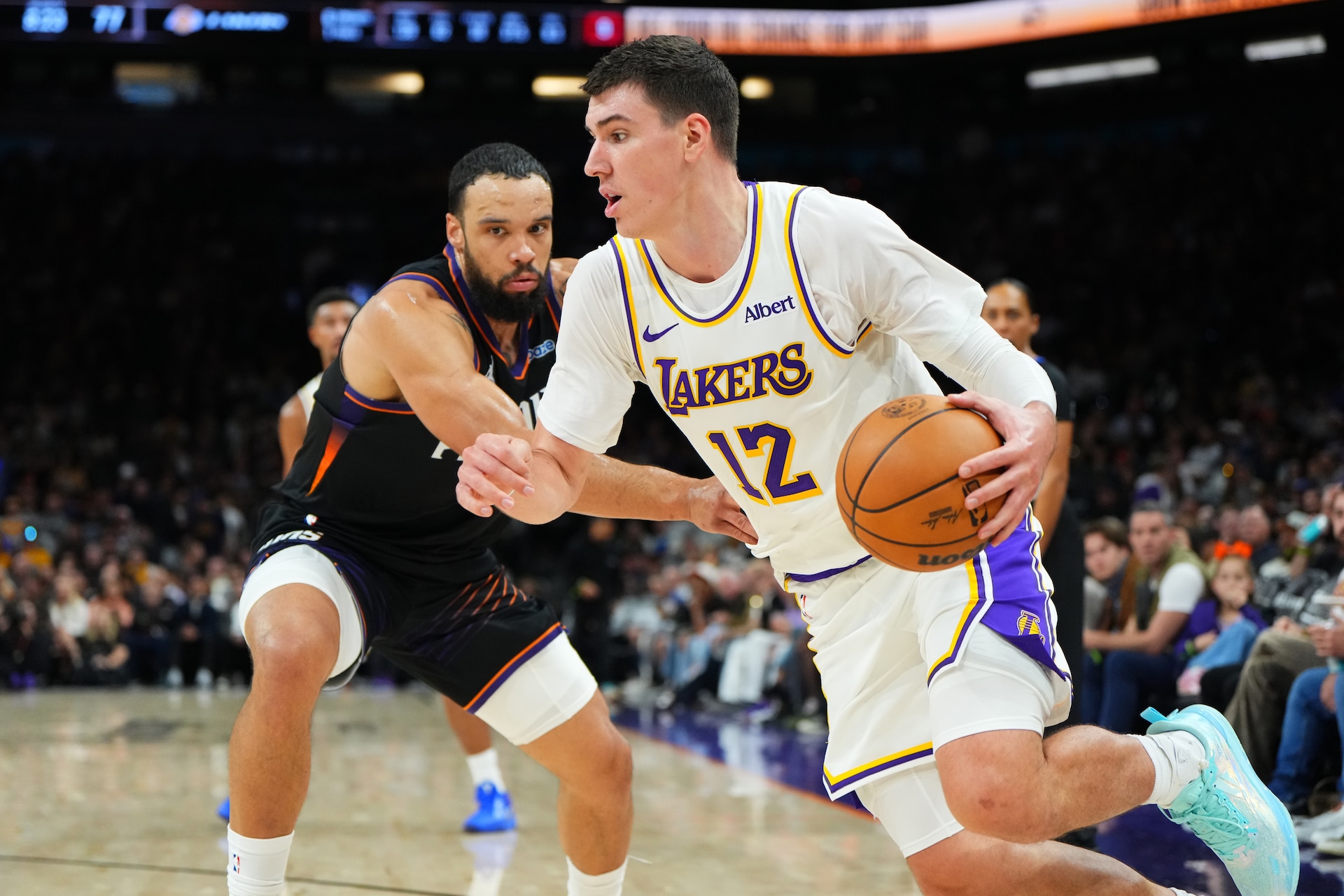
An eight-game winning streak can create the impression that every response has already been solved. It has not. The November schedule presents a more complicated question: what happens when the starting five changes just before consecutive games? Charlotte visits Tuesday and Utah arrives Wednesday. That means Redick has to think about the minutes of Tuesday's replacements without knowing exactly which players will be available a day later. The coaching plan needs to win the game in front of the team without creating unnecessary problems for the next one.
GOATIFY
GOATIFY Basketball
Luka's brilliance deserves teammates who can finish the play. Find basketball-inspired gifts and gear in the GOATIFY Basketball collection.

LaMelo Ball G.O.A.T. - Basketball Casual Top Tee
A basketball fan design for everyday wear.
Shop Now ↗
Lauri Markkanen GOAT - Basketball Decal Sticker
Add basketball personality to your favourite gear.
Shop Now ↗
James Harden G.O.A.T. - Basketball - Greatest Hoodie
A basketball fan design for everyday wear.
Shop Now ↗

Wemby G.O.A.T. - Victor Wembanyama Basketball Sweatshirt
A basketball fan design for everyday wear.
Shop Now ↗
Shaquille O’Neal GOAT - Shaq Basketball Coffee Mug
Add basketball personality to your coffee break.
Shop Now ↗The Hornets have their own availability concerns. Reports ahead of the game list young scorer Kon Knueppel and guard Dennis Schröder among Charlotte's absences. Those injuries may change where Charlotte looks for offense, but they do not erase the challenge facing Los Angeles. An opponent missing players can still exploit a rebounding mismatch, increase the tempo or use aggressive perimeter pressure to expose a lineup that has not played together. The Lakers cannot judge their adjustments simply by looking at the opponent's record.
The first practical indicator is the starting unit. Does Looney take the traditional-center role, or does Redick prefer a more mobile configuration? Who starts in Reaves' place, and does that player remain alongside Dončić when the regular rotations begin? The answers reveal which specific problem the coaching staff most wants to minimize. A bigger group suggests the priority is protecting the paint and glass. A smaller group suggests Redick is willing to accept some interior tradeoffs for handling and movement.
The second indicator is the shot profile. A team can look smooth in the first quarter because its superstar makes difficult attempts. The more useful signal is whether the offense repeatedly generates clean catches near the rim and quality three-point looks after Charlotte adjusts. If the Lakers can manufacture those opportunities without Reaves and Kessler, the roster's depth is functioning. If every productive possession requires a Dončić improvisation, a good final score could conceal a problem that becomes visible against stronger defenses.
The third indicator is physical. Kessler's availability cannot be replaced by counting blocks from another player. Watch defensive rebounds, opponent second-chance opportunities and how often Los Angeles sends extra helpers to protect the restricted area. That extra help can be necessary, but it has a price on the perimeter. The best replacement plan will not make the center position look identical; it will manage the new tradeoff consistently rather than allow one weak spot to determine every possession.
Finally, separate what is confirmed from what is plausible. Reaves is out Tuesday with a heel bruise and has been described as improving. Kessler is out Tuesday with lower-leg soreness after playing the first 14 games. Those facts do not say either player is out for the Utah game, and they do not guarantee either returns. As the back-to-back approaches, a fresh team report will matter more than anyone's guess based on the standings. If the Lakers can handle Charlotte without leaning on a speculative recovery, they will have gained something useful even beyond a ninth consecutive victory: evidence that their underlying system can travel through an injury interruption.
This is not a referendum on whether the 12–2 Lakers are real. They have already won enough different ways to establish that their start deserves respect. It is a narrower, more interesting examination of depth. A team that loses its second major creator and its most established rim protector on the same night can no longer rely on its preferred division of labor. Every support player inherits a piece of the missing work.
Dončić can make Tuesday feel normal with another extraordinary scoring display. The more encouraging outcome would be an ordinary, repeatable win: productive minutes from the extra guards, responsible decisions from the replacement bigs, defensive possessions that end with rebounds and a sensible rotation that leaves options for Utah a day later. The injury report explains why that would matter. The way the Lakers play without Reaves and Kessler will show how much of their early success belongs to the entire roster.
GOATIFY
GOATIFY Basketball
Shop GOATIFY basketball shirts, hoodies and stickers.


Jalen Brunson G.O.A.T. - Basketball Decal
Add basketball personality to your favourite gear.
Shop Now ↗
Dwyane Wade G.O.A.T. - Basketball - Greatest Sweatshirt
A basketball fan design for everyday wear.
Shop Now ↗
Wilt Chamberlain G.O.A.T. - Basketball Casual Tee
A basketball fan design for everyday wear.
Shop Now ↗
LeBron Photobomb – NBA Basketball Muscle Shirt Tank
A basketball fan design for everyday wear.
Shop Now ↗
Stephen Curry G.O.A.T. - Steph Curry Greatest Mug
Add basketball personality to your coffee break.
Shop Now ↗