

Luiten Was Last Into Dubai. Now McIlroy Is Chasing Him.
GOATIFYJoost Luiten was not supposed to be the headline act in Dubai. He was 56th in the Race to Dubai standings before withdrawals opened the final spot in the 50-player DP World Tour Championship field. By the end of Thursday, the 40-year-old Dutchman had made that late invitation look like an opportunity everybody else had underestimated. A five-under 67 put him on top of the leaderboard at Jumeirah Golf Estates.
Rory McIlroy is very much in the picture. His opening 69 left him only two shots behind Luiten as he chases an eighth Race to Dubai crown. The bigger complication is the man he must catch over the season: Eugenio Chacarra, who began the finale leading the rankings but opened with a level-par 72. That difference does not settle the season-long contest. It does make the next three rounds considerably more interesting than the pre-tournament standings alone suggested.
Luiten turned the final invitation into a five-under lead
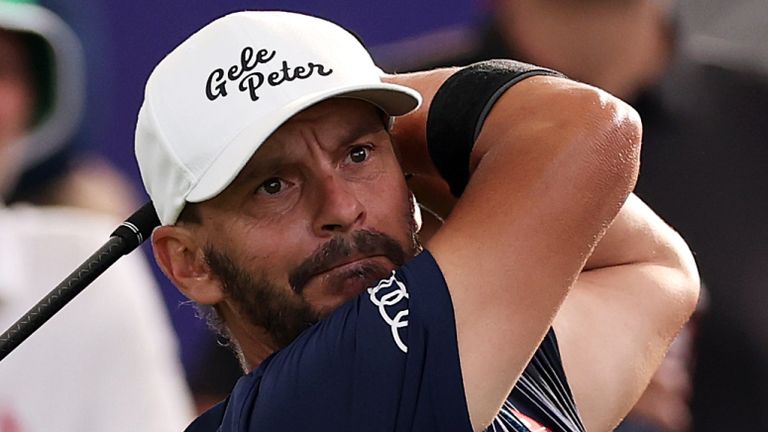
There is a particular freedom in arriving at a season finale without the expectations attached to the sport's biggest names. Luiten was not automatically among the 50 players who would contest the championship. His Race to Dubai position was 56th, and a series of withdrawals had to move him into the field. Six places had to open before he could take the last available spot. That is a far less comfortable route than qualifying on the strength of a top-ten ranking, but it also meant that Thursday's opportunity was a bonus rather than the end of a months-long campaign to defend a lead.
He made the bonus count immediately. Luiten covered the front nine in 31 strokes, a remarkable first-half return on a day when the Earth Course demanded patience from much of the field. A start like that is about more than making a few early putts. It changes the choices a player can make. With strokes already in hand, he could approach the inward nine with a buffer while others were still trying to establish what a good score would look like in the shifting breeze.
The round was not a smooth march from the first tee to the clubhouse. Consecutive bogeys at the 11th and 12th interrupted his momentum. On a leaderboard containing major champions and players fighting for season-long rewards, those are the moments when an unexpected leader can begin protecting a score instead of continuing to play. Luiten's response was more revealing than the opening rush: he birdied the 13th, regained control of the round and found another birdie at the last to sign for 67.
That finish matters because five under was not a score the field was producing casually. Only 22 of the 50 starters finished below par. The championship's relatively compact field means there are no anonymous early-round pairings hiding from the cameras, yet the course still created a spread of scores. A golfer who earned his place through withdrawals had handled the same conditions better than every player who qualified ahead of him.
GOATIFY
GOATIFY Golf
From an unexpected tee time to the lead in Dubai, Luiten's week is one for golf fans. Browse GOATIFY Golf apparel and accessories for the game's surprise moments.


The closest challenger after one round was Denmark's Jacob Skov Olesen, whose 68 put him a shot behind. The one-stroke margin does not make Luiten a runaway favorite. It does give the leaders a completely different Friday from the one they expected when the week began. Olesen can attack from second without carrying the novelty of the last-man-in story. Luiten must now show he can keep playing freely when his name is at the top of every leaderboard.
In a four-round event, one exceptional Thursday is an opening argument rather than the final verdict. Players at three or four under are still within a single strong stretch of the lead. But the way Luiten reached five under—fast start, visible wobble, then recovery—offers more encouragement than a card built entirely on a lucky run of putts. If he can continue to turn the par fives into opportunities while avoiding the doubles that make windy rounds unravel, the unexpected entrant may remain a factor well beyond the opening morning.
McIlroy's imperfect 69 still did the job he needed

McIlroy's position is deceptively strong. A 69 is not the sort of score that wins a trophy on its own, and his Thursday was untidy enough to leave room for frustration. Yet he reached the clubhouse only two behind the leader, ahead of the player who arrived in Dubai with the better season-long points position. Those are the two leaderboards that matter this week: the tournament itself and the Race to Dubai standings. McIlroy needs to keep both in view without letting the second interfere with decisions on the first.
His round featured five birdies and two bogeys. That balance tells a useful story about his ceiling and his floor. The birdies showed that scoring chances were available even when conditions made ordinary approaches more difficult. The dropped shots showed he was not yet in total command of the Earth Course. A player chasing a title might be tempted to treat every mistake as evidence that he needs to manufacture an extraordinary recovery, but two shots is hardly a deficit that calls for impatience on Thursday evening.
The final hole captured the feeling of a round that could have looked even better. McIlroy created a chance of eagle at the par-five 18th, then had to settle for birdie. On the card, it was another red number and a solid way to finish. In the mind, it was an opportunity to close the gap to just one. That distinction is important. A near miss at the end does not turn a useful score into a bad one, especially when many rivals spent the afternoon attempting to avoid giving strokes away.
The wider context makes his position even more significant. McIlroy is pursuing a record-equalling eighth Race to Dubai title, a measure of staying power that extends well beyond a single hot season. The event is staged on a course where he knows the demands of the finishing stretch. Experience does not guarantee clean iron shots in gusting conditions, but it can reduce the temptation to read too much into a volatile leaderboard before half the tournament is complete.
He also cannot play this as a private duel with Chacarra. Luiten has five under, Olesen four, and several other golfers have begun within striking distance. McIlroy's immediate competitive problem is to produce another complete round before worrying about the presentation ceremony. If he spends Friday trying to erase a two-shot deficit with one heroic drive, he risks turning a manageable chase into unnecessary trouble. The better route is to recreate the scoring opportunities that produced five birdies while limiting the expensive interruptions.
GOATIFY
GOATIFY Golf
McIlroy's Dubai chase is a reminder that every shot counts at the season finale. Explore GOATIFY Golf shirts, hoodies and accessories for golfers and fans.
Friday's pairing with Adrian Otaegui is another useful reference point. Otaegui opened with 70, one behind McIlroy, so the two will share a similar view of the conditions and the leaderboard in their second round. Players who begin the day in close proximity can feed off each other's rhythm, but a golfer with an entire season at stake must resist measuring every hole against the person beside him. McIlroy's real scorecard stretches across 72 holes and across a ranking system shaped by months of results.
Two under on a particular nine can feel routine when the world's most recognizable golfer is in the group. On a day when fewer than half the starters broke par, a three-under total deserves more respect. McIlroy did not seize control of Dubai on Thursday. He did something subtler: he stayed near enough to the lead to make his own game, not somebody else's collapse, the main factor in what happens next.
Chacarra's 72 gave the season-long race a different shape
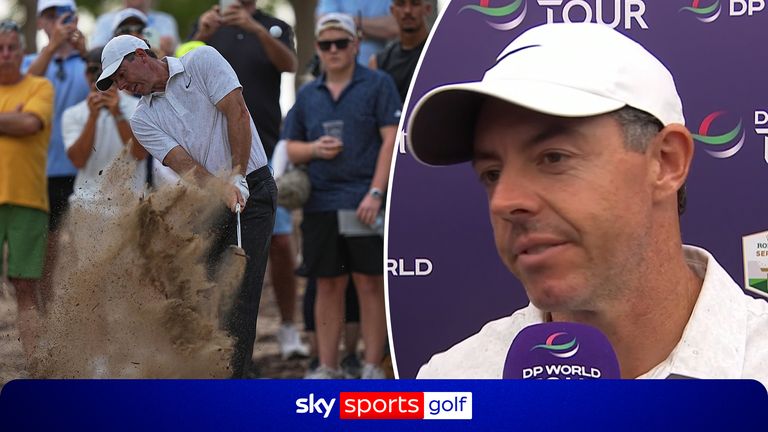
Chacarra's opening day was the counterweight to McIlroy's solid position. The Spaniard arrived as the Race to Dubai points leader, with the rare opportunity to turn a breakthrough campaign into the season's biggest individual prize. A level-par 72 was not a disaster in the conditions, but it left him five shots behind the surprise tournament leader and three behind McIlroy. For someone trying to protect a narrow advantage across four rounds, that is an uncomfortable opening snapshot.
His score did not tell the story of a golfer completely out of touch. There were opportunities and birdies during the round, alongside mistakes that prevented him from matching the pace near the top. Two bogeys late in the day made the closing position particularly frustrating. Those strokes mattered not because they mathematically ended his title chance—they plainly did not—but because they gave McIlroy room to move ahead on the tournament leaderboard without requiring a spectacular start.
The points calculation cannot responsibly be reduced to a simple Thursday ranking. The Race to Dubai rewards results accumulated over the season and the final positions at this championship, not the unofficial leaderboard at the end of one round. Chacarra remains the points leader coming into the event; the crown is not awarded after 18 holes. The relevant change is that McIlroy has a plausible pathway to overtake him if their relative positions hold or widen. The next round could change that picture just as quickly.
Nor is this simply a two-man contest, even if the most familiar name and the season leader dominate the headlines. The title calculations entering the finale involved a broader group of contenders. Patrick Reed, Jon Rahm and other high-ranking players have reasons to keep attacking. Rahm's opening 71 put him within four of the tournament lead, a useful platform even if several places separated him from McIlroy on the day. Olesen's 68 offered an immediate reminder that players outside the season's central narrative can dictate how high everyone else needs to score.
GOATIFY
GOATIFY Golf
With the Race to Dubai still up for grabs, celebrate championship golf and its unpredictable finishes with GOATIFY Golf gear.
There is another pressure line running through the championship: careers, exemptions and access to future events. The DP World Tour's season-end pathway offers PGA Tour cards to the leading eligible players not already exempt. That makes small differences in final position valuable even for competitors who are not realistic contenders for the Harry Vardon Trophy. One extra birdie on Sunday can have consequences far beyond an individual round's prize money. It is another reason the field may look less conservative as the week advances.
The Thursday scores showed how thin the margins can be. Players who seemed secure in their form before the finale were suddenly trying to recover from a 74 or worse, while Luiten and Olesen made the opening day look comparatively straightforward. Wind and firmer tournament setups tend to expose approach-distance mistakes and recovery decisions. A good shot that leaves a tricky downhill putt can quickly become a bogey; a sensible miss can be a better result than an ambitious attempt to fly a tucked flag. Across the final 54 holes, patience is likely to be as valuable as a spectacular highlight.
Friday brings an immediate chance to test whether Thursday's positions were a genuine shift or just the first act of a long championship. Luiten and Olesen go out together in the later morning wave. McIlroy is paired with Otaegui, while Chacarra has the earlier start alongside Grant Forrest. Different tee times may mean slightly different conditions, but comparing their rounds before every group finishes would be a mistake. The more meaningful measurement is whether Chacarra can turn level par into a proper scoring run and whether McIlroy can continue adding red numbers without opening the door through careless mistakes.
For Chacarra, the remedy is not to reinvent the swing that put him atop the season ranking. He needs to convert the scoring chances he creates, avoid the late-round losses and keep the championship close enough to reward the points already earned. For McIlroy, the opportunity is to push forward without chasing every flag. And for Luiten, who started this week as the final name through the door, there is the unexpected possibility that the championship itself—not merely the season-long race—could become his story. That combination makes the next 18 holes meaningful on several different levels.
Thursday turned the Dubai finale from a forecast into an actual race. Luiten holds the tournament lead after an improbable route into the field. Olesen is close enough to apply pressure. McIlroy has a two-shot gap to close but a stronger opening position than the man he is chasing for the season prize. Chacarra still has time to defend that points advantage, yet his 72 means his Friday round now carries added urgency.
The most sensible reading is not that one round has crowned a new champion. It is that the first round exposed how many different races are happening on the same course: a surprise leader trying to prove he belongs, a veteran champion pursuing a historical milestone, a season leader fighting to keep control and a field with PGA Tour opportunities of its own. Dubai's opening day gave each of those storylines a genuine sporting consequence. The next three rounds will decide which one survives.
GOATIFY
GOATIFY Golf
Shop GOATIFY golf shirts, hoodies and stickers.


















