Rotterdam Just Blew Up the Padel Hierarchy — Only Coello and Tapia Survived
GOATIFYRotterdam was supposed to be another checkpoint in the familiar fight at the top of men’s padel. Instead, Friday’s quarterfinals ripped up almost every assumption in the draw. Alejandro Galán and Federico Chingotto, the second seeds and the pair closest to Arturo Coello and Agustín Tapia in the season-long hierarchy, were beaten in straight sets by Franco Stupaczuk and Jon Sanz. Juan Lebrón and Leo Augsburger, seeded third, went out to Mike Yanguas and Coki Nieto. Paquito Navarro and Martín Di Nenno, seeded fourth, lost a three-set battle to Momo González and Lucas Campagnolo.
Only Coello and Tapia survived, and even the world No. 1 pair had to recover from losing the opening set to Tino Libaak and Gonza Alfonso. That makes Rotterdam more than a weekend of isolated upsets. It is a snapshot of how compressed the men’s field has become. The top pair still owns the strongest baseline of results, but the space beneath them is no longer arranged neatly by seeding. On the right day, several teams now have enough defense, power and tactical clarity to break the bracket.
Coello and Tapia survived the same chaos that swallowed everyone else
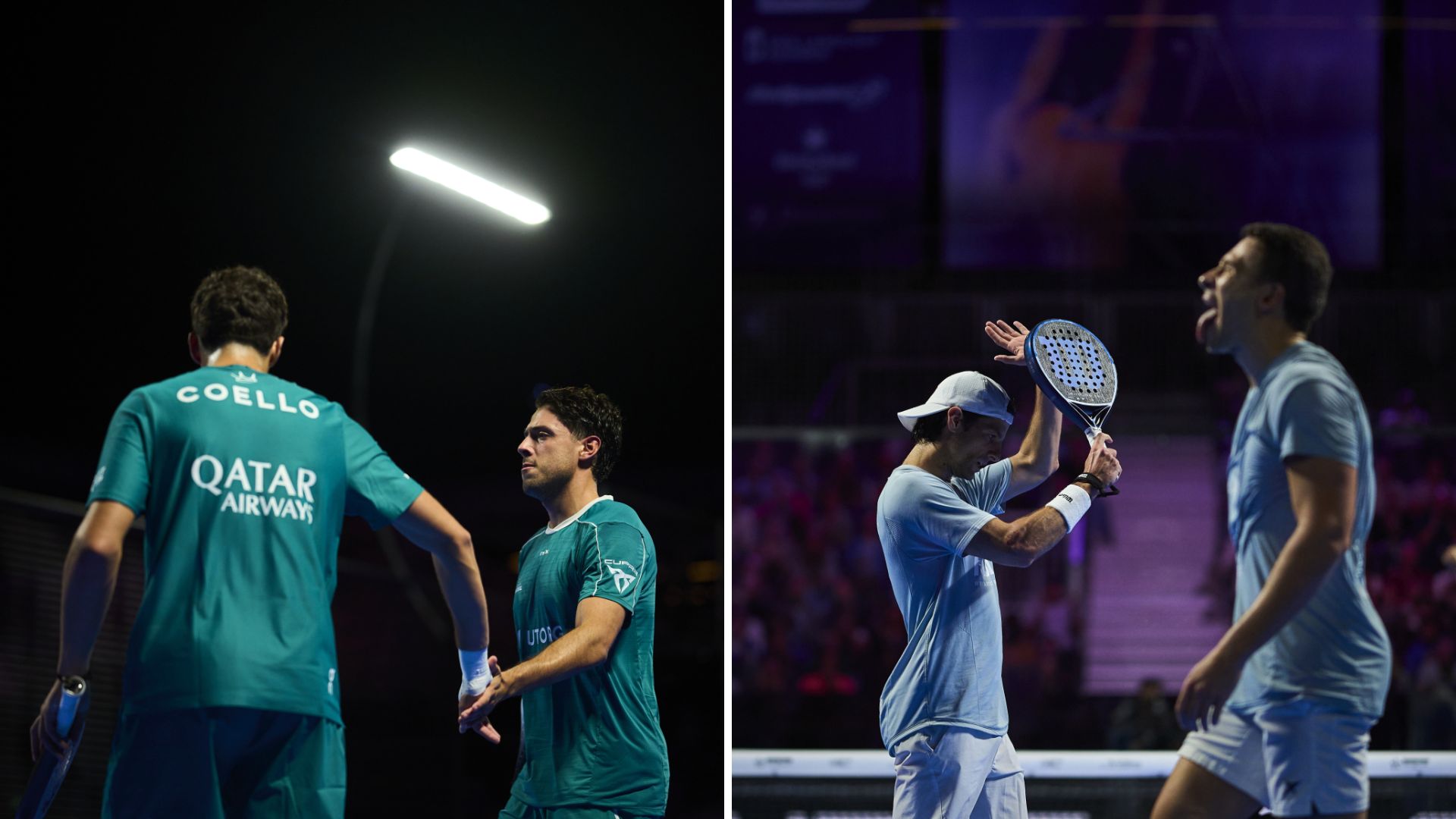
The easiest mistake is to look at the semifinal draw and assume Coello and Tapia simply did what the other favorites could not. Their 4-6, 6-3, 6-3 win over Libaak and Alfonso was much less comfortable than that. The Argentinians took the first set by playing without the caution that usually appears against the No. 1 pair. They attacked early, trusted their transitions and made Coello and Tapia spend more time solving problems than dictating them.
That is important because Rotterdam came only weeks after Paris, where Coello and Tapia again showed why their floor is so high. They can win when the match is clean, but their defining advantage is increasingly the ability to change the shape of an ugly match. After dropping the opener in Rotterdam, they became more stable in neutral exchanges and more decisive once they reached the net. The score did not swing because Libaak and Alfonso suddenly stopped competing. It swung because the favorites reduced the number of loose points they were donating.
On a quarterfinal day when every other top-four seed disappeared, that adjustment became the difference between status and elimination. Coello and Tapia are not immune to the field’s growing depth; Madrid already showed that Yanguas and Nieto can beat them. Their edge is that a bad set rarely becomes a bad afternoon. They have enough complementary tools to change pace, absorb a hot opponent and then reassert the patterns that make them so hard to finish off.
That is why Rotterdam now tests them differently. They are no longer walking into a semifinal against the opponent the seeding projected. They face a draw full of teams playing with the confidence that comes from having already broken somebody else’s ceiling.

Stupaczuk and Sanz finally turned volatility into control
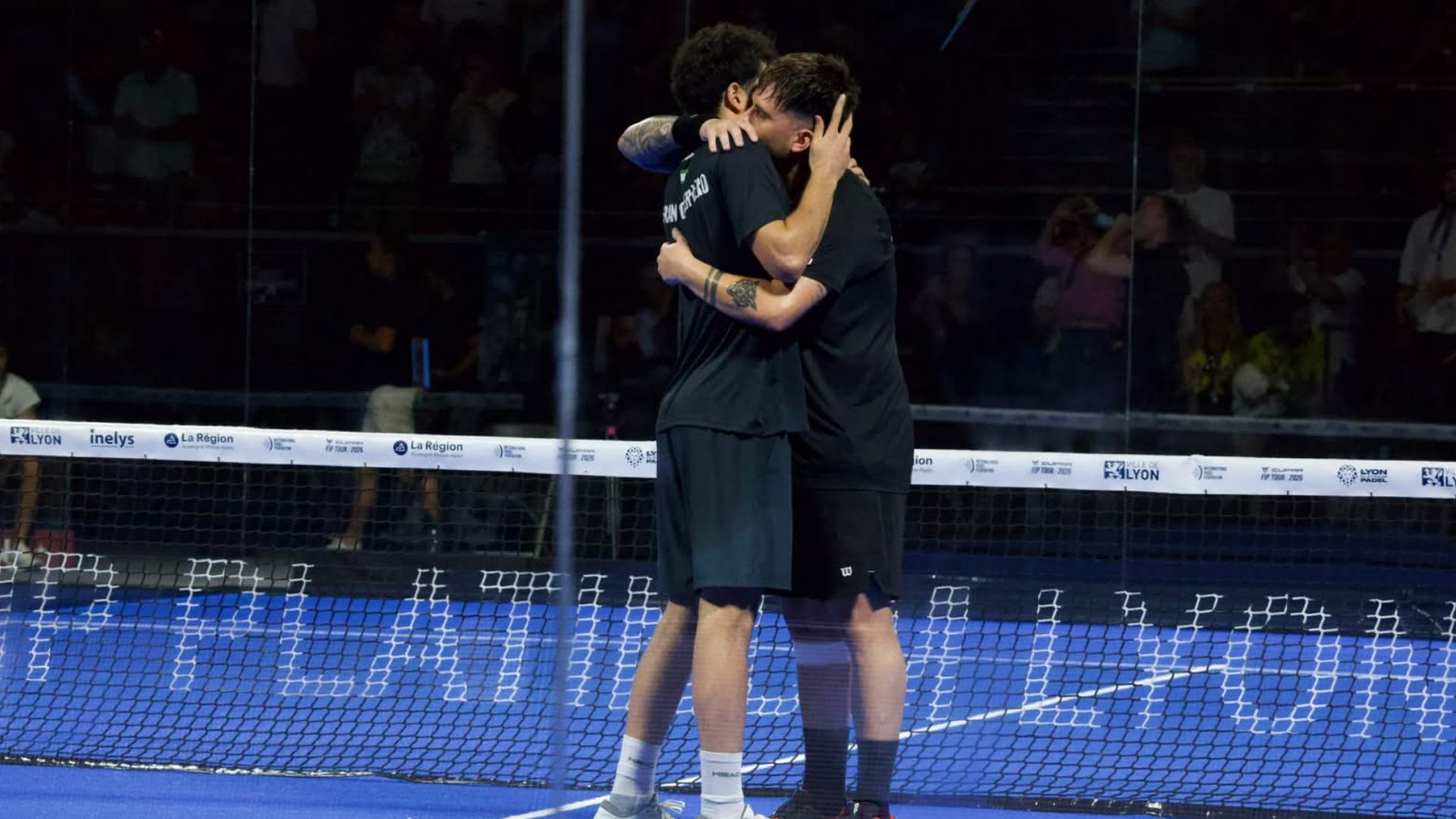
Stupaczuk and Sanz beating Galán and Chingotto 6-4, 6-4 is the result that most directly challenges the expected order. It was not a three-set escape or a favorite collapsing after holding a lead. The fifth-seeded pair took the match, survived the moment when the second seeds pushed back, and closed it in two.
The key is that Sanz’s aggression did not become a tax on the partnership. Before the quarterfinal, the tactical question was obvious: could he keep his explosiveness against Chingotto’s defense without forcing the finish too early? Rotterdam produced the version of Sanz that makes the partnership dangerous. His speed still created pressure, but Stupaczuk gave the pair enough structure around it. They were able to build points instead of treating every attacking ball as the last ball.
That matters for Stupaczuk too. His best teams have usually worked when he can organize the middle, defend with patience and then accelerate when the point has actually opened. Sanz gives him a left-hander who can turn a half-chance into a winner, but the pair only becomes elite if those bursts are attached to repeatable patterns. Against Galán and Chingotto, they looked less like two dangerous individuals and more like a team with a shared tempo.
They had reached the Lyon final the previous week and lost after leading, so Rotterdam offered an immediate test of whether that run was momentum or merely another promising week. Beating the No. 2 pair is stronger evidence. Their semifinal against Yanguas and Nieto is especially interesting because the four players know one another’s tendencies from previous partnerships. There will be fewer tactical secrets; execution and emotional control should matter more than novelty.
Yanguas and Nieto are becoming the bracket’s most credible disruptors
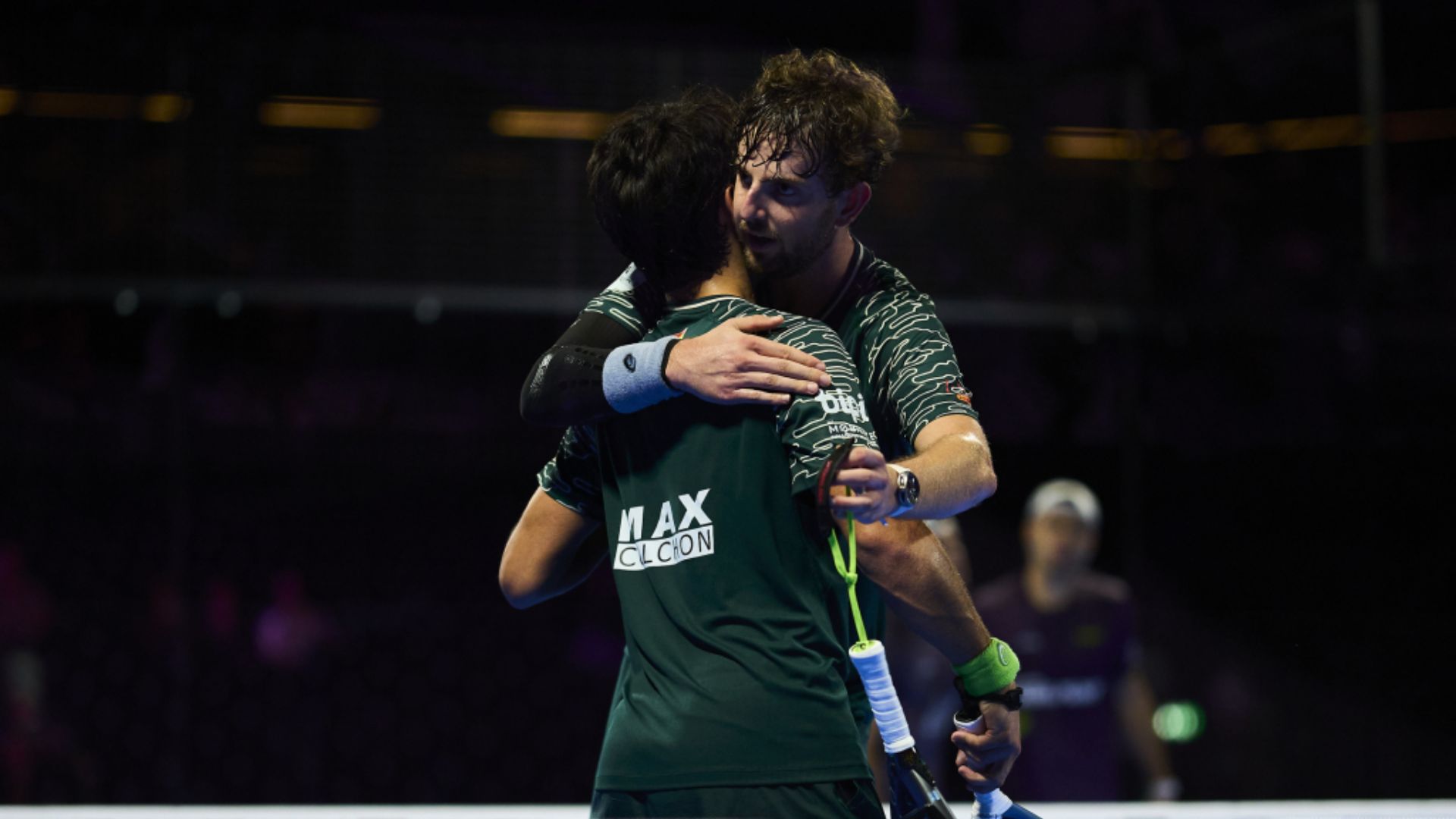
Yanguas and Nieto’s 7-6, 6-3 win over Lebrón and Augsburger should be read alongside Madrid, not in isolation. In Madrid they beat Coello and Tapia and reached the final. Rotterdam gave them another top-level scalp and, crucially, another example of winning the moments that separate a dangerous pair from a dependable one.
The first-set tiebreak was the clearest evidence. A 7-0 tiebreak against a team with the serving and finishing power of Lebrón and Augsburger is not normal. It reflected how well Yanguas and Nieto managed the match’s slower, heavier conditions. Rather than trying to win a power contest, they extended exchanges, defended one extra ball and made the third seeds keep proving they could finish cleanly. Once the tiebreak turned into a rout, the pressure shifted.
Nieto’s value in this type of match is easy to underestimate because so much of it comes from removing errors and closing space. Yanguas can then use his reach and athleticism without feeling that every point needs a spectacular solution. That balance makes them unusually awkward for more explosive teams: they can survive the first attack, but they also have enough offense to punish the next ball if the opponents overcommit.
Their reunion has therefore changed the middle of the men’s hierarchy. They do not need to claim that they are already on the same season-long level as Coello and Tapia or Galán and Chingotto. The more meaningful claim is simpler: no top pair can look at a draw, see Yanguas and Nieto in its quarter, and assume the seed will hold. Madrid established the possibility. Rotterdam is turning it into a pattern.

The real Rotterdam story is that the depth is becoming structural
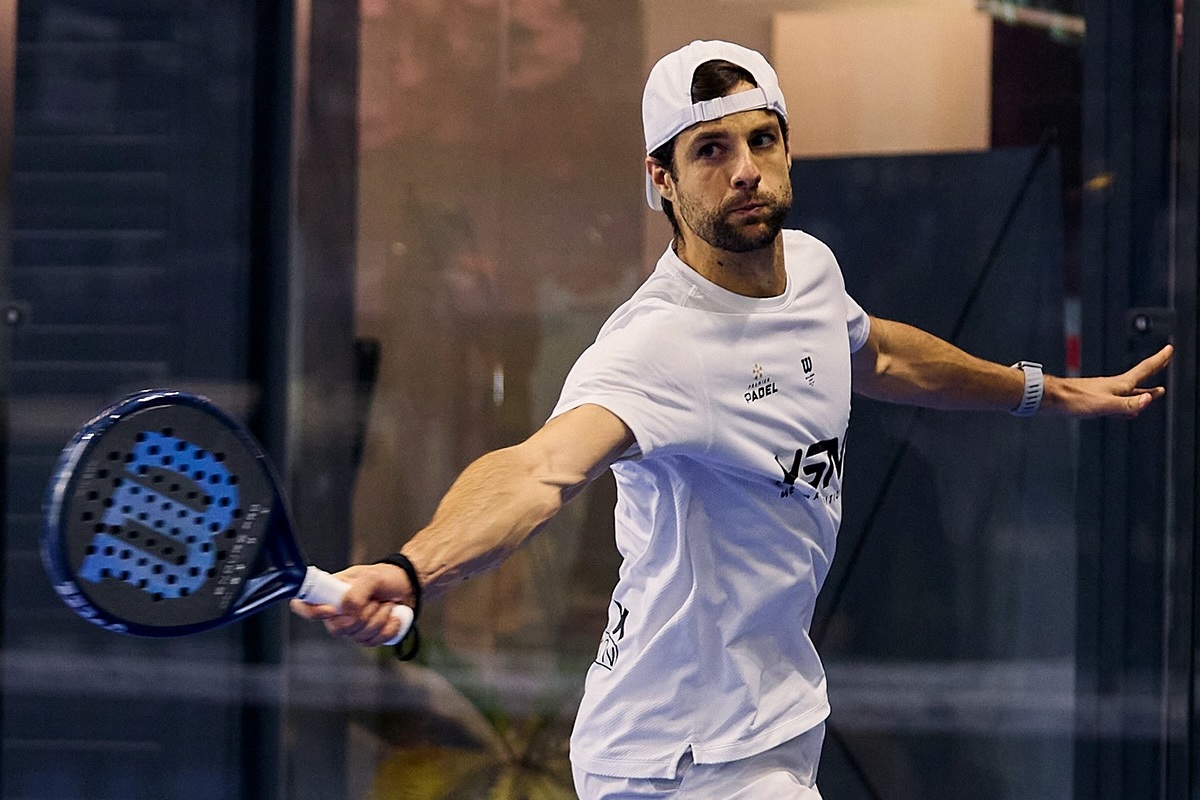
Momo González and Lucas Campagnolo completed the quarterfinal upheaval with a 2-6, 7-6, 7-5 win over Navarro and Di Nenno after nearly three hours. They were not clearly superior from the start. They absorbed a first set in which the fourth seeds looked in control, stayed attached to the match, and then turned the pressure of a close second set into a different contest.
The pair had already been building evidence before Rotterdam. Their semifinal run at the FIP Platinum in Lyon suggested the partnership was stabilizing. Rotterdam adds a win under Premier Padel pressure against a seeded team expected to advance. They now face Coello and Tapia with little reason to play cautiously.
Put the four semifinalists together and the larger point becomes clear. One pair is the established benchmark. The other three reached this stage by eliminating higher seeds, and they did it in different ways: Stupaczuk and Sanz through controlled aggression, Yanguas and Nieto through defensive density, González and Campagnolo through resilience across a long three-set fight.
That diversity is what makes the depth feel structural rather than random. Coello and Tapia may still restore order by Sunday, but that would not erase Friday. The gap between the top pair and the rest can remain meaningful while the gap between seeds two through eight becomes small enough that almost every quarterfinal is live.
There is also a rankings consequence. Deep runs by pairs outside the top four do not just create one unusual semifinal; they change future seedings and make later draws harder to predict. The more often these teams trade wins, the less useful the old assumption becomes that the first four seeds will simply meet one another at the weekend.
Rotterdam has not proved that the established order is finished. Coello and Tapia are still standing, still favored, and still the pair everyone else measures itself against. What the quarterfinals proved is that the route to them is becoming less predictable.
Stupaczuk and Sanz found a disciplined version of their aggression. Yanguas and Nieto turned defense into control. González and Campagnolo stayed alive long enough to turn a losing match. Those are different formulas producing the same message: seeding alone no longer protects anyone. If Coello and Tapia win again, this title may say more about their resilience than their dominance. If they do not, Rotterdam will be remembered as the weekend when the chasing pack stopped waiting for permission.
Shop GOATIFY padel products from the Padel-filtered collection scope.