

Morant's Revenge Game Ends in Injury — Boozer Steals the Night
GOATIFYJa Morant finally faced the franchise that made him a star. He did not get the reunion he wanted. The Portland Trail Blazers lost 124-103 to the Memphis Grizzlies on October 29, and Morant's first meeting with his former team ended on the bench after a left hamstring problem forced him out in the fourth quarter.
Even that storyline was overtaken by the player Memphis acquired after beginning a new era. Nineteen-year-old Cameron Boozer recorded 18 points, 12 rebounds and 12 assists in only his fifth NBA game, becoming the second-youngest player in league history to post a triple-double. The Grizzlies improved to 5-0 while Portland suffered its first defeat. A night marketed by the emotional return of a former franchise centerpiece became an argument that Memphis might already have found the foundation for what comes next.
Cameron Boozer did not just win — he entered an extraordinary NBA club
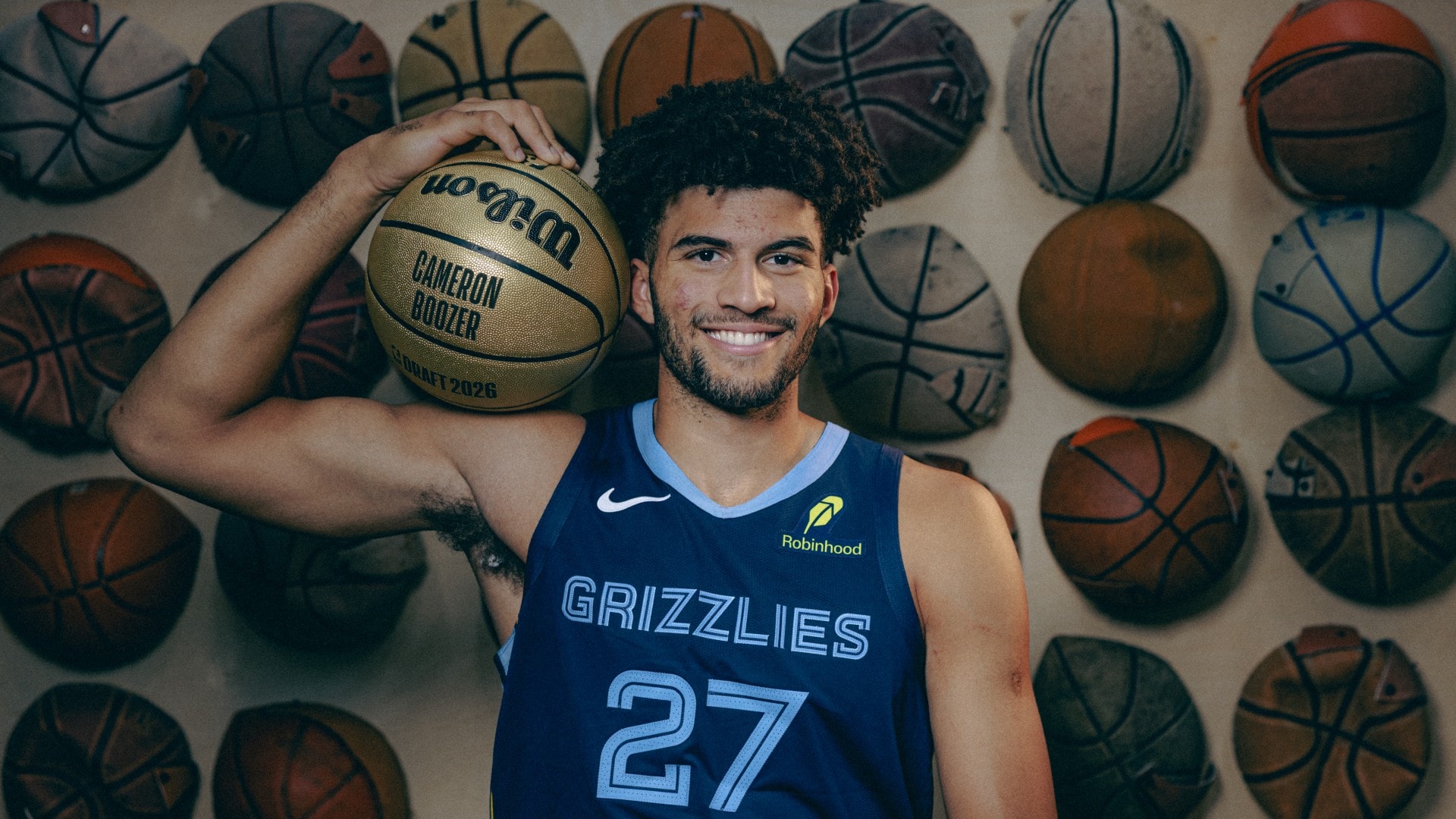
For most 19-year-old rookies, a solid first week means surviving defensive assignments, learning where to stand and avoiding the mistakes that veteran opponents immediately target. Cameron Boozer has already skipped several chapters of that learning curve. In his fifth regular-season appearance, the Memphis forward posted 18 points, 12 rebounds and 12 assists, helping to turn a tight road game into a comfortable 21-point victory.
The age is what makes the line extraordinary. Boozer was 19 years and 103 days old on October 29. Only Josh Giddey has recorded a triple-double at a younger age, doing it at 19 years and 84 days in January 2022. Boozer is therefore the second-youngest triple-double player in NBA history, and the youngest to achieve the feat in a win. He also passed Victor Wembanyama's previous age mark for a frontcourt player. Those are specific historical distinctions, not an argument that a single game already makes him better than either player.
It was not simply a night of accumulating rebounds after missed shots. Twelve assists from a forward demand repeated good reads: finding shooters before the defense recovers, making decisions against pressure and resisting the temptation to force his own scoring. Boozer also connected on four of five attempts from three-point range, an especially valuable contribution for a Memphis team trying to create room around its size. He finished with a plus-20 margin in 28 minutes, another indication of how well the team functioned while he was on the floor.
The No. 3 selection in the 2026 draft arrived in Memphis with major expectations after a dominant season at Duke. But the difference between prospect reputation and NBA production is enormous. NBA defenders are bigger, rotations are faster and every early success becomes a scouting report for the next opponent. Boozer's combination of rebounding, passing and timely perimeter shooting offers a much more compelling early signal than points alone.
Only a handful of players have registered a triple-double within their first five NBA games, a group that includes Oscar Robertson, Art Williams and Ben Simmons. That is remarkable company, but not a career forecast. The real test is whether Boozer can keep creating efficient opportunities once teams deliberately take away his first passing options. Memphis will gladly accept that as its next problem. Five games into his professional career, its rookie is already forcing opponents to prepare for him as a decision-maker, not just a scorer.

Memphis turned a halftime stalemate into a shooting and depth clinic

The final score makes this look like a routine blowout. It was not. Portland and Memphis reached halftime tied 58-58, and the Trail Blazers had enough attacking rhythm to believe their unbeaten start would continue. Deni Avdija had already supplied 13 points by the break, while Boozer had matched that total for Memphis. For two quarters, the matchup felt balanced.
The third quarter exposed the difference between producing a few good possessions and sustaining them. Memphis broke out of the tie with a 12-2 burst that included a Jaylen Wells three-pointer. Portland managed to get back within two, but the Grizzlies immediately answered with ten consecutive points, building an 87-75 advantage late in the period. That second response mattered more than the first run: it showed Memphis could withstand a counterpunch without losing its offensive structure.
Portland was still within eight entering the fourth. Then Zach Edey hit a three, Ty Jerome supplied a sequence of important baskets and Memphis constructed another decisive run. A 13-0 surge pushed the lead to 111-89 with just over five minutes remaining. The Grizzlies won the fourth quarter 33-20 and the entire second half 66-45. What had been an even game at the break became a convincing win because Memphis repeatedly punished the stretches when Portland could not buy a basket.
The three-point contrast tells much of the story. Memphis made 18 of 42 attempts from beyond the arc, a 42.9% success rate. Portland hit only 12 of 49, or 24.5%. That is six fewer makes despite seven additional attempts, an 18-point gap in three-point scoring alone. One cold shooting night does not prove a team has a structural flaw, but when the misses are paired with an opponent's waves of balanced scoring, every defensive mistake becomes more expensive.
Boozer and reserve Isaiah Stewart each scored 18, Cedric Coward added 17 and Edey contributed 13. GG Jackson scored 12, while Jerome, Wells and Quinten Post also reached double figures. Eight different Memphis players scored at least ten points. The spread is important: the Grizzlies did not need a 40-point eruption from a single star or an impossible shot-making stretch from one bench player. They generated pressure from several places, which made Portland's attempts to adjust more complicated.
There is an obvious caution here. Shooting percentages fluctuate, and a 5-0 record is a very small sample. Yet the game revealed an identity worth monitoring. Memphis had size, multiple secondary scorers and a rookie who could move the ball before a defense was set. That combination is a more sustainable reason for optimism than a perfect record on its own.
Ja Morant's first meeting with Memphis ended with the worst possible question

Ja Morant had already tried to reduce the emotional temperature before tipoff. His first meeting with Memphis since the summer trade was, in his description, another game on the schedule. He had also said there were no harsh feelings toward his former team. It was a sensible approach for a player trying to establish a new identity in Portland rather than replay every argument from the final years of his Grizzlies tenure.
On the court, the reunion was more awkward. Morant scored 14 points, collected two rebounds and handed out three assists in 23 minutes. He shot six of 14 from the field. There were glimpses of the aggressive driving and creativity that made him a Memphis favorite, but not enough to reverse the game's direction. Then, with 7:46 remaining in the fourth quarter, a left hamstring issue ended his night. He did not return.
Portland coach Micah Nori said afterward that Morant had felt a twinge and was being evaluated. That is the extent of the reliable medical picture immediately after the game. A twinge can describe a range of problems, and neither the team's decision to hold him out nor the fact that he walked off the court establishes a recovery timeline. Until Portland provides further information, declaring that he will miss weeks or that he is definitely fine would be guesswork.
The symbolism was unavoidable. Memphis selected Morant second overall in 2019, watched him win Rookie of the Year and later Most Improved Player, and built one of its most exciting recent teams around his explosiveness. At his scoring peak in 2021-22, he averaged 27.4 points per game. But injuries, suspensions and a deteriorating final chapter changed the direction of the partnership. The June 29, 2026 trade sent him to Portland in exchange for forwards Jerami Grant and Kris Murray, giving both organizations a chance to start over.
Portland's version of Morant is not supposed to carry the same nightly burden he once shouldered in Memphis. With Damian Lillard, Deni Avdija and other ball-handlers available, the Blazers can spread initiation duties and ask Morant to attack the moments when a defense is vulnerable. He entered the game averaging 16.3 points and 6.3 assists during Portland's 3-0 opening. That context makes the injury frustrating: the early evidence suggested he was finding a useful role without having to dominate every possession.
His next medical update will matter far more than any revenge-game narrative. The Blazers need to know whether the injury is a short interruption or something that forces a meaningful adjustment to their guard rotation. Until then, Morant's personal reunion is unfinished, and his new team must resist building a conclusion around one bad evening.

The Blazers have questions; the 5-0 Grizzlies have earned attention

Portland entered the matchup 3-0, with a revamped backcourt and enough early offensive success to make the Morant experiment feel promising. The first defeat does not erase that progress. It does, however, identify two areas that deserve attention: how much reliable shooting the Blazers can create when their primary actions stall, and how their guard-heavy structure functions if one of its central pieces is unavailable.
Avdija gave Portland a strong individual performance with 24 points, nine rebounds and seven assists. He attacked, created and remained productive while other parts of the offense cooled. Damian Lillard had a much harder night, finishing with nine points on three-of-13 shooting. That contrast was especially striking after Lillard's important late three-pointer against the Lakers in Portland's previous victory. A veteran shooter can look decisive one night and struggle the next; what matters is whether the team can generate good looks when the percentages fall.
Portland attempted 49 threes against Memphis and made just 12. That volume suggests the team was willing to keep firing rather than abandon its spacing, but the box score alone cannot tell us whether those attempts were open, rushed or forced by the Grizzlies' defense. The more revealing question for the coaching staff is what happened before the shot: whether the ball changed sides, whether the defense had to rotate and whether there was an alternative when the first option failed.
Memphis, meanwhile, has become one of the league's most intriguing early stories. The Grizzlies are 5-0, matching the second such start in franchise history and their first since 2014-15. Houston is the only other remaining unbeaten NBA team. Those facts are impressive, but the most interesting element is the change in how Memphis wins. Boozer is already a creative frontcourt presence, Edey offers interior size, Coward provides another developing scoring option and the bench can keep the scoreboard moving.
That depth is why the Grizzlies' first week deserves more than a passing glance. The team has already won away from home, has survived a close first half in Portland and has shown it can separate with several different contributors. But opponents will begin tailoring their coverages to Boozer, and the schedule will eventually test whether the shooting holds up when defenses are better prepared. A young roster is not immune to inconsistency just because its first five games have gone right.
Memphis next faces Sacramento, which entered the weekend without a win, while Portland heads to Utah. Neither matchup will settle the Western Conference hierarchy. They will, however, provide the next evidence of whether the Grizzlies can keep playing with discipline and whether Portland can respond to an ugly loss without making its offensive balance dependent on Morant's immediate return.
The larger contrast is almost too neat: the former Memphis star is searching for stability in Portland, while his old franchise has started winning behind a teenager who seems comfortable doing a little of everything. Basketball seasons rarely follow such clean narratives for long. On this particular Thursday, though, the scoreboard and the history books told the same story: the new Grizzlies era has arrived sooner than expected.

Memphis has a rookie making history, a balanced rotation and a 5-0 record. Portland still has a talented backcourt, but its first defeat exposed the cost of cold perimeter shooting and made Morant's health the immediate priority. Neither five wins nor one bad night decides a season, and the severity of Morant's hamstring problem was not established after the game.
Still, the symbolism was hard to miss. Morant returned as the visiting star, left early, and watched a 19-year-old Grizzly put his name beside some of the NBA's youngest record-setters. The rematch is months away. The next chapter for both teams has already begun.



















