

Jalen Williams Leaves on Stretcher as 3–0 Thunder Lose Three Players
GOATIFYOklahoma City won its third straight game on Sunday night, but the final score barely captured the mood inside Paycom Center. The Thunder beat the Los Angeles Clippers 108–101 on October 25, then watched All-Star Jalen Williams leave on a stretcher after a frightening fall with 1:14 remaining. Williams acknowledged the crowd with two thumbs up as he was taken away. There was no confirmed diagnosis immediately after the game, and any timetable for his return remained unknown.
It was the third injury interruption of the evening for a team that had begun the season 3–0. Cason Wallace exited with left shoulder soreness and Jaylin Williams with right wrist soreness, both in the opening quarter. Shai Gilgeous-Alexander's 34 points, a timely bench response and Oklahoma City's trademark turnover pressure were enough to secure the victory. Whether those same strengths can cover multiple uncertain availability situations is now the more consequential question, especially with Phoenix visiting Monday.
Jalen Williams' injury overshadowed a third straight win
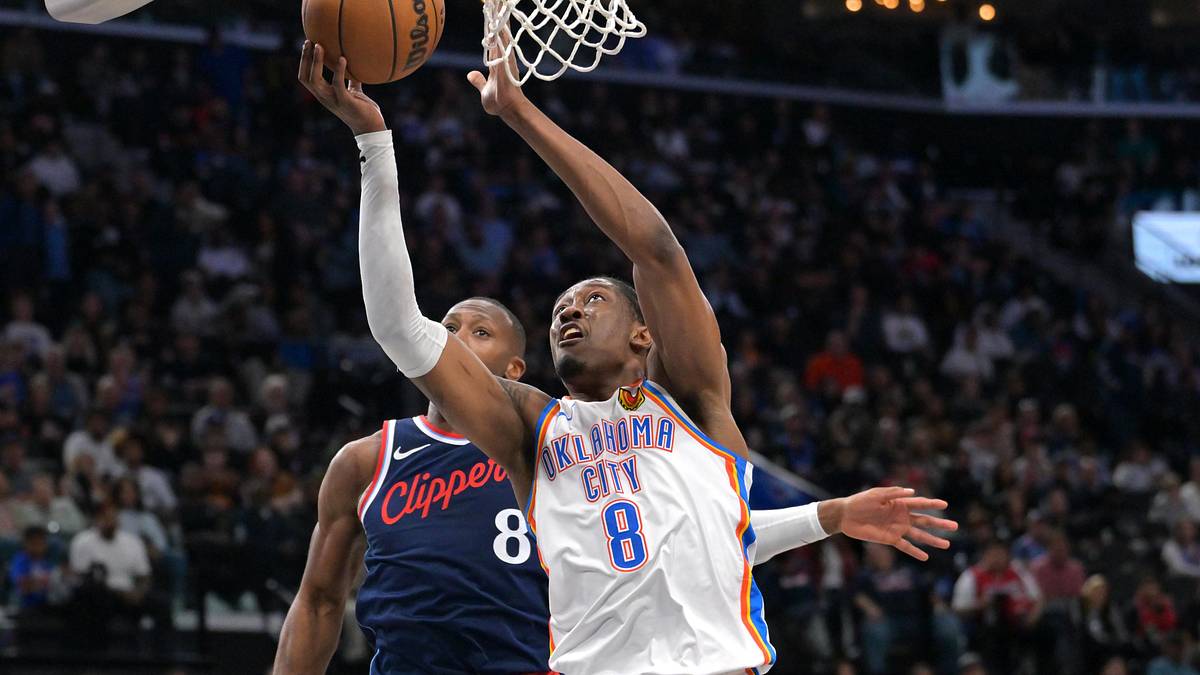
The play that changed the night came in the final 74 seconds. Williams attacked the basket, absorbed contact and landed awkwardly beneath the rim. Medical staff attended to his lower left leg while players from both teams gathered nearby. The stoppage lasted roughly five minutes before the Thunder finished the game. Williams' thumbs-up gesture offered the arena a moment of reassurance, but it did not establish the nature or seriousness of the injury.
That distinction matters. A dramatic scene can invite instant conclusions, particularly when a player leaves on a stretcher. Oklahoma City had not announced a diagnosis by the end of the night. Coach Mark Daigneault indicated that the team expected more information Monday, making the next medical update more useful than any interpretation of a replay. Gilgeous-Alexander was visibly emotional afterward and spoke about the human cost before discussing the basketball consequences.
Williams is not an interchangeable wing. His value comes from the combination of secondary creation, perimeter size and defensive versatility. When Gilgeous-Alexander draws two defenders, Williams can punish the resulting mismatch without requiring a completely new offensive structure. On defense he gives the Thunder another player capable of contesting a shot, switching assignments and recovering into the passing lanes that fuel their transition game. Losing any one of those functions is manageable; replacing all of them simultaneously is much harder.
The context is especially difficult because availability had already defined much of Williams' previous season. Wrist and hamstring problems limited him to 33 regular-season appearances in 2025–26, after he had been an All-Star and an important contributor to Oklahoma City's 2025 championship. His return was supposed to restore continuity to the Thunder's strongest lineups. Instead, the first week of the new season has produced another period of uncertainty. For now, the responsible conclusion is not a projected absence, but that Oklahoma City must prepare for several different possibilities.

Wallace and Jaylin Williams created two different depth problems
The other two departures came much earlier. Guard Cason Wallace was ruled out with soreness in his left shoulder, while forward Jaylin Williams left because of right wrist soreness. Both exited in the first quarter and did not return. Those are the team's stated game-night descriptions, not evidence of particular structural injuries or long recoveries. Their statuses for Monday's game were not established by the initial announcements.
Wallace is important because Oklahoma City's defense works best when ball pressure comes from several places rather than from a single specialist. He can pick up a guard early, navigate screens and help force an offense into its second or third option. Alex Caruso can take some of those assignments, and Ajay Mitchell can provide minutes and energy, but shifting every matchup onto one veteran changes how the rest of the rotation functions. It also reduces the freedom to deploy smaller groups without surrendering point-of-attack resistance.
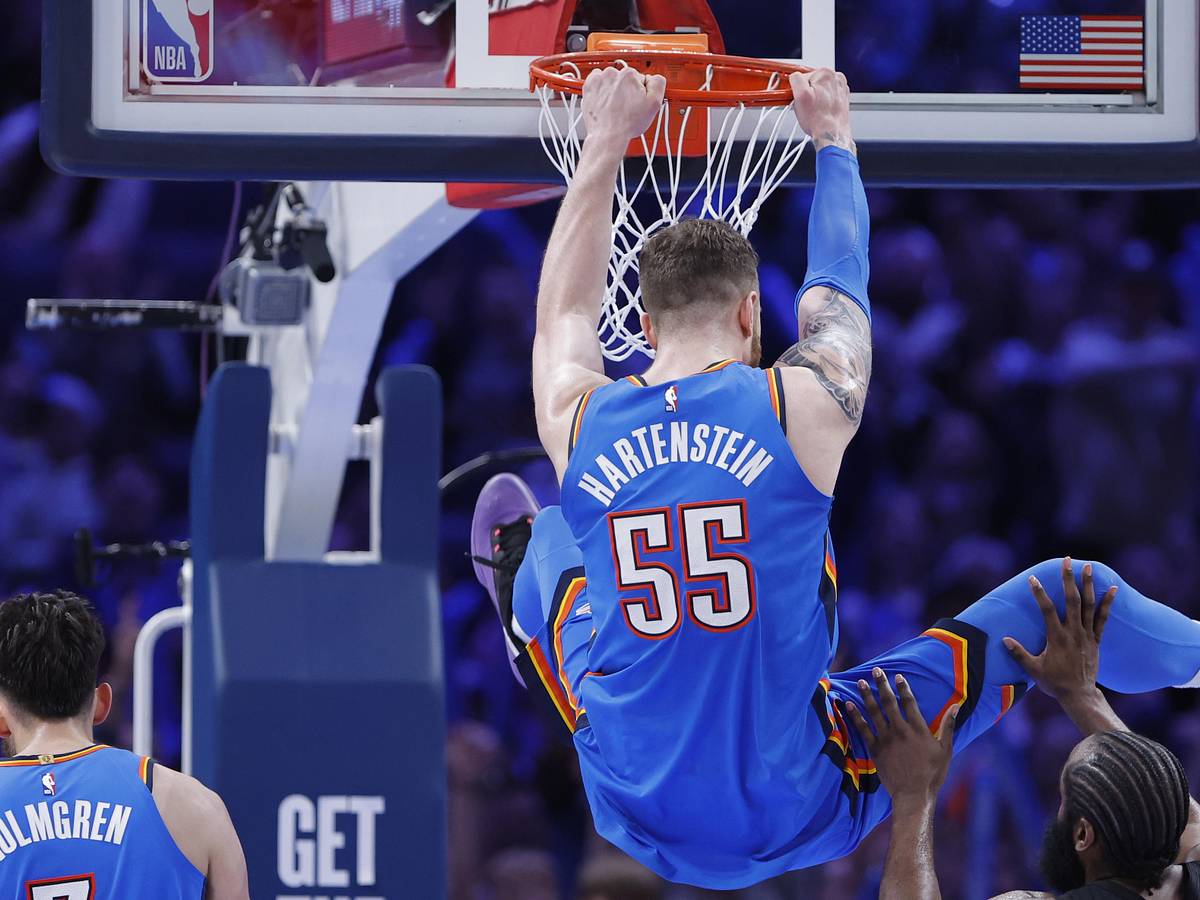
Jaylin Williams presents a different challenge. His value is not measured only by points or rebounds: he can operate as a passing connector, give the frontcourt another physical body and help maintain spacing around the team's primary creators. When he is unavailable, Chet Holmgren and Isaiah Hartenstein may have to cover more combinations of size and skill, while coach Daigneault has fewer ways to stagger his bigs. The exact adjustment depends on the opponent and on who is healthy enough to play.
The shared lesson is that three injury headlines should not be treated as one medical story. Jalen Williams' late incident was visibly alarming, whereas the official descriptions for Wallace and Jaylin Williams were soreness. Each requires its own assessment. The basketball problem, however, is collective: Oklahoma City's preferred identity depends on waves of competent defenders and quick decisions across positions. If multiple rotation players are unavailable together, that identity becomes more expensive in minutes, workload and tactical compromises.
Shai's 34 points and 26 forced turnovers kept the Thunder unbeaten
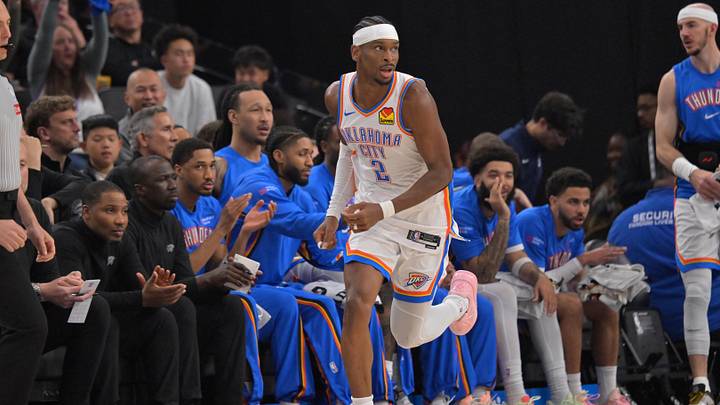
There was a real basketball victory underneath the injury concerns. Gilgeous-Alexander scored 34 points on 13-of-26 shooting and made seven of eight free throws. Ajay Mitchell supplied 18 points off the bench, hitting eight of 14 attempts while adding six rebounds, four assists and three steals. Hartenstein posted 12 points and 12 rebounds. Those contributions gave Oklahoma City several ways to generate offense after its rotations were disrupted.
The Clippers made the contest uncomfortable. Oklahoma City trailed 64–57 in the third quarter, then received a 20–10 burst from its bench to regain control. Alex Caruso's timely three-pointer helped reset the game, but Los Angeles refused to disappear. Derrick Jones Jr. later cut the margin to 97–96 with a three-pointer inside the final three minutes. The Thunder had to execute down the stretch rather than cruise to a routine home win, and Gilgeous-Alexander's late free throws helped close it out.
The most revealing number was not a shooting percentage. Los Angeles committed 26 turnovers, and Oklahoma City converted them into 38 points. That is the mechanism behind much of the Thunder's defensive identity: crowd the ball, close passing windows, force a rushed decision and attack before the defense can get organized. The Clippers entered the matchup with ball-security concerns, and those concerns became a major source of Oklahoma City's scoring. Darius Garland recorded 16 points and 11 assists, but Los Angeles struggled to sustain clean possessions against the pressure.
Still, turnover scoring is not a substitute for a complete offense. A team cannot assume every opponent will give it 26 extra opportunities, especially if its own best defensive personnel are unavailable. The positive sign was Mitchell's ability to create efficient offense in a difficult game and Hartenstein's work on the glass. The warning was that a narrow fourth-quarter margin can erase the cushion built by defensive chaos. Oklahoma City earned its 3–0 start, but the performance also showed how quickly the margins can tighten.

Phoenix arrives Monday, leaving almost no time to adjust
There is no convenient break in the schedule. The Thunder host Phoenix on Monday, one night after the Clippers game. That short turnaround limits practice time and forces the coaching staff to prepare for multiple availability scenarios before full medical information is public. The first task is simple: determine who can safely play. The second is considerably more complex: rebuild the minute distribution without sacrificing the defensive aggression that has made Oklahoma City so difficult to face.
If Jalen Williams cannot play, Gilgeous-Alexander may need to carry more of the initial creation burden, with Mitchell receiving additional chances to initiate possessions. The challenge is to avoid turning every half-court trip into an isolation. Oklahoma City's best offense has a rhythm of drive, kick, quick reversal and a second attack. Keeping that movement alive would protect Gilgeous-Alexander from unnecessary wear and make the Thunder less predictable when defenses load up on him.
The frontcourt choices matter just as much. Holmgren provides vertical protection and spacing, while Hartenstein supplies screening, rebounding and short-roll decisions. Jaylin Williams' availability could influence how often those two play together or separately. Wallace's status could similarly change Caruso's defensive assignments and Mitchell's workload. None of these adjustments is a forecast of a player's absence; they are the contingencies a staff has to map when three contributors leave the same game.
It would be tempting to frame a 3–0 opening as proof that the Thunder can withstand anything. A better reading is narrower. Oklahoma City has already shown it can survive one difficult night through star scoring, bench production and disruptive defense. It has not yet shown how those strengths hold up over weeks if the roster is thinner. Monday's medical updates and the Suns game will offer the first meaningful evidence. Until then, the most important result from Sunday may be information rather than another number in the win column.
Oklahoma City's 108–101 win was impressive in isolation: Gilgeous-Alexander scored 34, Mitchell gave the bench a lift, and 26 Clippers turnovers became 38 Thunder points. But the sight of Jalen Williams leaving on a stretcher changed what mattered. The team also needs clarity on Wallace's shoulder and Jaylin Williams' wrist before anyone can responsibly estimate the impact on its rotation.
The Thunder are unbeaten, not untested. They have the star power and defensive habits to remain dangerous, yet the next challenge is managing uncertainty without asking the same healthy players to solve every problem. Phoenix arrives immediately. The standings say 3–0; the more important questions now concern health, depth and what Oklahoma City can still look like when the lineup changes.



















