

Manfred Won't Budge on MLB's Salary Cap. The Lockout Clock Is Running.
GOATIFYMajor League Baseball's newest labor fight is no longer about whether owners would like a salary cap. On November 18, 2026, commissioner Rob Manfred made it clear that ownership does not expect to approve the next collective bargaining agreement without one. For a sport whose players have rejected hard limits for decades, that is a formidable opening to the final twelve days before the current agreement expires.
At issue is a proposed $258.2 million ceiling and $180.2 million spending floor for 2028, accompanied by changes to revenue sharing and individual contracts. Manfred frames the framework as a response to widening financial disparities between clubs. The players' union sees an artificial restriction on salaries and an attempt to transfer leverage from players to owners. Neither the cap nor the floor is law or current MLB policy. They are still contested bargaining terms.
The deadline is precise: 11:59 p.m. Eastern on December 1. A lockout could begin on December 2, freezing much of the major league offseason transaction market. That would not immediately cancel any 2027 games, but the unresolved gap could become a threat to spring training and ultimately the season if it persists. What matters now is the difference between a headline-friendly cap number, the actual economic mechanics behind it and whether either side can negotiate around a principle it has declared non-negotiable.
Manfred Turned a Negotiating Position Into an Ownership Ultimatum
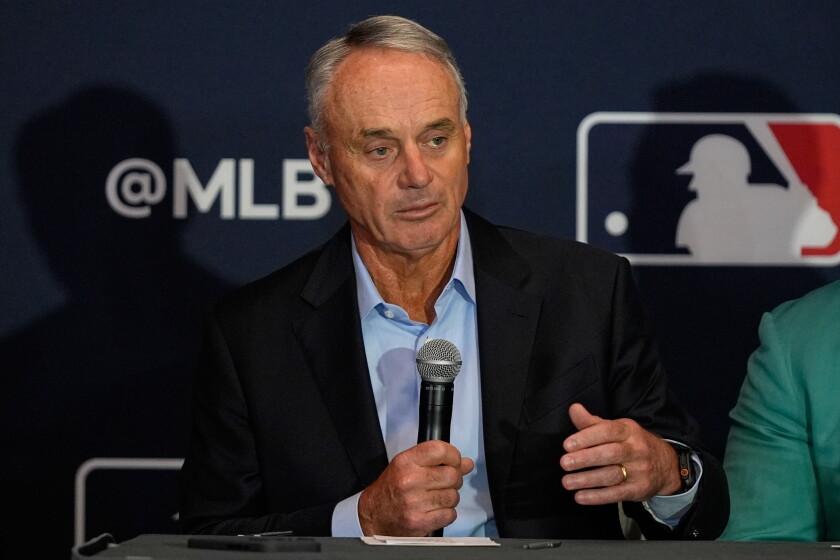
What changed at the owners' meeting on November 18 was not the existence of a salary-cap proposal. Management had put one on the table months earlier. The change was that commissioner Rob Manfred removed the easiest imagined escape route: a last-minute agreement that preserved the familiar luxury-tax system while offering smaller concessions elsewhere. He told reporters that ownership would not ratify a new labor contract without a cap and a spending floor. In collective bargaining, that is less an opening offer than a public test of how far each side is prepared to go.
There is a crucial distinction between a commissioner stating an owners' objective and baseball officially adopting a new rule. There is no enacted hard salary cap in Major League Baseball as of November 19, 2026. The numbers being discussed belong to management's proposed future agreement. Players would have to accept an economic framework, or a deal would have to emerge from negotiations, before any club could be required to operate under it. The louder the language becomes, the easier that distinction gets lost in online arguments.
The timing makes this more than an abstract dispute about how a sports league should distribute money. The existing collective bargaining agreement expires at 11:59 p.m. Eastern on December 1. Without a new agreement, owners can impose a lockout beginning December 2. That is a management-initiated work stoppage: the league closes its labor market while the parties continue to bargain. It does not, on its own, mean an entire baseball season has been canceled. But it creates an immediate barrier between players and normal offseason team-building.
Manfred presented the cap as a competitive-balance demand backed by fans, saying the league believes a substantial majority favor a maximum and minimum payroll. That gives ownership a simple public narrative: fans do not want a few wealthy clubs turning a $200 million gap into a permanent advantage. Polling can explain why a commissioner chooses that argument, but it cannot settle what the policy would do to prices, player compensation, contract guarantees or the way local revenue flows through each franchise.
The union's response is equally foundational. Players regard the ability to negotiate without an absolute team payroll ceiling as a defining economic right. A luxury tax can punish especially aggressive spending yet still let a club pay the penalty and keep adding talent. A hard ceiling is different because it becomes an actual boundary. The dispute is therefore not merely about whether the cap figure should be $250 million, $260 million or something else. It is about whether a ceiling belongs in baseball at all.
GOATIFY
GOATIFY Baseball
Baseball's labor debate has just intensified. Show your MLB fandom.


White Baseball GOAT Sweatshirt
Rep baseball’s greatest with a white GOAT graphic sweatshirt.
Shop Now ↗
White Baseball GOAT Sticker
A white baseball GOAT decal for your bottle, laptop or game-day gear.
Shop Now ↗That is why the word compromise sounded almost contradictory on Wednesday. Manfred said he was open to movement on details, while refusing to move on the very category of restriction that the MLB Players Association opposes. The union can make concessions on taxes, minimums or arbitration and still reject that category. Management can improve its floor or revenue-sharing terms and still insist on the category. Unless somebody changes that underlying position, an elegant package of side deals may never reach a ratifiable agreement.
Baseball has lived through this argument before. Management's cap ambitions helped precipitate the 1994–95 players' strike, which wiped out the 1994 World Series. That history is important without being a prediction. A potential 2026 lockout is not the same legal action as a players' strike, and owners can choose its duration while the calendar advances. Still, both camps understand that labor trust is especially hard to rebuild when the central issue looks existential to one of them.
Manfred also said the league would continue making itself available for bargaining, including around Thanksgiving. That may be sincere and tactically useful at once. If he appears ready to negotiate up to the deadline, management can argue that a stoppage resulted from union resistance. If the union points to his non-negotiable cap, it can argue that meaningful bargaining has already been boxed in. Those competing narratives will matter in the days ahead, but neither makes a negotiated economic agreement any less necessary.
The $258.2 Million Cap Is About Team Behavior, Not Just One Number

The proposed top line is easy to remember: a $258.2 million hard payroll cap paired with a $180.2 million floor, aimed at the 2028 season under the November bargaining framework. But those totals are not equivalent to a box-office accountant taking the money a club pays this year and multiplying it by a single percentage. The plan uses payroll figures tied to luxury-tax calculations, which generally value multiyear contracts by average annual amount rather than the cash deposited during one specific season.
For the high-spending end of the sport, that accounting distinction is enormous. An expensive long-term contract is not automatically made harmless by deferring dollars or scheduling a small cash payment in one season. Clubs have already spent years constructing rosters under rules that did not include this proposed hard ceiling. Owners would need to negotiate how existing guarantees, trade protection, future obligations and possible transition rules could coexist with a new maximum. Telling a team to cut a headline amount is not the same as identifying a legally and competitively workable way to do it.
Management supplied a striking comparison using 2026 payrolls measured against the proposed 2028 cap. On that hypothetical basis, the Dodgers would be about $174 million above the ceiling, the Mets $108 million, the Yankees $83 million and the Phillies $64 million. Those figures illustrate the size of the behavioral change the league seeks. They are not current penalties, required 2026 salary reductions or evidence that existing contracts have been voided. A future agreement would have to specify exactly how compliance would be achieved.
In a universe where that framework took effect, the challenge for Los Angeles would not be simply whether it could afford elite players. The Dodgers clearly have the resources to assemble a star-heavy roster under the present system. The challenge would be how many large average annual values could coexist inside an enforceable threshold. A club would have to decide which positions to staff with inexpensive developing players, where to sacrifice depth, and how much flexibility to keep for midseason upgrades. New York's clubs and Philadelphia would face versions of the same constraint.
GOATIFY
GOATIFY Baseball
Payroll rules may change. Your baseball loyalties do not.


White Baseball GOAT Dad Hat
A white baseball GOAT design for ballpark days and everyday fan style.
Shop Now ↗

Gold Baseball GOAT Sweatshirt
Rep baseball’s greatest with a gold GOAT graphic sweatshirt.
Shop Now ↗

The floor pushes in the opposite direction. A $180.2 million minimum would appear to force lower-spending teams to commit more money to major league payroll rather than indefinitely pocketing shared revenue. The proposal includes a transition feature allowing a club to spend as little as 90 percent of the floor in 2028, or about $162.18 million, provided the spending obligation is satisfied over a three-year period. Those details matter: the floor's effectiveness depends on exactly when money must be spent, which expenditures qualify and what happens if clubs fail.
A spending floor can help players in certain markets without necessarily offsetting a hard cap's effects elsewhere. It might create more viable destinations for experienced free agents or encourage clubs that historically operated cheaply to bid for immediate talent. It might also redirect money from a handful of very expensive rosters toward teams previously content to maintain much smaller payrolls. But whether that produces higher total player compensation depends on the full system, not merely the difference between two dollar figures.
The proposal also contains constraints on individual contracts and a plan to share local media revenue more evenly. These are not minor footnotes. A salary cap without income sharing can squeeze spending while leaving revenue inequality almost untouched; sharing media receipts changes the business incentives of the clubs themselves. Yet the exact definition of baseball-related revenue is disputed. A promise that players and management will split revenue fifty-fifty is difficult to evaluate if the parties do not agree on which receipts or costs enter the calculation.
Fans should therefore watch for a concrete, integrated offer: transition relief for existing deals, treatment of guaranteed salary, local-media revenue rules, how an individual contract limit works, floor enforcement and projected leaguewide pay. It is tempting to pick a side on the cap number alone because the figure makes a clean social-media headline. Actual bargaining turns on how all those rules interact and whether they create a system both players and thirty ownership groups will accept.
The Players' Counteroffer Addresses Cheap Teams Without Accepting a Ceiling
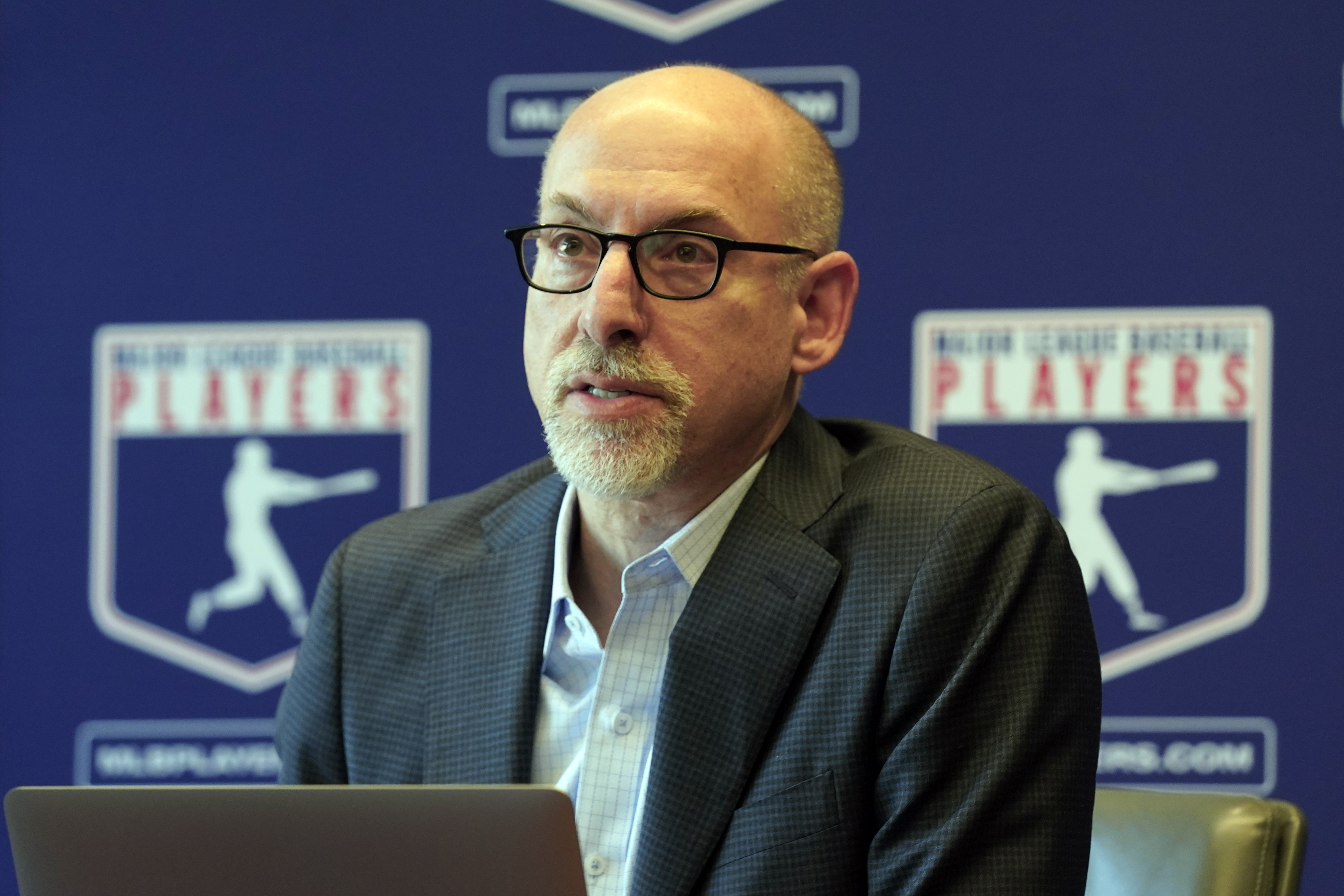
Calling the players' position a rejection of competitive balance is too simple. Their objection is to management's preferred instrument. The union has proposed its own mechanism aimed at clubs that refuse to spend: a competitive integrity tax on very low payrolls. It has also pushed for a higher luxury-tax threshold and expanded salary-arbitration rights. These ideas preserve a basic ability for willing owners to spend above a tax line while adding pressure on those who choose not to invest in their major league roster.
The distinction becomes clearer when a fan imagines two problems separately. Problem one is an owner with unusually large resources, whose spending can create a deep and resilient roster. Problem two is an owner who receives league revenue but deploys very little on players and leaves the roster thin for seasons at a time. A hard cap is built primarily to constrain the first case, while a floor and low-payroll penalties are designed for the second. Both can affect competitive balance; neither is a guarantee that front offices will draft, develop or manage well.
Interim MLBPA leader Bruce Meyer represents a membership whose careers vary wildly. A superstar on a long guaranteed contract faces one set of incentives; a veteran hoping to survive one more free-agent winter faces another; a pre-arbitration player might care most about minimum salary and access to meaningful raises. It is reasonable to ask whether the union can protect all three groups simultaneously. It is also reasonable to ask whether a hard ceiling would reduce the upside of the largest contracts and eventually drag down offers to the players immediately below them.
Players are especially wary of framing a ceiling as an act of fairness when league revenues and franchise values have kept growing. MLB reported approximately $12.9 billion in 2026 revenue. Ownership points to dramatic club-to-club disparities and the fragility of local television money. The union responds that revenue calculations need to be verified, and that increasing owners' certainty about labor costs is not identical to increasing workers' share of the sport. Both positions describe real bargaining interests, not simply a disagreement over arithmetic.
GOATIFY
GOATIFY Baseball
Every side has its case. Keep the game at the center.


White Baseball GOAT Dad Hat
A white baseball GOAT design for ballpark days and everyday fan style.
Shop Now ↗
Gold Baseball GOAT Sticker
A gold baseball GOAT decal for your bottle, laptop or game-day gear.
Shop Now ↗A proposal to split defined revenues equally also deserves scrutiny rather than automatic applause or dismissal. If the definition excludes meaningful money generated through affiliated entities, the advertised ratio can mislead. If it captures a broad and reliable revenue base, it could provide players with an economic growth link and owners with cost predictability. The unresolved issue is who audits the inputs, how adjustments occur when business conditions change and whether players accept that trade for losing the uncapped market they currently have.
Owners argue that a richer local market gives certain teams a built-in advantage that cannot be fully overcome by clever scouting. That is a serious concern when some clubs can retain mistakes, replace injured contributors and acquire costly talent without the same budget consequences as rivals. But the counterargument is that winning remains a product of development, opportunity and decisions. Money buys more chances to recover from errors; it does not turn a poorly constructed roster into a championship guarantee.
Likewise, the players' alternatives cannot be accepted on faith. A low-payroll tax has to be steep enough to alter behavior, and spending by itself does not ensure a club competes. If owners simply buy mediocre veterans to escape a penalty, the competitive improvement may be small. Arbitration expansion and higher minimums can distribute rewards earlier in a player's career, but they still need funding and a broader agreement on service-time rules. The effectiveness of each proposal depends on its thresholds, enforcement and interaction with other contract provisions.
The apparent stalemate is therefore a test of whether the sides will negotiate outcomes rather than slogans. Management wants limits at the top and enforced spending at the bottom. The union wants more spending by the bottom clubs without a binding limit on the top. There is overlap in the goal of preventing habitual non-investment. There is no overlap yet in the premise that a hard cap is necessary. That narrow but fundamental divide explains why the deadline can approach even as both parties continue to present proposals.
Milwaukee Won Without a Spending Arms Race. Now the December Deadline Threatens Everybody
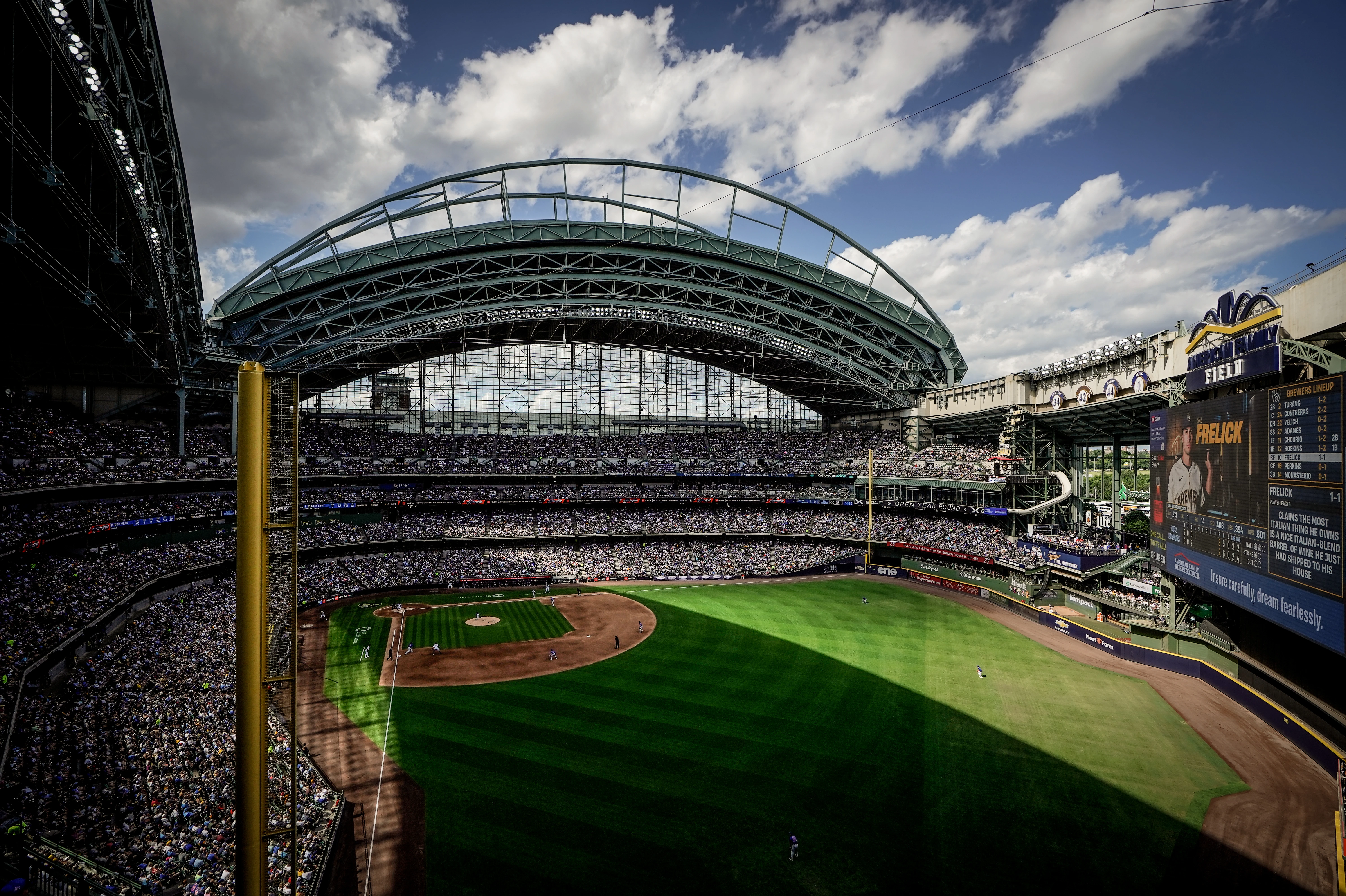
The timing of this fight carries an obvious irony. Milwaukee has just won the 2026 World Series, becoming baseball's first small-market champion in more than a decade under the league's own framing. The Brewers beat Tampa Bay in five games to deliver the franchise's first title, then returned home to an extraordinary celebration. Fans watched a team built around development, pitching, defense and targeted roster moves achieve something that heavy spending alone could not guarantee for many richer clubs.
That story can be used in two opposing arguments, and neither should be flattened. The union can point to Milwaukee as evidence that an uncapped league is not an automatic procession of the teams with the largest payrolls. Smart scouting, timely player progression and cohesive execution can overcome financial disadvantages. Management can point to the rarity of that outcome and ask why a smaller-market club should need an almost perfect series of decisions to contend while a wealthier rival can purchase expensive insurance against injuries and mistakes.
Which interpretation carries more weight depends on the question. If the claim is that small-market winners are impossible, the Brewers have just disproved it. If the claim is that smaller markets are at a systematic disadvantage over a decade of roster-building, one championship does not settle the debate. Competitive balance is measured across many seasons, not only by the name engraved on the latest trophy. A fair test would look at sustained playoff access, player development, retention opportunities, revenue and how frequently expensive teams can recover from poor decisions.
GOATIFY
GOATIFY Baseball
From Milwaukee to the majors, baseball belongs to fans.

Gold Baseball GOAT Dad Hat
A gold baseball GOAT design for ballpark days and everyday fan style.
Shop Now ↗
White Baseball GOAT Sticker
A white baseball GOAT decal for your bottle, laptop or game-day gear.
Shop Now ↗White Baseball GOAT Sweatshirt
Rep baseball’s greatest with a white GOAT graphic sweatshirt.
Shop Now ↗Baseball also needs to distinguish the immediate labor calendar from the imagined worst-case scenario. The current agreement ends late on December 1, with a possible ownership lockout beginning December 2. A stoppage can freeze trades and major league free-agent signings and make it much harder for clubs to conduct normal offseason planning. It does not erase the schedule the moment midnight arrives. The danger grows as negotiations consume the winter, because the time available for a normal ramp-up to spring training and a full 2027 season shrinks.
For fans, that first phase can feel deceptively quiet. There are no regular-season games to miss in December, so early headlines may focus on unsigned veterans, stalled trades and the absence of transactions. For players, the practical issues are immediate: unsigned free agents cannot settle their destinations, clubs cannot build rosters normally, and uncertain work conditions make long-term planning more difficult. Minor league rules and team-controlled operations can differ from major league restrictions, so it is unwise to claim that every baseball activity stops automatically.
Spring training is when the abstract numbers would begin colliding with the actual baseball calendar. If the sides were still divided by February, clubs would need to consider reporting dates, preparation, exhibition schedules, insurance and the logistics of a shortened offseason. If negotiations extended into March, the possibility of missed regular-season games would become far more concrete. None of that is inevitable on November 19. It is the logical consequence of allowing a very large economic disagreement to survive successive deadlines.
There are several indicators worth tracking before then. A serious bargaining breakthrough would likely include a clearly defined league revenue pool, enforceable spending obligations for the lowest-payroll clubs and some workable treatment of existing long-term contracts. If ownership started to consider a luxury-tax system with much stronger penalties instead of a hard cap, that would mark movement on its red line. If the union began discussing any ceiling at all, that would mark an equally profound shift in its position. So far, neither party has publicly embraced that degree of change.
The strongest position for an interested fan is to reject the false choice between rooting for owners and rooting for individual players. A healthy baseball economy should reward the people who produce its entertainment, create credible competitive opportunities across markets and maintain enough labor stability that supporters can trust the season will happen. A cap might be part of such a system, or it might simply transfer bargaining power to owners. A tax-and-floor alternative might help smaller markets, or it might not change the underlying incentives sufficiently. That is the evidence the next agreement must address.
Milwaukee's fans are still celebrating their first championship. The Dodgers, Yankees, Mets and thirty front offices want to plan their next moves. Players want the right to bargain for their market value. Ownership wants a different economic structure. Those interests are not naturally aligned, but the calendar does not negotiate for them. With less than two weeks remaining before the existing agreement expires, the central question is no longer whether a salary-cap confrontation is possible. It is whether either side can find a design that makes continuing to play baseball more attractive than winning the labor argument.
Manfred's November 18 message sharpened baseball's bargaining problem rather than resolving it. A 2028 cap and floor could change how every club prices its roster, particularly the Dodgers, Yankees and Mets, but the union is still pressing for a system without a ceiling. Milwaukee's recent championship complicates the claim that small-market clubs cannot win while offering no proof that structural spending disparities are harmless. Both truths can coexist.
The next evidence of progress will not be another argument about which side cares more about fans. It will be a detailed, mutually credible offer addressing payroll flexibility, low-spending teams, existing contracts and how the game's revenue is measured. Until such an offer attracts agreement, December 2 remains a realistic date for baseball's offseason business to go quiet. The final cost will depend on how long both sides prefer a standoff to compromise.
GOATIFY
GOATIFY Baseball
Support the sport you love with GOATIFY baseball gear.
Gold Baseball GOAT Dad Hat
A gold baseball GOAT design for ballpark days and everyday fan style.
Shop Now ↗White Baseball GOAT Sticker
A white baseball GOAT decal for your bottle, laptop or game-day gear.
Shop Now ↗White Baseball GOAT Dad Hat
A white baseball GOAT design for ballpark days and everyday fan style.
Shop Now ↗


















