Seven Wins, Then Three Defeats: The Midfield Problem Haunting Maresca's City
GOATIFYSeven league games into Enzo Maresca's first Premier League season in charge of Manchester City, the table offered a picture of near-perfect control. Seven wins, an apparently refreshed midfield and a manager who looked equipped to extend the club's habit of turning expensive talent into relentless results. Three matches later, that same team has lost to Aston Villa, Brighton and Nottingham Forest. The reversal is dramatic enough to invite a simple question: what changed so quickly?
There is an uncomfortable answer hiding behind City's familiar numbers. They still see more of the ball than their opponents. They still reach dangerous areas and manufacture chances. But their defensive structure is no longer protecting them when a pass goes astray or an opponent wins a duel. The possession figures are impressive; the space on the wrong side of the ball is becoming irresistible to rival teams.
Forest's 3-1 victory on November 7 was the clearest illustration yet. The problem is not that City suddenly forgot how to attack. It is that their attacking shape can leave Elliot Anderson covering an impossible amount of ground, with Enzo Fernández and Rayan Cherki providing invention that does not always come with enough defensive insurance. The international break gives Maresca a chance to rebuild the balance before a difficult run of fixtures.
Seven wins became three losses — and the possession numbers are misleading
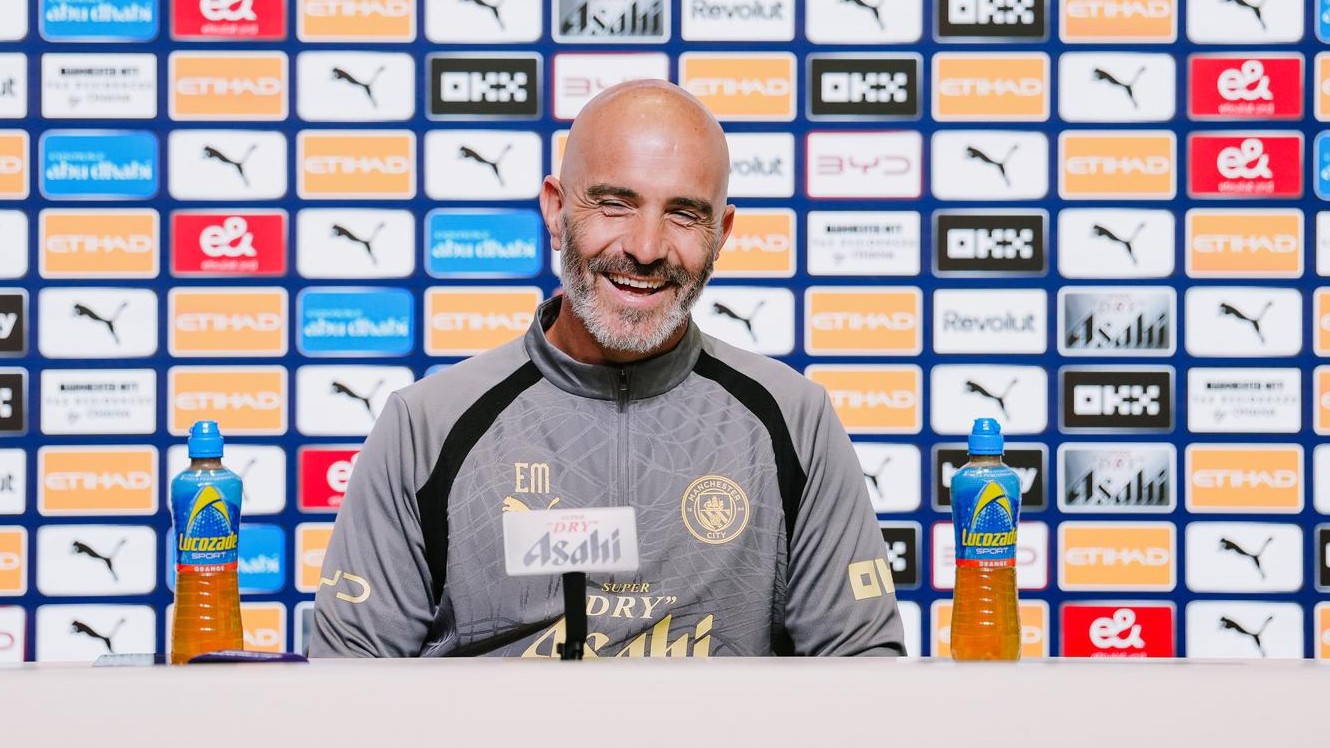
Maresca is not wrong to point out that City's defeats have looked different on the surface. At Villa Park, they had 63 percent possession and produced 15 chances against eight in a 2-1 loss. Against Brighton, they controlled 62 percent of the ball and created 21 chances to their opponents' seven, yet lost 1-0 at home. At Nottingham Forest, the possession share rose to 79 percent, but the final score was 3-1 to the hosts. Those numbers describe an attacking side that has not lost the ball altogether; they do not describe one that has controlled the decisive moments.
There is a difference between territorial dominance and a protected attack. A team can pass its way around the opposition penalty area for long periods and still be vulnerable to the first direct ball after a turnover. City have been treating possession as a measure of authority, but their opponents have been calculating how quickly they can reach the space that possession leaves behind. The question is not simply how many chances City create. It is how costly each attacking move becomes if the ball is lost before the defensive shape has settled.
The defensive trend is harder to dismiss as a succession of unlucky afternoons. City have gone nine matches without a clean sheet and conceded 17 goals across their most recent eight, including the three shipped in Nottingham. Goalkeeping errors have contributed to that total, but there is a more persistent problem underneath. Too often the goalkeeper and center-backs are dealing with opponents who already have room to accelerate. By the time City are forced into an emergency tackle or a retreating sprint, the danger was created several passes earlier.
A possession-heavy team must manage risk precisely because it spends so much time committing players forward. If both full-backs advance, if the attacking midfielders stay high and if the holding player is pulled toward the ball, the defensive line needs unusually clean passing and immediate counterpressure. Opponents no longer need to dominate a full match to beat City. They need to survive long enough to turn two or three unprotected transitions into proper scoring chances.
The seven-match winning start is still evidence of the quality in this squad. It also makes the current weakness more striking. City were the first club in the Premier League era to win their manager's first seven league fixtures, with the run culminating in a tense 3-2 success over Ipswich. Even during that winning sequence, however, the margins were sometimes narrow. Victories can conceal structural weaknesses when an exceptional finisher or a late intervention keeps changing the scoreboard in your favor.
Maresca's challenge is to separate noisy results from repeatable warning signs. A side that consistently outshoots opponents can expect some positive correction in finishing. A side that concedes the same kind of fast break against different opponents cannot reasonably expect the issue to disappear on its own. City may score more in the next month, but unless the spaces between the midfield and back four are managed better, opponents will continue to generate high-value chances from relatively few attacks.
The table sharpens the stakes. The defeat at Forest left City six points behind Arsenal after ten league games. That gap is recoverable in November, but only if the football beneath the results is repaired. Another three matches of apparent domination and defensive exposure would leave the title-race discussion looking very different.
GOATIFY
GOATIFY Soccer
The title race can change in three weeks. Keep your football allegiance close with GOATIFY's soccer collection.

Kylian Mbappe Red Ninja Turtle Raphael with Mug
Add football personality to your coffee break.
Shop Now ↗
Kylian Mbappe Red Ninja Turtle Raphael Sticker
Add football personality to your favourite gear.
Shop Now ↗
Kylian Mbappe Red Ninja Turtle Raphael Men's Tee
A football fan design for everyday wear.
Shop Now ↗
Kylian Mbappe Red Ninja Turtle Raphael Sweatshirt
A football fan design for everyday wear.
Shop Now ↗
Kylian Mbappe Ninja Turtles football/ soccer Sweatshirt
A football fan design for everyday wear.
Shop Now ↗
Kylian Mbappe Ninja Turtles football/ soccer Mug
Add football personality to your coffee break.
Shop Now ↗Nottingham Forest exposed the gap between City's attacking plan and their defensive cover
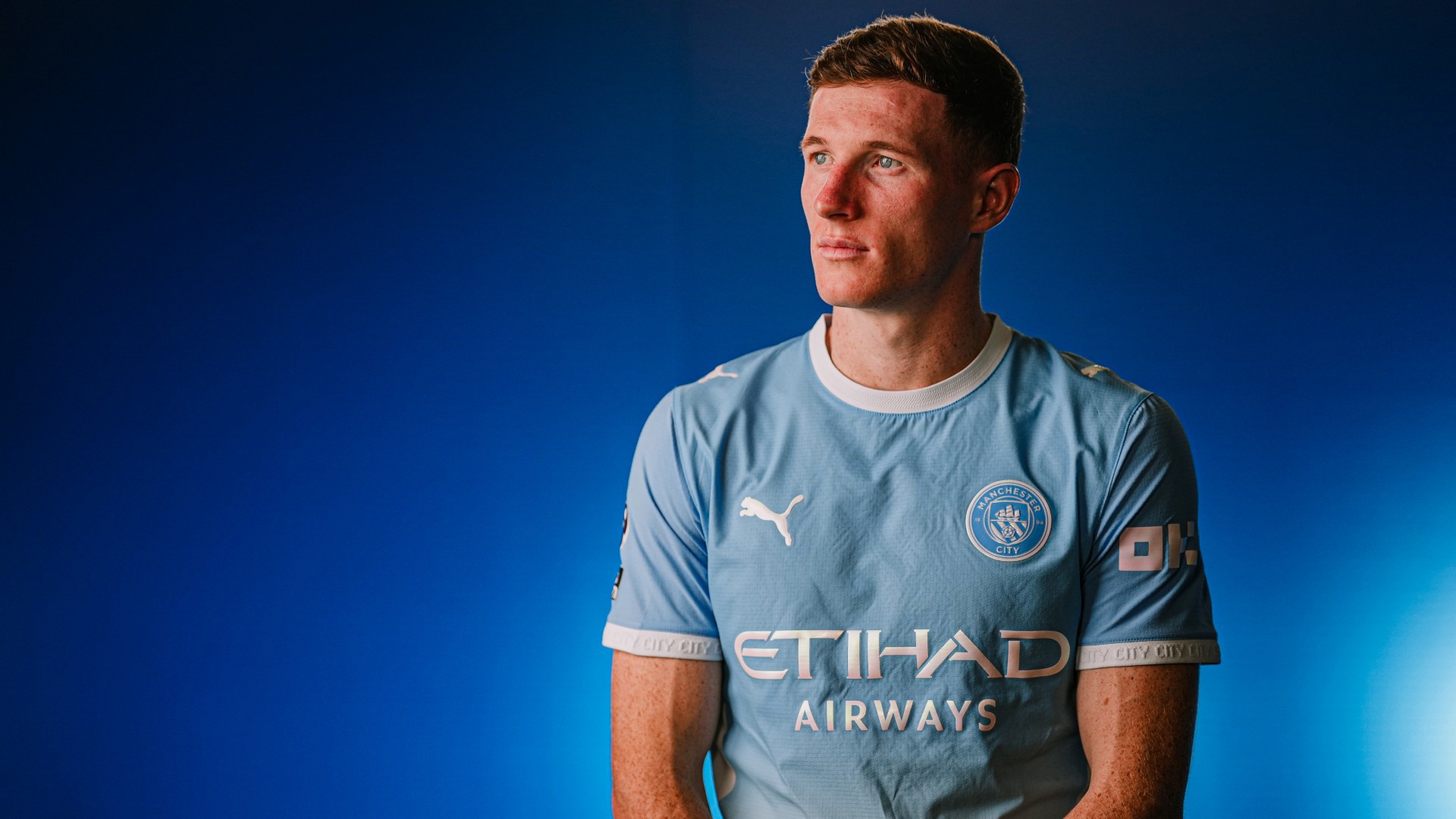
The opening 18 minutes at the City Ground turned theoretical risk into an immediate scoreboard problem. Jair Cunha won possession from Joško Gvardiol and carried the ball forward to score after six minutes. Liam Delap doubled Forest's lead in the 18th, attacking the space in front of him and finishing a powerful individual run. Those were not the goals of a side patiently outpassing Manchester City. They were the reward for winning the first challenge, moving decisively and refusing to let City recover their defensive positions.
Forest's pressure was especially effective because it targeted the moments when City's passing side was least prepared to defend. A build-up error near the back line is dangerous for anyone, but it becomes particularly costly when the nearest midfield support is occupied ahead of the ball. An opponent who steals possession does not have to beat a settled block of ten defenders. He can drive into a corridor before the nearest City player has even turned toward his own goal.
Delap added a particular menace. The former City forward did not need many touches to threaten. His running forced defenders to retreat, and that retreat changed the value of every following pass. When a center-back moves backward to protect the space behind, the opponent may suddenly have room to shoot or release a supporting runner. City were caught between stepping toward the ball and covering the next run. Forest repeatedly made that hesitation matter.
Maresca changed two players at half-time, introducing Matheus Nunes and Nico O'Reilly. City improved considerably and Rayan Cherki's excellent 52nd-minute half-volley briefly offered the possibility of a comeback. That spell matters because it shows the attacking talent is not the central concern. City could respond, increase their tempo and place Forest under sustained pressure. They even had chances to draw level, with Erling Haaland narrowly missing when the momentum had begun to swing.
Then the same weakness returned at the worst possible time. With City pressing for a second goal, Forest found another route forward. Morgan Gibbs-White drove the move and Delap finished again in the 73rd minute, restoring a two-goal advantage. The contrast was brutal: City needed a sustained passage of control to create their comeback opportunity; Forest needed one clean transition to undo it. The winner of that exchange was not the team with the prettier passing map.
The manager's post-match frustration focused on intensity and second balls. Those are not empty coaching slogans here. When a high line is already exposed by the team's attacking positions, a lost challenge becomes a shot-creation event. Winning a loose ball in midfield may only register as one duel in the match statistics, but in this system it can be the difference between 75 percent possession being useful and 75 percent possession becoming a trap.
There are small fixes available. City can keep one full-back deeper when the opposite flank pushes on, position an extra player behind the attacking line, or make the nearest midfielder prioritize counterpressure instead of joining every move. None of those changes requires abandoning an identity built on the ball. They do, however, require Maresca to value protection as much as progression. Against Forest, the balance was tilted toward the latter until the scoreboard made it too late.
It would be misleading to attribute every conceded goal to one individual error. Defensive breakdowns are collective, even when a television replay isolates a final mistake. If City's organization routinely places the last defender in a desperate recovery position, the system is asking for perfection in precisely the phase of play where football is least predictable.
GOATIFY
GOATIFY Soccer
Big Premier League moments, from counterattacks to comeback goals, deserve football-fan gear as memorable as the match.

Kylian Mbappe Ninja Turtles football/ soccer Mug
Add football personality to your coffee break.
Shop Now ↗
Kylian Mbappe Ninja Turtles football/ soccer Mug
Add football personality to your coffee break.
Shop Now ↗
Kylian Mbappe Ninja Turtles football/ soccer Mug
Add football personality to your coffee break.
Shop Now ↗
Kylian Mbappe Ninja Turtles football/ soccer Mug
Add football personality to your coffee break.
Shop Now ↗
Kylian Mbappe Ninja Turtles football/ soccer Mug
Add football personality to your coffee break.
Shop Now ↗
Kylian Mbappe Ninja Turtles football/ soccer Mug
Add football personality to your coffee break.
Shop Now ↗Anderson cannot do three midfield jobs: Maresca's international-break test
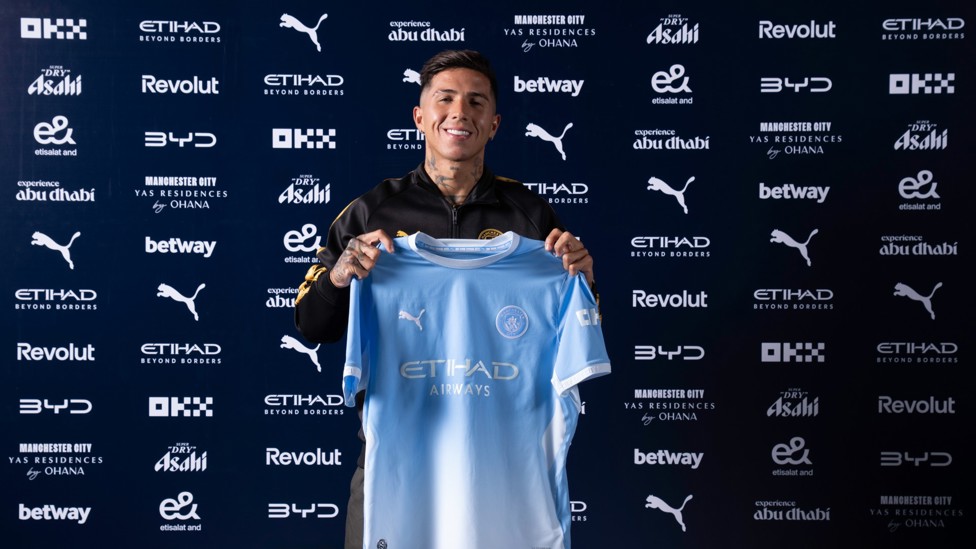
The problem at the center of the pitch begins with a contradiction. City have recruited players who can see passes others cannot, carry the ball through pressure and turn a tight attacking situation into an opening. Fernández, signed from Chelsea in a major September transfer, brings range, technical control and an appetite for arriving around the box. Cherki can produce an unpredictable touch that unbalances a defense in an instant. Those qualities are real. The difficulty is choosing where their defensive responsibilities begin when both play in advanced positions.
Anderson has often been asked to make the entire arrangement work. A powerful runner and intelligent ball-winner, the England midfielder is capable of screening the center, supporting the press and recovering into wide spaces. But no single player can provide cover everywhere at once. If he steps toward the ball, the central lane may open behind him. If he holds his position, the opponent may carry forward unchallenged. If he slides across to protect an advanced full-back, the other side of midfield becomes harder to secure.
That pressure is magnified by Rodri's departure from the club in the summer rebuild. City have lost not only a famous name but the particular balance that an elite holding midfielder can provide. Rodri's best teams used his positioning and anticipation to prevent attacks before they gained speed. Anderson offers energy, pressing ability and distribution, yet he should not be expected to impersonate every aspect of a specialist defensive conductor while also compensating for two creative partners.
Maresca clearly values the passing and invention of Fernández and Cherki. The more productive question is not whether one of them should be banished to the bench forever. It is whether their starting positions and assignments can be adjusted so the rest of the side is not continually exposed. One option is to pair Anderson with a more conservative midfielder, allowing one creator to work between the lines. Another is to make the attacking full-backs stagger their forward runs so that midfield never has to cover both open channels simultaneously.
A third possibility is to press with more specific triggers. If City cannot reliably win the first tackle immediately after a turnover, they should sometimes retreat into shape rather than chase an opponent across an open pitch. That may look less aggressive for five seconds, but it can preserve the structure for the following minute. The most effective possession sides are not necessarily those that take the most risks; they are those that know exactly when a risk is backed by sufficient numbers.
There is also the question of mentality. City's owners and management remain under the shadow of a Premier League financial-rules case. An independent panel found almost all the league's charges proved, the club disputes the findings and has appealed, and possible sanctions remain unresolved. It is reasonable to say that uncertainty is an additional pressure around the club. It would not be reasonable to claim that it caused the players to lose duels at Nottingham Forest: nobody outside the dressing room can reliably measure that connection. Tactical evidence should not be replaced by psychological guesswork.
The calendar now offers a genuine training opportunity. City do not play another league match until November 21, when Fulham visit the Etihad Stadium. Napoli then arrive for a Champions League fixture on November 24, before the league schedule sends City to Arsenal on November 29. The immediate task is not merely to beat Fulham. It is to establish an arrangement that can survive an opponent's first successful press, remain balanced when a full-back advances and give the creative players a platform rather than asking Anderson to rescue every transition.
Maresca inherited a club accustomed to solving problems with a combination of exceptional players and exceptionally clear roles. He has enough talent to change the story quickly. Yet the seven-win start cannot be the tactical reference point if it hides the vulnerabilities exposed over the past three league weekends. The reset has to be practical: who stays behind the ball, who wins the second ball, who protects the center, and what happens when the next ambitious pass goes wrong?
GOATIFY
GOATIFY Soccer
The game's biggest tactical debates never stop. Explore GOATIFY's soccer apparel and accessories for fans of the sport.

Manchester United Ratcliffe Out, Glazers Out Sticker
Add football personality to your favourite gear.
Shop Now ↗
Trashford Marcus Rashford Manchester United Tank
A football fan design for everyday wear.
Shop Now ↗
Trashford Marcus Rashford Manchester United Hoodie
A football fan design for everyday wear.
Shop Now ↗
Trashford Marcus Rashford Manchester United Mug
Add football personality to your coffee break.
Shop Now ↗
Trashford Marcus Rashford Manchester United Sticker
Add football personality to your favourite gear.
Shop Now ↗
Kylian Mbappe Ninja Turtles Real Madrid Soccer Hat
A football fan design for everyday wear.
Shop Now ↗City's three losses are not proof that Maresca's project is doomed, just as the first seven wins were not proof that every problem had been solved. The same attacking quality remains, and the season is young enough for a genuine course correction. What has changed is that opponents now have a reliable route to hurt City: challenge the midfield, attack the high line and make every turnover count.
The next month will reveal whether the manager can turn that knowledge into a sturdier team. The important number is not 79 percent possession at Forest. It is how often a Manchester City attack can end without becoming a Manchester City defensive emergency.