

Russell Had Six Clean Weekends. Hamilton Is His 2027 Blueprint.
GOATIFYGeorge Russell's 2026 Formula 1 campaign was supposed to be his opportunity to lead Mercedes into a new rules era. Instead, Kimi Antonelli has already secured the drivers' championship, and Russell has spent a frustrating year explaining why promising weekends kept ending short of their potential. The British driver has now named an unexpected source of confidence: Lewis Hamilton, his former Mercedes teammate, whose first year with Ferrari went badly before his fortunes improved dramatically in 2026.
Russell's comments, reported November 14, are not a claim that the championship can still be rescued. They are a recognition that a difficult season should not become a permanent judgment about a driver's ability. But the Mercedes case requires more than the familiar promise to come back stronger. There is a championship-winning car in the same garage, a teammate who has adapted to it better, and a clear obligation to understand why.
Six clean weekends explain Russell's frustration, not the entire gap
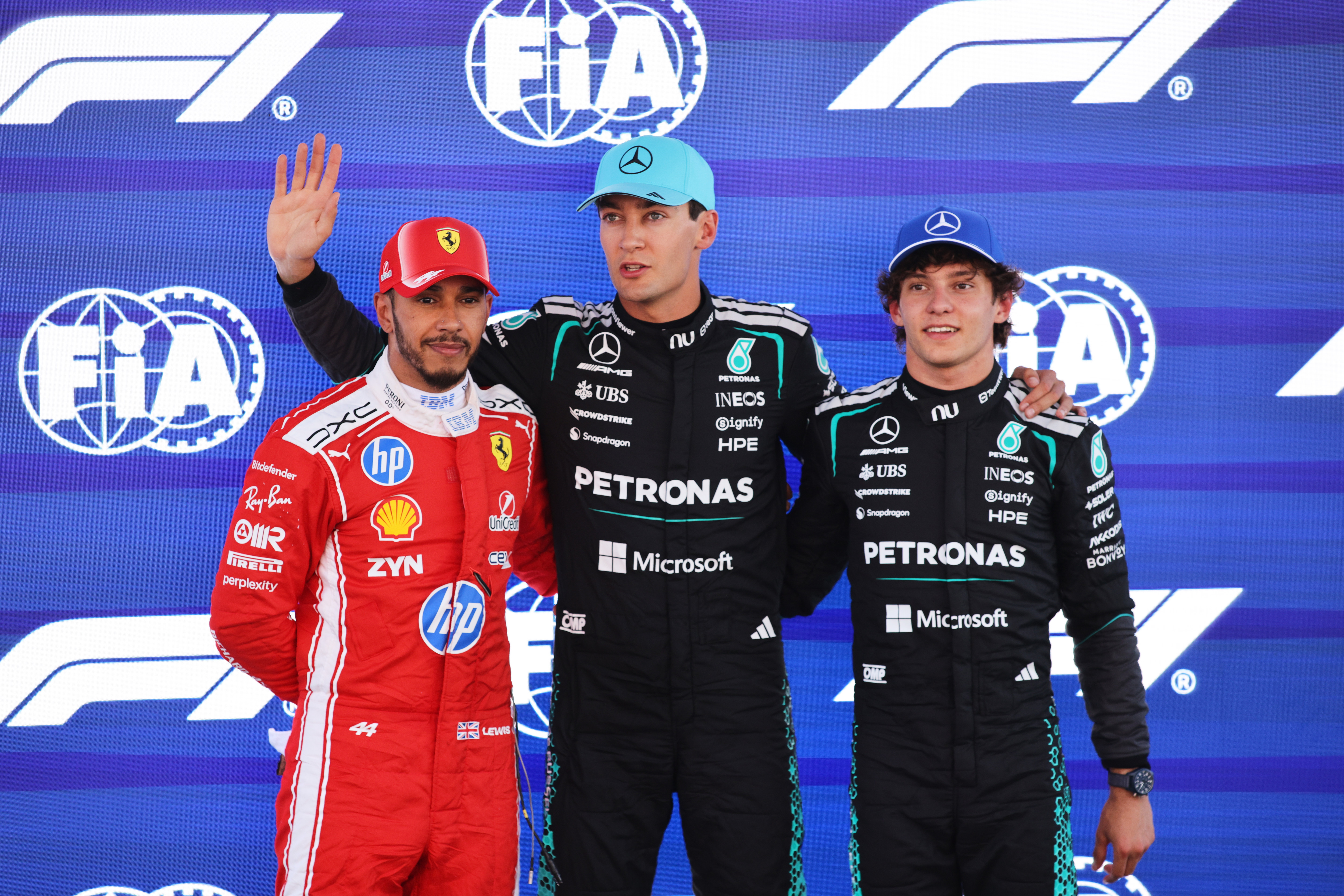
Russell has described only six race weekends in 2026 as free of meaningful disruption. The wording matters. Six trouble-free weekends is the driver's assessment of the season, not a verified tally of mechanical retirements or a claim that every other race ended with a broken car. Formula 1 has more subtle ways of destroying a result: a setup change that moves a balance out of reach, a power deployment problem, a compromised qualifying run or a technical limitation appearing at a particularly expensive moment.
The distinction is central to judging his season fairly. Russell won the opening race and has taken two more victories, enough to demonstrate that his underlying speed has not vanished. Yet isolated wins are not a championship campaign. The standard set by Antonelli is repeated performance, from the first practice session to the final stint, with fewer weekends spent searching for an answer that never quite arrives. That is where Russell's season has unraveled.
His remarks carry an emotional dimension as well. Russell described the exhausting cycle of rebuilding confidence after one setback only to face another. He singled out Mexico as a weekend when a substantial opportunity disappeared outside his control. A driver can accept a single technical failure as part of racing; repeated disturbances across consecutive travel-heavy events can turn every next session into a test of patience. The mental cost should not be trivialized simply because the sport is wealthy and glamorous.
On the other hand, frustration does not explain the whole points gap. Antonelli operates within the same team, the same 2026 regulations and broadly the same car philosophy. The precise failures and setups are not necessarily identical, but Russell has conceded his teammate adapted to the new machinery better. A serious diagnosis must therefore have room for both Mercedes' engineering problems and the driver-car mismatch. Declaring one driver unlucky and the other merely fortunate would diminish the difficulty of Antonelli's achievement.
GOATIFY
GOATIFY Formula 1
Russell's difficult 2026 highlights the fine margins of Formula 1 race setups. Browse GOATIFY F1 racing fan designs while Mercedes works toward a rebound.


New-generation cars can upset the instincts that years of racing have built. Brake release, steering inputs, corner rotation and throttle application are not interchangeable from one design to another. The driver who feels an immediate response to a familiar input will build confidence quickly; another might need to change habits and still find that the car behaves differently as fuel, tyres or conditions change. That is an explanation worth testing, not a fact that can be inferred from public timing sheets alone.
Mercedes should divide its review into three measurable categories: hardware issues, an overly narrow setup range and driver execution. For each compromised weekend, the engineers can ask whether the failure was preventable, whether the balance had been predicted and whether either driver's feedback could have identified it earlier. Comparisons need the same tyres, track conditions and car specification wherever possible. Otherwise, a seemingly decisive two-driver comparison can conceal as much as it reveals.
Russell's remaining races in Las Vegas, Qatar and Abu Dhabi are therefore not just ceremonial appearances after the title has gone. They are opportunities to gather the kind of evidence a 2027 challenge will require. A late podium would restore some momentum; a repeatable operating window across three very different venues might tell the engineers even more. A genuine rebound begins with the problem becoming understandable rather than merely survivable.
Antonelli mastered the W17 while Russell kept searching for its window
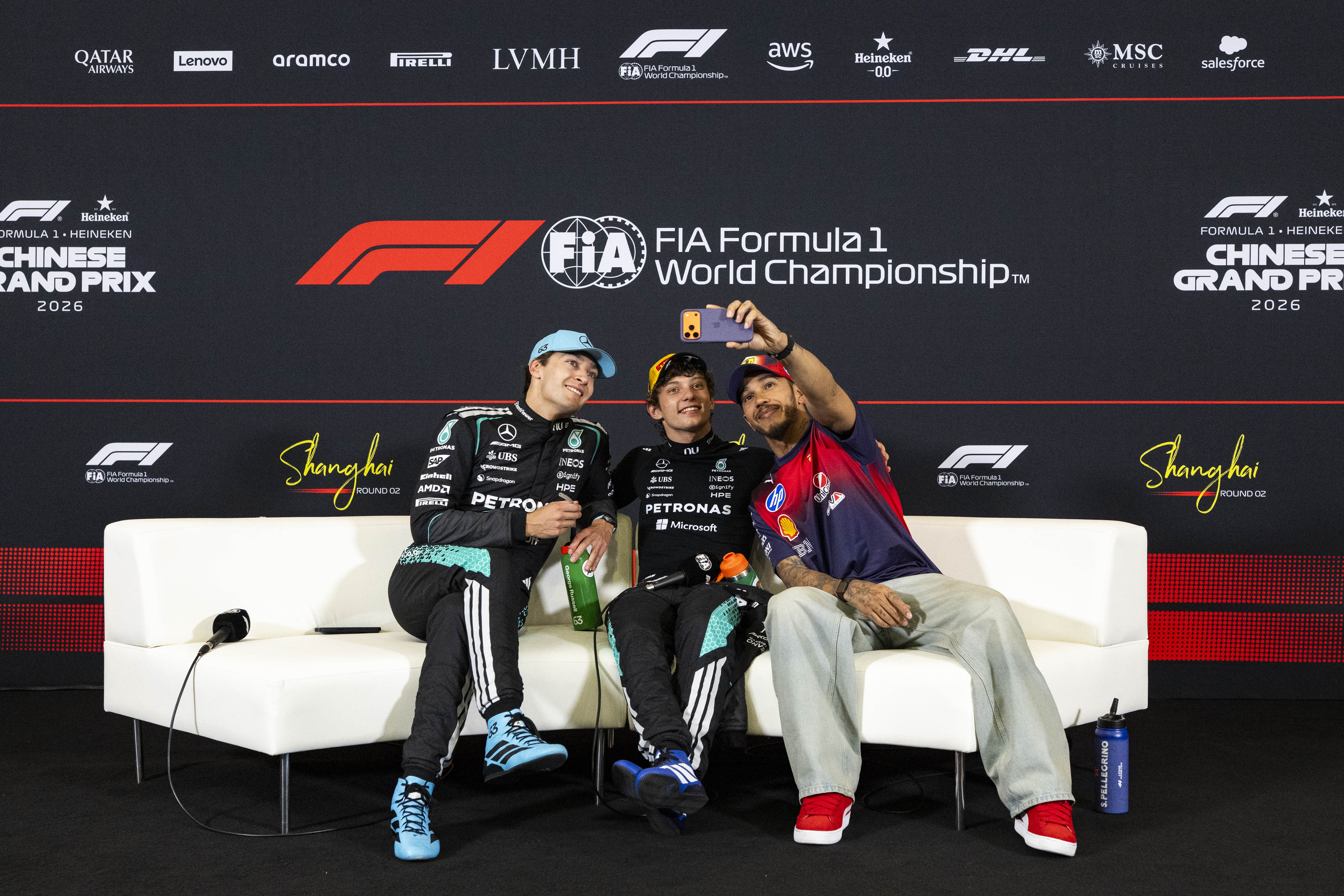
Antonelli's title creates a brutally useful benchmark for Mercedes. The official Formula 1 standings checked on November 15 show him leading with 390 points, with Max Verstappen second on 279 and Russell third on 262. The gap between the Mercedes teammates is 128 points. Ferrari's Lewis Hamilton, on 261, sits just one point behind Russell. Those figures are a more current snapshot than the gap quoted in some earlier reports and make the contrast difficult to ignore.
The headline is tempting: if one Mercedes is the championship-winning machine, the other driver's deficit must be a verdict on individual performance. Reality is less convenient. A car can have extraordinary ultimate pace while making that speed difficult to find reliably. An approach that works under one set of tyre temperatures or circuit demands might leave another driver with an unpredictable rear end, inconsistent rotation or insufficient confidence to attack the apex. The difference between a manageable limitation and a ruinous one is often small.
Toto Wolff addressed that very issue in October, acknowledging Russell's struggle to find the W17's effective operating window. In practical terms, the operating window is the range of setups, conditions and techniques in which a car produces its expected performance. If it is narrow, a small track-temperature shift or ride-height change can have disproportionate consequences. That creates a feedback problem: a driver might make a sensible adjustment only to discover it has sent another part of the car outside its ideal conditions.
GOATIFY
GOATIFY Formula 1
Antonelli's title and the W17 operating-window debate put F1 technology in the spotlight. Discover GOATIFY Formula 1 tees, hoodies and stickers.


Antonelli deserves significant credit for learning the platform quickly. Regulations that reset car behavior also reshuffle the value of each driver's habits, and he has made his adaptation count across a championship season. Delivering under the pressure of sharing a Mercedes garage with an established winner is no small feat. His title proves both that the team built formidable speed and that he knew how to deploy it when opportunities arrived.
For Russell, the proper response cannot simply be to copy every Antonelli setting. Two drivers can take different lines and braking approaches to the same lap time; forcing one to mimic the other can erase strengths without solving the basic problem. Mercedes instead needs a broader usable range, clearer feedback from Friday to Sunday and a program that distinguishes a genuine improvement from a setup that looks spectacular for one qualifying lap and collapses over a race stint.
The collaboration should work in both directions. Russell must be willing to revisit familiar techniques and make uncomfortable adjustments. Mercedes must be willing to redesign or tune the characteristics that repeatedly leave its other driver stranded. Neither party benefits from a blame contest. Engineers cannot fix a feeling unless it can be translated into a testable behavior, and a driver cannot restore confidence if the response to a complaint is merely that his teammate is faster.
That is what makes the Antonelli comparison productive rather than fatal. The factory already knows its 2026 platform can win a world championship. It now has a wealth of championship data from one side of the garage and a separate list of recurring complaints from the other. Those two datasets could become a competitive advantage in 2027 if the team is disciplined enough to learn from both, rather than deciding the issue has already been settled.
Hamilton's Ferrari rebound gives Russell a blueprint, not a guarantee

Hamilton's recovery is a powerful example because it was neither quick nor guaranteed. Russell outscored him twice during their three seasons together at Mercedes. Hamilton then made his high-profile move to Ferrari for 2025 and went through a full Grand Prix campaign without a podium. It was an extraordinary stretch for a seven-time champion, and naturally invited speculation about whether age, motivation or changing cars had left him behind.
The results in 2026 challenged that narrative. Hamilton secured his first Ferrari Grand Prix win at Barcelona-Catalunya in June, beating Russell and Lando Norris after Ferrari executed a daring strategy and the driver delivered the required pace. That was not simply a better press conference or a promising practice result. It was proof that Hamilton and Ferrari could finally put together a winning full-race performance, an achievement that no one could honestly bank on after the previous year.
The standings now show Hamilton on 261 points, 12 clear of his Ferrari teammate Charles Leclerc, who has 249. That slender lead does not guarantee his advantage will last, nor does it imply Leclerc has suddenly lost his quality. It demonstrates how quickly a fixed story about a driver's decline can become outdated. Hamilton did not need his career records rewritten to regain credibility; he needed a car and racing environment that allowed his strengths to appear consistently again.
GOATIFY
GOATIFY Formula 1
Hamilton's Ferrari comeback gives F1 fans plenty to debate before 2027. Explore GOATIFY Formula 1 gifts and racing designs.


Russell is looking toward a comparable reset. The shift to the smaller, lighter 2026 machines appears to have suited Hamilton better than Ferrari's 2025 package, while the Mercedes driver has had a much more awkward experience with the same era of regulations. Those different trajectories should discourage simplistic theories about who is inherently faster. Formula 1 rewards a combination of talent, preparation, machinery, team decisions and adaptation. When the combination changes, the order can change too.
Nevertheless, optimism can become a trap when it substitutes for engineering. There is no guarantee Mercedes' 2027 car will suit Russell more naturally or that Antonelli's advantage will disappear. Ferrari, Red Bull and other rivals will keep improving. A realistic comeback plan begins with clear evidence: what recurring issues have cost Russell the most time, which problems can be fixed during the remaining races, and which weaknesses must be handled in next year's development program?
The driver also has a task beyond asking the engineers for better equipment. Recovery requires being ruthless about controllable decisions: how he prepares a tyre, how he approaches a corner that has caused trouble, how clearly he communicates a balance change and how he responds when a weekend becomes imperfect. That is a more useful form of resilience than insisting the next result must compensate for every previous disappointment.
Team leadership faces its own pressure. Antonelli is a world champion who has earned the right to shape development priorities. Russell is a race winner who needs evidence that Mercedes can work with his feedback as well. Healthy competition can accelerate the car; a blame-filled garage can bury useful information. The aim should be two drivers capable of extracting high performance without requiring identical habits or identical setups.
For now, the championship is settled and the winter work still lies ahead. Las Vegas, Qatar and Abu Dhabi can reveal whether Russell's problems are becoming more predictable and whether Mercedes can convert difficult lessons into repeatable speed. Hamilton has shown that an ugly season is not a permanent identity. Russell's next chapter will be determined not by how persuasively he repeats that message, but by how well the factory and driver turn it into something measurable.
Russell's comparison with Hamilton is a credible reason for hope, but not a shortcut. His old teammate's Ferrari revival came with a real change in racing circumstances, tactical execution and race-winning performance. Russell has the ability to win in 2026; the missing piece has been turning his best weekends into a consistent campaign.
Antonelli's title is proof that Mercedes can conquer the new regulations, not proof that its other driver has reached a ceiling. If Russell and the team separate genuine reliability failures from setup problems and adaptation, next season may offer an entirely different contest. Until then, six clean weekends is a problem to solve, not a standard any championship contender should accept.
GOATIFY
GOATIFY Formula 1
Shop GOATIFY Formula 1 shirts, hoodies and racing stickers.



















