

Wuhan's Top Four Seeds Are Gone — Swiatek's 150th Win Sets Up a Trap
GOATIFYWuhan's quarterfinal draw no longer resembles the tournament that began on Monday. The top four seeds have fallen, including three-time champion Aryna Sabalenka and last year's finalist Jessica Pegula. Elina Svitolina, seeded fifth, is the highest seed left. Yet the biggest remaining name may be Iga Swiatek, whose 150th career WTA 1000 victory has set up a particularly awkward meeting with the player who knocked out Sabalenka.
The last eight feature four different kinds of pressure: Swiatek trying to turn a late-season revival into a WTA Finals place, Svitolina trying to convert her seeding advantage, Sonay Kartal attempting to extend an improbable injury comeback, and a pair of volatile power hitters who can change a match in minutes. With the final WTA 1000 title of 2026 at stake, the absence of the early favorites has made the bracket less predictable, not necessarily easier.
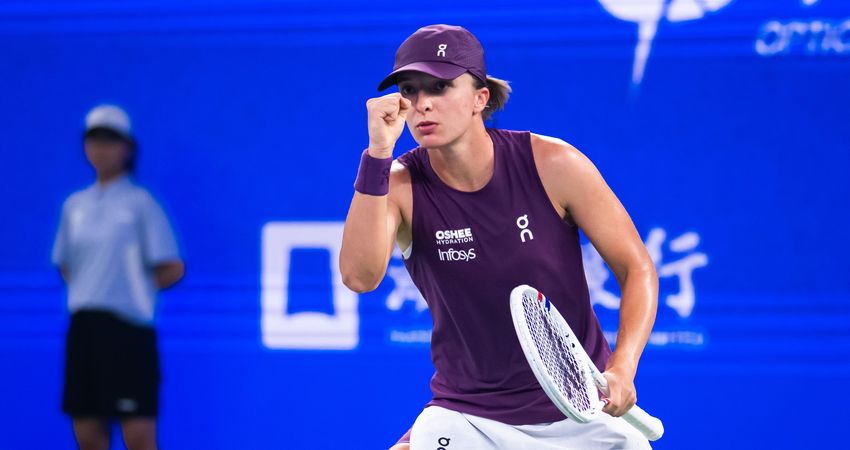
Swiatek's 150th WTA 1000 win leads straight into the Ann Li trap
Ann Li has already produced the result that reshaped the top quarter. The American recovered from a set down to beat Sabalenka 3-6, 6-4, 7-6(5), finally converting her tenth match point. The significance was not just the ranking of the opponent. Sabalenka had won Wuhan three times, and Li had to keep making decisions under pressure long after the match appeared to be slipping out of her hands. Li then backed up that upset by beating Janice Tjen in straight sets, reaching her first WTA 1000 quarterfinal without the familiar letdown that can follow a career-defining win.
Swiatek's route has been more controlled. She beat lucky loser Ashlyn Krueger 6-1, 6-4 on Thursday, registering her 150th WTA 1000 match win in only 187 matches at that level. That milestone reflects how consistently she has won against strong fields, but the Krueger match also showed why she cannot simply coast through the next round. Swiatek saved seven of eight break points. Her ability to rescue difficult service games was decisive, yet needing that many escapes gives Li an obvious area to attack.
The matchup is therefore less about which player has the more impressive résumé than which can control the first strike without losing patience. Li's win over Sabalenka required resilience through repeated chances to finish; Swiatek has built much of her success on returning pressure and forcing opponents to play one more difficult ball. If Li can attack second serves while keeping her own error count manageable, she can make this a long afternoon. If Swiatek takes time away on return and keeps the rallies on her terms, her experience becomes an enormous advantage.
Their official head-to-head reads 1-0 to Li, but that number needs context. Swiatek retired from their Madrid meeting earlier in 2026 while dealing with illness, so it offers little tactical evidence for a completed hard-court match. Swiatek has reached 32 career WTA 1000 quarterfinals, seven this season, and is still chasing a place in November's year-end championships. Li is playing with the freedom of someone who has already exceeded expectations. Neither fact decides the match, but together they explain why a seemingly favorable draw could still be dangerous for the Pole.

Chwalinska and Sakkari have a 1-1 rivalry — and no clear favorite
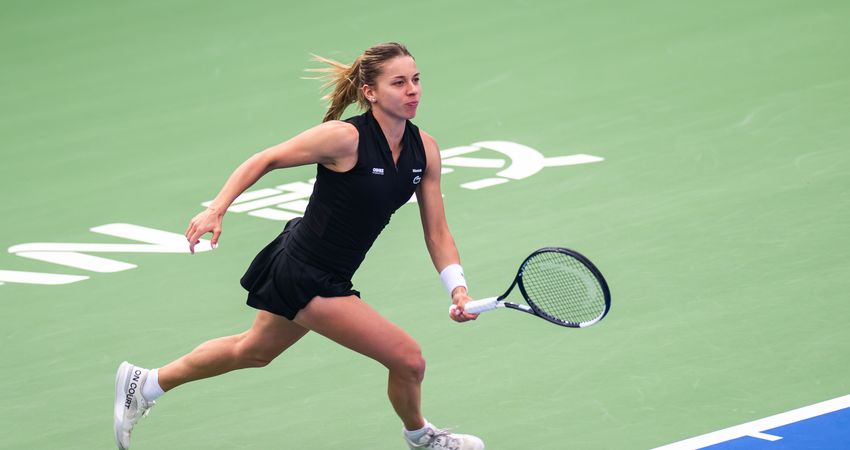
The second quarterfinal pairs two players who reached Wuhan's last eight by very different routes. Maja Chwalinska has been the tournament's composure story. She recovered from a 6-1 opening set against Marie Bouzkova, then defeated seeded American Iva Jovic 6-4, 6-1 with the steadier baseline performance. Chwalinska committed 16 fewer unforced errors than Jovic in that match. Her ability to avoid giving away cheap points matters because the next opponent has the athleticism to turn even a defensive exchange into an attack.
Maria Sakkari is trying to turn a return to familiar territory into a late-season statement. She last appeared at Wuhan in 2018, and her previous best run here was a semifinal in 2017. This week she beat Donna Vekic, came from behind against Marta Kostyuk, and then handled teenage wildcard Mia Pohankova in straight sets. That sequence has demanded both patience and the willingness to change tactics when a match starts badly. Sakkari's experience is obvious, but the quality of her execution will matter more than the number of big stages she has played.
The two have split their previous meetings. Sakkari recovered from a set down to win in Rome in 2025; Chwalinska returned the favor at Roland Garros this year, taking the match 1-6, 6-3, 6-2. Those scorelines suggest a matchup in which momentum can swing dramatically. Chwalinska's willingness to absorb pace and extend exchanges can frustrate Sakkari, while the Greek's movement and heavier first-ball aggression can prevent the Pole from settling into the same patterns she used against Jovic.
Chwalinska's run to the Roland Garros final earlier this season showed she is capable of sustaining high-level tennis across multiple rounds, not merely springing a one-off upset. Wuhan offers a different test on a faster hard court, where short service games and clean returns can determine who gets the first chance to dictate. Sakkari, meanwhile, has enough history at this venue to know that a quarterfinal appearance is not the finish line. The winner is likely to be the player who can keep her second serve protected and stay composed when the first plan stops working.
Svitolina has the ranking edge; Kartal has the tournament's sharpest momentum
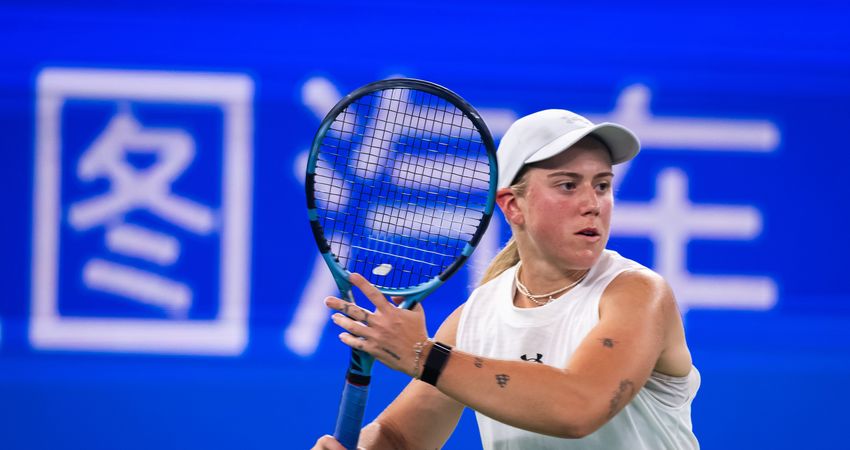
Elina Svitolina is the highest-seeded woman remaining, but her 6-1, 6-4 victory over Chinese wildcard Guo Hanyu was not as tidy as the score might suggest. She landed fewer than half of her first serves and committed 32 unforced errors, although she created 16 break points and converted seven. That is a revealing combination: Svitolina was still able to apply relentless return pressure while leaving herself more vulnerable than she would prefer in her own service games. Against a confident opponent, the second part of that equation could become expensive.
Sonay Kartal has given Wuhan one of its most compelling comeback stories. After a six-month injury absence, the Briton is only a few tournaments into her return and has already eliminated ninth seed Belinda Bencic and Jasmine Paolini. Her third-round win over Paolini was startlingly one-sided: 6-2, 6-0, with the final eleven games going Kartal's way. She struck 14 winners against only eight unforced errors. Those numbers point to a player who was not merely surviving the rallies; she was selecting the right moments to accelerate.
Kartal has not dropped a set in her first three Wuhan matches, which is impressive given how little competitive rhythm she had been able to build earlier in the year. The caution is that Svitolina presents a different kind of challenge from Paolini. She is comfortable changing height, direction and pace, and her ability to retrieve difficult balls can turn a clean attacking opportunity into an extended point. Kartal cannot assume the same openings will appear as frequently. She will need to keep taking initiative without rushing the next shot.
The head-to-head favors Svitolina 2-0, but their Auckland meeting at the start of 2026 went all the way to a deciding-set tiebreak before the Ukrainian won 6-4, 6-7(2), 7-6(5). That is a better guide to the possible tension than the raw record. Svitolina's ranking and experience make her a credible title favorite in the depleted field. Kartal's recent level makes her a credible threat to that status. The match may hinge on whether Svitolina can raise her first-serve percentage before Kartal starts attacking the second delivery.

Shnaider versus Ostapenko could be Wuhan's most explosive quarterfinal
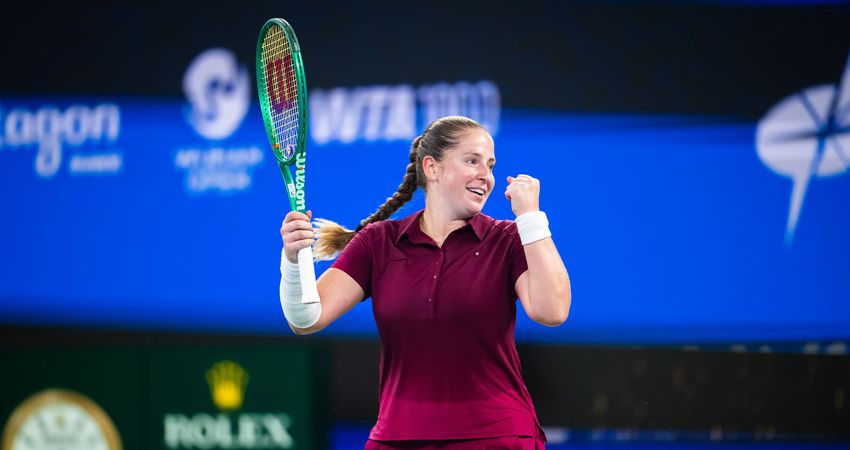
Diana Shnaider arrived in Wuhan without much reason to trust her history at the tournament: she had lost in the first round on both previous visits. Three straight-set wins have changed that story. Her latest was a 7-5, 6-3 victory over sixth seed Karolina Muchova, a result that required her to stay disciplined against one of the tour's most inventive opponents. Shnaider has not needed a deciding set all week, and the physical energy saved could matter against a player whose matches regularly lurch from one extreme to the other.
Jelena Ostapenko has reached the same stage by a more chaotic route. Against Jessica Pegula, the Latvian saved three match points in the second-set tiebreak and recovered to win 2-6, 7-6(7), 6-3. She followed that escape with another three-set battle, beating Leylah Fernandez 6-1, 1-6, 6-4. The contrast between those sets is familiar to anyone who watches Ostapenko: she can overwhelm an opponent with returns and flat groundstrokes, then struggle to keep the ball inside the lines when the margins narrow.
The Pegula comeback also showed that Ostapenko can solve a problem without simply hitting harder. She used an unexpected drop shot to save the third match point and, over the final two sets, found ways to stay in longer rallies. She finished that contest with 46 winners, including ten aces, and 37 unforced errors. It is a high-risk statistical profile, but in a one-off knockout match it can make her especially dangerous. Shnaider must resist being drawn into a pure hitting contest if Ostapenko is landing her first strike.
This will be their first tour-level meeting. Shnaider's steadier route suggests she can force Ostapenko to earn points repeatedly; Ostapenko's history, including a Wuhan semifinal appearance in 2017, suggests she will not be intimidated by the occasion. The broader stakes are substantial. A Wuhan quarterfinalist earns 215 ranking points and $98,500; reaching the semifinal raises those figures to 390 points and $197,000. With a 1,000-point title and $665,000 champion's check available, every remaining match can reshape both the season's closing rankings and the players' plans for November.
Wuhan's quarterfinals are a reminder that a depleted draw does not mean a weak one. Li has beaten the former favorite, Kartal has returned from injury with remarkable precision, Chwalinska and Sakkari know how to overturn a match, and Shnaider and Ostapenko bring entirely different forms of danger. Swiatek and Svitolina may have the strongest paper cases, but both face opponents with genuine evidence that they belong here.
Friday's matches will decide more than four semifinal places. They will show which players can turn a disrupted bracket into a defining result — and which can carry that level into the final WTA 1000 weekend of 2026.
Shop GOATIFY tennis products from the Tennis-filtered collection scope.
















