

Can You Volley a Pickleball Serve? The 2026 Two-Bounce Rule
GOATIFYNo: you cannot volley a pickleball serve. Under the 2026 USA Pickleball rules, the receiving player must let the served ball bounce in the correct service court before hitting it. Taking that ball out of the air is an immediate receiver fault, even if the shot would have been a spectacular winner. The serving side then has an obligation of its own: it must allow the return to bounce before playing its next shot.
This is the two-bounce rule, and the name is more confusing than the actual sequence. It demands one bounce on the receiving side and one on the serving side, not two bounces on the same side. Once both have happened, ordinary volleys are available from legal positions. There is also an easy language trap: a volley serve is a legal way to start a point, while a volleyed return of serve is illegal. Here is how the rule works on court, what a fault costs, and where professional and local rulebooks differ.
Why You Cannot Volley the Serve
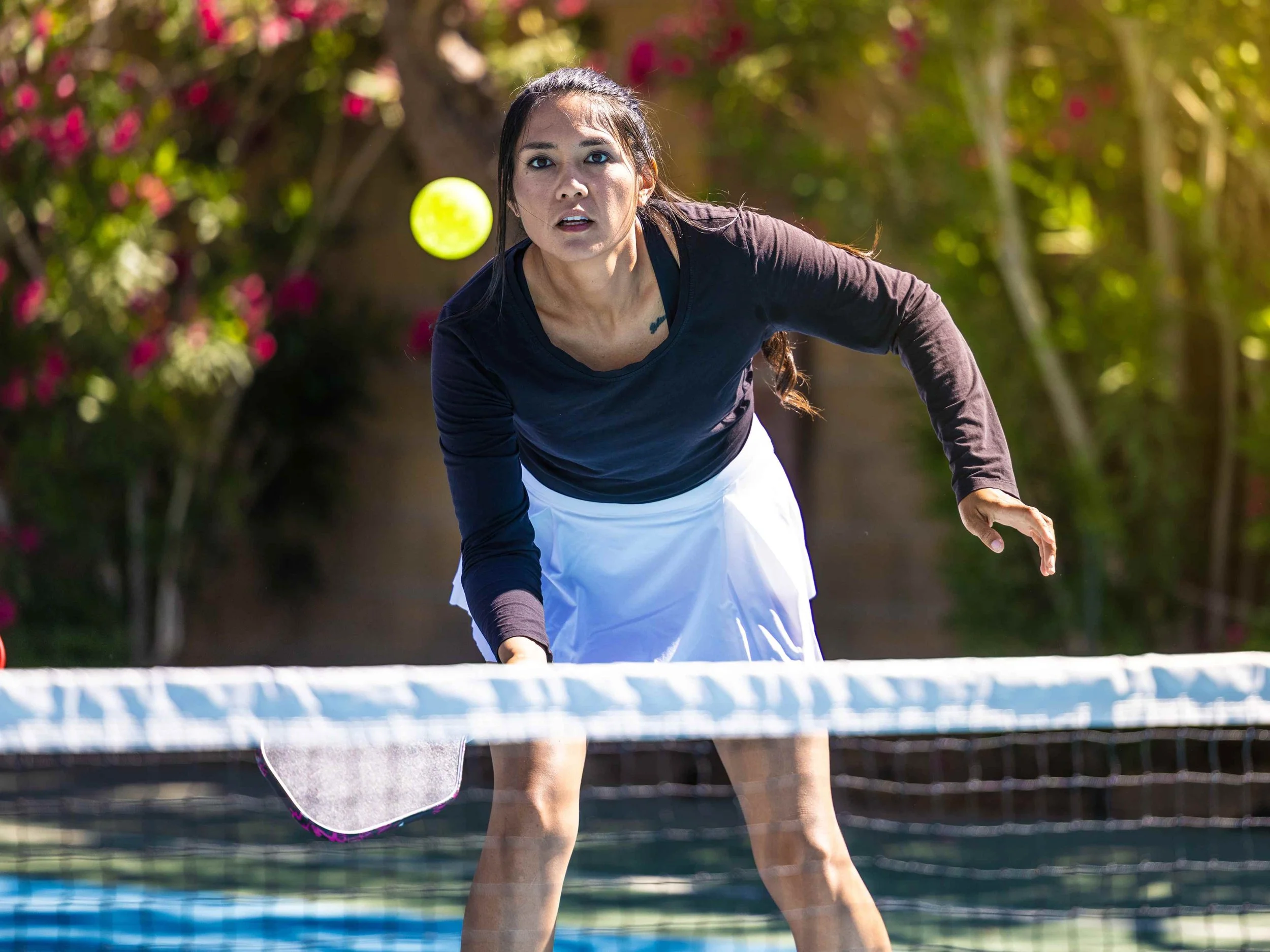
A volley is any paddle contact made before the ball has bounced. If you stand behind the baseline, see a high serve drifting toward you and swat it out of the air, you have volleyed the serve. Your position does not rescue the shot. You can be well behind the kitchen, outside the baseline or perfectly balanced: the serve still has to bounce first. USA Pickleball's 2026 Rule 10.A expressly requires both the serve and the return of serve to bounce before they are returned. Rule 10.A.1 assigns the fault to the receiver who hits the serve too early.
Consider a normal doubles point. The server hits a deep diagonal serve. The correct receiver steps forward, takes the ball at chest height before it lands, and drives it past the server. The ball's eventual destination is irrelevant because the illegal contact has already ended the rally. In standard side-out scoring, the serving team wins that rally and scores a point. Under an event using rally scoring, the point still goes to the side that wins the rally, but the broader serving and scoring procedures can differ. Do not confuse the fault with a simple out call or a second-serve opportunity.
The rule applies to a slow, floating serve as much as to a hard one. It also applies when you could have made a clean put-away without approaching the non-volley zone. There is no exception because the serve looked easy or because the other team would have struggled with your return. Your legal choices are to track the flight, let the ball land in the correct service area and then play the rising ball or take it later after the bounce, provided it does not bounce a second time in ordinary standing play.
Another common scenario is a serve headed toward a player's body. Do not reflexively catch it or block it with your paddle before the bounce. Contact with a receiver or their partner before the served ball lands is treated as a receiving-side fault under the service-contact provisions. If the serve is heading clearly out, moving safely out of its path is often smarter than trying to save it. If it lands outside the correct service court without touching you, that is the server's fault instead. Where the ball actually lands, and whether it first touched a player, matters.
GOATIFY
GOATIFY Pickleball
Pickleball apparel and gifts for players learning the rules.

Pickleball GOAT Golden Paddle & Ball Decal Sticker
Add sports personality to your favourite gear.
Shop Now ↗


The First Three Shots: Serve, Bounce, Return, Bounce

The easiest way to memorize the restriction is to number the actions, not the bounces. First shot: the server hits diagonally into the correct service court. The receiving team must wait for the ball to land. Second shot: the correct receiver strikes that ball after its first bounce, sending a legal return toward the other half of the court. The serving team must now wait for that return to land. Third shot: the server or their partner may strike the ball after its first bounce. Only now are the two mandatory opening bounces complete.
A fourth shot, and subsequent rally shots, may be volleys if the player is outside the non-volley zone and otherwise complies with the rules. You are not required to let the ball bounce forever; the restriction is on the opening sequence. A serving player who jumps on the receiver's return before it lands makes the mirror-image mistake to the receiver who volleys the serve. USA Pickleball Rule 10.A.2 makes that an immediate serving-side fault. It does not matter how tempting the intercepted ball is.
The word double-bounce is often used casually for the opening rule, but an actual double-bounce fault is different. Under Rule 10.B, in ordinary play a player must return the ball before it bounces a second time on their side. Suppose the receiver waits, watches the serve bounce once and then hesitates until it bounces again. That is not extra compliance with the two-bounce rule; it is a separate failure to return the ball in time. The rule requires exactly the first landing before contact, not an unlimited wait.
This shapes tactics in both singles and doubles. Deep serves push the receiver back and make it harder to advance after returning. A high, deep return can buy the receiving team enough time to approach the kitchen line while forcing the serving side to play a bounce. Conversely, a short return can invite the server forward for a more aggressive third shot after it lands. That third shot might be a controlled drop into the kitchen or a drive through open space. The bounce rule determines the timing; shot selection depends on height, depth, opponents and court position.
Practice with a three-word call: serve, return, bounce. The receiver silently calls the first bounce; the serving pair waits for the second. During a warm-up rally, exaggerate your patience rather than rushing a spectacular early strike. The eventual goal is not merely avoiding a whistle; it is putting yourself in balance to hit a useful legal shot while the opponent also has to respect the same opening pattern.
A Volley Serve Is Legal; Volleying the Serve Is Not

The phrase volley serve creates a stubborn beginner misunderstanding. Here, “volley” describes what the server does to their own released ball: strike it before it touches the court. It does not give the receiver permission to return that serve in the air. The receiver's first shot still has to be a groundstroke. In a legal volley serve, the serving player releases the ball and contacts it while it is airborne, using the prescribed service motion.
GOATIFY
GOATIFY Pickleball
Browse pickleball designs for the next court session.


Pickleball Pickle Rick Mutant Court Warrior Sticker
Add sports personality to your favourite gear.
Shop Now ↗
For standard USA Pickleball play in 2026, the volley serve has specific mechanics: the paddle must be moving in a clear upward arc at contact, the top of the paddle head must not be above the wrist joint, and the ball must be contacted no higher than the waist. Foot position, visible release, prohibition on artificially imparting spin at release, and diagonal service placement also matter. A serve that clears the net but lands in the non-volley zone or on its boundary line is not valid; the serve must reach the proper diagonal service court beyond that zone. A net cord does not automatically cancel an otherwise legal serve.
Recreational and USA Pickleball-sanctioned players also have the drop serve option. A player releases the ball naturally, without throwing or forcing it downward, lets it bounce and then serves. Under the 2026 USA Pickleball rulebook, the drop serve does not inherit the volley serve's upward-arc, wrist-height and waist-contact restrictions. This is a distinction about the initial serve; it does nothing to alter the returner's obligation to let that served ball bounce in the receiving court.
There is an important professional wrinkle. The UPA-A 2026–2027 rulebook, version 0.9, governs relevant PPA Tour and Major League Pickleball professional competition through its applicable rules and appendices. Its professional Appendix B, PR 3.1.2, requires a volley serve and does not permit the drop serve. Yet its Rule 8.1 still enforces one groundstroke from each side before a volley during a rally. So a player watching a pro repeatedly volley-serve should not conclude that the pros are also allowed to volley the return. The two actions share a word, not the same legality.
Before an organized match, check the named governing ruleset, its current edition and the event's written regulations. A professional bracket, a USA Pickleball-sanctioned event and an unsanctioned neighborhood league can have different serving or scoring terms. Do not turn a friendly house variation into a claim about the official rulebook, and do not assume a televised professional serving technique is universally permitted at a local tournament.
Faults, Kitchen Lines and the Exceptions Worth Knowing
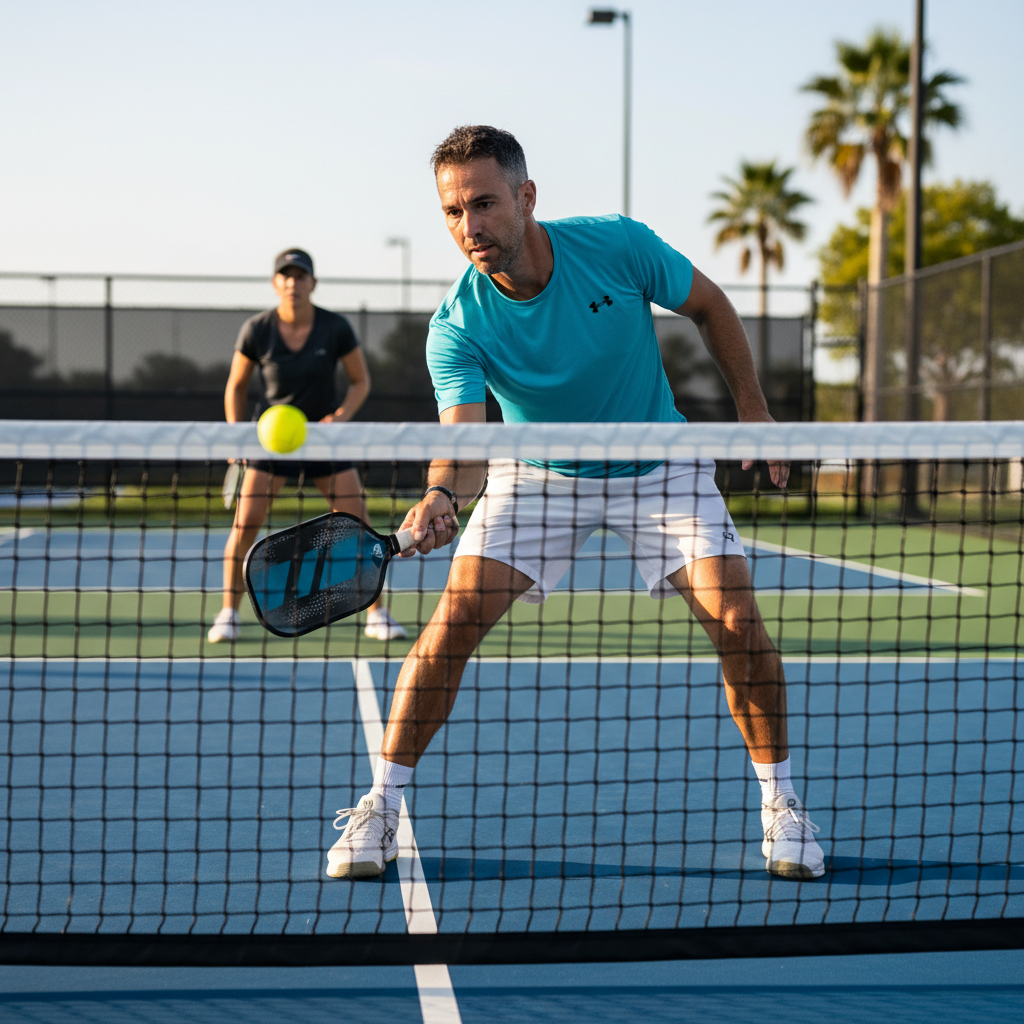
There are three separate questions worth asking when a rushed return goes wrong. Did the serve bounce before the receiver hit it? If not, it is a two-bounce-sequence fault. Did the ball land in the correct area? A serve must clear the non-volley zone and reach the diagonally opposite service court; a return after the bounce may land anywhere on the opponents' in-bounds court, including the kitchen. Did someone volley while touching the kitchen or its line? That is a non-volley-zone fault, which can occur later in the rally even after both required opening bounces are complete.
GOATIFY
GOATIFY Pickleball
Pickleball tees, hoodies and stickers for your crew.

Pickleball GOAT Golden Paddle & Ball Athletic Tank
A sports fan design for everyday wear.
Shop Now ↗


Pickleball I Love Pickleball Retro Heart Decal Sticker
Add sports personality to your favourite gear.
Shop Now ↗

The kitchen is the seven-foot zone adjacent to the net on each side. You may stand in it, and you may hit a ball from inside it after the ball bounces. You cannot initiate a volley there, or have your volleying momentum carry you into it, including across its boundary line. Players often wrongly believe that completing the two-bounce rule somehow permits volleys from inside the kitchen. It does not. Two-bounce timing and non-volley-zone position are independent restrictions. If you step out after being in the kitchen, establish yourself legally before volleying.
Boundary-line distinctions also trip up first-time receivers. A serve touching the kitchen line is a service fault because that line belongs to the non-volley zone. A serve landing on an appropriate outer service-court boundary line can be in. The return, however, is not required to avoid the kitchen: a legal, soft return that bounces just beyond the net is still a legal return if it lands within the opponents' court. The serving player has to wait for that ball to bounce even if it floats temptingly close to their paddle.
In doubles, the designated receiver must hit the serve; their partner cannot simply take it because the ball seems closer. That wrong-receiver issue is separate from the two-bounce restriction. The receiving partner should also avoid standing in the path of a serve, because contact with the player before the bounce is not a shortcut to a replay. When calls are disputed, use the event's officiating and replay procedures instead of applying an improvised penalty.
Inclusive-play rules add genuine, structured exceptions, rather than a free-for-all. The USA Pickleball 2026 rulebook provides an additional bounce allowance for wheelchair players and for qualifying, declared adaptive standing players in specified adaptive or hybrid competition. That modifies when a return must be made in those situations; it is not permission for the standard receiver to strike a serve in the air. Read the relevant Part IV provisions and competition requirements before advising an athlete that a second bounce is prohibited in every form of pickleball.
For a quick training drill, have the server alternate deep and short diagonal serves while the receiver says “bounce” audibly before each return. On every rally, require the serving pair to say “bounce” before their next stroke. Then permit normal play, tracking any premature interceptions. A second drill starts both sides deeper and rewards a controlled deep return rather than a rushed winner. These rehearsals build patience while reinforcing the tactical benefit of the rule: neither side gets to turn the opening exchange into an immediate volley ambush.
The courtside answer is simple: let the serve bounce, hit the return, and make the serving side let that return bounce too. After those first two landings, players may volley when their position and other rules allow it. A serve struck by the server in the air is a volley serve, not an invitation to volley its return.
If someone argues that a 2026 pro match allows an exception, ask which action they saw: a server using a volley serve, or a receiver taking the incoming serve before it bounced. Those are different things, and the standard and UPA-A professional codes both preserve the opening two-bounce requirement. For leagues and tournaments, check the actual governing rulebook and local event terms, especially if scoring, serving technique or inclusive-play procedures are in question.
GOATIFY
GOATIFY Pickleball
Explore GOATIFY pickleball apparel and gifts.


Pickleball It's a Big Dill Vintage Pickle Sweatshirt
A sports fan design for everyday wear.
Shop Now ↗


















