

Bridges Saved the Knicks. Their 26-Point Collapse Still Matters.
GOATIFYMikal Bridges made one of the best shots of the NBA weekend, and the New York Knicks were almost too relieved to enjoy it. His buzzer-beating three-pointer delivered a 97–96 victory over the Portland Trail Blazers on November 21, 2026, after New York allowed a 26-point advantage to disappear. Madison Square Garden got its celebration. The Knicks got their fourth consecutive win. And Mike Brown got a fourth-quarter film session he cannot afford to skip.
For a moment the story seemed destined to belong to Portland. Deni Avdija made two free throws with roughly three seconds remaining to put the visitors ahead 96–94. Josh Hart then located Bridges for the final shot while the Blazers covered Jalen Brunson, the Knicks' leading scorer. A player whose own shooting form has been criticized all season finally received the ball in the one place where confidence matters more than recent percentages. The resulting three changed the winner, but it did not undo the breakdown that came before.
Brunson scored 30 points, Landry Shamet added 20, and Bridges finished with 12. Donovan Clingan countered with 22 points and 13 rebounds for Portland, which won the second half 53–31. Those numbers give the evening its proper shape: a comfortable lead, a genuinely impressive comeback, one disastrous late foul and a perfect last answer. A winning shot deserves a replay. A 26-point collapse deserves an explanation.
Bridges' Three Saved the Win, Not the Whole Game
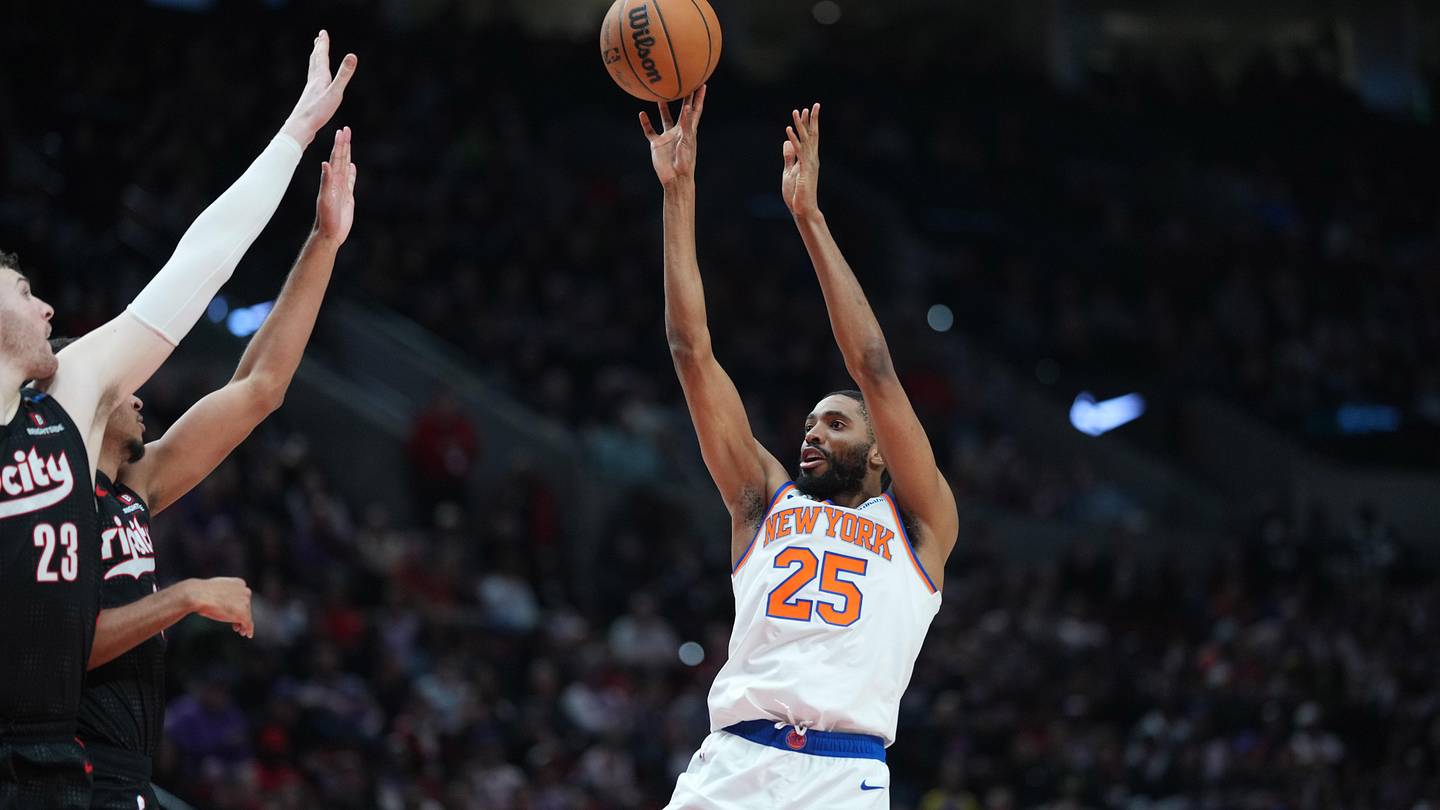
When Deni Avdija made two late free throws and put Portland ahead 96–94 with 3.2 seconds remaining, the New York Knicks were suddenly confronting a problem that had looked impossible before halftime. They could not simply run the clock. They could not settle for two points without risking overtime. After leading by as many as 26, they had to create a clean shot from a dead ball while the defense knew exactly how much time was left.
Josh Hart was assigned the inbound. Jalen Brunson, the night's 30-point scorer, was the first player Portland had to deny. The available pass was not necessarily the obvious one, and Hart had to make the read rather than force the ball into a covered lane. He found Mikal Bridges on the wing. Toumani Camara closed, but Bridges used the space he could create, raised into his shot and sent a three-pointer toward the rim just before the horn. It went in. Knicks 97, Trail Blazers 96.
The ending was more than a lucky bounce. Hart's passing angle, the timing of the catch, the speed of the defensive closeout and Bridges' ability to shoot under pressure formed one possession in which every decision mattered. Bridges did not need a long scoring run to change the result. He needed a single accurate release when the offense had almost no margin for error. He finished the evening with 12 points, and the last three were its most valuable.
Bridges has been under scrutiny for an uneven shooting stretch. Numbers coming into the contest pointed to unusually poor efficiency by his established standards. That context makes the shot compelling, but a single make is not proof that the whole slump has ended. The accurate appraisal is smaller and more important: when New York's preferred action was unavailable, Bridges was willing and able to deliver a winning attempt against NBA-level pressure.
GOATIFY
GOATIFY Basketball
Shop GOATIFY basketball shirts, hoodies and stickers.

LeBron James – LeGOAT Streetwear Pullover Gift Hoodie
A basketball fan design for everyday wear.
Shop Now ↗


Crying LeBron – NBA Basketball Muscle Shirt Tank
A basketball fan design for everyday wear.
Shop Now ↗
Ja Morant Gun Basketball NBA Memphis Grizzlies Mug
Add basketball personality to your coffee break.
Shop Now ↗There was even a strange historical echo. Bridges hit a separate overtime buzzer-beater against Portland in March 2025, at the Moda Center, when the details and personnel circumstances were different. An archival photo of that earlier game belongs in this comparison, not in a claim about the November 2026 finish. The two late winners reinforce something enduring about Bridges' capacity to occupy a decisive moment, even when an entire performance has not been polished.
The Knicks are entitled to celebrate the execution of their final play. They should not allow that successful sequence to become an explanation for the 23-point halftime cushion they had already surrendered. Clutch shot-making and reliable lead management are not the same skill. Saturday proved that New York had the first one when it mattered most; it left serious questions about the second.
New York Lost the Second Half 53–31
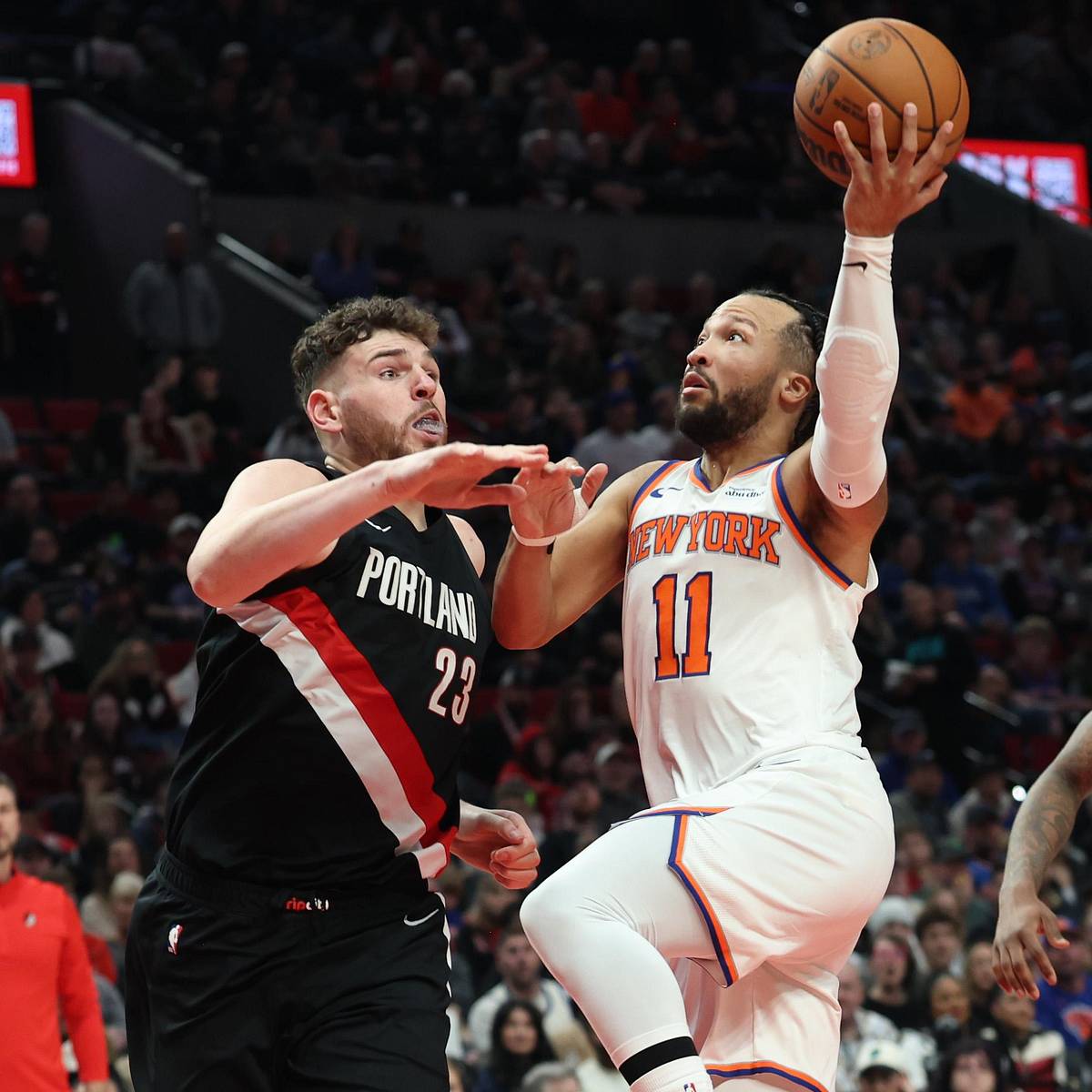
The result is a one-point win. The way the points arrived is a warning that deserves a longer look. New York scored 40 in the first quarter and another 26 in the second, reaching halftime ahead 66–43. It had led by 26 at its peak. Portland was playing from behind, and the Knicks' offense had been sharp enough to turn possessions into a near-continuous stream of points.
Jalen Brunson scored 19 of his 30 in the first quarter alone. New York's early shooting forced Portland to answer not one hot possession but a whole stretch of them. Landry Shamet provided perimeter support and ultimately finished with 20. The scoring mix suggested that even with important starters missing, the Knicks could create more than enough offense to control the night. At the break, holding a 23-point advantage looked like a matter of execution rather than survival.
Then the direction reversed. Portland won the third quarter 29–15, reducing the deficit to nine. It won the fourth 24–16. Those two periods produced a 53–31 split against New York after halftime. This was not an ordinary little run from an opponent that fell short. It was a sustained shift that erased nearly everything the Knicks had constructed over the previous 24 minutes.
Scoring 31 in a half does not automatically prove a team forgot how to attack. Pace can slow when a lead is large, and the available rotation matters. But a team trying to protect an advantage must still produce shots that force a defense to respect its options. The final stretch became a study in low-efficiency possessions and reduced options. New York did not consistently convert the game into easy finishes or keep Portland from generating answers at the other end.
Brunson's night illustrates the contradiction. Thirty points are outstanding production. Yet a brilliant opening quarter does not guarantee the same flow late, when the defense adjusts and possessions become longer. New York too often looked to individual creation to solve the situation. The best version of this offense needs more repeatable actions than hoping an established scorer can recreate the first quarter under different conditions.
Tyler Kolek made a three-point play that lifted the margin to 92–79 in the fourth. Thirteen points should have been comfortable enough to reach the finish line. Instead Portland's next surge turned it into 94–94 and then 96–94. The Knicks still won because Bridges made the final shot, but nothing about the collapse should be mistaken for a healthy formula that will work again against a stronger fourth-quarter opponent.
GOATIFY
GOATIFY Basketball
Shop GOATIFY basketball shirts, hoodies and stickers.

Jalen Brunson G.O.A.T. - Basketball Decal
Add basketball personality to your favourite gear.
Shop Now ↗
New York Knicks – 2026 NBA Champions Sweatshirt
A basketball fan design for everyday wear.
Shop Now ↗
Carmelo Anthony G.O.A.T. - Basketball - Hoodie
A basketball fan design for everyday wear.
Shop Now ↗

Carmelo Anthony G.O.A.T. - Basketball Muscle Tank
A basketball fan design for everyday wear.
Shop Now ↗
Portland Nearly Completed a Real 26-Point Comeback

A collapse requires someone capable of turning it into a comeback. Portland deserves more than the role of passive beneficiary of New York's poor shooting. The visitors were down 23 at halftime and had surrendered 66 points in the opening two quarters. They still found the defensive edge and offensive stability to win both remaining periods. By the final seconds they were not merely threatening: they had taken the lead.
Donovan Clingan was central to the change. His 22 points and 13 rebounds gave Portland a reliable presence around the basket and on missed shots. The Trail Blazers scored 48 points in the paint compared with 26 for the Knicks, a massive contrast in where the teams were finding their efficient opportunities. Without Karl-Anthony Towns in New York's lineup, size and interior coverage were already significant tactical issues. Clingan made the consequences visible.
Deni Avdija finished with 20 points and delivered the two free throws that appeared to seal the comeback. His fourth-quarter work at the line had not been flawless, which makes his final pair more notable, not less. He got the ball after the late foul, stood over the highest-pressure free throws of the game and made both. For a moment Portland led 96–94, and the scoreboard had caught up with the feeling that the visitors were controlling the closing minutes.
Damian Lillard's three-pointer with just over a minute left had tied the game at 94. He finished with 15 points, and the shot was a reminder that a veteran scorer can affect a result late even without dominating every possession. Jrue Holiday contributed useful production from the bench, while Toumani Camara drew the unenviable defensive task of closing out to Bridges at the end. A strong comeback can still be overturned by an excellent shot that comes from good offensive execution.
Portland's full story includes the errors of the first half. Giving New York such a large lead is not sustainable basketball, and the Trail Blazers paid for it when the margin finally narrowed to a single possession. But the response was organized enough to change the shot quality and rhythm of the game. Portland's 29 points in the third quarter and 24 in the fourth were an earned reversal, not a statistical curiosity.
The final result punishes Portland more than the last 24 minutes deserve. That does not mean the Blazers deserved to win, because the last shot counts every bit as much as the fifty before it. It means a 97–96 defeat can still show a team how to pressure a favorite into uncertainty. Portland should retain the lesson from its rally while identifying why it required an almost impossible rescue mission in the first place.
Mike Brown Has to Fix the Lead, Not Replay the Winner

The Knicks did not have their normal lineup. Karl-Anthony Towns missed the game with an illness, while OG Anunoby was sidelined by a calf problem. Those absences matter for spacing, rim protection, defensive assignments and the flexibility of New York's preferred groups. Shamet delivered 20 points and Andre Drummond had 13 rebounds, but useful replacement statistics do not make a rotation identical to the one a coach planned to use.
GOATIFY
GOATIFY Basketball
Shop GOATIFY basketball shirts, hoodies and stickers.


Mike Brown can recognize the limitations and still expect better management of the game. It was the same available lineup that built the 26-point advantage, after all. The Knicks' first-half execution proved they could move the ball and find productive opportunities. The second half was evidence that Portland's adjustments and greater energy could disrupt those patterns. The important question is why New York could not find enough counters to protect even a portion of its cushion.
Brown's film session should examine the shift in shot quality and speed from the opening quarter to the last. Did the offense stop threatening different areas of the floor? Were the Knicks settling for contested looks too early in the clock, or waiting so long that any shot became contested? Was Portland winning more of the possession battle in the paint and off the glass? Those are specific tactical questions, not a demand that every player shoot as efficiently as he did during the first twelve minutes.
The foul that sent Avdija to the line belongs in a separate and urgent conversation. With the game tied, Drummond's contact handed Portland a chance to move ahead without needing a difficult shot. Avdija made both free throws. Endgame communication is often invisible when it works and glaring when it does not. In this case the Knicks had to design a winning three rather than choose their own terms in a tied game.
Hart saved his part of the story by locating Bridges on the inbound. Bridges saved the result. But New York cannot make two unusually sharp choices in the final seconds its standard response to a fading lead. That is an exhausting way to win in November and a dangerous one in spring. Over a season, late possessions will not always reward the team that produces the last hero.
The Knicks' fourth consecutive victory and 10–6 record are still meaningful. They face Indiana next, with little time to take satisfaction from one shot before preparing for another opponent. The healthiest response would celebrate Bridges' nerve and then make the ending less necessary in the next game. A contender should be able to do both without pretending one erases the other.
Bridges' final basket belongs among New York's great moments of this young season. His poise, Hart's inbound read and the reaction around them were genuine positives. The Knicks have a player capable of delivering the last possession without needing the previous forty-eight minutes to be perfect.
Yet the second-half mathematics cannot be talked away. New York led 66–43 at halftime, Portland won the next two quarters 53–31, and a 26-point advantage nearly became a defeat. The Blazers' perseverance and paint scoring changed the game. The Knicks' slow response and late defensive decision made one final shot mandatory rather than optional.
Both teams have useful lessons to take into their next games. Portland needs a much better start. New York needs its offense to remain functional when its opponent starts answering back. Celebrate the three, keep the win, and remember how close a supposedly finished game came to ending the other way.
GOATIFY
GOATIFY Basketball
Shop GOATIFY basketball shirts, hoodies and stickers.

Dwyane Wade G.O.A.T. - Basketball - Greatest Sweatshirt
A basketball fan design for everyday wear.
Shop Now ↗
Steve Nash G.O.A.T. - Basketball Casual Top Tee
A basketball fan design for everyday wear.
Shop Now ↗
Shrequille O'Neal - Shaquille O'Neal as Shrek Hoodie
A basketball fan design for everyday wear.
Shop Now ↗
Wilt Chamberlain G.O.A.T. - Basketball Decal Sticker
Add basketball personality to your favourite gear.
Shop Now ↗

Nikola Jokic G.O.A.T. - Basketball Coffee Cup Mug
Add basketball personality to your coffee break.
Shop Now ↗















