Fornaroli Gets Two More McLaren FP1 Runs — After 339km at Paul Ricard
GOATIFYLeonardo Fornaroli has two more Formula 1 Fridays on his calendar, and McLaren is making sure they are more than ceremonial appearances. The 21-year-old Italian will drive the team's 2026 MCL40 in first practice at the Mexico City and São Paulo Grands Prix after completing another substantial private test in France. The assignment follows his earlier appearances in Barcelona and Hungary and completes McLaren's mandatory rookie-practice programme for the season.
The preparation is unusually revealing. At Circuit Paul Ricard, Fornaroli logged 58 laps and 339 kilometres in the 2025 title-winning MCL39, while the team's test and development driver Jake Hughes added another 52 laps. It was not a public audition against the full grid, but a deliberately structured exercise in repeatability, set-up work and adapting to a different generation of machinery. With McLaren's established race seats occupied by Lando Norris and Oscar Piastri, every useful session helps Fornaroli build the case for his longer-term future.
The 339km Paul Ricard test was about doing an FP1 job, not setting a headline lap

The most important number from Fornaroli's latest outing is 339 kilometres. Across 58 laps of Paul Ricard's Grand Prix configuration, he worked through a programme designed to resemble the demands of an actual opening practice session. McLaren used longer runs and several set-up variations, rather than treating the day as a search for one eye-catching lap time. A brief spell of rain interrupted the afternoon, but the team reported that it still completed the planned work.
There was another meaningful change under the bodywork. McLaren had retired its 2023 MCL60 from Testing of Previous Cars duties in July, and this was the first time the 2025 MCL39 had been used for the team's Paul Ricard programme. That matters because a driver moving between simulator, older-car tests and the current 2026 machine must repeatedly recalibrate braking references, corner-entry expectations and the way a car responds to different set-ups. The MCL39's pedigree as a championship-winning car does not automatically make it a perfect proxy for the MCL40, but it gives Fornaroli a serious platform for learning procedures and feedback.
The choice of Paul Ricard was practical. The former French Grand Prix venue offers a mixture of corner speeds, braking zones and extensive runoff, so a driver can explore different approaches without the same risk profile as a narrow street circuit. For a reserve driver, the skill being tested is not just raw speed. Engineers need consistent laps, reliable communication, repeatable comparisons and a driver who understands why a particular run matters. A sensational single lap would be less useful than clean data that the race team can interpret.
Fornaroli was not the only driver involved. Jake Hughes, whose development work feeds McLaren's simulator programme, completed 52 laps and 298 kilometres in the MCL39 on the first day of the two-day test. His running gave the team another reference point for set-up comparisons. Fornaroli's programme is therefore part of a wider engineering exercise, not a standalone publicity event. McLaren has already taken its testing operation to Barcelona, Silverstone, Austin, Monza and Portimão this year. The cumulative mileage helps explain why the team can now trust its junior driver with two more official practice sessions.
Mexico City and Interlagos will test two very different sides of Fornaroli

McLaren's announcement identifies Mexico City and São Paulo as Fornaroli's remaining first-practice assignments. The Mexico weekend runs from October 30 to November 1, with Brazil following on November 6-8. They come immediately after the United States Grand Prix, which means Fornaroli must switch quickly from preparation to execution while the senior team is dealing with three consecutive race weekends. The exact car allocation for each session should be confirmed in the team's event communications; it would be premature to claim which regular driver he will replace.
Mexico City poses a particularly distinctive problem. The Autódromo Hermanos Rodríguez sits roughly 2,285 metres above sea level, where thin air changes the balance between aerodynamic grip, cooling and power-unit operation. The turbocharged engine does not simply lose performance in the same way an old naturally aspirated engine would, but the turbo and cooling systems must work harder. Less dense air also reduces the effectiveness of wings and bodywork. For a rookie, the challenge is to build confidence in the braking zones and traction areas while obeying a precise programme that may prioritize aerodynamic measurements over lap times.
Interlagos offers a different examination. Its short, undulating 4.309-kilometre lap mixes quick direction changes with the technical infield and the traction-critical exit of Junção. A practice driver needs to learn the rhythm rapidly because a single hour disappears fast once installation laps, system checks and possible interruptions are accounted for. Fornaroli has said he is particularly looking forward to the circuit's mixed corners, while acknowledging Mexico's altitude as a new physical challenge.
The rookie sessions also carry a genuine sporting cost for McLaren. Norris and Piastri are contesting an intensely competitive constructors' battle, and surrendering a practice hour reduces one race driver's direct time in the car. A well-run rookie session can offset part of that cost by delivering useful data, but only if the replacement driver stays out of trouble and follows the engineering plan. Fornaroli has already taken over Norris's car in Barcelona and Piastri's in Hungary. His next two outings complete the four-session allocation rather than creating an extra concession from the team.

Back-to-back junior titles gave him a résumé; McLaren is now testing the working habits
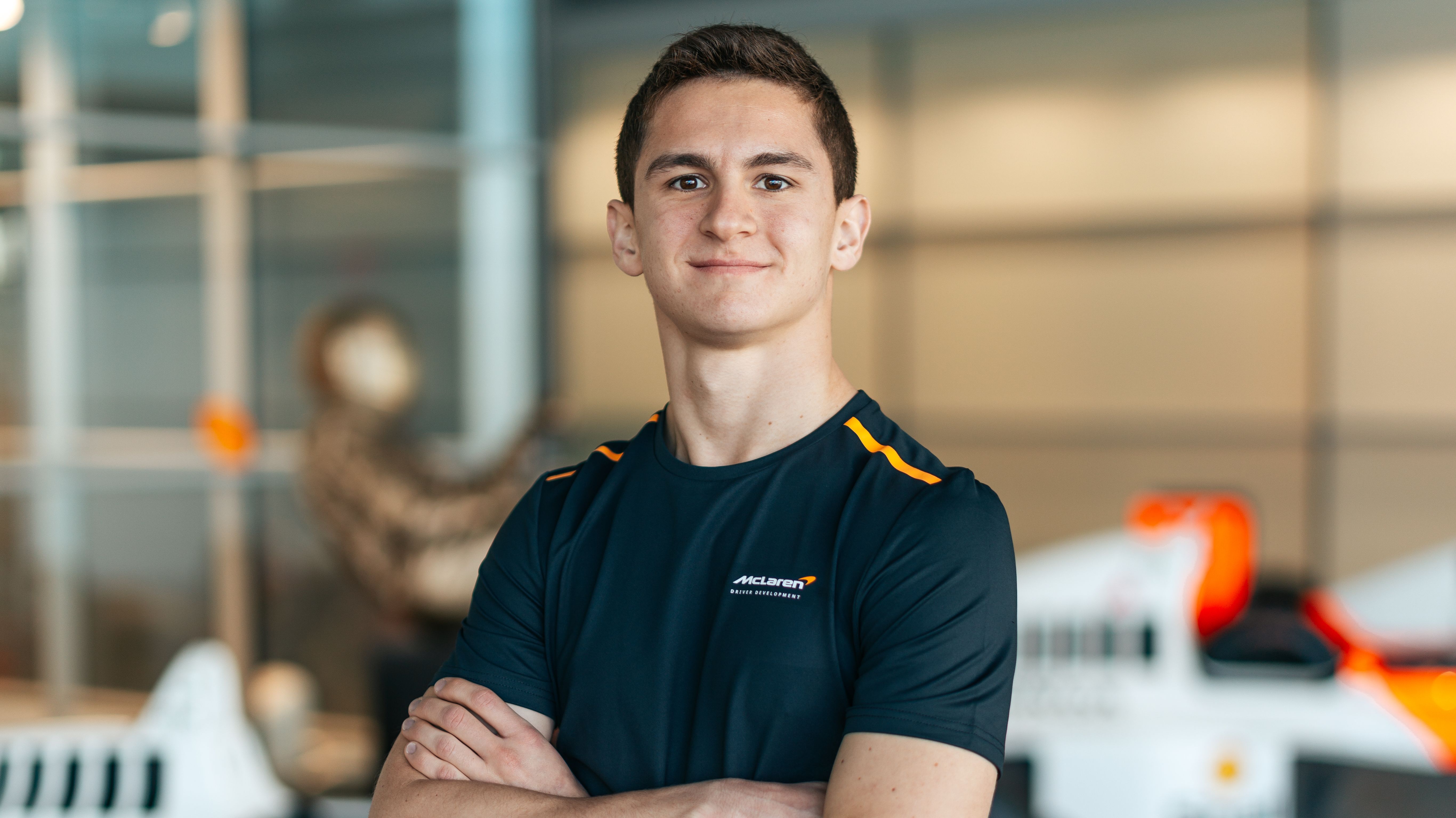
Fornaroli did not reach this stage through a single breakout performance. He won the Formula 3 championship in 2024 and followed it with the Formula 2 title in 2025, an unusual consecutive achievement that made him one of the more compelling young drivers outside the full-time Formula 1 field. McLaren added him to its Driver Development Programme in December 2025 and gave him reserve duties for 2026. Those credentials explain the opportunity; they do not by themselves guarantee an available race seat.
His first official F1 practice in Barcelona was an encouraging example of the distinction. He completed 22 laps, finished fifth on the timing screens and, more importantly for the team, worked through an aerodynamic programme in the MCL40. The position looked impressive, but Friday practice times can be misleading because drivers use different tyres, fuel loads and test objectives. The stronger signal was that Fornaroli carried out the assignment cleanly and supplied useful information. Hungary provided a second session with different demands and further exposure to the live race-weekend environment.
Outside those Fridays, the less glamorous work is arguably just as important. McLaren has involved him in simulator preparation, trackside support and repeated tests of previous cars. He has spoken about learning how a much larger organization works, including the intensity of communication between engineers, mechanics and drivers. It is the sort of preparation that can make a reserve driver genuinely useful if a team suddenly needs him, and it also gives other teams a more complete picture than junior-series results alone could provide.
There is a complication in any discussion of an imminent F1 promotion: McLaren already has Norris and Piastri in its race lineup, and neither of Fornaroli's newly confirmed FP1 drives constitutes an announcement of a 2027 Formula 1 seat. The team has separately said he will race in its new Hypercar programme in the World Endurance Championship in 2027 while remaining involved in F1 reserve duties. That creates a substantial professional racing opportunity without resolving his long-term F1 ambitions. Fornaroli can pursue both development paths, but a Grand Prix start still depends on an opening and a team's decision.
That is why the next two practice appearances deserve attention without being over-sold. Mexico and Brazil will not decide a championship for Fornaroli, and they will not automatically promote him. They will show whether he can step into a current F1 car at two very different circuits, handle pressure, adapt quickly and leave McLaren with better information than it had before. For a young driver trying to convert a strong résumé into a lasting career, those are valuable things to prove.

Fornaroli's October programme connects three parts of his development: the 339 kilometres at Paul Ricard, the two remaining official rookie sessions, and a broader role that already stretches into McLaren's 2027 endurance plans. It is a substantial investment in a driver who has won successive junior championships but has not yet secured a permanent Formula 1 seat.
The important next measurement is not whether he briefly tops a timing sheet. It is whether his feedback, consistency and adaptability help McLaren through two high-pressure race weekends. Mexico City and São Paulo will give him fresh evidence to offer any team considering his future. Fornaroli has earned the opportunity; now he needs to make the hour in each car count.