

Korda Shot 65. Sunday's Prize Is Bigger Than $4 Million.
GOATIFYA season-ending tournament is supposed to identify the player who handles one final week best. Nelly Korda has made the 2026 CME Group Tour Championship feel considerably bigger than that. A third-round 65 at Tiburón Golf Club on Saturday, November 21, left her on 16-under 200, just two shots behind A Lim Kim, with a first title at this event, another massive payday and an LPGA Hall of Fame place all within reach. None of those prizes is hers yet. The most striking thing about Saturday is how suddenly every possibility became plausible.
At the halfway point Korda was close enough to stay relevant, but not close enough to dictate Sunday's conversation. She entered Saturday tied for 11th at nine under. Nine birdies later, she stood tied for fourth after matching the day's lowest round. Jeeno Thitikul and Yuri Yoshida occupy second at 17 under, while Auston Kim shares Korda's 16-under mark. That is a crowded leaderboard, not a two-player match, and its close spacing is exactly why the last 18 holes are unpredictable.
The money is obvious: the winner's check is $4 million. The history needs closer attention. Korda is one point short of qualifying for the LPGA Hall of Fame, and she began the week only $161,077 behind Annika Sorenstam's long-standing career earnings mark. A win would address both ambitions, but breaking the money record does not require winning. Saturday's 65 turned several different targets into one compelling Sunday, while also exposing how easily one missed shot could change the order.
Nine Birdies Turned a Swing Search Into a Saturday 65
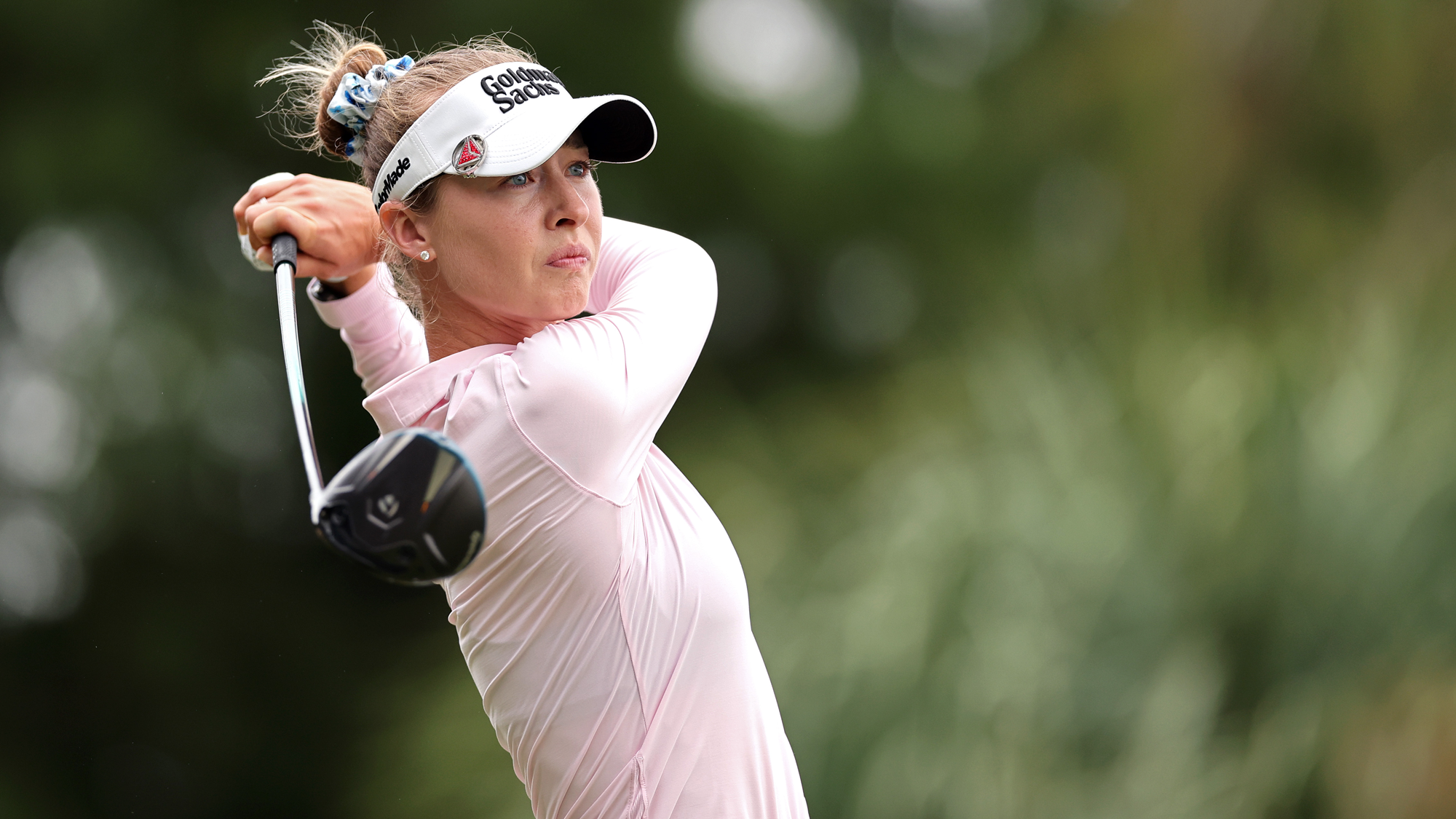
Three consecutive scores of 68, 67 and 65 form a clean numerical story: each day Nelly Korda has found another way to make Tiburón pay. Saturday's round was less tidy than the headline number suggests. She made nine birdies, two bogeys and seven pars, the kind of scorecard that reflects sustained attacking opportunities rather than an afternoon of simply avoiding trouble. Starting tied for 11th, she needed an aggressive round to become a real factor in the title race. The 65 supplied it without eliminating the mistakes that can still punish her on Sunday.
Her first nine holes contained the essential pattern. A birdie at the par-five first established early momentum, and further gains on the fourth and seventh brought her quickly toward the leaders. The eighth, a par three, interrupted the run with a bogey. Korda's response was immediate: she birdied the ninth to complete the outward half in 33. By that point her week had moved to 12 under, and the deficit was shrinking quickly. Recovering the lost shot on the very next hole mattered almost as much as the additional birdie itself.
The inward half gave the round its shape. A birdie at the 10th followed the ninth to create a run across the turn. Another came at the 13th. Then three consecutive birdies from 15 through 17 transformed a strong score into one of the performances of the tournament. Korda chipped in at the par-four 15th, hit her tee shot close to the hole at the par-three 16th and birdied the par-five 17th. It was an unusually varied burst: short-game touch, precise approach play and another scoring opportunity converted. All three produced the same single stroke on the card, but they demanded different execution.
The closing bogey is an important footnote, not an irrelevant blemish. Korda reached 17 under before a wayward shot to the right at the par-four 18th cost her a stroke. That left her at 16 under, two behind A Lim Kim rather than one. The mathematics are small; the tactical consequence could be large. A player starting two behind the leader cannot necessarily control her own outcome even with an excellent round. Sunday's finish may bring the same combination of opportunity and risk, particularly if the leaders continue trading birdies.
GOATIFY
GOATIFY Golf
Korda turned a swing adjustment into nine birdies. Explore GOATIFY golf caps, shirts and gifts for fans of sharp rounds.


What changed in the swing? Korda has described working after Friday's round to find a simple takeaway thought that would allow her to compete without becoming over-technical. That is a personal account of her process, not proof that one swing cue mechanically caused nine birdies. But her improved daily scores and Saturday's repeated scoring chances are consistent with the benefit of a thought she can trust under tournament pressure. In a final round with a crowded leaderboard, keeping that routine simple may be more useful than searching for another late-week mechanical overhaul.
Her round also illustrates the difference between being aggressive and being careless. The chip-in at 15 was a bonus that cannot reasonably be expected every day. The near-ace at 16 was another unusually close approach. The more transferable ingredient was the frequency of good positions throughout the round: nine holes produced birdies, with opportunities coming from several parts of her game. A contender can control the quality of repeated chances far more than she can control whether a chip drops. Sunday will test whether those chances keep arriving.
There is reason to trust the venue without treating that as destiny. Korda has finished inside the top 10 in eight of her nine previous appearances at the CME finale. She was runner-up in 2018, tied third in 2019 and third again in 2025. Those results indicate familiarity with the demands of Tiburón, yet they also underline the one thing missing from her record here: a title. The past is evidence that she can contend, not evidence that her first CME win is inevitable.
That distinction should frame the coming 18 holes. The 65 did not require flawless golf and did not move Korda into the lead. It did put her close enough for the last round to matter enormously, while revealing the exact trade-off she will face: preserve the fluent scoring rhythm that brought nine birdies, but limit the expensive lapses that left a final bogey on the card. If she combines those two elements, her position becomes dangerous. If she needs another unlikely chip-in merely to keep pace, the chasing task will be far harder.
A Lim Kim Holds the Lead, but Not a Comfortable Cushion
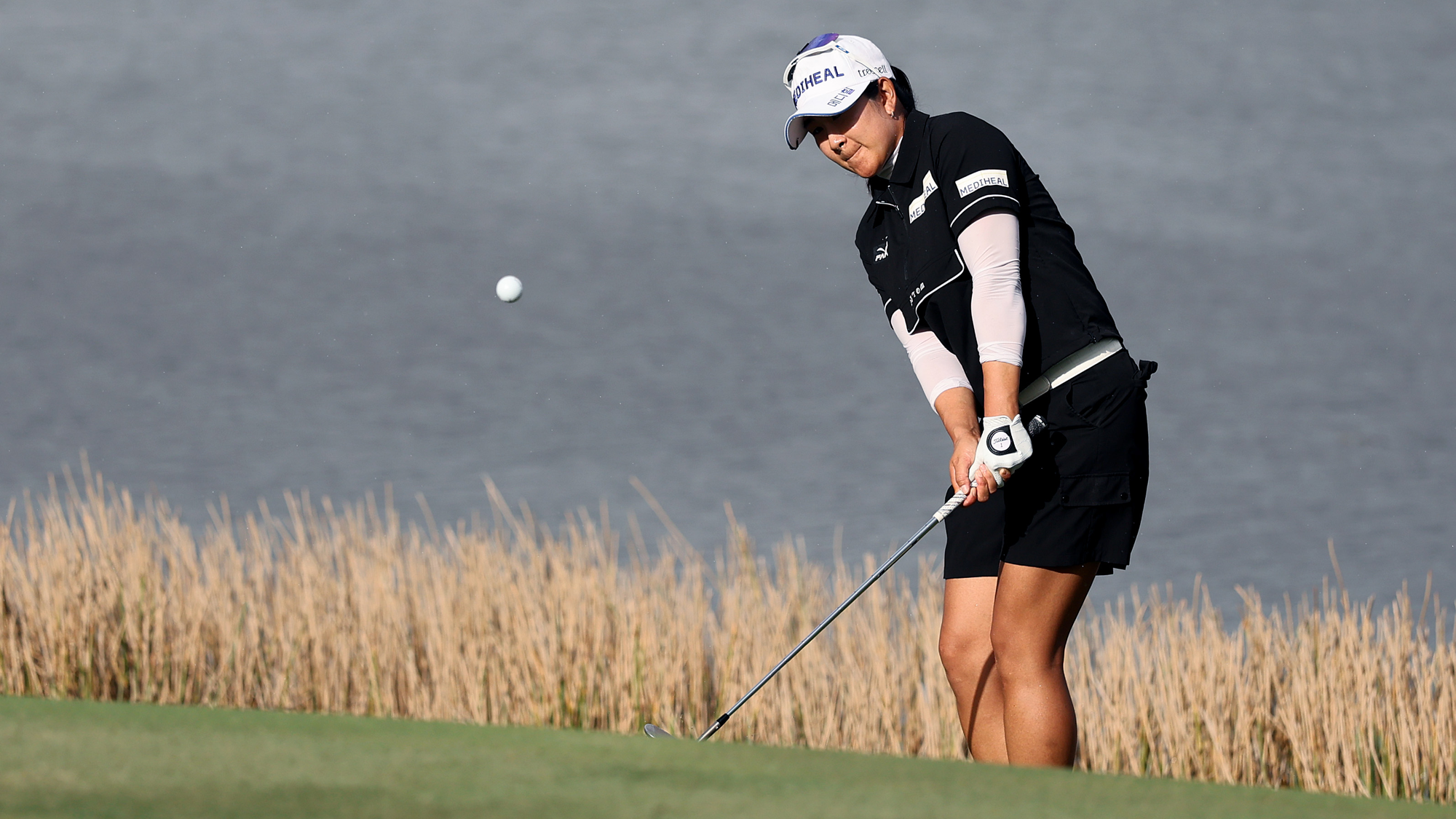
A Lim Kim begins Sunday with the position everyone else wants: a one-shot lead at 18 under. The significance is not merely that she sits at the top of the leaderboard. She has already put three rounds together at a level that demands an exceptional final day from anyone who wants to overtake her. A chasing Korda, Thitikul or Yoshida can play well and still lose if Kim responds. That is the strategic disadvantage of starting from behind, and a one-shot margin can feel larger when several opponents are simultaneously trying to apply pressure.
Yet Saturday was not a procession. Kim had created daylight on the back nine, making birdies at the 12th and 13th and at one stage leading Thitikul and Yoshida by three. In the closing stretch, two bogeys reduced that cushion. She signed for a three-under 69, enough to remain ahead but no longer enough to enter Sunday with clear separation. In golf terms, the round demonstrated both why Kim controls her immediate fate and why a lead can disappear without one dramatic catastrophe.
The leader's week has contained the spectacular as well as the practical. Kim holed her tee shot on the par-three 16th on Friday and produced a 64 in the second round, giving herself the foundation to absorb Saturday's mistakes. A hole-in-one is not a reliable strategy to repeat. Its value here lies in the strokes already banked: Kim enters the final round at 18 under regardless of how unusual some of the earlier scoring was. Sunday asks whether she can manufacture enough conventional chances to keep the challengers away.
GOATIFY
GOATIFY Golf
A Lim Kim has the lead and every shot matters. Browse the GOATIFY Golf collection for fans following the finale.
There is an important distinction between protecting a lead and playing defensively. A one-stroke advantage over two players, with two more only another stroke behind, rarely permits a leader to spend an entire round aiming at the middle of every green and expecting par to be sufficient. On a soft course that has already yielded rounds of 64 and 65, others may quickly erase a modest margin. Kim must decide when a sensible miss is valuable and when passing up a genuine birdie chance simply transfers pressure to the following hole.
For Korda, the target is therefore moving. She does not need to chase an abstract 18-under total: she needs to finish ahead of Kim and everyone else. If Kim opens with birdies, two shots may become three or four before Korda reaches a favorable stretch. If Kim makes an early bogey, the entire complexion of the chase could shift. That is why a Sunday leaderboard can be deceptive after only a few holes. A score that looks strong in isolation might be ineffective against the pace being set by the players ahead.
Saturday also illustrated that the closing holes do not guarantee anyone a clean finish. Korda lost a stroke at 18, while Kim's margin shrank down the stretch. Their mistakes occurred in different positions on the leaderboard but had the same lesson: each shot counts just as much after a long run of excellent play. A leader cannot assume a small buffer will protect a poor final hole, and a chaser cannot assume she has enough time to repair an avoidable error after the last favorable scoring opportunity has passed.
Kim deserves to be treated as the favorite by position, not as a supporting character in someone else's historic pursuit. She owns the lead because her three-round total is best, and a strong closing performance would give her a legitimate victory on one of the tour's biggest stages. Korda's possible Hall of Fame breakthrough supplies the richer narrative, but it does not earn her a stroke. Sunday's most interesting battle is whether Kim can convert control of the scoreboard into control of the finish while four immediate rivals make that conversion difficult.
Thitikul and Yoshida Make It More Than a Two-Player Chase
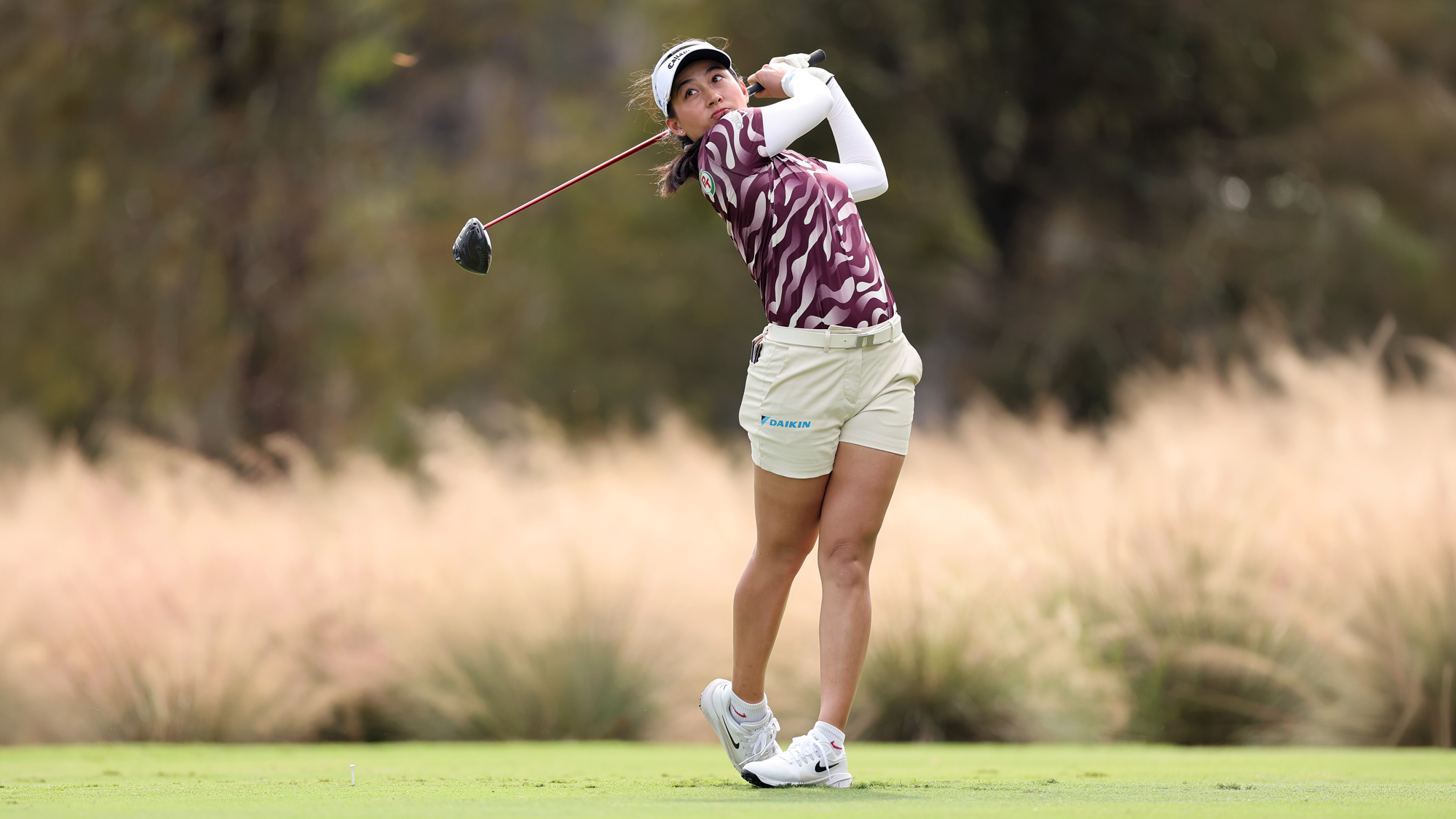
It would be tempting to tell Sunday's story as Korda hunting A Lim Kim. That would leave out two players who start the final round closer to the leader than Korda does. Jeeno Thitikul and Yuri Yoshida are tied for second at 17 under, one stroke behind Kim. Auston Kim is alongside Korda at 16 under. In other words, Korda has a historic opportunity, but she is not even the nearest challenger on the scoreboard. Any account that turns the final round into a scripted duel misses how competitive the actual field has become.
Thitikul's credentials carry their own historical weight. She has won the CME Group Tour Championship in both 2024 and 2025. A third consecutive victory would make her the first player to complete that three-peat at this event. Her Saturday 67 moved her into a share of second, and she has looked increasingly comfortable at Tiburón as the week has developed. That is not proof she will win again. It is a reminder that the player attempting another notable first already knows how to close out this particular tournament.
The defending champion also changes the shape of the money-record conversation. Thitikul came into the event with career earnings of $20,292,858. A $4 million winner's check would be sufficient to move her beyond the $22,583,693 total that has kept Annika Sorenstam at the top of the official career money list since 2001. Korda could potentially clear the same mark with a top-six finish. One possible Sunday outcome would therefore have Thitikul taking the trophy while both women move past Sorenstam's career figure. The individual stories overlap without becoming identical.
GOATIFY
GOATIFY Golf
Thitikul and Yoshida are chasing the lead, too. Find GOATIFY golf designs for the season's decisive weekend.
Yoshida should not be treated as a name between the marquee stars. Her 17-under position is earned, and she begins with precisely the same one-shot deficit as the defending champion. In an event where a single birdie on the opening holes can reshuffle the top four, the position she carries into Sunday is tangible leverage. The players with the loudest narratives do not receive preferred tee shots, wider fairways or an extra stroke on the scorecard. Yoshida has a real chance to set the number everyone else must answer.
Auston Kim also complicates the arithmetic. Tied with Korda at 16 under, she needs the same two-shot swing to draw level with the current leader, assuming the leader stands still. That last qualification is critical: a two-shot gap at the end of three rounds is simply a snapshot of the starting position. Sunday will be shaped by who scores when the lead changes hands. A player who opens well may get an entirely different set of decisions than one who spends the first nine holes chasing a steadily rising target.
Soft conditions following rain have been part of this championship week, and the scoring through Saturday shows that low rounds are available. There is consequently little reason to believe that merely avoiding mistakes will be enough for everyone in contention. Yet pressing too hard can just as quickly produce the late bogey that Korda and A Lim Kim both experienced. The strongest finish may come from the player who finds the right moments to attack rather than the one who tries to turn every hole into an all-or-nothing opportunity.
That is the central tension for Thitikul, Yoshida, Auston Kim and Korda alike. Thitikul has the chance to own this championship for a third straight year; Yoshida and Auston Kim can change the shape of the race without satisfying anyone's prewritten headline; Korda can chase a Hall of Fame point; Kim can defend the only lead that matters before play starts. The competitive story is richer because the prizes are different. The champion, however, will be decided by the same standard for every player: the lowest total after the final round.
The Hall of Fame, $4 Million and Another Sorenstam Record
The final round's intrigue extends well beyond who lifts the CME trophy. For Korda, the clearest historical threshold is an LPGA Hall of Fame place. She has 26 of the 27 points required under the tour's system. Victory on Sunday would supply the missing point and make her the 36th player to qualify, the first since Lydia Ko in 2024. That result requires actually winning the tournament. A runner-up finish, however impressive, would not complete the same Hall of Fame calculation. The distinction matters when so many stakes are being compressed into one afternoon.
Korda has already achieved enough in 2026 to make the Hall of Fame discussion understandable. She owns four victories this season: the Hilton Grand Vacations Tournament of Champions, the Chevron Championship, the Riviera Maya Open and the U.S. Women's Open. Those successes have brought her career LPGA win total to 19, and she has secured her second Player of the Year award. A CME victory would be her 20th title and fifth of the year. No one needs to manufacture urgency to explain why that would be an extraordinary addition to an already accomplished season.
At the same time, the Hall of Fame is not a one-week expiration date. Korda has emphasized that she expects to compete beyond this season, and she does not want the qualification discussion to operate like a countdown clock. That is a sensible way to frame Sunday's mental challenge. The result could settle the milestone immediately, but failing to win would not erase the 26 points already accumulated. There is a difference between the significance of an opportunity and the claim that it must be taken now or never.
GOATIFY
GOATIFY Golf
From Korda's Hall of Fame pursuit to Ryu's ball-striking record, discover GOATIFY Golf apparel and fan gifts.
The career money record offers a separate path. Annika Sorenstam's official $22,583,693 figure has stood atop the LPGA list since May 6, 2001. Korda entered the week at $22,422,616, a deficit of $161,077. The tour's pre-final-round projection is that a top-six finish would move Korda ahead, even without the $4 million winner's check. That means she could break the record while someone else wins. Conversely, claiming the Hall of Fame point still demands a victory. Readers following the final leaderboard should resist treating those two outcomes as one indivisible prize.
The size of the final check is the reason these records are so tightly linked. A $4 million first prize is the biggest winner's payout in women's golf, and it can alter historical earnings totals in one afternoon. It is a measure of the economics of the modern tour as much as any single player's longevity. Comparisons between careers separated by 25 years require that caveat: official money totals are real records, but tournament purses, available events and prize distributions have changed. Passing an earnings mark does not automatically settle a debate about the greatest career.
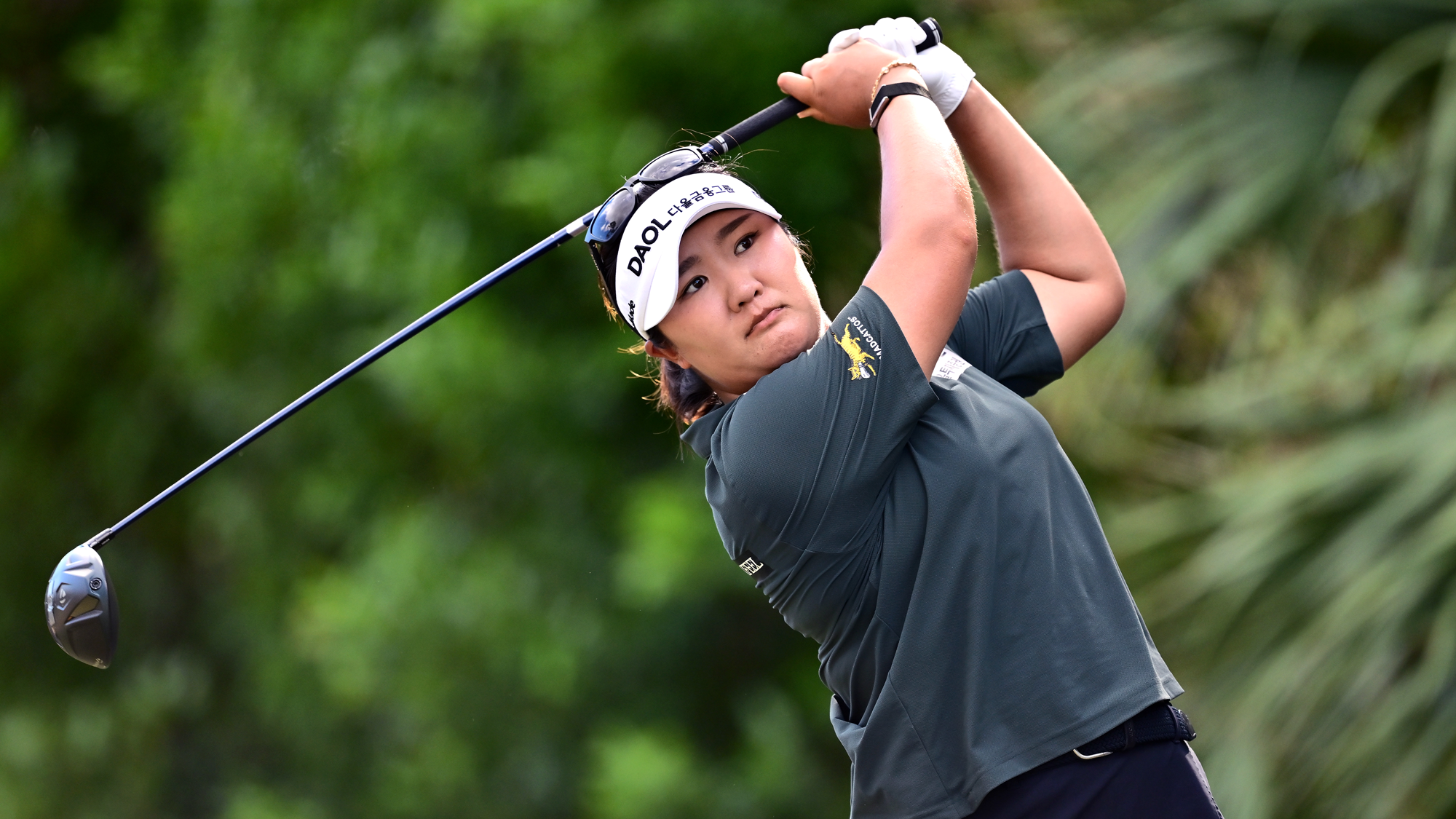
That is why the other Sorenstam statistic in play deserves attention. Haeran Ryu is chasing the 2001 single-season greens-in-regulation standard of 79.74 percent. She entered the final round leading the current tour at 79.49 percent, with a path—depending on her final-round accuracy—to overtaking the older benchmark. Ryu is not in the immediate title cluster: the reported 54-hole standing had her tied for 18th at 11 under. But her tee-to-green consistency could still give Sunday's round historical weight of a very different kind. Her tournament image illustrates that parallel statistical contest, rather than pretending she shares Korda's Hall of Fame circumstance.
There is also the Race to CME Globe to clarify. Korda reached Naples at the top of the season-long points standings, while the winner of this championship is crowned the race champion. A contender could therefore leave with the trophy and the race title even as another player breaks the lifetime earnings mark. Thitikul's pursuit of a third successive CME victory adds yet another possible milestone. Depending on the order in which players finish, different names could dominate the championship record, the career money list and the season awards story.
The best reason to care about Sunday is not that every record must fall. Most cannot all unfold in a single tidy narrative. It is that the leaderboard has put genuinely different sporting goals within reach at once: winning a golf tournament, earning a rare qualification point, surpassing a career money total and threatening a ball-striking percentage that has survived a quarter century. Korda's 65 was the spark. The players around her, and the details of the records themselves, are what make the final day more interesting than one superstar's chase.
Saturday established the opportunity, not the ending. A Lim Kim is still the leader at 18 under; Thitikul and Yoshida remain one shot closer to her than Korda, and Auston Kim is also positioned to affect the finish. Korda's advantage is not that she can simply collect a predetermined trophy. It is that three increasingly sharp rounds have given her a credible route to a victory that carries meaning far beyond one leaderboard.
A win would make it 20 LPGA titles, five in 2026, a first CME trophy and the missing Hall of Fame point. A strong finish without a win could still take Sorenstam's career money record. Those outcomes should not be conflated. As Sunday begins, the sport has a rare final round in which the champion, the year's largest check, a place in history and the record book can all move independently. The only sound forecast is that the last 18 holes have earned everyone's attention.
GOATIFY
GOATIFY Golf
Shop GOATIFY golf shirts, hoodies and stickers.


















