

Stirling Knocked Out Procházka. His Teammate Has the UFC Belt.
GOATIFYNavajo Stirling did not need five rounds to prove he belonged at the top of the UFC light heavyweight conversation. He needed one opening, two minutes short of the end of Round 2, and a right hand that turned a cautious contest into the biggest win of his career. At UFC Qatar on November 21, the undefeated New Zealander knocked out former champion Jiří Procházka at 4:58 of the second round, moving to 12-0 and extending his UFC winning streak to seven.
The result is easy to sell as a spectacular knockout. The bigger story is harder to organize. Stirling has now beaten former champions in consecutive fights, yet the man wearing the light heavyweight title is Carlos Ulberg, a fellow New Zealander and City Kickboxing teammate. Procházka, meanwhile, has suffered consecutive knockout defeats, both against fighters connected to the same training environment. Those facts pull the division in different directions at precisely the moment the usual contender hierarchy should be getting clearer.
The Qatar result changes how the UFC can talk about Stirling, but it does not automatically solve who he should fight next. A signature finish is a sporting achievement; a championship booking also has to reckon with recovery, relationships, rankings, and what the rest of the division earns inside the Octagon. The useful question is not simply whether Stirling deserves attention. Saturday settled that. It is how the promotion turns this particular win into a credible next step without pretending the Ulberg problem does not exist.
The Right Hook Was a Reward for Patience, Not a Lucky Escape
With four minutes and 58 seconds gone in the second round, the planned five-round main event was suddenly finished. Navajo Stirling caught Jiří Procházka with a right hook, sent him down toward the fence and followed up before referee Marc Goddard stopped the contest. The official time matters because it captured how little room for error remained. Stirling was seconds from heading to another corner interval with the scorecards still relevant. Instead, one counter wiped the cards off the table. Calling that a lucky punch ignores how long both fighters spent testing the distance before it landed.
An explosive result can make a patient performance look more reckless in retrospect. Reports from Doha describe Stirling investing in leg kicks during the opening round, meeting Procházka's jab and allowing the former champion space to show his own attacking ideas. The Czech was not helpless or suddenly outclassed from the first bell. MMAWeekly's round-by-round account even favored Procházka in Round 1 after the former champion landed a right hand that put Stirling down. That is the context worth keeping. The undefeated fighter did not produce a highlight because nothing challenged him; he produced it while absorbing evidence that an experienced finisher could punish a careless entry.
Stirling's leg work is important for what it demanded, even if it did not visibly compromise Procházka's movement. Every attempt to check, answer or counter a kick asks a fighter to choose between protecting an exposed leg and immediately returning to offense. Stirling could use that exchange to learn how Procházka re-entered range. This is a tactical interpretation, not a claim that a specific kick mechanically caused the knockout. What the decisive sequence showed was simpler: Procházka committed forward and Stirling found the channel for a sharp counter. The contact came after the challenger had spent most of the bout observing the timing of those commitments.
GOATIFY
GOATIFY UFC & MMA
Stirling's patient counter was the knockout. Find GOATIFY UFC and MMA gear for fight fans who value the detail.


MMA GOAT Gold Middle Finger Fight Crewneck Sweatshirt
A MMA fan design for everyday wear.
Shop Now ↗

That difference between an attack and a counter is central to the fight's meaning. Procházka's unpredictable movement makes passive opponents hesitate, yet it also produces windows when he moves from a less protected position into an exchange. Stirling did not need to copy his opponent's tempo. He stayed composed, answered the looks in front of him and waited until a right hand could intercept rather than chase. His response was not flawless throughout the bout, but the finish demonstrated a level of decision-making that a viral KO clip cannot show by itself. The dramatic image is the final punch; the actual performance includes every minute in which he resisted forcing one.
UFC's official recap places the result within an unusually decisive 2026 campaign: Stirling has stopped four straight opponents this year, including former champion Jan Błachowicz in August. That sequence is a different kind of argument from simply remaining unbeaten against opponents still finding their place on the roster. The 2024 Contender Series graduate now has a run that spans patient early UFC decisions and emphatic finishes against established names. In other words, his style has not been reduced to one shot. A fighter who can win decisions and then finish elite opposition has more ways to survive a difficult five-round assignment.
There is still a limit to what one performance establishes. Procházka created offense, the bout lasted less than ten minutes, and Stirling has not yet faced every wrestling or pressure style the contenders' list can produce. Nobody should substitute a single highlight for a full scouting report. But the performance gave the UFC something stronger than a marketing slogan: a 12-0 fighter whose biggest opponent forced adjustments and whose most important moment came from timing rather than panic. Saturday's result elevated him from intriguing contender to someone every prospective title challenger now has to factor into the division's plans.
Procházka Has a Style Problem, Not Just a Two-Fight Losing Streak
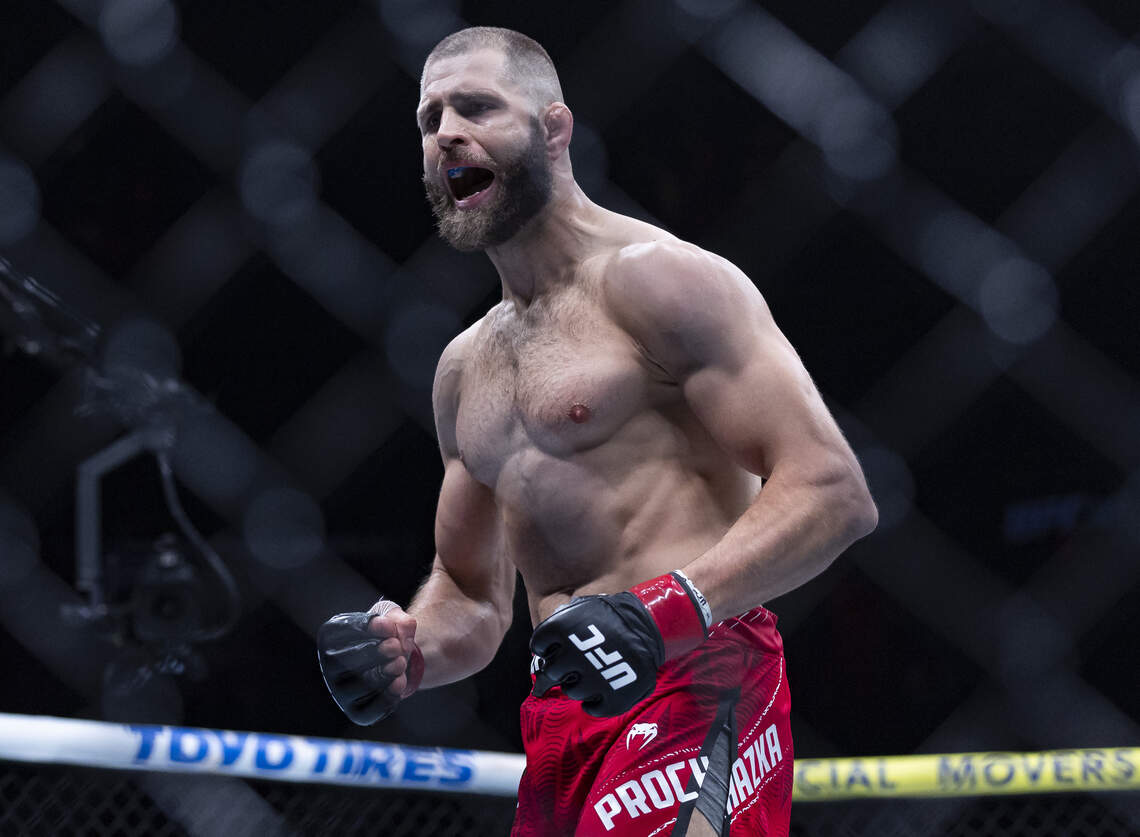
Jiří Procházka arrived in Qatar needing more than a result. In April, he had lost a vacant light heavyweight championship fight to Carlos Ulberg by first-round knockout at UFC 327. Saturday put him across from Ulberg's teammate and ended with another stoppage. Two losses do not erase a former champion's career, but their similarity in consequence should demand more than a generic promise to be more aggressive in the next camp. The issue is whether Procházka can keep the unpredictability that makes him dangerous without repeatedly exposing himself when his opponent maintains composure.
That balance has always been central to his appeal. Procházka's willingness to operate at unusual ranges, switch rhythms and launch attacks from unconventional positions makes him a difficult man to prepare for in the gym. Opponents can spend minutes trying to decide whether a move is an invitation, a feint or the beginning of a real combination. Yet the advantages run in both directions. An exchange entered with hands lowered or with too much weight committed forward can leave a narrow window for a disciplined counterpuncher. Against fighters at the very top, those windows can be smaller than a second and still decide everything.
To reduce Saturday to careless defense would be too simple. Procházka was credited with meaningful offense in Doha, and one ringside round-by-round account had him ahead in the opening five minutes. Neither the official result nor the nature of the knockout proves that he was technically inferior in every phase of the contest. A fighter may be competitive for the vast majority of a round and still make one decision that costs the fight. At elite light heavyweight, where opponents have both finishing power and the patience to wait for an opening, the margin is unforgiving. The danger for Procházka is not that he has forgotten how to fight. It is that more of his rivals understand how to survive the chaos long enough to punish it.
GOATIFY
GOATIFY UFC & MMA
Procházka's recovery demands a thoughtful reset. Explore GOATIFY UFC and MMA designs for serious fight fans.

Rogainz Joe Rogan UFC MMA Martial Arts Sticker
Add MMA personality to your favourite gear.
Shop Now ↗


UFC GOAT Gold Middle Finger Fight Decal Sticker
Add MMA personality to your favourite gear.
Shop Now ↗
His own reaction made the questions harder to ignore. In a statement reported on November 22, Procházka acknowledged feeling prepared and strong but wondered whether he had devoted too much attention to tactics and not enough to pressure. That is a revealing possibility, although it should not be confused with a diagnosis. Pressing harder is not automatically safer. More forward movement can create openings for his offense, but it can also make the countering moment easier to time. A more useful adjustment may be learning when pressure has earned a sound entry and when the opponent is simply waiting for him to take another risk.
This is where a responsible next booking matters. An immediate third straight fight against a top-tier knockout artist might give the audience another spectacular night, but it could also avoid the question of adaptation entirely. A carefully chosen matchup involving extended striking exchanges, clinch work or sustained tactical resistance would tell the division more about whether Procházka can win rounds without relying on chaos to carry him through. The UFC does not owe any contender an easy path, and the former champion does not need to be protected from competitive opposition. But his next fight should be selected for the sporting question it answers, not solely for the prospect of an explosive highlight.
None of this requires treating Procházka as a spent force. He has been a champion, has won against elite opposition and owns a finishing record that commands respect. His losses create real evidence, not a permanent identity. He can still reinvent parts of his approach while remaining unmistakably himself. The next camp will be judged less by bold declarations than by the first ten minutes of the next fight: can he defend a counter, manage range when an opponent refuses to chase, and recognize when an offensive opening is genuine? That is how this two-fight streak becomes either a turning point or a recurring pattern.
The Champion Is Stirling's Teammate, and That Changes the Title Math
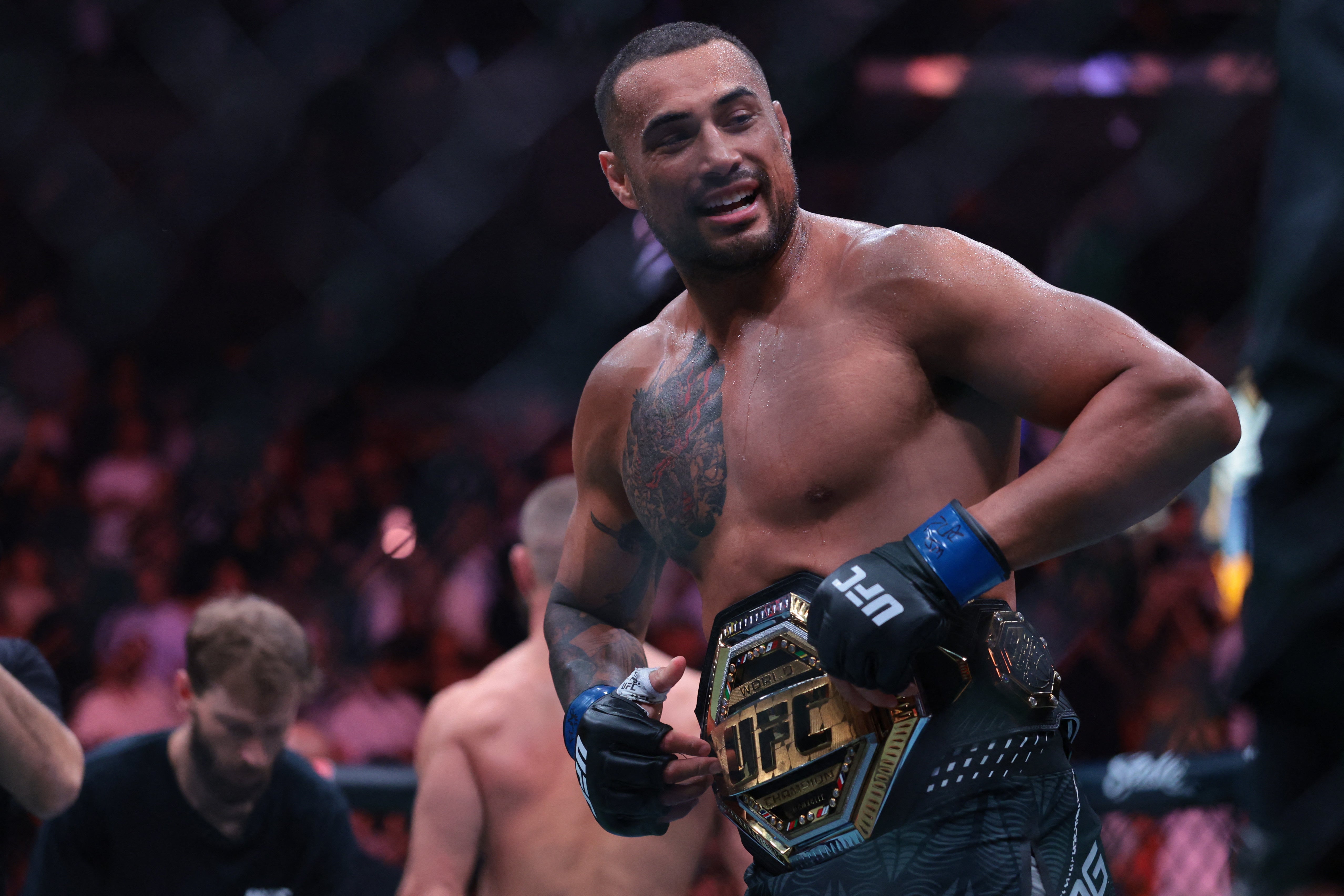
The usual logic of a breakthrough performance is straightforward: beat a famous former champion, rise in the rankings and make the strongest possible case for the next title opportunity. Stirling has accomplished the first part spectacularly. The problem is the man holding the championship. Carlos Ulberg won the vacant UFC light heavyweight belt by knocking out Jiří Procházka in April, and Ulberg and Stirling are teammates at City Kickboxing in New Zealand. A division can rank athletes as competitors while their working lives remain intertwined. That difference suddenly matters much more than the simple winner-versus-champion graphic.
Stirling did not use his post-fight moment to demand that Ulberg fight him. He spoke respectfully about the opponent he had just beaten and expressed interest in the UFC returning to New Zealand. That does not amount to a pledge never to fight his teammate, and it does not prove an agreement about how the promotion will proceed. It does indicate that the obvious next fight is not automatically the one the athlete wants to sell. Training relationships involve coaches, sparring partners, preparation habits and loyalties that do not vanish when the rankings update. In a title fight, the two camps would be required to make choices about information, access and trust that most opponents never face.
GOATIFY
GOATIFY UFC & MMA
The champion and contender share a gym. Browse GOATIFY UFC and MMA collection designs for followers of the title race.

There is a practical sporting complication too. Reports after UFC Qatar note Ulberg has been recovering from an ACL injury sustained around his championship-winning fight. Recovery timelines depend on medical evaluation and training readiness, not on fans' appetite for a return date. Even if everyone involved wanted the matchup, the reigning champion's availability would shape what the UFC can reasonably schedule. A powerful November knockout does not by itself create a spring calendar slot. The promotion must weigh the champion's condition against the need to keep Stirling active and other ranked light heavyweights meaningfully engaged.
One possibility is a title eliminator between Stirling and another high-level contender. That would give him a chance to show his work against a different problem and could protect the integrity of the title race if Ulberg is unavailable. The downside is obvious: a fighter who already beat Procházka and Błachowicz might reasonably wonder what additional evidence is required. A second possibility is an agreement between teammates to compete for the championship, provided both want it and can arrange genuinely separate training camps. That would resolve the sporting hierarchy but potentially introduce difficult personal dynamics. A third is a meaningful stay-busy fight while the division waits, though that route puts Stirling's ranking position at risk without necessarily bringing him closer to the belt.
The UFC also has to resist treating the friendship as a permanent matchmaking exemption. A championship is a competitive title, not a private entitlement reserved for whoever is easiest to match. But the opposite extreme—insisting on an immediate teammate confrontation simply because it would generate controversy—ignores the human and logistical realities of the gym that has produced both athletes. A credible system should be willing to ask both what they want, measure the champion's availability, and identify which matchup creates a fair opportunity for everyone else competing at 205 pounds.
This is why Stirling's victory raises rather than answers the biggest question. His record is 12-0. His UFC run is now seven wins without defeat. He has finished four opponents in 2026. Those are sporting facts that place him in the discussion with legitimate title challengers, not an argument for pretending he already owns the belt. The next announcement will show whether the promotion can acknowledge his breakout and its awkward geometry at the same time. Ulberg's recovery, Stirling's ambitions and the roster's other claims all matter. Only a plan that respects all three can make the knockout's promise feel like real progress.
Qatar's Other Contenders Show Why a Win Still Needs a Plan
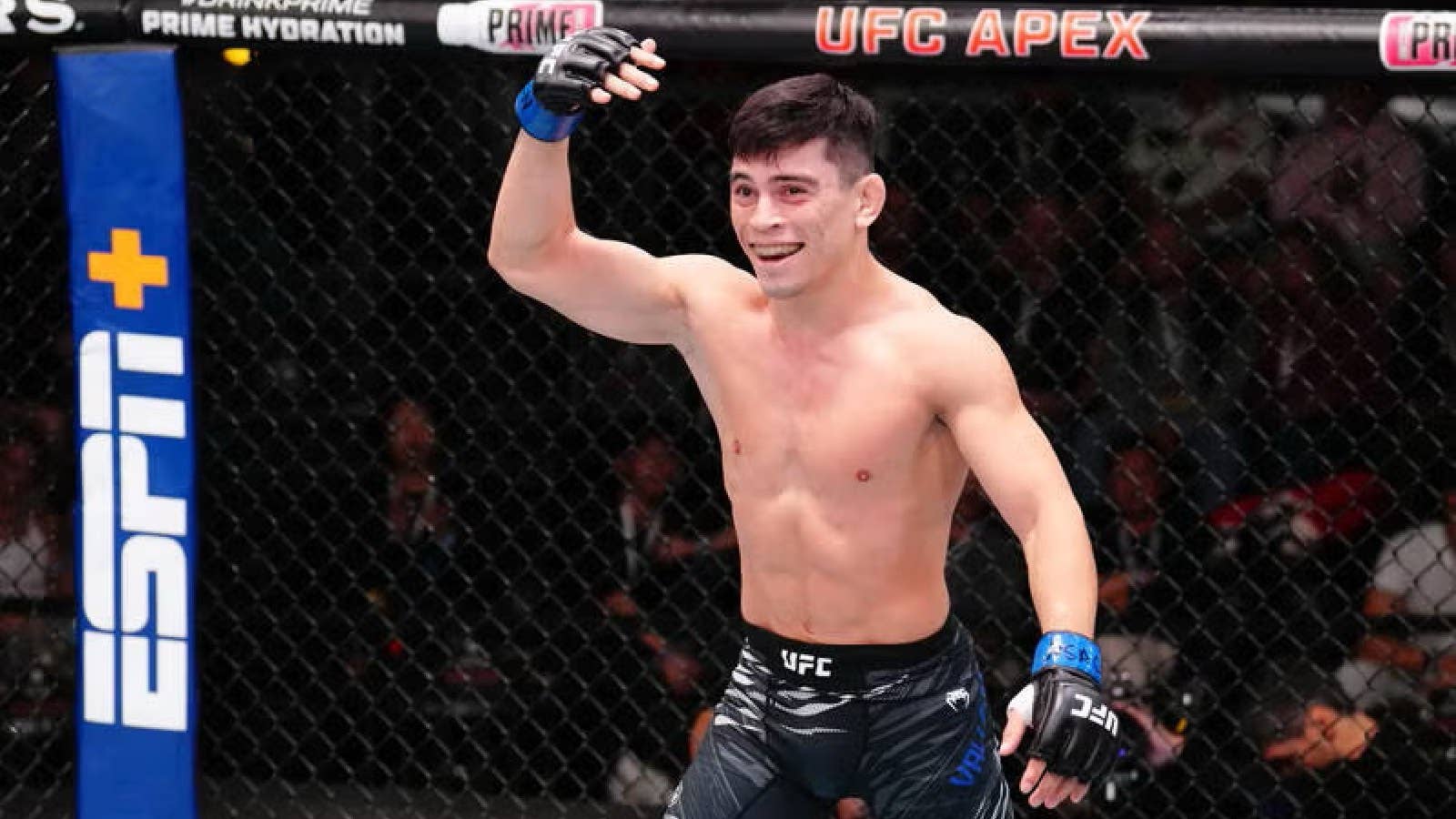
Stirling was not the only athlete leaving Doha with an argument for a bigger fight. In the co-main event, Kevin Vallejos beat former bantamweight champion Aljamain Sterling by unanimous decision, winning by scores of 30-27, 30-27 and 29-28. The Argentine did not get there with the sort of explosive finish that created the night's headline. He handled a different assignment: keeping a decorated grappler from turning a three-round contest into sustained control on the mat, while making the more persuasive offensive moments count on the feet. That contrast makes a useful point about contenders. The spectacular finish and the disciplined decision can both be meaningful auditions for elite matchmaking.
GOATIFY
GOATIFY UFC & MMA
Doha produced new contenders in several divisions. Discover GOATIFY UFC and MMA shirts, hoodies and fight gear.
MMA GOAT Gold Middle Finger Fight Crewneck Sweatshirt
A MMA fan design for everyday wear.
Shop Now ↗UFC GOAT Gold Middle Finger Fight Decal Sticker
Add MMA personality to your favourite gear.
Shop Now ↗Sterling had tools that posed a genuine tactical test. His wrestling entries and clinch work force opponents to defend not just isolated shots, but follow-up attempts after the first approach fails. Vallejos answered often enough that all three judges gave him the decision. The result does not mean Sterling's grappling ceased to matter, and some viewers disputed the width of the scorecards. It does mean the younger fighter handled the most prominent name on his résumé under the kind of pressure that reveals whether athletic promise is translating into reliable skills. Vallejos subsequently called for a meeting with featherweight champion Alexander Volkanovski. That request may or may not be granted; it does not diminish the evidence he produced.
Elsewhere on the main card, City Kickboxing veteran Dan Hooker earned a unanimous decision over Brian Ortega, with all three judges scoring it 30-27, and Kyoji Horiguchi won a decision over Asu Almabayev. Ikram Aliskerov added a one-sided middleweight decision against Jared Cannonier. These are different divisions, different career stages and different styles, but the shared theme is hard to miss. Winning a high-profile bout creates a claim; the promotion then has to decide which claim advances the championship picture and which points toward a different test. The outcomes are not interchangeable simply because they appeared on the same broadcast.
Hooker's victory was especially notable as a change of direction after three consecutive defeats. Ortega, following the fight, laid his gloves down and spoke of ending his career, according to the UFC's recap. Those developments carried stakes unrelated to the light heavyweight belt, yet they remind viewers why an event cannot be evaluated only through its final main-event knockout. For one competitor, the evening can confirm a breakthrough. For another, it can salvage a run. For a veteran, it can become an ending. The next bookings should reflect those individual realities rather than forcing every result into the same simple title-shot formula.
Qatar therefore left the UFC with more than highlights. Stirling demands a credible plan at 205 pounds, Vallejos has a fresh featherweight claim, and other winners have earned relevant opponents without necessarily being next in line for championships. Stirling's particular complication is sharper because the champion shares his gym, but the principle is universal: a result should change the questions asked of a fighter. If the next opponent merely repeats what the previous win already demonstrated, fans may see a fight while the rankings gain little new information. The best follow-up tells the audience something important that Saturday could not.
Stirling's victory deserves to stand on its own before anyone rushes to attach a championship date. He met a dangerous former titleholder, survived periods in which Procházka was finding his rhythm, and ended the fight with a perfectly timed right hand. That is a stronger proof of arrival than a carefully managed record alone. The result also vindicates an earlier stretch in which Stirling won decisions rather than collecting viral finishes; the patient work created a foundation for the knockout streak.
Yet the next decision will reveal more about the UFC's light heavyweight division than the highlight itself. Does the promotion give Stirling a title eliminator while Ulberg recovers, explore a rare teammate-versus-teammate title fight only with both fighters' agreement, or match him with another elite contender first? None is frictionless. Procházka also needs a measured reset, not an immediate promise that another spectacular comeback will fix the technical questions exposed in consecutive losses.
Qatar gave the division a genuine new headliner. The responsibility now moves from Stirling's right hand to the matchmakers' calendar: reward the performance, respect the complications, and demand the next fight answer a question the knockout could not.
GOATIFY
GOATIFY UFC & MMA
Shop GOATIFY UFC and MMA shirts, hoodies and fight fan gear.
Rogainz Joe Rogan UFC MMA Martial Arts Sticker
Add MMA personality to your favourite gear.
Shop Now ↗


















