

Russell Topped Wet Vegas Practice. Mercedes Still Has Questions.
GOATIFYThe headline belongs to George Russell, but the most revealing comment from Las Vegas came after the timing screen had already declared him quickest. The Mercedes driver took the top spot in wet Free Practice 2 with a 1:47.272, just 0.071 seconds clear of Pierre Gasly. He then suggested that Mercedes probably had not been the fastest car. That is not the usual victory speech after leading an F1 session. It is a reminder that on a cold, damp street circuit, when a lap happens can matter almost as much as the machinery underneath it.
Formula 1's opening practice had produced no competitive lap times in heavy rain. The second hour began on wet tyres, moved towards intermediates and ended with a short red flag, a rapidly improving circuit and a last-minute scramble. Charles Leclerc finished third, Isack Hadjar fourth and Oscar Piastri fifth, while Max Verstappen managed only 13th after a troubled run. Each result carries a different qualification. The clock records one driver's best lap; it cannot show what every car might have done on identical grip.
That distinction matters because Friday's final practice and qualifying are expected to be dry. The central questions are not merely whether Russell can repeat P1, but how Ferrari, McLaren and Red Bull translate limited wet-weather data into a competitive setup, and which team can make its tyres work when the Las Vegas Strip turns cold again.
Russell won the timing screen, not a clean verdict on Mercedes pace
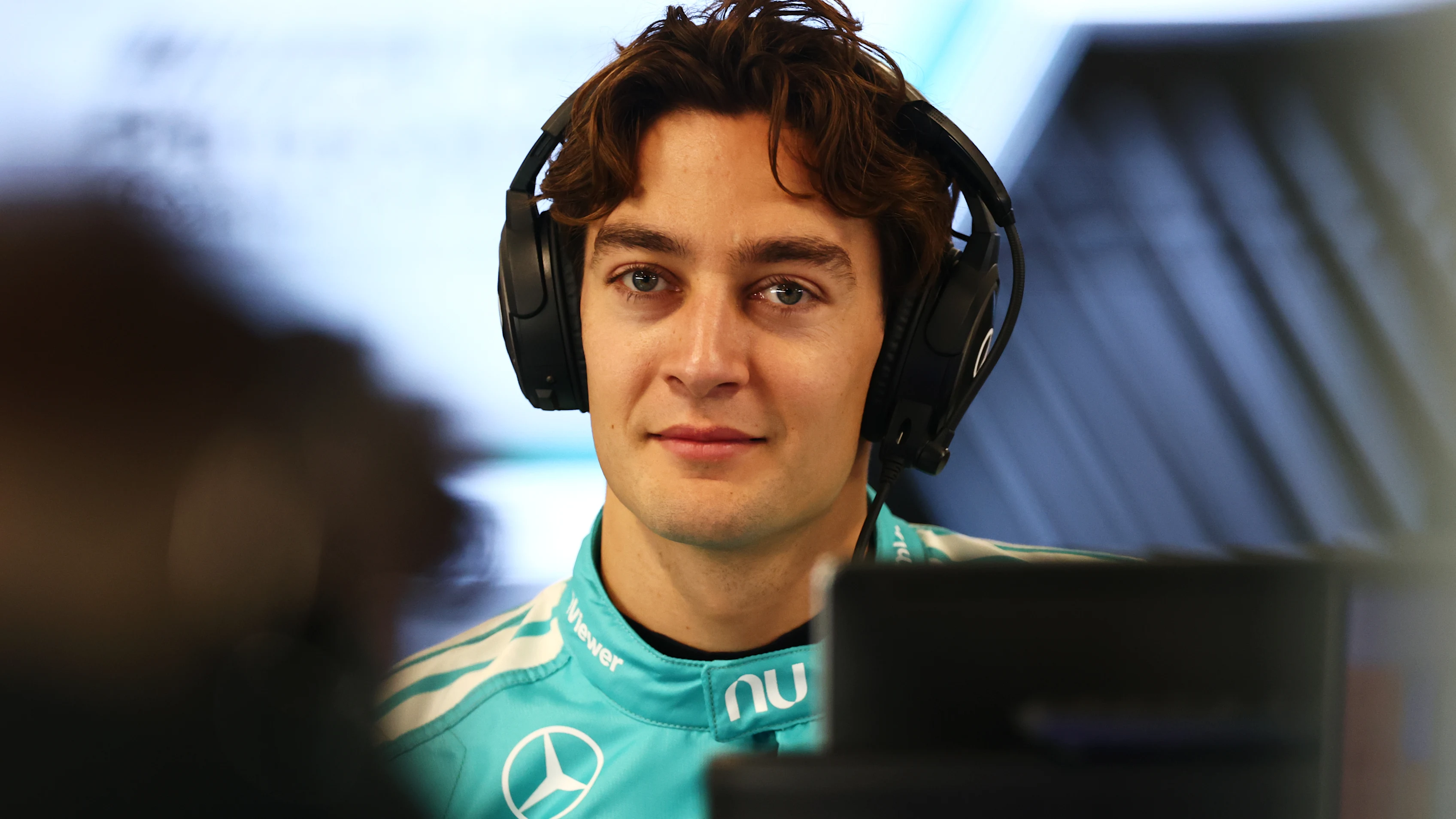
Russell's last lap turned a complicated session into a simple Mercedes headline. The final margin was narrow enough to look like a traditional duel: 1:47.272 for Russell, 1:47.343 for Gasly. Yet those times were set on a street circuit that was becoming faster almost minute by minute. A lap when more moisture has cleared is not directly comparable with one made while drivers still search for grip. The team on top of the timing screens is not always the team with the best baseline car.
The underlying sequence explains why. Oscar Piastri had been an early pioneer of the intermediate tyre; Lando Norris then built a succession of quicker laps. Leclerc went under 1:50 and kept finding time. Hadjar briefly moved to the top. Debris near the last corner brought a short red-flag stoppage, compressing final runs into only a handful of minutes. When the track reopened, everyone wanted one more attempt before the flag. Russell delivered his strongest lap at the moment when that opportunity was most valuable.
His own assessment was more useful than the finishing order. Russell felt McLaren had looked exceptionally quick at points, believed Leclerc had shown genuine pace and noted that the timing of his run had helped. None of that diminishes his performance. He still had to build tyre temperature, judge the braking points and execute an accurate lap on a surface that punished mistakes. A driver can deserve credit for a superb lap without that lap settling a technical contest between teams.
Mercedes' most encouraging detail was its ability to react late in the hour. At a circuit where a small loss of confidence on the brakes can cost enormous time, Russell remained precise when conditions were difficult. That ability may matter again in qualifying, especially if cold temperatures complicate the first push lap. The less encouraging detail is that the team's own view of its raw speed was more modest than P1 would imply. Nobody from outside the garage can credibly translate a wet practice position into a dry qualifying probability.
The fair conclusion is much narrower than a prediction of pole. Mercedes proved it could extract an excellent intermediate-tyre lap as the track improved. It did not establish that its dry balance, straight-line efficiency or tyre preparation will be best. With one representative practice remaining before the grid is set, those missing measurements are not a footnote. They are almost the entire challenge facing every team, including the one that happened to lead the timesheets.
GOATIFY
GOATIFY Formula 1
Russell's late lap turned a difficult night into a Mercedes headline. Explore original GOATIFY Formula 1 fan apparel.


Gasly and Leclerc made the case that the field is closer than P1 suggests
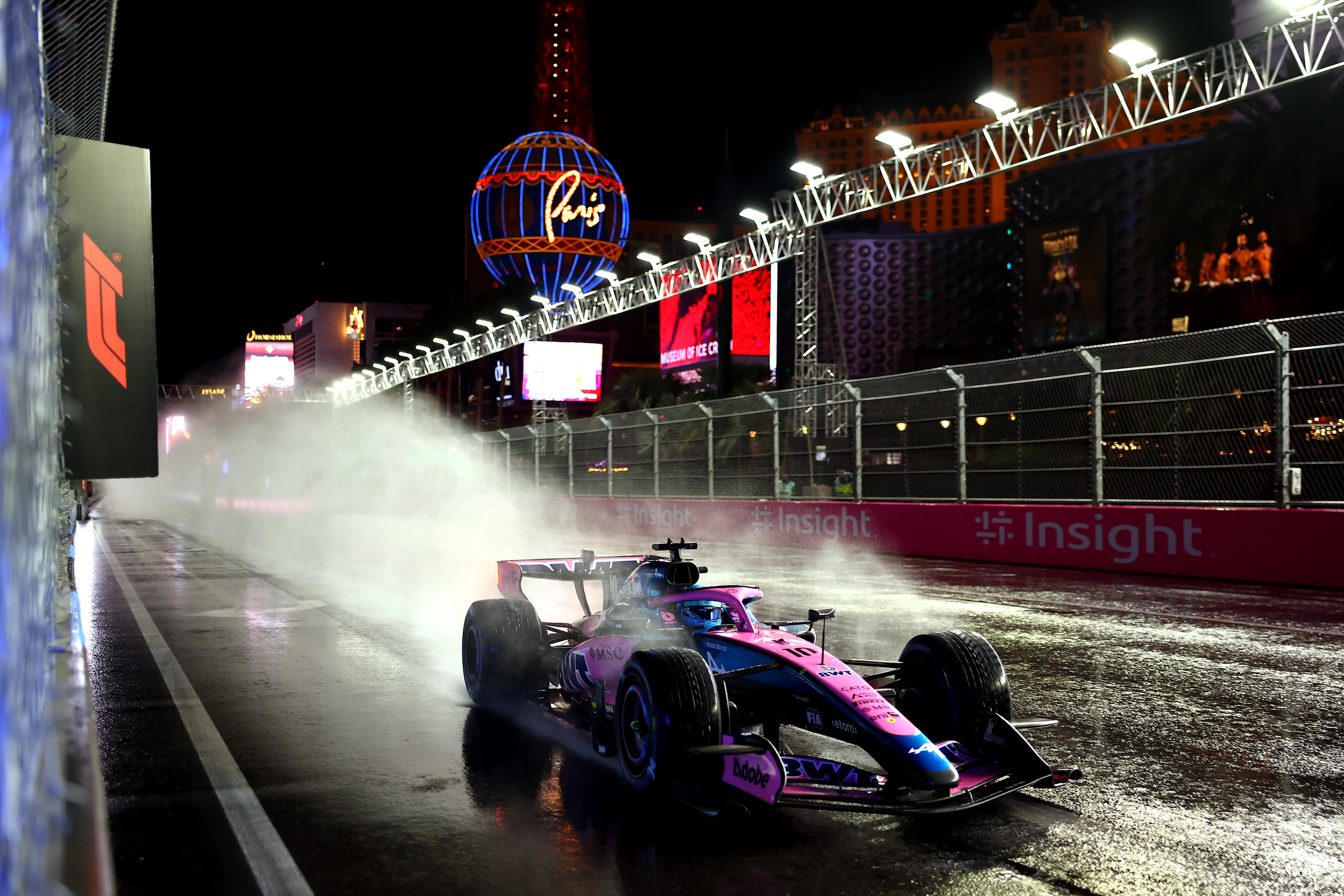
Pierre Gasly's second place should make observers especially cautious about treating FP2 as a final pecking order. Alpine ended the session just 0.071 seconds behind Russell, with Gasly looking comfortable as the water gradually cleared. He was not merely rescued by a freak sector: the car stayed competitive on intermediates as the circuit evolved. Team management nevertheless avoided declaring a sudden front-row breakthrough, and Gasly himself accepted that dry running would be more representative.
The caution is understandable. Alpine's management acknowledged that its recent results had been difficult, with just one point from the preceding six races. A sudden step to leading pace would be a terrific story, but it is not yet an established fact. A car can be kind to intermediates, help a driver trust the front axle in slow corners or simply be in the right place on an improving track. None of those advantages automatically transfers to slick tyres. Franco Colapinto's ninth place, over 1.8 seconds behind his team-mate, further demonstrates how tricky meaningful comparisons become.
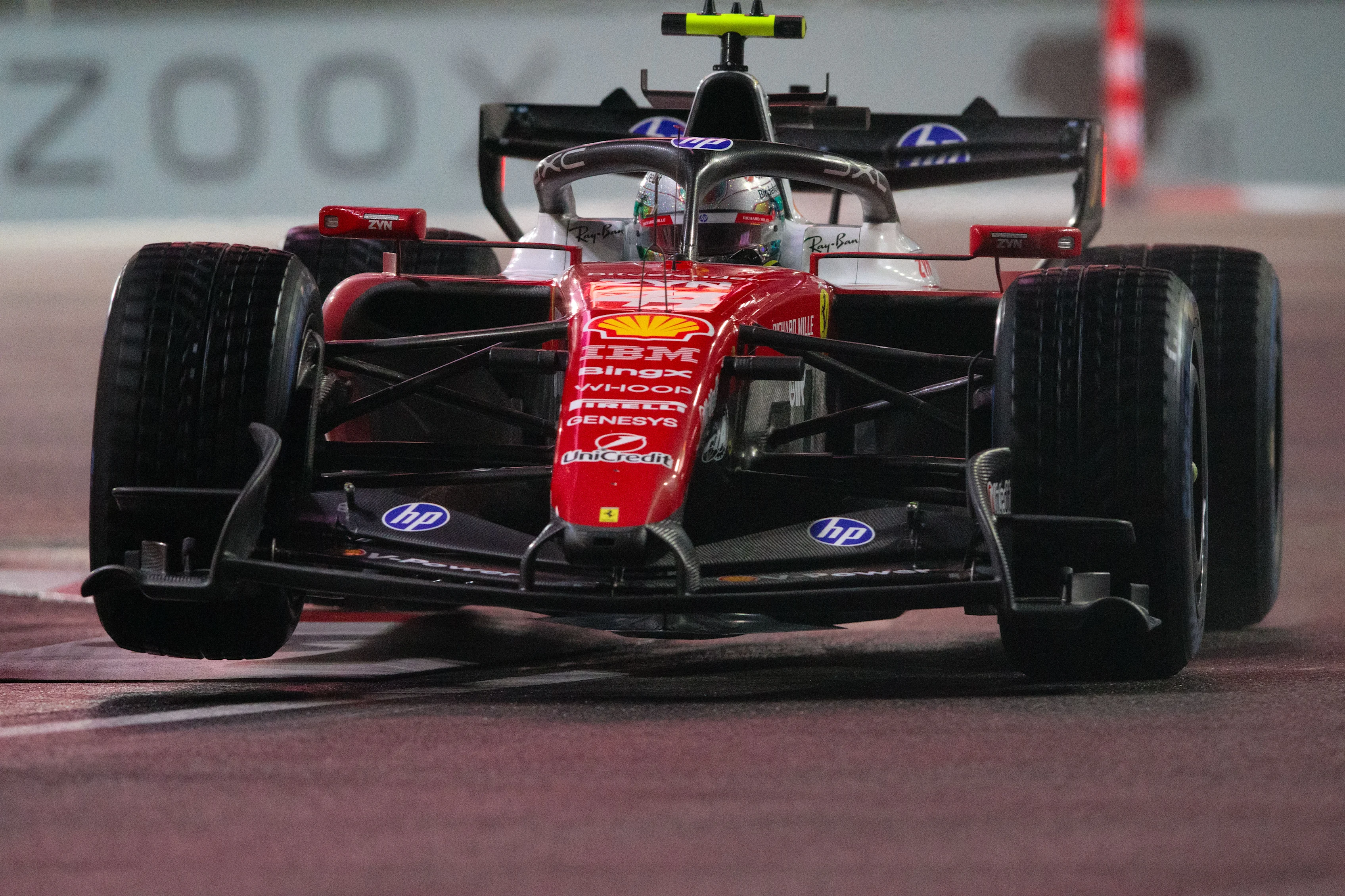
Ferrari supplied a different kind of evidence. Charles Leclerc was the first driver to break the 1:50 barrier, later clocked 1:47.605 and spent long periods looking capable of taking P1. Lewis Hamilton finished sixth even though he missed FP1 while Ferrari gave Dino Beganovic seat time. Hamilton reported finding useful information during the wet-to-intermediate transition, making the team's evening more constructive than the third-and-sixth positions alone might suggest. Those laps still do not tell Ferrari how quickly its dry tyres will come into the correct operating window.
Hadjar's fourth place added another complication. He briefly led and looked capable of improving again before hitting traffic late in the lap, so even his 1.135-second gap to Russell is not a clean measure of the Red Bull's potential. Piastri in fifth and Norris in seventh gave still more reasons to resist simple rankings. McLaren was quick as grip evolved but its drivers did not necessarily get the same late-session opportunity as the fastest finishers.
The meaningful question for Friday is which promising clues survive a tyre change. Gasly's P2 raises expectations, but Alpine's real test is whether its confidence and efficiency persist on slicks. Leclerc's speed makes Ferrari a plausible qualifying threat provided it prepares the tyres properly. Four different teams occupied the first four positions, each with a separate reason for optimism and a separate reason to doubt. That is a better description of an open weekend than declaring a Mercedes-Ferrari duel based on a wet Thursday.
Verstappen's difficult nine laps and McLaren's pace hide opposite questions
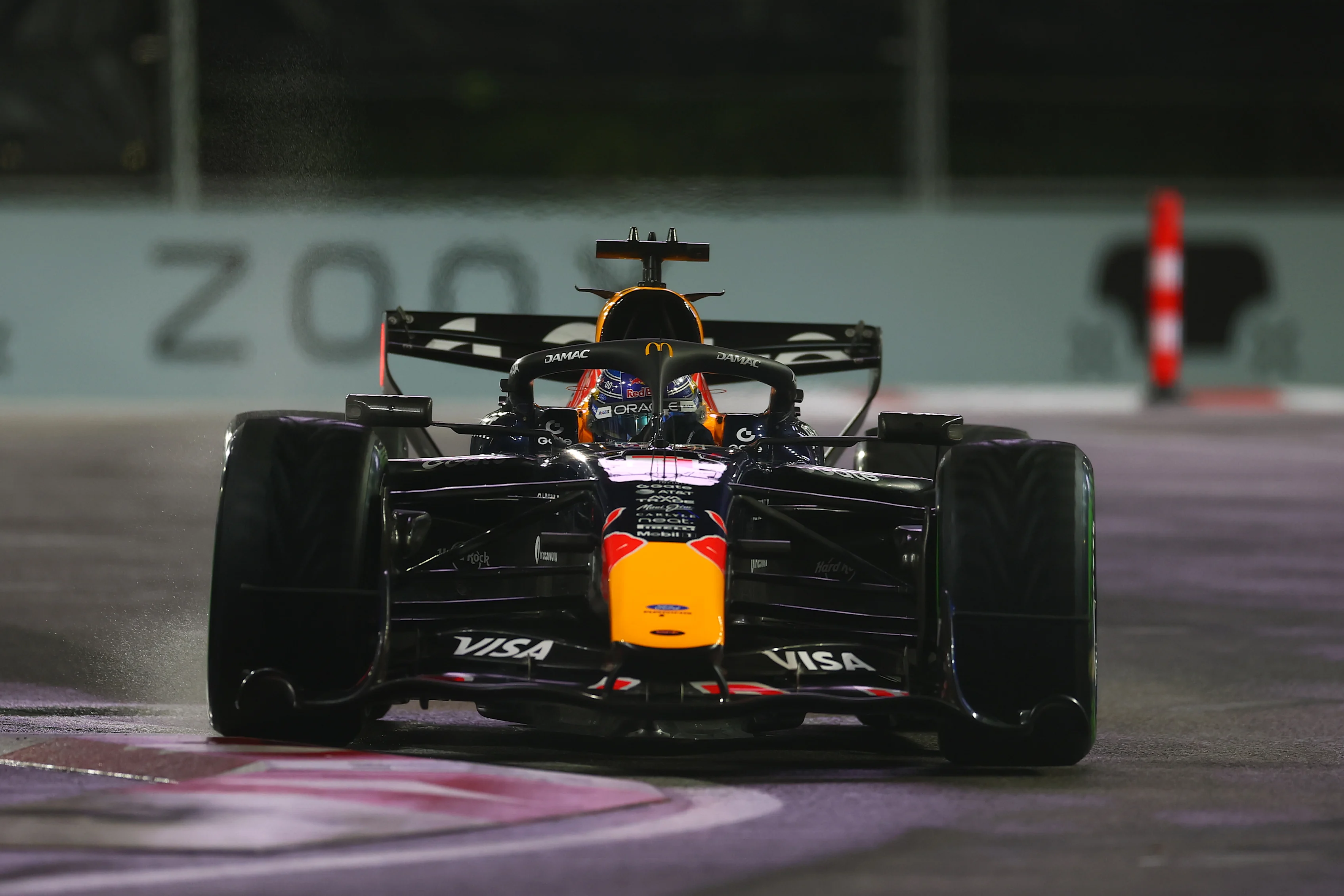
Verstappen's 13th place is the easiest number to sensationalize and among the least reliable indicators of where he will qualify. He completed only nine laps in FP2, spent an extended period in the garage and reported that his Red Bull was not behaving as expected. The team's explanation distinguished early decisions about wet-weather running from subsequent problems with energy deployment and balance. When a street circuit is still damp, an unresolved problem like that can distort the lap time more than a modest aerodynamic disadvantage would.
There are at least two technical questions inside the same bad result. An energy-management issue can prevent a driver from getting consistent acceleration at the exits of slow corners or optimum deployment on a long straight. A balance issue changes how confidently a driver can brake, rotate and apply the throttle, especially when there is little grip at the rear. Solving one does not automatically fix the other. Red Bull's engineers therefore cannot simply call this a wet-tyre anomaly and assume that slicks will return the car to a competitive place.
GOATIFY
GOATIFY Formula 1
Gasly's unexpected P2 and Ferrari's sharp pace are made for F1 fans who enjoy a surprise. Browse GOATIFY racing designs.


The counterpoint is Isack Hadjar. His Red Bull climbed as high as the leading time before finishing fourth, and the final attempt was disrupted by traffic near the end of the lap. Hadjar was much happier with his car's overall behaviour in the tricky conditions. His result shows that the chassis-and-power-unit combination was capable of a decent intermediate-tyre lap; it does not prove Verstappen had the same balance, set-up or deployment available. The meaningful comparison comes when both cars can complete a dry qualifying simulation without interruptions.
McLaren presents almost the opposite puzzle. Piastri and Norris were among the first to make the switch from full wets to intermediates. Norris repeatedly improved the benchmark as the track dried and looked extremely competitive during the middle of the hour. But when the final times were sorted, Piastri was fifth and Norris seventh. That is hardly proof that McLaren lacked speed. A sequence of laps at 20 minutes remaining tells a different story from a last-gasp lap after another round of track evolution, particularly with a stoppage compressing the closing minutes.
Russell himself singled out McLaren and Ferrari when he discussed who looked quickest, which should make Mercedes supporters temper the assumption that the fastest single lap describes an established advantage. Meanwhile McLaren faces its own practical question: was its early pace a reliable sign of an adaptable car or merely evidence that its drivers reached the intermediate tyre's performance window a little sooner? Neither interpretation is conclusive, and both are worth testing on Friday.
The striking feature of Thursday's session is that the surprises point in different directions. Red Bull has identifiable items to repair. McLaren may have more pace than its final classification suggests. Ferrari looked consistently promising through changing conditions. Alpine has reason to be pleasantly surprised but no grounds to celebrate a dry front-row start yet. When observers talk about the order being scrambled, the better interpretation is that comparable data never really existed, not that a definitive new order has emerged.
Even the traffic that spoiled Hadjar's final run offers a relevant warning. Las Vegas qualifying contains a major execution component: finding a clear final sector, achieving tyre temperature without using too much life and avoiding other cars at the end of the lap. If the conditions stabilize, the stopwatch will become much more revealing. But street-circuit preparation and traffic still mean a perfect theoretical car does not necessarily take pole. The competitive picture will be judged by much more than one Thursday position.
The dry reset could turn tyre temperature, not Friday's ranking, into the story
The Las Vegas Strip Circuit is spectacular under the lights but remarkably unforgiving when the road is cold. Its 6.201-kilometre layout combines long full-throttle sections with heavy braking and slow corners. The teams want straight-line efficiency without creating an unstable car when drivers stand on the brakes. They also have to generate enough tyre temperature to work through the low-speed turns without sliding. Thursday's rain made both tasks harder to assess, because intermediates behave differently from the slick tyres expected for qualifying.
That is why Russell highlighted graining as an unresolved race concern. When rubber cannot build and maintain the right temperature, sliding can damage its surface and reduce performance. It is possible to look fast over a single lap and struggle through a stint, or to suffer a poor early lap before the tyre settles into a more usable window. Las Vegas has produced different strategic patterns in past editions, including both one-stop and two-stop approaches. Those examples are useful context, not a formula that can be applied automatically to different tyres, weather and 2026 cars.
Friday's final practice must therefore do two jobs at once. Teams need representative qualifying simulations to understand the grid potential, but they also need enough consecutive laps to estimate tyre life and race balance. An outfit that concentrates exclusively on one-lap speed may discover on Saturday that its set-up hurts the tyre over longer runs. One that prioritizes long-run stability risks giving away crucial qualifying places on a circuit where passing is possible but still costly. The trade-off becomes more difficult when almost no dry information has been collected on the opening day.
GOATIFY
GOATIFY Formula 1
Verstappen and McLaren brought rival questions to Vegas. Find GOATIFY Formula 1 shirts, hoodies and stickers.


Ferrari's evidence illustrates the opportunity and the uncertainty. Leclerc had the confidence to go fastest as the inters came alive, while Hamilton ended sixth and described useful learning during the session. That is a promising starting point for two experienced drivers, but neither has yet proved that the Ferrari can retain its front-end response when the racing line is dry and the surface temperature falls again. A car may suit the intermediate's flexible construction while needing a very different balance for a slick. The engineers will need to decide whether to trust their simulator baseline or make bigger adjustments from the feedback they have.
Mercedes faces an additional complication separate from Russell's fast lap. Kimi Antonelli, eighth in FP2 and already the world champion, is carrying a five-place grid penalty for taking another internal combustion engine beyond his season allocation. Changes to power-unit components and associated set-up choices make his weekend harder to compare directly with Russell's. The penalty is a real constraint regardless of whether Mercedes proves fast over one lap. A driver with a grid drop has more incentive to make overtaking and tyre conservation work in the race rather than focusing entirely on a position he cannot keep.
Red Bull has to fix Verstappen's balance and deployment complaints while the whole grid chases dry-tyre answers. McLaren must determine whether the flattering middle-session runs or the more modest final classification better reflect its capabilities. Alpine has to see whether Gasly's unexpectedly strong intermediate performance survives on slicks. None of those problems can be solved by revisiting the FP2 chart. Their answers require actual laps, and those laps will be rationed tightly by the schedule.
The remaining timetable sharpens the pressure. The final practice begins on Friday, November 20, at 4:30 p.m. Las Vegas local time, with qualifying at 8 p.m. The Grand Prix follows on Saturday, November 21, at 8 p.m. local. The distance between the final practice and a meaningful grid position is short; the teams cannot afford to squander it chasing a misleading Thursday number. If temperatures fall or track grip changes again, they may face an entirely new problem even after the rain has stopped.
For now, the strongest prediction is not a driver's name. It is that the teams which convert the most limited information into usable tyre preparation and a stable car will have an advantage. Russell's P1 was deserved, Gasly's P2 was eye-catching and Ferrari showed promise. What is still missing is precisely what decides the weekend: proof that those encouraging performances translate into a quick, repeatable dry-car package.
George Russell earned the fastest lap when it counted, and Pierre Gasly's Alpine delivered one of the evening's genuine surprises. Leclerc supplied a strong Ferrari reference, McLaren demonstrated flashes of pace and Verstappen's limited running left Red Bull with clear questions to answer. Those are worthwhile observations. They are not a qualifying prediction disguised as certainty.
The distinction is especially important in Las Vegas. A constantly improving wet circuit rewards timing, decision-making and confidence, but it cannot reveal all the compromises involved in a cold, dry weekend. Mercedes will be happy with Thursday's momentum; its rivals will be just as interested in what the data does not yet show.
Friday's dry simulations should begin separating outright speed from opportunistic lap timing. Until then, the honest story is not that Russell has become the certain favorite for pole, but that five teams showed different kinds of promise and uncertainty during one messy practice hour. The Strip has already produced the intrigue. Now it needs a fair comparison.
GOATIFY
GOATIFY Formula 1
Explore GOATIFY Formula 1 shirts, hoodies and racing stickers for every fan.


















