

Ari and Andrea Trail by 2,600. The Shared-Event Gap Is 600.
GOATIFYThe women's year-end No. 1 race in padel looks almost settled if you read only the headline deficit. Gemma Triay and Delfi Brea have 14,200 points in the comparison published after Dubai. Ari Sánchez and Andrea Ustero have 11,600. That is a serious 2,600-point advantage with the Mexico Major beginning on November 23 and Barcelona's season-ending Finals still ahead. Yet a second calculation changes the way the gap should be understood: in the 20 tournaments entered by both partnerships, the leaders have collected 12,200 points against 11,600. Same-event difference: just 600.
Both numbers are useful. Neither should be confused for the other. The official season race rewards the results players have actually banked, including two P1 tournaments Triay and Brea won while Ustero was injured. The shared-event calculation instead asks how closely the partnerships have performed when they appeared on the same tournament calendar. It cannot award points to anyone for an event they missed. Nor can it predict what a hypothetical draw would have produced. It does show why Sánchez is justified in describing a closer competitive battle than the raw standings imply.
Before Acapulco, the meaningful question is not whether someone can rewrite the summer. It is whether Sánchez and Ustero can make the remaining opportunities count while the established leaders keep extracting points from every draw.
Two Scoreboards, One Big Difference

Start with the official-looking number: 14,200 to 11,600. The difference is 2,600, and it belongs to the season race, not to a single match-up or the rolling world ranking. In professional padel, the Race is a running account of the points players earn during the season. It matters because a smaller deficit on paper can still be much harder to overcome if the leader has more reliable results already secured. A team cannot persuade the standings to erase a tournament merely because the chasing partnership was unavailable.
Now apply a narrower test. Remove the two P1 tournaments that Sánchez and Ustero could not enter, and compare the 20 tournaments in which both pairings participated. Triay and Brea earned 12,200 points across that common schedule; Sánchez and Ustero, 11,600. The difference is 600. This is not a replacement league table. It is a descriptive comparison of the results actually achieved when both duos were in the field. It tells us that the frontrunners' advantage over overlapping events is real but much smaller than the season-total gap.
The arithmetic deserves to be written out because the distinction can be obscured by a dramatic headline. The leaders' 14,200 consist of 12,200 from common events and another 2,000 from Málaga and Pretoria. The challengers' 11,600 come entirely from the shared events used in this comparison. Subtract 11,600 from 12,200 and the overlap gap is 600; add the two P1 titles to the leaders' side and the official-season difference becomes 2,600. Those figures are a snapshot after Dubai, not a promise about the final ranking.
Even the narrower metric has limits. Two tournaments can feature both partnerships without those teams facing one another. Results against other opponents count toward the same-event points. The calculation therefore measures their ability to progress through similar competitive environments, not the head-to-head score between the pairings. It also ignores the fact that the draw, fatigue, conditions and opponent order can differ dramatically. Calling the gap 600 is accurate only when the label stays attached.
GOATIFY
GOATIFY Padel
Shop GOATIFY padel products from the Padel-filtered collection scope.


That leaves an unusually interesting conclusion. Triay and Brea deserve credit for a season built on more accumulated points and for being 600 points better across the events the four players all attended. Sánchez and Ustero deserve recognition for being competitive in that common sample despite a disrupted calendar. The championship will be determined by official points, while the more revealing sporting debate can consider both totals without pretending one cancels the other. A close contest within the overlap makes the final weeks attractive. It does not make the leaders' advantage fictitious.
The Injury Cost Two Starts, Not Two Guaranteed Titles

The largest numerical wedge in this race grew during a period in which Sánchez and Ustero were not on court together. Andrea Ustero's injury kept the Catalan partnership out of the Málaga P1 and the Pretoria P1. Both tournaments went ahead, both titles were won by Gemma Triay and Delfi Brea, and each P1 victory supplied 1,000 points to the winners. Those two weeks added up to a 2,000-point contribution on the leaders' side of the ledger.
It is tempting to describe that amount as 2,000 points lost through injury. That wording is a shortcut, not a calculation of what the challengers would have earned. Even if they had been fit and entered, they would have needed to win both titles to claim the maximum 2,000 themselves. Entry does not guarantee a semifinal; a semifinal does not guarantee a final; the final does not award its champion's points to both teams. Their absence removed the possibility of collecting points there. It did not establish which results would have followed from participation.
Nor should the injury become a reason to discount Triay and Brea's victories. They had to beat the opponents put in front of them. Playing the full schedule has its own demands: physical management, travel, adjustment to changing courts, recovery between demanding matches and the pressure of defending a leading position. Remaining available can be a genuine competitive strength. So can turning entry opportunities into titles instead of merely making the draw. The 2,000 points are legitimate evidence of a season well executed, regardless of who was missing.
For Sánchez and Ustero, the counterargument is less about entitlement than lost optionality. With no start, a partnership cannot earn even a modest quarterfinal result, let alone put pressure on rivals in the same half of the draw. The injury also interrupts training rhythm and forces a return to match intensity against opponents who have kept competing. Recovering fitness and then rebuilding the feel of a doubles partnership is not as simple as appearing on the next tournament list. Shared court positioning, movement under pressure and communication can all be affected by time apart.
Their strong results since returning therefore carry meaning beyond the points. They demonstrate that the pair can reestablish the tempo of an elite partnership after a broken stretch. But that comeback is not an accounting exception. There is no late-season bonus for the weeks missed, and no guarantee the leaders will stumble simply because the challengers are now fit. The rational way to appreciate Sánchez and Ustero's season is to acknowledge the context while retaining the official scoreboard. Their campaign was interrupted; Triay and Brea capitalized; now the remaining events decide how much of the difference can actually be reduced.
Paris and Rotterdam Changed the Argument; Kuwait Kept It Honest
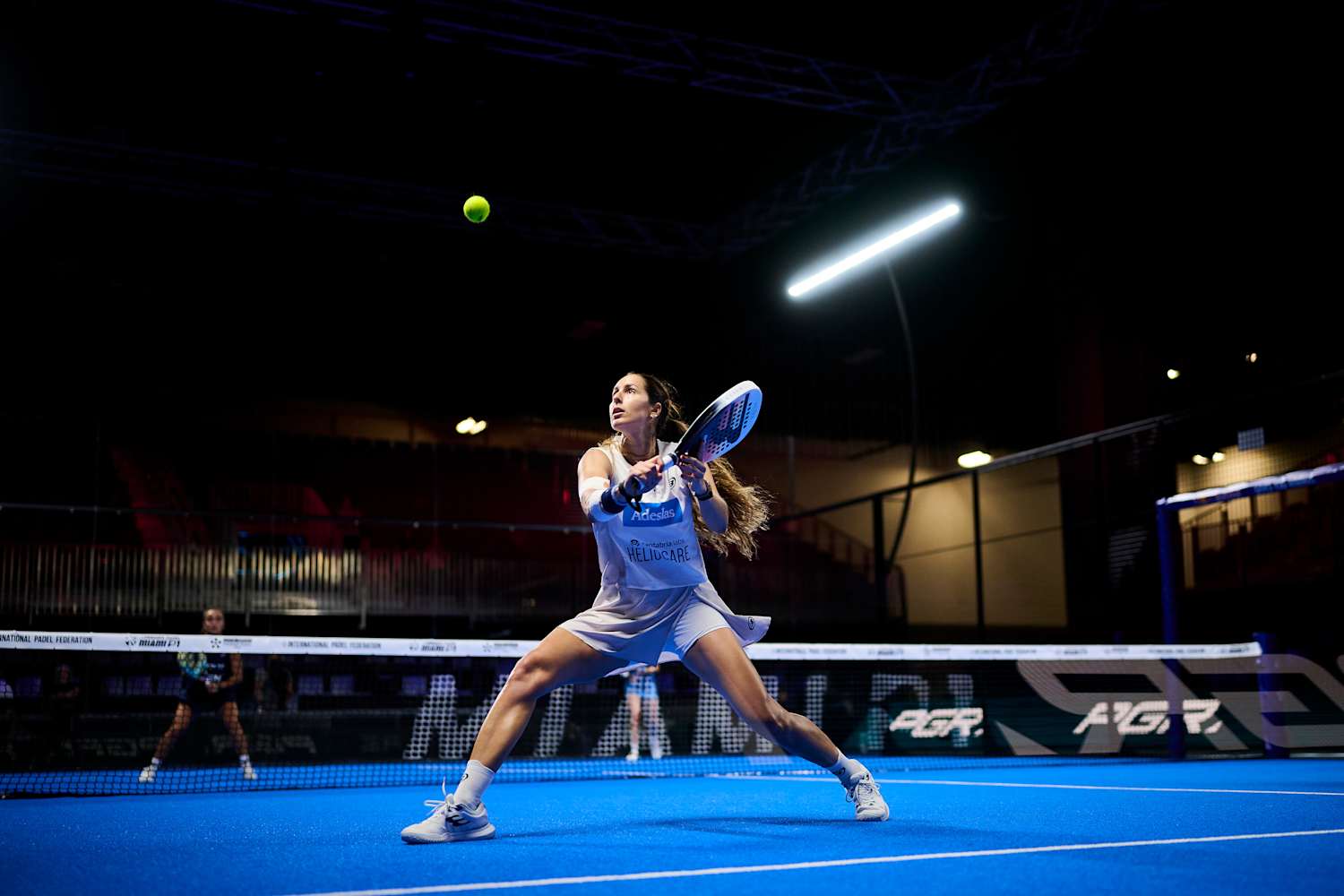
The narrow common-event gap would be less interesting if Sánchez and Ustero had merely accumulated points in ordinary early-round wins. Their recent tournament record gives the comparison sporting substance. They won the Paris Major, followed it with the Rotterdam P2 title and then took the Milan P1 crown. They also reached the Kuwait Major final. Those are not small events stacked to inflate a tally; they include one of the calendar's biggest stages and a string of performances against opponents capable of disrupting the title race.
GOATIFY
GOATIFY Padel
Shop GOATIFY padel products from the Padel-filtered collection scope.
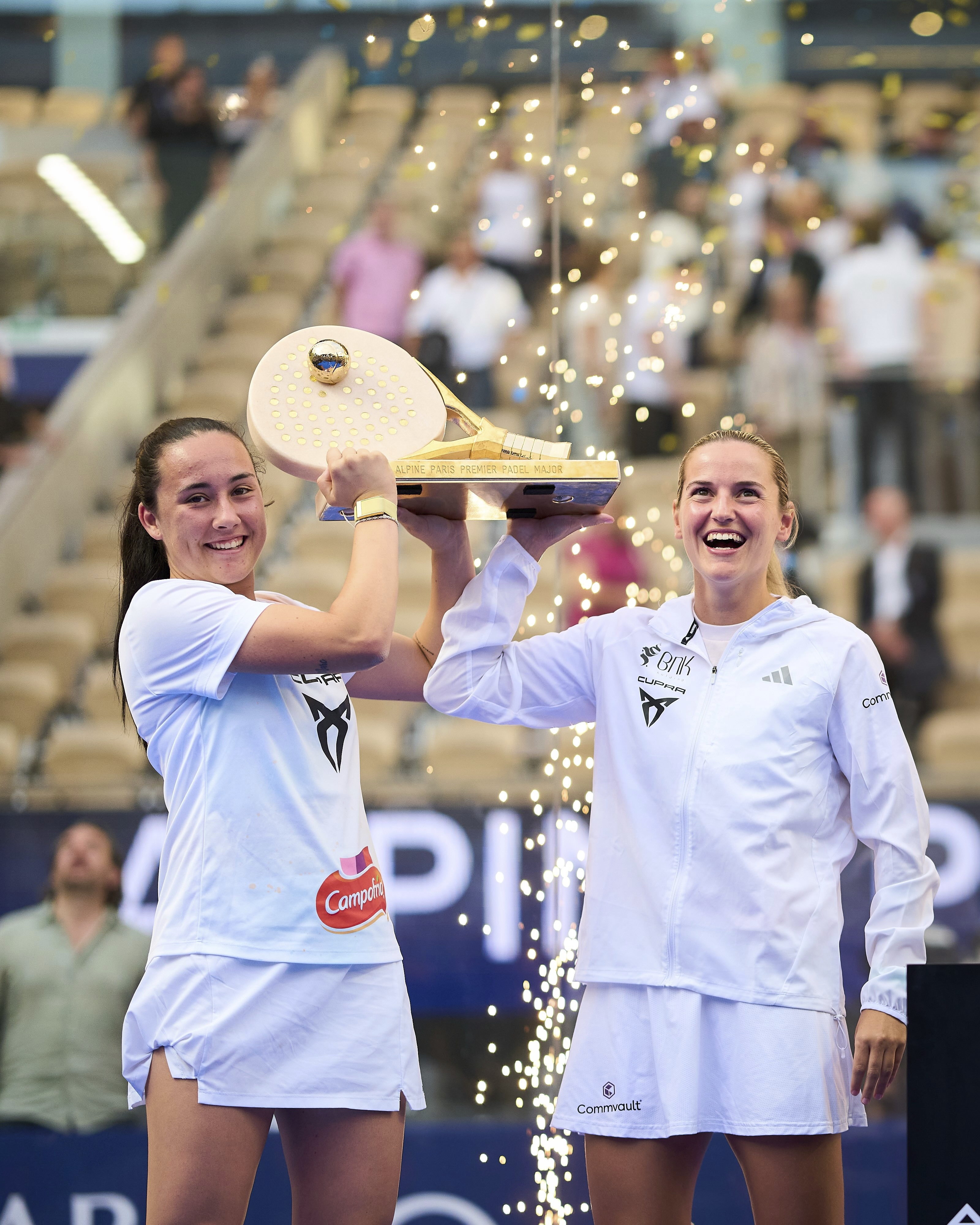
Paris was the breakthrough that made the partnership impossible to dismiss as a promising project still waiting for a major statement. In the September final at Roland-Garros, Sánchez and Ustero defeated Martina Calvo and Claudia Fernández 6-2, 6-0. The scale of the result matters because it suggests more than survival through a close draw. A pair can win a one-off thriller through a handful of points; taking a Major final with that margin shows a level of control that opponents must take seriously. It also delivered a significant points reward at a point when every opportunity mattered.
Rotterdam offered a different test. The pair first got past Triay and Brea in the semifinal, then defeated Bea González and Paula Josemaría 6-4, 6-4 in the final. Beating one leading partnership can be explained away as a favorable matchup or an isolated performance; doing it twice across the sharpest end of a tournament is much harder to discount. Official match reporting described Sánchez's ability to dictate the rhythm and Ustero's influence on attacking exchanges. Their emerging balance is central to why the partnership became a credible threat despite its missed summer.
But Kuwait demonstrated that recent form does not make the year-end summit inevitable. In the October 31 Major final, Sánchez and Ustero took the first set 6-3 against Triay and Brea. The leaders answered by winning the next two 6-1, 6-1. This was not a tiny escape on a single match point. It was a substantial shift in control against the very partnership trying to chase them down. The victory gave Triay and Brea another Major trophy and a highly valuable addition to their points total. For Triay it also represented a record 59th professional title.
That final is a useful counterweight to an overly sympathetic reading of the 600-point comparison. The common schedule was close, but the leaders also delivered a major direct victory when the pressure was highest. Their experience of recovering after a lost set and turning the match decisively is precisely the quality required to protect an advantage. Sánchez and Ustero have enough evidence to argue they belong in the top battle; Triay and Brea have a title record and a current points lead to argue that they remain the standard.
There is room for both judgments without manufacturing a rivalry from unrelated claims. One pair has built a larger complete-season body of results. The other has responded to disruption with a series of statement weeks. Whether those trends meet in Mexico is a live sporting question. Whether either pair deserves past points they did not earn is not.
Mexico and Barcelona Are About Results, Not Revised Mathematics
The calendar now becomes the most important variable. The Mexico Major in Acapulco is scheduled for November 23–29, with the season-ending Premier Padel Finals in Barcelona set for December 10–13. At a Major, the winning pair can collect 2,000 points each. The Finals offer another major opportunity for players who have qualified. Those events are close enough to make the debate urgent and valuable enough to affect the standings, but they will not rewrite the results already recorded in Málaga, Pretoria or Kuwait.
GOATIFY
GOATIFY Padel
Shop GOATIFY padel products from the Padel-filtered collection scope.
A simplistic mathematical headline would add the champions' available points and announce that Sánchez and Ustero can automatically overturn 2,600. That ignores what Triay and Brea collect in the same events and how the Race's best-results system may affect the net increase. A challenger gains ground only by outscoring the leader by enough on the points actually counted. If the frontrunners advance deep into Mexico, a very good tournament from the chasing pair may make surprisingly little difference. If the leaders exit early while the challengers win, the gap can contract more sharply. The margin changes by a comparison of outcomes, not by the winner's score considered in isolation.
There is a tactical layer to that arithmetic. The teams cannot control each other's draw or opponent injuries; they can control preparation, service patterns, shot selection and the energy they bring to repeated high-pressure matches. Ustero's physical readiness matters after the summer setback, particularly if a long three-set match creates a difficult turnaround before the next round. Sánchez's experience can help manage a run without treating every point like the entire season depends on it. The younger partner's attacking threat is most valuable when the pair has enough patience to create the right ball rather than rushing the first opportunity.
For Triay and Brea, the challenge is different. They do not need to play as if they are 2,600 points behind. They need to defend their lead through results, not through caution. Kuwait showed they can change a final after losing the opening set. The Dubai quarterfinal loss to Claudia Jensen and Tamara Icardo was a reminder that even top seeds are vulnerable, so protecting the ranking by simply expecting other teams to lose is not a plan. Every match they win in Acapulco either creates a new opportunity to extend their advantage or denies challengers the chance to close it comfortably.
There is also a psychological trap for the chasing pair: making the ranking more important than each day's match. The 600-point overlap comparison is evidence of their competitiveness, not a tactical instruction or an excuse to feel cheated. Chasing players who focus on a hypothetical table can tighten up against opponents they need to beat first. They need to carry the Paris and Rotterdam confidence into Mexico while accepting that a poorly timed early loss would make the official gap even more difficult to bridge.
The most honest measure after Acapulco will be a new official race total and a simple explanation of how the difference changed. If Sánchez and Ustero win and the leaders fall short, the comeback story earns a new chapter. If Triay and Brea continue their habit of deep runs, the figures will underline their consistency. Until those matches have been played, the season remains open as a sporting contest and firmly in the leaders' hands as a points calculation.
The 2,600-point deficit and the 600-point shared-event gap describe different truths about the same season. One is the official reward for every result earned. The other reveals how close two elite partnerships have been in the tournaments they both attended. An injury reduced Sánchez and Ustero's opportunities; it did not create imaginary titles. Triay and Brea turned those opportunities into trophies, then reinforced their authority by beating the challengers at the Kuwait Major. All four players have enough form to make the final events compelling.
Acapulco starts the next chapter on November 23. What matters now is not which accounting frame produces the friendliest headline. It is who can win the matches, withstand the pressure and leave Mexico with the strongest actual position before Barcelona. The standings cannot be argued down. They can only be played down.
GOATIFY
GOATIFY Padel
Shop GOATIFY padel products from the Padel-filtered collection scope.


















