

The Jets Kept Hall and Wilson. McDonald's Reduced Role Is the Harder Bet.
GOATIFYNew York had a chance to treat the NFL trade deadline as a clearance sale. With just two wins through nine games, several recognizable names drawing interest and a potentially transformative 2027 draft ahead, the Jets could have argued that every established veteran should have a price. Instead, general manager Darren Mougey kept the roster largely together. The few moves they did not make say more about their long-term plan than a routine exchange of late-round picks would have.
Breece Hall stayed despite speculation about his market. Garrett Wilson was treated as a central part of the offense rather than a route to another selection. Geno Smith was retained even though his contract is approaching its end. And Will McDonald IV, dissatisfied with his diminished defensive role, did not get the move he requested. It is a striking collection of decisions for a team whose results suggest an urgent need for change.
There is a coherent case for patience: New York wants to develop its young players beside credible veterans, protect a foundation for next season and enter the next draft with unusually strong capital. But that strategy is not automatically sound just because it avoids selling low. The harder question is whether the coaching staff can actually use the players it chose not to trade. McDonald's situation, in particular, makes that test impossible to ignore.
Hall and Allen are worth keeping together — but the value comes from different jobs
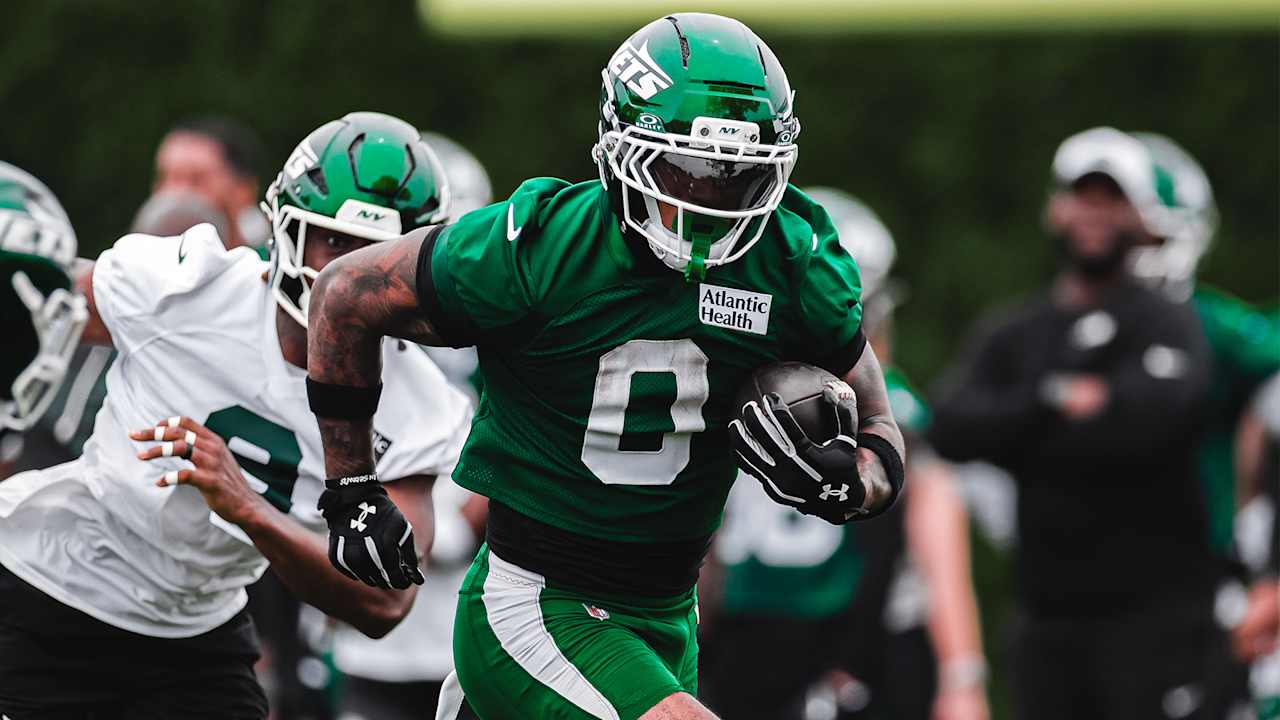
Hall's name appearing in deadline chatter was hardly surprising. Productive running backs on struggling teams are easy to imagine in a contender's backfield, particularly when a club already has a younger option playing well. But New York had committed significant money to Hall only months earlier. One account of the May extension put the three-year total at $43.5 million; other contemporary reporting gave a slightly higher figure. The important point for the trade decision is not the discrepancy in the public number. It is that the Jets had just made Hall a meaningful part of their financial plan and did not view the first difficult stretch of the season as a reason to undo it.
That commitment has been tested by Hall's quadriceps injury. He has missed substantial time, leaving Braelon Allen the chance to prove the offense can function without its nominal lead back. Through four starts, Allen had delivered two 100-yard rushing performances and reached 418 rushing yards, averaging 4.6 yards per carry. Those figures are not a referendum on Hall's talent. They do show that the Jets have an inexpensive, capable runner who can take a genuine share of the workload when both are available.
The temptation is to present the choice as a simple starter-versus-backup battle. A more useful question is whether the two backs create different looks. Hall remains dangerous when the offense can get him in space, use him as a receiving outlet or manufacture mismatches against linebackers. Allen has shown he can shoulder a more conventional rushing load and keep an offense moving through contact. Rotating those responsibilities can preserve both players' health and stop defenses from preparing for one kind of runner on every early down. It can also help a team that has not consistently created enough explosive plays through the air.
GOATIFY
GOATIFY NFL
Hall and Allen give New York two ways to run the ball while Smith develops the passing game. Explore GOATIFY NFL fan designs.


Keeping Allen on a rookie contract makes this option more plausible. He does not carry the same immediate salary implications as Hall, so the team is not paying two veteran premiums merely to have a recognizable name on the bench. The real opportunity cost is in touches and game-planning attention. If the offensive staff gives one runner almost everything because of reputation or contract size, the second becomes an expensive insurance policy in terms of lost development. The deadline decision makes sense only if the Jets are willing to keep testing both versions of the backfield.
That same player-development logic explains why an expiring-contract quarterback might stay. Geno Smith's presence gives young pass catchers a functioning professional offense in which to learn. Rookies Omar Cooper Jr. and Kenyon Sadiq need meaningful route timing, reads against disguised coverage and a stable measure of whether their own mistakes or their quarterback's choices are hurting a play. Replacing Smith with an emergency audition in November would introduce another variable into an already difficult evaluation.
Smith is not simply occupying the position. The Jets' own season statistics credited him with 2,078 passing yards, 12 touchdowns and three interceptions through nine games. Those numbers provide a clearer test of the wider offense than the team's win total alone. Keeping a veteran for that purpose is rational. Making the correct long-term quarterback decision still requires the staff to examine pressures, late-game failures, protection and how much the developing receivers are actually producing. The value of preserving the offense is evidence, not comfort.
Will McDonald's trade request exposes the problem with keeping talent you will not play
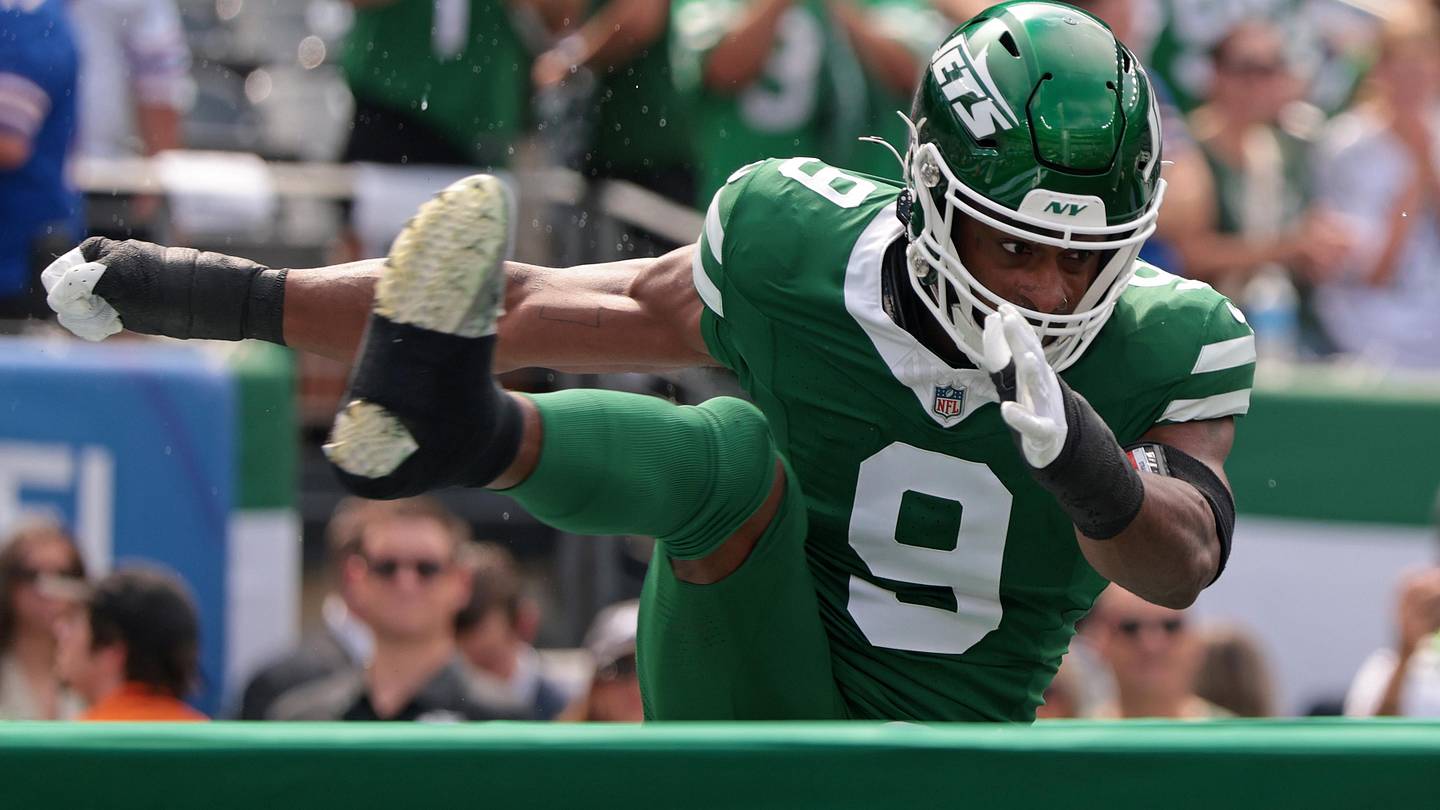
McDonald is the strongest challenge to the idea that standing still was a deliberate investment in player growth. The 2023 first-round pick asked for a trade before the deadline, frustrated that his opportunities had narrowed. New York reportedly rejected a significant offer from Jacksonville. One personnel executive floated the possibility that a second-round pick could have been available. Those are reported estimates of the market, not proof of an actual final offer, but they illustrate the cost of choosing to keep a player whose role no longer seems to fit his résumé.
His recent production makes the frustration easier to understand. McDonald recorded 10.5 sacks in 2024 and eight more in 2025. Across those seasons, he appeared in roughly two-thirds of the Jets' defensive snaps. Through nine games in 2026, that share had dropped to 46 percent. He had three sacks and seven quarterback hits, and he had started only two games. It is reasonable for a pass rusher with that history to ask whether a reduced role represents a tactical choice, a temporary roster logjam or an assessment that the coaching staff does not trust him.
GOATIFY
GOATIFY NFL
McDonald's playing-time dispute puts the Jets' roster choices under a spotlight. Explore GOATIFY American football shirts and accessories.
The Jets have invested heavily in alternatives. They used the No. 2 overall pick on David Bailey and added Kingsley Enagbare and Joseph Ossai in free agency. That gives the defense different body types and assignments on the edge, particularly when it needs players who can hold up against the run rather than only attack a passer. If the coaches judge McDonald less suitable for early downs, that may explain some of the rotation. It does not settle why a defense that has struggled in key moments should leave a proven source of pressure underused on passing downs.
The conversation changed after the deadline. McDonald publicly said he wanted to help the team win and did not want the dispute magnified. Coach Aaron Glenn also made clear that New York had no intention of dealing him. More importantly, Glenn said McDonald had earned an expanded role and that it was the coach's responsibility to place him in positions where he could be successful. That is a far more consequential promise than simply telling a player he remains valued.
Now there is a measurable way to judge the decision. Does McDonald's defensive snap percentage rise from that 46-percent level? Does he feature in obvious passing situations, including late downs when opponents know they must throw? Can the Jets find packages that pair his speed with Bailey's versatility rather than choosing between the two? A few extra snaps in an uncompetitive fourth quarter would not provide much evidence. A sustained, defined role over the remaining schedule would.
There is also a contract reason to decide rather than drift. The team exercised McDonald's fifth-year option for 2027, tying another season of salary to a player the staff has not consistently featured. Retaining him may ultimately be smarter than accepting the uncertain value of a draft pick. But only if those future dollars purchase a player the team actually intends to use. Keeping a good defender out of principle, then making him an afterthought, would be a contradiction hiding inside a rebuilding plan.
Wilson and three first-round picks put real pressure on New York's 2027 blueprint

Garrett Wilson was the clearest example of a player New York considered too important to discuss seriously. Kansas City and San Francisco reportedly made inquiries, but the Jets regarded the receiver as a foundational piece, and Wilson did not want a move. That matters because a rebuild built entirely from draft choices is still speculative. Retaining a receiver who has already shown he can carry a passing offense gives the next quarterback, whether Smith or someone else, a player around whom meaningful decisions can be made.
Trading Wilson might have produced an eye-catching return. It also would have created an obvious need for an elite receiving option at precisely the moment New York hopes to spend its draft capital improving the rest of the roster. A team cannot solve every weakness by exchanging its best young players for uncertain replacements. The stronger test of the no-trade decision is whether Wilson has a supporting cast that prevents opponents from devoting all their attention to him. That is why the continued development of Cooper and Sadiq matters nearly as much as Wilson's retention itself.
GOATIFY
GOATIFY NFL
Wilson remains central to the Jets' future as three first-round picks approach. Browse GOATIFY NFL-inspired apparel and gifts.
Smith's role connects the veteran and rookie timelines. An established passer helps the staff separate a receiver's technique and separation from problems created by inaccurate or late deliveries. It also gives Wilson a reliable enough partnership that the club can judge how close it is to functioning as a legitimate offense. At the same time, a 36-year-old quarterback on an expiring deal cannot be the only answer the front office has for the next several seasons. New York must decide whether the quarterback room is a bridge, a destination or an area for major draft investment.
The Jets will have three first-round picks in 2027, a collection strengthened by earlier deals involving Sauce Gardner and Quinnen Williams. That is more than the usual promise that next April might fix everything. Multiple first-rounders create options to acquire help across positions, move around the board or package resources for a preferred prospect. They also raise the burden of judgment. The team must distinguish between needs that can be addressed with rookies and roles that still demand proven veterans. Draft capital is an asset only until the decisions made with it turn into players on the field.
A useful way to evaluate the front office's approach is to ask what it can learn before the season ends. How does Hall fit alongside Allen rather than replacing him? Which of Cooper's and Sadiq's assignments are already NFL-ready, and which still need development? Can Wilson remain productive when teams construct coverage plans around him? Does Smith give the attack enough competence to answer those questions? And, on defense, will McDonald finally get the playing time needed to show whether he belongs in the next version of the Jets? Each answer should shape how the club spends its picks.
The alternative would have been easier to explain in a single headline: trade veterans, accumulate choices and start over. But it would also have robbed Aaron Glenn's staff of several useful evaluations and created additional holes. New York instead has chosen the harder public argument, that a two-win team can already possess players worth protecting. The argument can be right without the season having gone well. Its credibility now depends on visible improvement, specific roles and a level of accountability that goes beyond promising that the team is close to a breakthrough.
The Jets did not need to win the trade deadline to make a sensible decision. They needed to avoid destroying the parts of a roster that might still form a competitive team. Hall and Allen can offer complementary value; Wilson is not easily replaced; Smith can help evaluate young skill players; and three first-round selections provide rare freedom to fill the gaps.
McDonald is the exception that tests the whole philosophy. If the team rejected real interest from elsewhere and now gives him a meaningful pass-rushing job, retaining him may look wise. If his snap count barely changes, New York will have preserved a player without making use of him. The decisions of November will be judged in the practices and games that follow, and ultimately by what the Jets put around these players in 2027.
GOATIFY
GOATIFY NFL
Shop GOATIFY NFL and American football shirts, hoodies and stickers.


















