

Pegula Saved Match Point. Her Win Sent Gauff Out of the WTA Finals.
GOATIFYJessica Pegula was one point from the end of her WTA Finals campaign on Thursday, November 12. By the time the final ball was struck in Indian Wells, she had saved that match point, beaten Linda Noskova in three sets, reached the semifinals and knocked fellow American Coco Gauff out of the tournament without ever playing her again.
The scoreboard gives the bare outline: Pegula defeated Noskova 7-6(2), 4-6, 7-5 in a two-hour, 45-minute contest. The story behind it is stranger. All three contenders finished Group 1 with two wins and one defeat, but the set records separated them. Noskova topped the group, Pegula joined her in the final four, and Gauff was eliminated even after winning her own final match against Marta Kostyuk.
Pegula's career-high 16 aces, Noskova's 15 double faults and a comeback that turned on a single match point explain the result on court. The round-robin mathematics explain why the result mattered so much elsewhere. And the reward for Pegula is a first career meeting with 19-year-old Mirra Andreeva, whose own WTA Finals form has been formidable.
Sixteen aces, 15 double faults and a match point that changed the draw
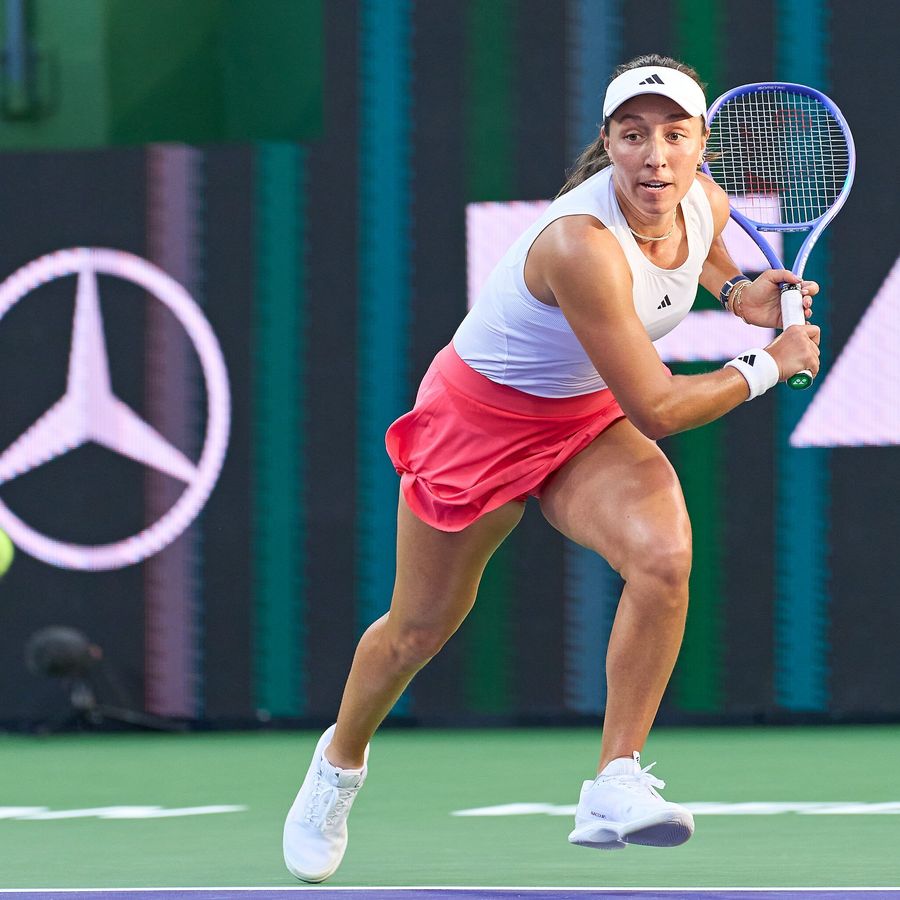
The stakes were already unusually complex before Pegula and Noskova walked out. Noskova had beaten Kostyuk 6-2, 6-4 and Gauff 6-3, 6-3, putting her in the strongest position in the group. Pegula, by contrast, had started with a three-set defeat against Gauff before recovering with a straight-sets victory over Kostyuk. Thursday's encounter was not simply about which of the two Americans could maintain momentum. It was Pegula's direct route to survival and the last piece of a three-player qualification puzzle.
Pegula took the opening set in a tiebreak, winning it 7-2 after neither player could establish lasting command. Noskova hit back to take the second set 6-4. The deciding set stretched beyond the usual final-stage pressure because neither player could rely on the wider qualification picture to make the physical contest easier. At 4-5 in the third, Pegula faced match point. She survived it and eventually finished the contest 7-5, turning what looked like elimination into a place in Saturday's semifinals.
The serving numbers help explain why this became such a volatile match. Pegula struck a career-high 16 aces, a striking return for a player more commonly associated with clean baseline patterns, early timing and redirecting pace. Noskova produced nine aces of her own but also 15 double faults, the most she had recorded in a match. That contrast did not make the Czech an easy opponent. Tournament statistics credited her with 46 winners to Pegula's 35, demonstrating that she still carried significant offensive weight throughout the contest.
GOATIFY
GOATIFY Tennis
Browse Tennis GOAT essentials while Pegula's record serve keeps the semifinal race alive.


Tennis GOAT Golden Racket & Ball Decal Sticker
Add tennis personality to your favourite gear.
Shop Now ↗

Both players had spells of control. Noskova's aggressive approach could shorten exchanges and force Pegula to defend before she was settled, while Pegula's improved first-serve production repeatedly gave her cheap or short points when a long baseline battle might have been exhausting. They both generated plenty of opportunities on return, but in a match decided so narrowly, maintaining composure during the final service games mattered more than any isolated highlight. Pegula won the contest despite losing the second set and despite the danger of having her season end on a single point.
The match also added context to Pegula's broader season. It was her ninth victory over a top-10 opponent in 2026 and the 52nd of her career, according to the WTA. She has now reached the WTA Finals semifinals three times in five appearances. Those numbers make the saved match point more than a lucky escape: an established contender found a way through a close, high-pressure fixture, and the consequences extended to players who were not on the court.
That the two opponents could emerge with separate rewards is part of what makes the round-robin system so unusual. Noskova had already built a strong group position with two straight-sets wins, while Pegula needed the result to reach the last four. Noskova's power remained a threat throughout even as the double faults mounted, and Pegula's increased free points on serve were unusually valuable for a player normally prepared to win from the back of the court. Rather than treating the result as a straightforward collapse from one side, the better reading is a high-level match in which execution swung at decisive moments.
Gauff won six straight games and still lost the qualification battle
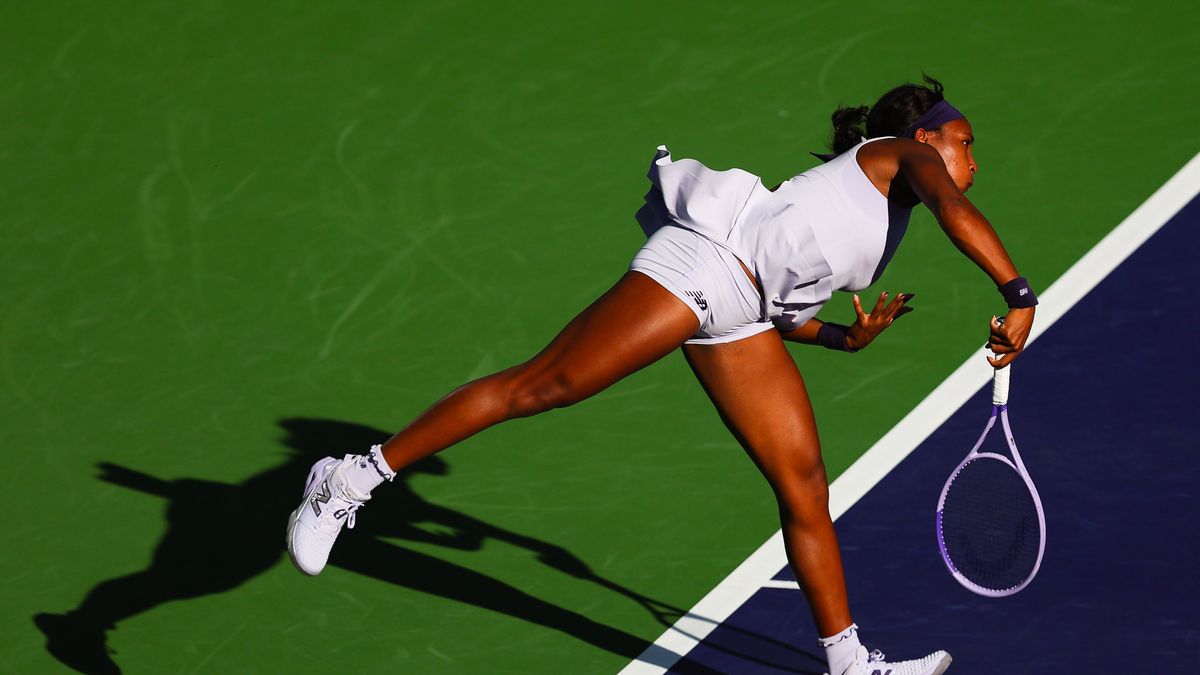
Coco Gauff had handled the part of the equation she could control. In her final Group 1 match, the American beat Marta Kostyuk 6-4, 7-5. It was not an entirely straightforward win. Gauff trailed 1-5 in the second set and needed treatment for back tightness, but she won six consecutive games to close out the match without having to play a decider. A recovery that dramatic would normally dominate the postmatch narrative.
Instead, Gauff was left needing the outcome of a separate contest to learn her fate. She had beaten Pegula in her opening round-robin match, then lost to Noskova in straight sets. Beating Kostyuk gave her two wins from three matches, a record that can be enough to reach the semifinals in an eight-player event split into two groups. The complication was that Pegula's victory over Noskova made the same 2-1 record belong to three players, each of whom had beaten one of the others.
The resulting circle was clear: Gauff defeated Pegula; Noskova defeated Gauff; Pegula defeated Noskova. Head-to-head results could not separate all three. Their sets won and lost across the group did. Noskova finished with five sets won and two lost, a 5-2 record. Pegula had five wins and three defeats in sets, or 5-3. Gauff finished 4-3. That placed Noskova first, Pegula second and Gauff third, outside the two available semifinal positions.
GOATIFY
GOATIFY Tennis
Explore Tennis fan gear as the three-way WTA Finals group tiebreak reshapes the draw.


The detail that makes this outcome particularly severe is that Gauff won her last match in straight sets. There was no additional game or point she could win after closing out Kostyuk to improve the record. Her early straight-sets defeat to Noskova had left her with less room for error than the other contenders, while Pegula's three-set loss to Gauff still contained a set won. Every set accrued earlier in the week remained part of the accounting when the final three-way tie emerged.
Kostyuk's involvement was also shaped by circumstances outside the original draw. She had entered as an alternate after Elena Rybakina withdrew because of illness, and she left the group without winning a set, while managing a wrist issue. Gauff's comeback showed competitive resolve and salvaged a final victory, yet it could not undo the standings damage from the Noskova result. The qualification lesson is harsh but straightforward: at the WTA Finals, winning a match and winning a place in the knockout round are sometimes different achievements.
Had Noskova taken her match point against Pegula, the standings would have looked different, but no such hypothetical changes what was actually recorded. Gauff's two victories were real, and so was the straight-sets loss that ultimately proved damaging. Calling her performance a failure simply because she did not advance would ignore the quality of Thursday's comeback. Equally, treating the tiebreak as an arbitrary injustice would overlook that every player entered knowing matches and sets both mattered. In the end, Pegula could shape Gauff's fate because each result belonged to the same small group.
Andreeva awaits Pegula after one of the tournament's most startling runs
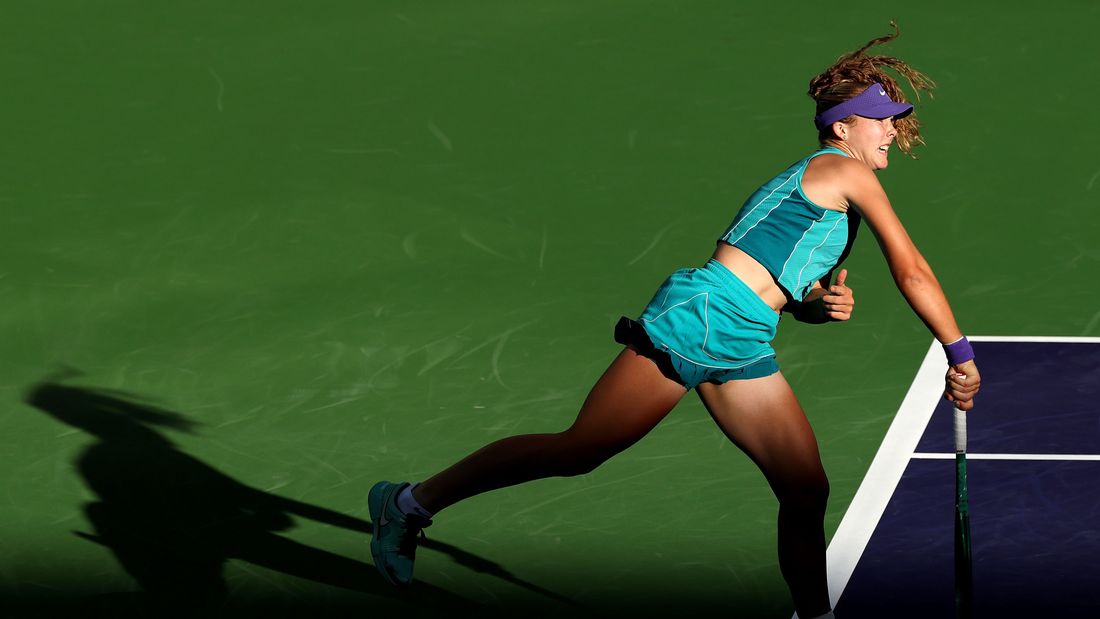
Pegula's prize for surviving Group 1 is a Saturday semifinal against Mirra Andreeva, the teenage Russian star who has already given the tournament one of its defining performances. The two have not previously met at WTA Tour level. There is no meaningful head-to-head history to use as a shortcut, which makes the contest a fresh tactical test rather than another instalment of an established rivalry.
Andreeva earned her place by winning Group 2, including a remarkable turnaround against Aryna Sabalenka on November 11. From 4-1 down in the opening set, she took the next 11 games to win 6-4, 6-0 in just 62 minutes. The WTA calculated that she captured 45 of the final 55 points. That is more than a flashy scoreline: it describes an opponent capable of changing the pattern of a match very quickly after an initially difficult stretch.
Her opening group victory over Elina Svitolina was also 6-4, 6-0. Producing a bagel set in each of her first two WTA Finals matches was a tournament first, and Andreeva became the youngest woman to reach the event's semifinals since Caroline Wozniacki in 2009. She has combined pace, anticipation and high-level shot selection in a way that makes her far more dangerous than a simple comparison of ages or prior tournament appearances would suggest.
GOATIFY
GOATIFY Tennis
Shop tennis-inspired designs ahead of Pegula's first meeting with Andreeva.

Tennis GOAT Golden Racket & Ball Crewneck Sweatshirt
A tennis fan design for everyday wear.
Shop Now ↗
Pegula brings contrasting strengths. Her return positioning and ability to redirect the ball should test whether Andreeva can consistently play on her own terms. Yet Pegula's service performance against Noskova also creates an important question: can she reproduce some of those 16 aces, or will she need to build longer points against a particularly quick mover? Andreeva's performance against Sabalenka suggests that allowing her even a short period of rhythm can turn a tight match into a one-sided scoreboard.
There is a personal side to the matchup, but it should not eclipse the tennis. Pegula made unguarded comments about Andreeva during a practice conversation that was unexpectedly livestreamed, including calling her a diva, and later apologized. After qualifying, she also praised Andreeva's speed, serve, power and tactical intelligence. That sequence is relevant background for an anticipated first meeting, not proof of a continuing feud or a forecast of how either player will behave on court.
The other Group 1 qualifier, Noskova, was scheduled to face the runner-up from Group 2, determined by Friday's Sabalenka-Svitolina match. Noskova's first-place finish despite losing to Pegula illustrates how the Finals reward a week's body of work, not just the final encounter. Pegula, meanwhile, has 400 ranking points and $680,000 in event earnings banked through the round-robin stage according to the WTA, with the largest sporting and financial prizes still ahead. Reaching the semifinals is established; winning against Andreeva is an entirely new challenge.
The crucial comparison is not which athlete has the bigger reputation, but how each handles a shift in momentum. Pegula recovered from match point down on Thursday, proof that she can keep executing when a scoreboard turns against her. Andreeva recovered from 4-1 down against a leading power hitter and then almost completely shut down her opponent's scoring. Both players have displayed resilience, but in radically different ways. Saturday's match will test whether Pegula can prevent long streaks against her and whether Andreeva can absorb the changing pace of an experienced counterpuncher.
The Thursday results turned Group 1 into a useful reminder of how different tournament progress can be from a conventional knockout win. Pegula saved match point and advanced. Noskova lost the match but won the group. Gauff won her final match and went home. All three finished 2-1, yet the accumulated sets produced three different outcomes.
Nothing about those standings guarantees what happens next. Pegula must prepare for a first meeting with Andreeva, whose run against Sabalenka showed how rapidly she can seize control. The immediate story is already remarkable without a prediction: one saved point, one three-way tiebreak and a semifinal pairing that might never have existed had Noskova converted her chance.
GOATIFY
GOATIFY Tennis
Shop GOATIFY tennis products from the Tennis-filtered collection scope.
Tennis GOAT Golden Racket & Ball Crewneck Sweatshirt
A tennis fan design for everyday wear.
Shop Now ↗


















