

Svitolina Ended Sabalenka's Season. The WTA Finals Bracket Is Set.
GOATIFYElina Svitolina has reached the semifinals of the 2026 WTA Finals, and the path there went straight through Aryna Sabalenka. The Ukrainian prevailed 6-3, 3-6, 6-1 in Indian Wells on Friday, November 13, shutting out one of the sport’s most imposing competitors from the knockout stage and taking the last available semifinal place for herself.
This was not a simple three-set comeback in which one player gradually found control. Svitolina established the terms of the first set, Sabalenka responded by raising her level in the second, and the final set turned decisively toward the player who had absorbed the pressure more efficiently. The result also changed the meaning of the final Group 2 match: the world-class power hitter who entered with the larger headline was the one heading home.
The other Group 2 match produced a very different kind of statement. Mirra Andreeva swept past late entrant Diana Shnaider 6-2, 6-1 to complete an unbeaten round-robin campaign. With Svitolina joining her, the Saturday semifinal matchups are now established: Svitolina against Linda Noskova, and Andreeva against Jessica Pegula. Here is how Friday's tennis settled the draw, and why neither semifinal looks straightforward.
Svitolina Won the Deciding Set by Keeping the Pressure on Sabalenka
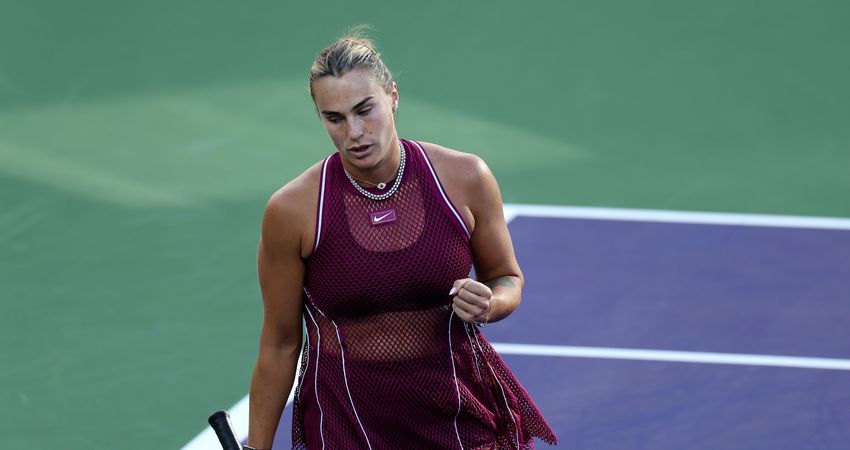
For one set, Svitolina got the contest she wanted. She returned enough of Sabalenka’s heavy delivery to make the Belarusian play second and third shots, and she made the scoreboard reflect that work. A 6-3 opening set was not a promise that the match would be easy; it was proof that the favorite could be disrupted when rallies did not end on her first powerful swing. Svitolina’s movement and discipline were as important as any single winner.
Sabalenka’s answer came quickly. In the second set she hit with greater authority, forced Svitolina into more reactive positions and took it 6-3. That shift was consistent with the competitive problem Sabalenka presents across a long match. Opponents can neutralize her power for stretches, but she does not need much room to turn an evenly contested game into a sequence of near-unreturnable serves and first-strike forehands. At a set apiece, the outcome was genuinely open again.
Svitolina did not respond by trying to out-hit her opponent. Instead, she returned to the more durable parts of her game: making Sabalenka hit another ball, keeping rallies alive without surrendering court position and managing the moments when pressure accumulated on the server. The third set’s opening games were competitive, but once Svitolina secured the decisive advantage she protected it rather than allowing the momentum to reset for a fourth time. The 6-1 finish was emphatic even though it followed two sets with very different patterns.
That contrast helps explain why the final score can be deceptive. The winner still had to weather a middle period in which Sabalenka looked capable of overwhelming the contest. A big third-set margin does not erase the tension of getting there. It shows what happened when the match became a test of repeated decisions under stress, not just a measure of who could strike the hardest shot in isolation.
GOATIFY
GOATIFY Tennis
Explore GOATIFY Tennis styles as Svitolina turns a three-set battle with Sabalenka into a season-ending upset.


Svitolina’s performance carried a personal element as well. She had not beaten Sabalenka since 2020 and entered Friday facing a five-match losing run in their rivalry. Breaking a sequence like that in an ordinary tour round would matter; doing it in a season-ending qualification match changes its significance. The player across the net had become familiar with ways to win their meetings. This time, those methods did not deliver another escape.
The former WTA Finals champion has been in the tournament’s biggest moments before. Svitolina won the season-ending championship in 2018 and returned to the final the following year. Those results do not award her any advantage in a 2026 semifinal, but they underline why she was not an inexperienced outsider hoping simply to survive the occasion. Friday was a fresh result, earned against a different opponent and at a different venue, yet it revived a familiar part of her competitive identity: consistency under the pressure of the last few games.
Sabalenka, by contrast, leaves with the uncomfortable sense of having reached another level of power without gaining the result it was supposed to produce. She recovered from a set down in this match only to lose control again. An elimination at the group stage does not define her season, but it is a particularly abrupt way for an elite player’s final tournament to end. Svitolina did not win by waiting passively for a collapse; she created enough problems that Sabalenka had to keep finding answers, and ultimately could not.
Andreeva Went Unbeaten While an Illness Reshaped the Final Group Match
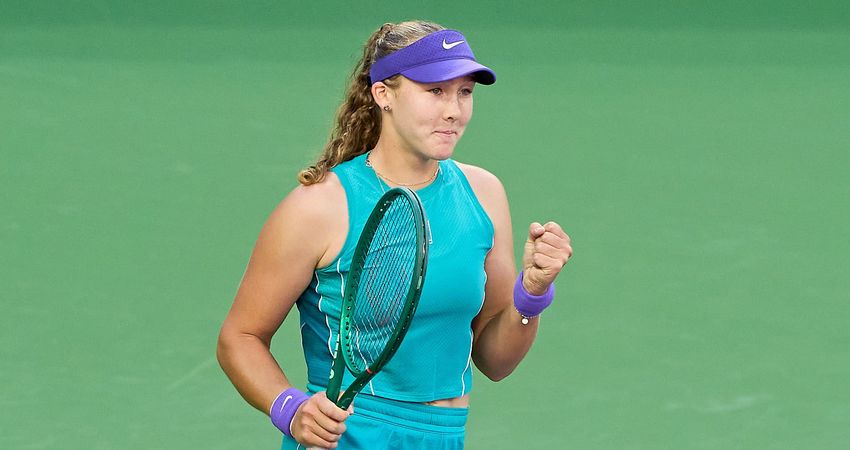
While Svitolina and Sabalenka were fighting for their place in the last four, Mirra Andreeva had a different assignment: finish a successful group campaign without allowing it to drift. She did that with a 6-2, 6-1 win over Diana Shnaider, taking 12 of the final 13 games and spending just 55 minutes on court. The scoreline captured both Andreeva’s control once she settled and the difficulty of stepping into a season-ending event with almost no match preparation.
The opponent was not the player originally scheduled. Karolina Muchova withdrew because of a gastrointestinal illness, and Shnaider stepped in as the second alternate. She was already familiar with the Finals environment after qualifying in doubles the previous year, but singles against an in-form Andreeva is a demanding assignment even with a full week of preparation. This time she was a late entrant, asked to compete against someone who had already established tournament rhythm.
Shnaider actually opened with a 2-0 lead. That matters because it prevents the result from being read as an uninterrupted hour of Andreeva domination. For two games, the substitute had some reward for her aggression. Then the contest changed completely. Andreeva began directing rallies, finding openings on return and turning pressure into a series of breaks. Winning 12 of 13 games from that point suggests more than one opponent’s bad patch: it shows a player who recognized an imbalance and kept attacking the same vulnerabilities.
Andreeva won a strong majority of points on her first serve and converted six of seven break opportunities. Those numbers explain how quickly the match moved once she established control. She did not need to spend long periods scrambling to protect her own service games, and almost every significant chance on Shnaider’s serve became a tangible scoreboard gain. For the young Russian, the result completed a 3-0 record in the group and set up another test against a seasoned opponent in the semifinals.
GOATIFY
GOATIFY Tennis
Browse GOATIFY Tennis designs while Andreeva’s unbeaten group campaign reshapes the final four.


Tennis GOAT Golden Racket & Ball Decal Sticker
Add tennis personality to your favourite gear.
Shop Now ↗
Tennis GOAT Golden Racket & Ball Crewneck Sweatshirt
A tennis fan design for everyday wear.
Shop Now ↗
Her group-stage record had already acquired a headline before Friday. Against Sabalenka earlier in the week, Andreeva recovered from a 4-1 first-set deficit and won the final 11 games to secure an extraordinary reversal. That performance did more than improve her standings. It exposed the vulnerability that Sabalenka later experienced again against Svitolina: once the Belarusian’s first-strike game lost accuracy, determined opponents could make the errors and difficult second shots pile up.
The two stories should not be collapsed into one. Andreeva’s win over Sabalenka was a dramatic change of momentum from a losing position; her win over Shnaider was efficient management after a brief slow start. The ability to produce both is why her semifinal appearance feels earned by the full group campaign rather than by a favorable draw alone. She has shown she can turn a contest and also close one down before it develops into a battle.
There is also a reminder of how unstable end-of-season brackets can become. Muchova’s withdrawal followed the earlier departure of Elena Rybakina, who exited before the tournament started citing illness and exhaustion. A field of eight top competitors can be transformed by physical issues as well as the results on court, especially after a long calendar. It would be unfair to treat Shnaider’s one-off loss as evidence of her normal level, just as it would be wrong to discount Andreeva’s authority over the opponent available to her.
For Sabalenka, the mathematics became definitive on Friday. A loss to Andreeva had left her needing to beat Svitolina to advance; instead, Svitolina took the final semifinal ticket. Andreeva had already qualified at the top of the group. That is the cleanest way to understand the outcome: one player was secure, two leading names contested the remaining berth, and the player who won the deciding match moved on.
Saturday's Semifinals Put Experience Against New Momentum
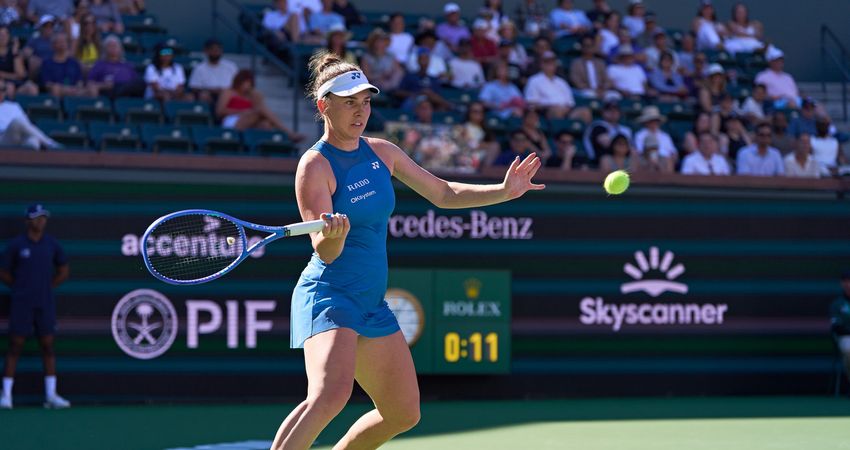
The WTA Finals now moves from round-robin calculations to two matches in which a single defeat ends the title chase. Svitolina will face Linda Noskova, while Andreeva meets Jessica Pegula, on Saturday, November 14. The remaining players arrived through different routes, but all four have already had to navigate opponents capable of playing at a final-worthy level.
Svitolina versus Noskova offers a particularly intriguing contrast. Svitolina has experience of lifting this trophy and of absorbing the strain of long, physical contests. Noskova is the reigning Wimbledon champion, a status that changes how every opponent must assess her. Her game can generate quick points through assertive serving and early ball-striking; Svitolina’s strength lies in making those points harder to finish. The matchup will be decided by what each player can sustain under semifinal pressure, not by which resume looks more impressive before the first ball.
Noskova’s own route was not a perfect straight line. She lost to Pegula in a gripping final group match after holding match point, but still emerged with a berth in the semifinals through the group standings. That is part of the peculiar challenge of this format: a tight loss can still produce advancement, while another player can win matches and discover that the tiebreak calculations have gone against her. Qualification rewards a body of results across the week, not just the emotional force of the most recent scoreline.
GOATIFY
GOATIFY Tennis
Find GOATIFY Tennis gear for fans following Saturday’s Svitolina–Noskova and Andreeva–Pegula semifinals.


Tennis GOAT Golden Racket & Ball Crewneck Sweatshirt
A tennis fan design for everyday wear.
Shop Now ↗For Svitolina, the crucial issue will be recovery as much as scouting. Friday demanded a prolonged mental reset after losing the second set to Sabalenka. A semifinal less than a day later asks her to preserve the sharpness that carried her through the deciding set, while adjusting to a new opponent with a different service rhythm and rally profile. A player can be outstanding in one match and still need a very different plan in the next.
The other semifinal pairs Andreeva’s fearless group-stage tennis with Pegula’s ability to navigate close matches. Pegula's victory over Noskova was a reminder that not every significant result looks dominant on the scoreboard. She saved a match point and won 7-6(2), 4-6, 7-5, recovering from the brink rather than cruising through. That experience can be valuable at a stage when the difference between progressing and going home may be a handful of points.
Andreeva, on the other hand, comes in having lost no round-robin match. Her acceleration against Sabalenka and the way she dismantled Shnaider show different forms of confidence. But Pegula is not the same problem as either opponent. She is a measured counterpuncher who can redirect pace, vary depth and make young attackers create winners repeatedly. If Andreeva can generate the same return pressure she imposed in her final group match, she will ask serious questions; if Pegula keeps the exchanges controlled, the dynamic could become much more complicated.
The contrast between momentum and match management runs through both pairings. Andreeva and Noskova have delivered compelling breakthrough stories, while Pegula and Svitolina have built careers around surviving the small, difficult moments that rarely make a highlight reel. Yet the bracket is not neatly divided into youth versus experience. Noskova knows what it takes to win a major, Andreeva has already been tested by the top player in her group, and the two older semifinalists are not merely defensive obstacles.
All four have a credible sporting case built on actual results rather than projection. There are no remaining round-robin permutations to interpret, and no reason to assume the favorite will emerge simply because of ranking or past achievements. A semifinal places those histories in direct competition. Saturday will decide which two players translate a strong week into a shot at the season-ending championship.
Friday produced two different verdicts on the same WTA Finals group. Svitolina survived the event’s biggest immediate pressure test by beating Sabalenka in three sets and claiming the last semifinal position; Andreeva closed an unbeaten campaign by turning a brief deficit against Shnaider into a one-sided finish. Sabalenka’s elimination was the headline surprise, but the lasting significance lies in the quality of the two players who advanced.
Now the format changes. The semifinals are no longer about percentages, standings or tiebreakers. Svitolina meets Noskova, and Andreeva faces Pegula, with a place in the championship match at stake. Friday explained how those four got there. Saturday will demand a fresh answer from each of them.
GOATIFY
GOATIFY Tennis
Shop GOATIFY tennis products from the Tennis-filtered collection scope.
Tennis GOAT Golden Racket & Ball Decal Sticker
Add tennis personality to your favourite gear.
Shop Now ↗


















