

Noskova Broke Gauff Five Times. The WTA Finals' First Semifinalist Is a No. 8 Seed.
GOATIFYLinda Noskova arrived at the 2026 WTA Finals as the eighth seed and a first-time participant. Two matches later, she is the first woman guaranteed a place in the semifinals. Her 6-3, 6-3 victory over Coco Gauff on Tuesday, November 10, took just 75 minutes at Indian Wells, but the number that best explains the result is five: that is how often Noskova broke one of the most dangerous players in the field.
The 21-year-old Czech did not simply overwhelm Gauff with the powerful first serve for which she is known. She dismantled the American's second serve, won important return points before rallies could settle, and repeatedly turned Gauff's service games into opportunities. Even after Gauff recovered breaks, Noskova kept finding ways to regain control. Her reward is a 2-0 record in Group 1 and a semifinal place with one round-robin match still to play.
For Gauff, the defeat changes Thursday's meeting with Marta Kostyuk from a chance to confirm momentum into an urgent attempt to stay alive. For Noskova, it raises a more ambitious question: how far can the lowest seed go in a tournament she has already started to reshape?
How Noskova Broke Gauff Five Times
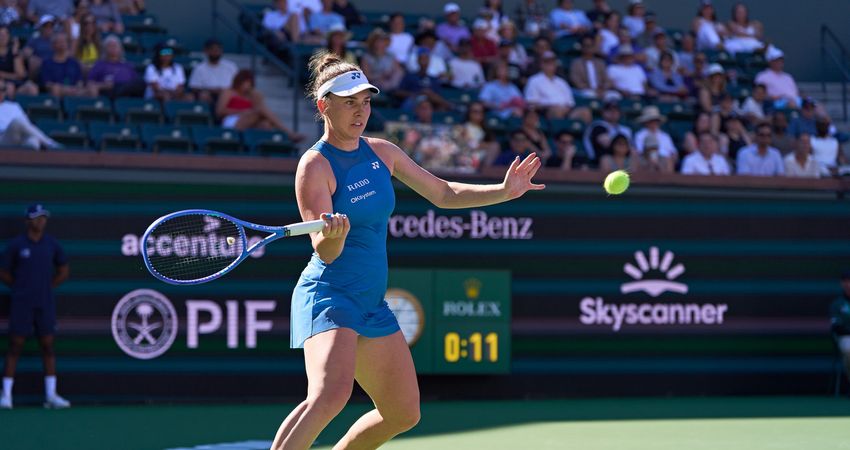
The scoreboard reads like a routine straight-sets win. The way Noskova produced it was anything but routine. Against an opponent capable of absorbing pace and extending points, she made the return game the central feature of the match. Five breaks from nine opportunities is an unusually strong conversion rate against a player of Gauff's standing, and four of those breaks came during a first set that never allowed the American to settle.
The second-serve numbers make the tactical picture even clearer. Gauff played 24 points behind her second delivery and won only six; Noskova claimed the other 18. That is a 75 percent return-points success rate whenever the American missed her first serve. A player can occasionally escape trouble by landing a big first delivery, but this pattern meant that almost every second serve carried immediate danger. Even a comfortable-looking service game could become a break-point battle after one poor first-serve sequence.
That pressure mattered beyond the individual points. Noskova built 4-1 leads in both sets. Gauff was forced to chase, which made it harder to dictate rally patterns or take calculated risks on return. It also gave the Czech room to manage the inevitable changes of momentum without abandoning her aggressive approach. A break lead is not a guarantee against a former WTA Finals champion, yet getting ahead twice made the American play almost the entire afternoon under scoreboard pressure.
Noskova's reputation is built partly on her serve, but this was a demonstration of a more complete attacking game. When her return lands deep, opponents have less time to construct their preferred first ball, and a powerful server suddenly becomes the one who gets to attack first in the point even while receiving. Gauff's exceptional movement can rescue rallies once they develop. Tuesday's problem was that so many points were already being shaped by Noskova's first return.
The result was also the latest turn in their developing rivalry. Gauff won the first two meetings between them, but Noskova has now taken both encounters in 2026. That does not settle which player has the higher long-term ceiling. It does show that the matchup has changed, particularly when Noskova can keep returning with this level of conviction. An eighth seed is supposed to be the player the higher-ranked opponents want to draw. In Indian Wells, Noskova is making that seeding look more like an outdated description than a reliable forecast.
There is a difference between hitting a succession of impressive winners and controlling where the match is played. The five breaks suggest Noskova achieved the latter. She moved the contest repeatedly onto Gauff's less secure delivery and made the American prove she could escape. Too often, she could not.
GOATIFY
GOATIFY Tennis
Noskova's aggressive return game was the story of the match. Explore GOATIFY Tennis apparel and stickers for fans who love a fearless baseline battle.


Tennis GOAT Golden Racket & Ball Decal Sticker
Add tennis personality to your favourite gear.
Shop Now ↗


Gauff's Second Serve Became the Match's Weak Point
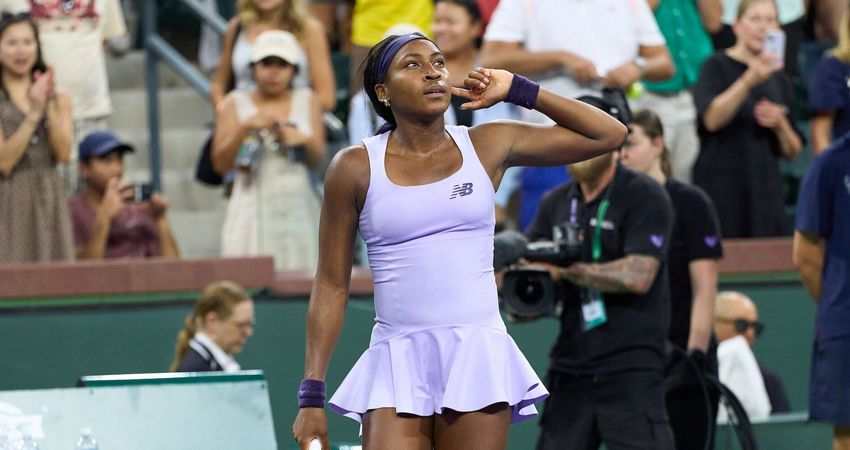
Gauff's own assessment after the match centered on the service games. She acknowledged that a stronger serving start might have allowed her to put more pressure on Noskova's delivery. That observation tracks with the match statistics: the American's second serve gave Noskova too many chances to begin points on the front foot. Against a returner whose confidence was already growing, the difficulty became cumulative rather than isolated.
It would be misleading to turn a 6-3, 6-3 defeat into a sweeping verdict on Gauff's season or her ability on a hard court. She won this tournament in 2024, and her opening match this year showed that she can still handle the long exchanges and sharp momentum swings required in this format. On Sunday she defeated Jessica Pegula 6-4, 6-7(5), 6-2, recovering to win the deciding set after a demanding contest. Two days later, however, Noskova posed a different and particularly unforgiving problem.
The contrast between those opening two matches is instructive. Against Pegula, Gauff had enough time to reset after losing a tiebreak and produce her best tennis in the third set. Against Noskova, she lost the first set and never created a sustained stretch in which the score stopped tilting against her. A three-set victory proves resilience; it does not automatically fix technical vulnerabilities that a strong opponent can identify and exploit forty-eight hours later.
The second-serve battle will be a focal point for her coaching team before Thursday. First-serve percentage is only part of the equation: placement, disguise, the quality of the second delivery, and the ability to defend the next shot all affect how often a returner can attack. Simply trying to hit every second serve harder risks making a difficult situation worse. Gauff needs a combination that gives her enough depth and variety to prevent opponents from standing forward and treating the second serve as an invitation.
There is still a route through Group 1, but no longer a comfortable one. Gauff faces Marta Kostyuk in the final round-robin match and needs a victory to remain in the semifinal conversation. The complete qualification picture also depends on results and tiebreak rules, rather than just a single player's win-loss total. The practical first step is straightforward: beat Kostyuk and do so with a much more secure service performance.
That opponent will be motivated even though her own semifinal hopes are over. Kostyuk entered as an alternate after Elena Rybakina withdrew with illness, then lost her first two group matches. She has also been managing the effects of a wrist problem that disrupted her preparation. Nothing about that context makes the final match an automatic victory for Gauff. A player with nothing left to lose in the standings can still make the points uncomfortable, particularly if Gauff begins serving nervously again.
Gauff's challenge is therefore both technical and psychological. She has to correct the patterns Noskova punished without carrying the scoreline into the next contest. A round-robin event offers a second chance, but it does not offer unlimited time to find an answer.
GOATIFY
GOATIFY Tennis
The battle between power serving and sharp returning makes tennis unforgettable. Browse GOATIFY Tennis designs inspired by the court.


Tennis GOAT Golden Racket & Ball Crewneck Sweatshirt
A tennis fan design for everyday wear.
Shop Now ↗
Why Noskova Is Through but the Group Still Matters
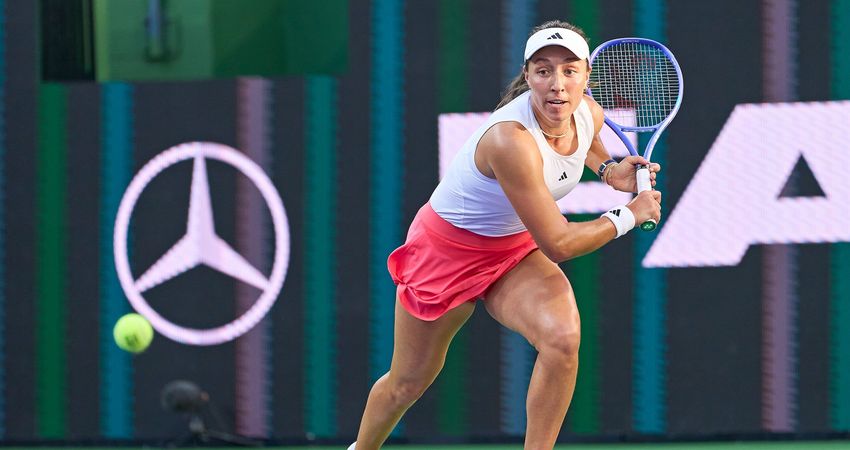
Noskova's early qualification is remarkable because it is not the story of a player briefly overperforming after an otherwise anonymous season. In 2026, she won Wimbledon, moved into the world's top ten and helped Czechia clinch the Billie Jean King Cup. She arrived in Indian Wells with the substance of an elite season behind her, even if a first WTA Finals appearance still carried a different kind of pressure. The tournament's No. 8 seed has been a major-title winner for months.
Her first round-robin match on Sunday provided the foundation. Marta Kostyuk came into the draw at short notice, replacing the ill Elena Rybakina. Noskova adapted and won 6-2, 6-4 in an hour and 26 minutes. She deliberately avoided the kind of long rallies Kostyuk wanted to create, then held her advantage when the Ukrainian became more competitive in the second set. Two days later, the same clear-headed commitment to an aggressive plan helped her overwhelm Gauff on return.
The historical comparisons underline how uncommon the start is. Noskova is the youngest first-time WTA Finals semifinalist since fellow Czech Petra Kvitova in 2011. She is also the youngest player to win her first two round-robin matches since Gauff did so in 2024, and the first No. 8 seed to start with consecutive group wins since Anett Kontaveit in 2021. These are not guarantees of a title, but they put the performance in a useful frame: the outcome is unusual even among the very best players at a season-ending championship.
The next match has a different set of incentives. Noskova is already through, while Pegula needs a strong finish to her group campaign. Pegula kept her own semifinal hopes alive on Tuesday by beating Kostyuk 6-2, 7-5, after losing a three-set opener to Gauff. She has openly emphasized the importance of serving well against opponents who return aggressively, and Noskova is exactly that kind of opponent. Their Thursday meeting therefore offers an intriguing test of whether the Czech's return numbers can be repeated against a more stable delivery.
The two also bring recent personal history into the contest. Noskova holds a 3-1 head-to-head advantage over Pegula, and Thursday offers a rematch of their Berlin final. That does not mean Pegula will necessarily struggle; she has experience adjusting within major tournaments, and her straight-sets recovery against Kostyuk showed that she can impose her own rhythm. But Noskova has earned the right to enter as more than a dangerous outsider.
There is an additional complication for the player who qualifies early: keeping competitive urgency without treating the final group match as disposable. A win can preserve momentum, send a message to the other half of the draw and improve the experience of facing another possible title contender. A loss might not remove Noskova from the semifinals, but it would interrupt a rhythm that has been central to her breakthrough.
The larger field will be watching closely. A first-time qualifier who has beaten Kostyuk and Gauff in straight sets has already removed one source of uncertainty: she belongs on this stage. The unresolved question is whether the same attacking clarity will hold once every match is an elimination match and opponents have more evidence about what they must take away from her game.
GOATIFY
GOATIFY Tennis
From Wimbledon to the WTA Finals last four, Noskova's rise is one to watch. Shop GOATIFY Tennis gear ahead of the next big showdown.


Tennis GOAT Golden Racket & Ball Crewneck Sweatshirt
A tennis fan design for everyday wear.
Shop Now ↗The first confirmed semifinalist at the 2026 WTA Finals was not the top seed or the most experienced champion in Group 1. It was Linda Noskova, who beat Coco Gauff 6-3, 6-3 and made the American's second serve the defining feature of their match. Five breaks and 18 return points won from 24 second serves explain more than the ranking numbers do.
Noskova now plays Pegula with a semifinal place secure and her unbeaten record still at stake. Gauff meets Kostyuk needing to win and hoping the rest of the group math cooperates. For both, Thursday is a test of adjustment. For Noskova, the week has already become a proof of arrival; now the question is whether that arrival ends in a trophy.
Shop GOATIFY tennis products from the Tennis-filtered collection scope.

















