

Imola Is Out. F1 Is Betting on Qatar and Abu Dhabi to Finish 2026.
GOATIFYThe 2026 Formula 1 season will finish where it was meant to finish: under the floodlights in Qatar and Abu Dhabi. On November 10, the championship informed Imola that the Italian circuit was no longer needed as its emergency replacement for the final race. That is a concrete scheduling decision, not simply another expression of confidence from the paddock.
The consequences are bigger than a change to a contingency plan. Formula 1 has already rerouted one Grand Prix and abandoned another amid regional conflict, while a sister international series moved races away from the Middle East. Releasing Imola now reduces the sport's ability to execute one particular alternative if conditions change again. The next question is not whether the organisers want to race at Lusail and Yas Marina. It is how the calendar decision, safety oversight and sporting stakes fit together over the final three weekends.
Why Imola was released before the last two races
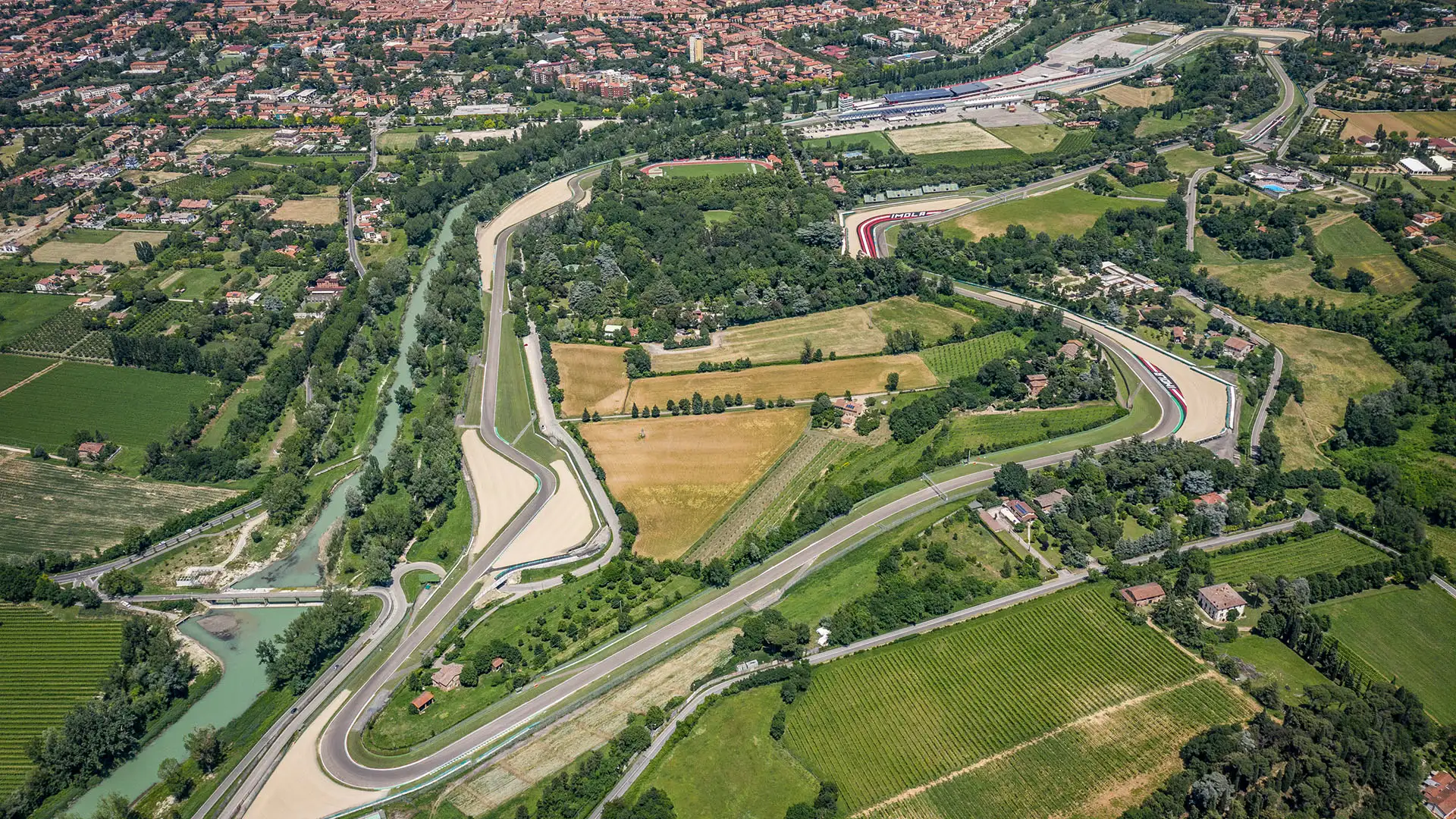
Imola was not another Grand Prix waiting to be slotted into an empty weekend. It was a contingency for a specific problem: what Formula 1 could do if it decided that staging the season finale in the Middle East was untenable. The former Emilia Romagna Grand Prix venue was considered for the December 6 weekend, the date otherwise assigned to Abu Dhabi. Making that switch would have meant moving an entire championship operation to northern Italy in a compressed window.
That kind of backup needs much more than an empty track. A race venue requires grandstands, temporary structures, security arrangements, broadcasting installations, travel plans and the equipment needed to accommodate teams, officials and supporters. Preparations at Imola had already started, according to reporting on the November 10 decision, with Formula 1 covering costs. Organisers could not keep an international event on permanent standby while the rest of the calendar advanced.
The championship's message on Tuesday was therefore an operational cutoff. Its spokesperson explained that Imola had been an option if the two Middle East races could not proceed, and that the circuit could not be made to wait without limit. Once the Italian organisers were told to stand down, the previously visible December 6 substitute ceased to be part of the active finale plan.
That distinction matters. Releasing Imola does not make a later safety concern impossible, nor does it mean Formula 1 would be obliged to race regardless of conditions. It means one prepared alternative is no longer being maintained. If the situation deteriorates, officials would still have to reassess the event, but they could not simply assume the same Italian contingency remained instantly available.
The venue also carried an emotional link to the season. Kimi Antonelli, now the newly crowned youngest Formula 1 world champion, is Italian, and Imola has long been associated with Ferrari supporters and the country's racing culture. A return would have been a remarkable domestic stage for the champion, but that sporting appeal was never the reason the emergency option existed. It was an insurance policy against a calendar disruption.
Formula 1's choice underscores a trade-off found in every major international event: keeping an alternative alive buys flexibility, but costs money and places responsibilities on local promoters. By November 10 the championship had judged the value of that backup lower than the cost of extending the uncertainty. What fans can now see is a decisive calendar commitment, accompanied by the loss of a specific fallback rather than a declaration that all hazards have vanished.
GOATIFY
GOATIFY Formula 1
From wet weather to hard-compound strategy, F1 fans know plans can change fast. Explore GOATIFY Formula 1 racing shirts, hoodies and stickers.


The Qatar and Abu Dhabi plan is firm but still conditional

The dates are specific. Qatar is scheduled for November 27–29 at the Lusail International Circuit, with its Grand Prix on Sunday, November 29. Abu Dhabi follows on December 4–6 at Yas Marina, with the season-ending race on December 6. Las Vegas, on November 21, sits between the Brazilian round and those final two fixtures. Keeping this sequence preserves the planned travel and competition flow rather than forcing a rushed relocation.
The decision comes after months in which the regional conflict has already had measurable consequences for motorsport. Formula 1 moved its planned Bahrain Grand Prix to Sepang in Malaysia and cancelled the Saudi Arabian event. Those were not speculative scenarios; they were completed adjustments to the 2026 season. The World Endurance Championship also shifted its final two Middle East rounds to European venues, showing that organisers of related series reached different logistical decisions for their own events.
There are, however, signs that made Formula 1 more confident in its remaining venues. MotoGP completed its Qatar round at Lusail in the weekend immediately before the announcement. That recent international event demonstrated that a top-level championship could operate at the circuit, though it was not a universal endorsement by every participant. Yamaha stayed away under its wider travel policy. The difference between an event taking place and every stakeholder judging travel acceptable is one reason blanket statements about safety would be misleading.
Formula 1 said it had seen no negative developments specifically affecting Qatar and Abu Dhabi in recent months. That assessment explains why organisers were prepared to stop keeping Imola on standby. It should not be mistaken for a promise that the situation cannot change. A race weekend depends on the ability of personnel, freight, crews and spectators to move through the region, as well as local security assessments and public advice. A deterioration could alter the decision even after promoters and teams have begun their preparations.
Max Verstappen's comments illustrate the tension. Earlier in the autumn he questioned the wisdom of racing close to an active conflict. He subsequently clarified that he supported a Middle East finale under the right conditions and expected Formula 1 and the FIA to make decisions using information drivers did not themselves possess. That is not a contradiction so much as a recognition that the calendar and the safety threshold must be judged separately.
Lusail and Yas Marina are also very different racing tests. Qatar's fast, flowing configuration can place heavy sustained loads on tyres, while the Abu Dhabi layout combines long accelerations with braking zones and the technical complexity of a floodlit finale. For drivers and strategists, the announcement means preparation can remain focused on those known demands rather than a late switch to Imola's narrower, historic layout.
For supporters, a definitive venue plan is helpful: tickets, travel and accommodation cannot be arranged on indefinite contingency. The same clarity is useful for suppliers and broadcasters. Yet the responsible interpretation remains conditional. The events are scheduled to go ahead, and the decision is backed by organisers; the final safety assessment is still a live responsibility rather than an administrative box already checked.
GOATIFY
GOATIFY Formula 1
Lusail and Yas Marina bring tyre choices and floodlit racing back into focus. Browse GOATIFY Formula 1 designs for every type of racing weekend.


Two F1 titles are settled, but the finale still matters

The public commitment came from the sport's governing body as well as its commercial organiser. FIA president Mohammed Ben Sulayem said the championship was prepared for Qatar and Abu Dhabi and intended to finish the year at the two circuits. Formula 1 also informed its eleven teams of the plan; reporting on the decision says all eleven supported it. That matters because every team must move people, vehicles and equipment across the same final stretch of the calendar.
Still, there is a difference between broad agreement on the route and the absence of risk. Governing bodies and organisers are expected to consider local conditions, authorities' advice and practical movement requirements as event dates approach. Endorsing the schedule on November 10 gives the paddock a single working plan. It does not remove responsibility for reassessing conditions before the first session or throughout either race weekend.
Unlike many seasons, the final venues will not decide the senior championships. Kimi Antonelli secured the drivers' title in Mexico at age twenty, becoming Formula 1's youngest champion, and Mercedes completed the constructors' double in Brazil. Those achievements explain why both titles are already settled before Las Vegas. There is no need to invent a last-race title showdown where the standings no longer support one.
The events can nevertheless reshape how the season is remembered. Drivers still contest victories, podiums, finishing order and individual milestones; teams continue to evaluate race execution, vehicle development and operations. In a campaign disrupted by relocation and cancellation, simply delivering the last weekends as scheduled has wider symbolic importance for a sport built around the reliability of its world calendar.
Another championship gives those weekends direct competitive stakes. The Formula 2 title fight remains unresolved: Brazilian Rafael Câmara leads Red Bull-backed Nikola Tsolov by seven points, according to the November 10 race-calendar reporting. Preserving Qatar and Abu Dhabi maintains the intended on-track pathway for that contest instead of forcing a late rethink about the feeder series' conclusion.
With the decision, the 2026 F1 calendar is expected to comprise 23 rounds. That figure reflects the Bahrain relocation and the Saudi Arabian cancellation rather than an untouched original schedule. The Qatar and Abu Dhabi weekends therefore stand as the final chapter of a calendar that has already absorbed serious disruption, not as proof that the disruption never happened.
The final three race weekends present a straightforward test of the new plan. Vegas must run first, then Qatar, then Abu Dhabi. Teams should be able to focus on the racing, while decision-makers continue reviewing the information that fans and drivers cannot fully see. The strongest outcome would pair the spectacle of a familiar floodlit finale with clear evidence that the well-being of everyone travelling with the championship stayed ahead of a neat calendar ending.
Formula 1 has made its preferred ending unmistakable. Imola is out of the fallback picture, Lusail remains on the November 29 calendar and Yas Marina is scheduled to close the season on December 6. That gives teams, promoters and fans a clearer plan. It does not remove the need for continued scrutiny or a fresh judgment if circumstances change.
With both F1 championships already awarded, the measure of a successful finale is broader than a podium ceremony. It is a safe, credible conclusion to an unusually disrupted season, two properly contested Grand Prix weekends and a fair resolution of the still-live Formula 2 championship. The announcement settles one operational question. The final weeks must still prove the plan can be delivered.

















