

Sintes and Zamora Were Down 5–4 — Then They Blew Up Kuwait's Major Draw
GOATIFYThe Kuwait Major was supposed to become more predictable as the seeded pairs entered. Instead, a 20-year-old and an 18-year-old have already ripped a hole through the men's draw. Marc Sintes and Juan “Coquito” Zamora eliminated eighth seeds Momo González and Lucas Campagnolo 6-4, 3-6, 7-5 on Monday, October 26, turning the final games of a tense decider into the tournament's defining early shock.
What makes the result remarkable is not simply the difference in ranking or experience. Sintes and Zamora were 5-4 down in the third set, with the favorites positioned to finish the job. Three games later, the younger pair were celebrating their first appearance in the last 16 of a Premier Padel Major. The upset also came during a week already reshaped by Alejandro Galán and Federico Chingotto's withdrawal, leaving both established contenders and ambitious outsiders to reassess their routes through Kuwait.
Down 5-4, Sintes and Zamora Found Three Games That Changed Their Careers

There is a difference between producing one impressive set against a favored pair and finding the composure to win a Major match when the scoreboard turns against you. Sintes and Zamora managed both. They took the opener 6-4, but González and Campagnolo answered 6-3 in the second. By the closing stages of the decider, the seeded pair had the momentum and a 5-4 advantage. The match looked ready to become another example of experienced players surviving an uncomfortable early round.
Instead, the youngsters protected their serve at the critical moment, escaped a break-point threat and seized the next two games. A 7-5 third set meant three consecutive games had reversed the entire contest. The scoreline is a useful reminder of how little separates a dramatic breakthrough from a respectable defeat in padel: the winners did not dominate for two hours, and the favorites were not comprehensively outplayed. One concentrated stretch under maximum pressure decided who would still be playing on Wednesday.
Sintes, from Menorca, and Zamora, from Seville, are 20 and 18 respectively. Their partnership has been reassembled after Sintes competed with other teammates earlier in the season, making the result more striking than a victory by a long-established pairing. They had already beaten Mario del Castillo and Nacho Vilariño 6-2, 6-3 to reach this round. The upset over the eighth seeds is a much more demanding test of their ability to withstand sustained pace, better defensive recovery and the emotional weight of a major opportunity.
The immediate reward is a round-of-16 meeting with Javier García and Álex Ruiz. That match will ask a different question. Can Sintes and Zamora repeat their level when they are no longer a surprise and their opponents have fresh evidence of what they can do? Reaching the last 16 is a milestone; treating it as the beginning rather than the finish would make this Kuwait run genuinely transformative.

A Second Seeded Exit Makes Kuwait's Early Draw Even More Dangerous

The Sintes–Zamora result was not an isolated piece of chaos. Pol Hernández and Manuel Castaño also removed seeded opposition, beating the fifteenth-seeded combination of Álex Arroyo and José Jiménez 6-3, 6-3. Unlike the headline three-set escape, that result was emphatic on the scoreboard. Two young Spanish partnerships have now demonstrated that the opening rounds are not merely a formality before the top names arrive.
For a Major, those early defeats matter beyond the immediate disappointment. Seedings are designed to separate stronger pairs through the first stages, making the bracket appear to have a stable shape. Remove two seeded teams and suddenly an unseeded pair has a more inviting path, another contender faces an opponent with momentum, and the next round becomes harder to predict. The significance is structural, not just emotional: the identity of the possible quarterfinalists changes before the biggest matches have even begun.
There was already an unusual gap in the field after Galán's injury forced his withdrawal alongside Federico Chingotto. That development had made Arturo Coello and Agustín Tapia clearer favorites on paper. Yet a tournament can simultaneously become easier for its strongest pair and more treacherous for everyone below them. Lower-ranked teams do not need to beat the world number ones to change the event. They can alter which opponents survive long enough to challenge them.
Hernández and Castaño's straight-sets win offers a useful contrast to Sintes and Zamora's escape. One partnership survived the most stressful passage of the match; the other imposed itself quickly enough to avoid that situation. Both routes demand something that cannot be measured by ranking alone: the ability to deliver a convincing performance against a pair expected to advance. As the Kuwait draw narrows, that makes the next round less a reward for the underdogs than another opportunity to prove that their opening victories were not one-offs.

Stupaczuk, Navarro and Leal Show Why Experience Still Matters
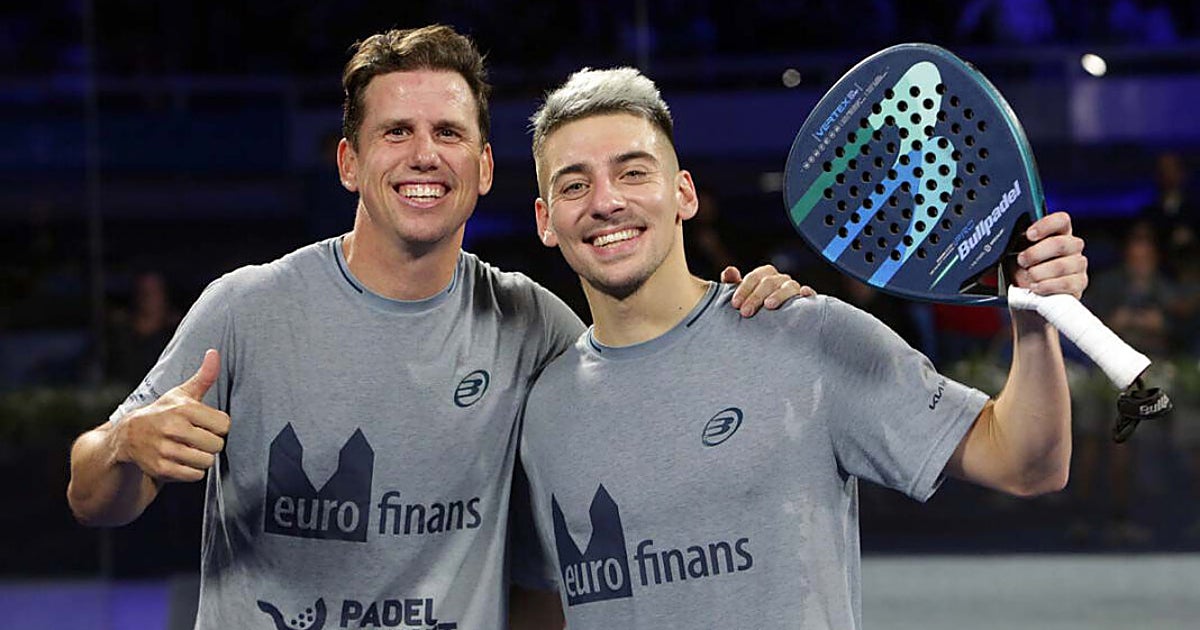
Not every established pair stumbled. Franco Stupaczuk and Jon Sanz began with a 6-2, 7-6 win over Andrés Fernández and José Diestro, while Paquito Navarro and Martín Di Nenno advanced 6-2, 6-3 against Álvaro Montiel and Dani Santigosa. The contrast with the eliminated seeds was stark: those pairs did not need to produce a miracle, only the consistent level that their positions in the draw demanded.
Stupaczuk and Sanz are particularly interesting in the current men's hierarchy. They reached the Milan semifinals earlier in October before losing to Coello and Tapia, and their combination gives them a realistic opportunity to progress deep into another big event. A straight-set opening win is not a guarantee of anything, but it preserves energy and keeps their preparation focused on the tougher opponents ahead. The second-set tiebreak also shows that even a successful start was not entirely frictionless.
Navarro and Di Nenno provide a different kind of threat. Their renewed 2026 partnership blends Navarro's instinctive attacking play with Di Nenno's ability to absorb pressure and construct rallies. Against Montiel and Santigosa, they did not allow the contest to become a drawn-out struggle. In a tournament where several higher seeds have already been pushed out, simply avoiding an unnecessary third set can become an advantage later in the week.
Other favorites had to work harder. Fran Guerrero and Javi Leal beat Fede Mouriño and Marc Quílez 6-1, 6-7, 6-3, a reminder that a dominant first set does not always settle a match. Tino Libaak and Gonza Alfonso were more emphatic, defeating Timéo Fonteny and Nacho Moragues 6-2, 6-0. Íñigo Jofre and Juanlu Esbrí also advanced in two tight 7-5 sets. Taken together, the results underline a central truth of a crowded Major: surviving the early rounds can demand entirely different skills, from efficient serving to patient recovery after momentum swings.
Coello and Tapia Enter a Bracket That Is Already Changing Around Them

All of this is happening just as the biggest names enter the competition. Arturo Coello and Agustín Tapia were scheduled to open their Kuwait campaign against Flavio Abbate and Franco Dal Bianco on Tuesday, with Juan Lebrón and Leo Augsburger also beginning against Juan Cruz Belluati and Martín Abud. Lebrón and Augsburger subsequently booked their last-16 place with a 6-4, 6-3 victory. For the world number ones, the relevant issue is not whether they should be favorites; it is how quickly the surrounding draw can change before they reach the later rounds.
Coello and Tapia arrive with a formidable recent record. Their October title in Milan followed victories in Düsseldorf and Rotterdam, while their Paris Major triumph came earlier in September. Their attacking patterns and established understanding make them difficult to unsettle even when opponents produce their best tennis-like reflexes at the net. The absence of Galán and Chingotto, the pair most closely associated with challenging their dominance, removes one major obstacle from the projected route.
But the Sintes–Zamora upset is a warning against treating the rest of the tournament as a ceremonial procession. Majors offer 2,000 ranking points to the champions, and Kuwait's men's draw includes established combinations with enough experience to exploit an off-day. The possibility of facing a fearless young pair, rather than the seeded opponent originally expected, creates a different preparation problem. The favorite has to impose its usual level without assuming the opponent will behave according to the rankings.
The next round will tell us whether Kuwait's early surprises were simply the turbulence of a deep draw or the start of a more dramatic event. Sintes and Zamora have already earned the right to test García and Ruiz, while Hernández and Castaño have shown that seeded opponents can be beaten without a three-set epic. For the established powers, the lesson is straightforward: no one can afford to plan exclusively for a final while the route to it is being rewritten one match at a time.
Kuwait's first major upset belongs to Sintes and Zamora, but its consequences extend beyond a single result. They have earned a first Major round of 16 by refusing to disappear at 5-4 down in a deciding set. Hernández and Castaño have removed another seed. Meanwhile, the more established partnerships have been reminded that their status means nothing if they cannot turn it into wins on the court.
Whether the two young Spaniards can beat García and Ruiz is still an open question. Their breakthrough has already changed the bracket, raised the pressure on the favorites and given the tournament a compelling story that has nothing to do with the usual final pairing. For a sport so often framed around its dominant stars, that is exactly the kind of uncertainty a Major needs.
Shop GOATIFY padel products from the Padel-filtered collection scope.

















