

Verstappen's Vegas Red Bull Lost Its Balance. Hadjar Made It Look Worse.
GOATIFYMax Verstappen's first competitive outing on the Las Vegas Strip in 2026 produced an ugly-looking result: 13th in second practice, a session in which his Red Bull completed only nine laps. The position is not the most worrying part. His car reportedly suffered energy-management trouble and a major balance problem, while team-mate Isack Hadjar had enough confidence to finish fourth. The same garage came away with two almost opposite experiences.
The opening day was soaked, and the lap times were set on a surface that changed from one minute to the next. Free Practice 1 produced no official timed laps at all. That makes a direct reading of the FP2 order dangerous, particularly with Friday qualifying expected to take place in different conditions. But dismissing Verstappen's complaints as a harmless wet-weather anomaly would be equally lazy.
Red Bull must separate a compromised practice programme from a genuinely narrow operating window. One is an inconvenience that a clean final-practice session can erase. The other is a warning that the car may be difficult to place and difficult to deploy even when conditions stabilize. Hadjar's showing makes that question sharper, not simpler.
Verstappen's nine laps mattered more than finishing 13th
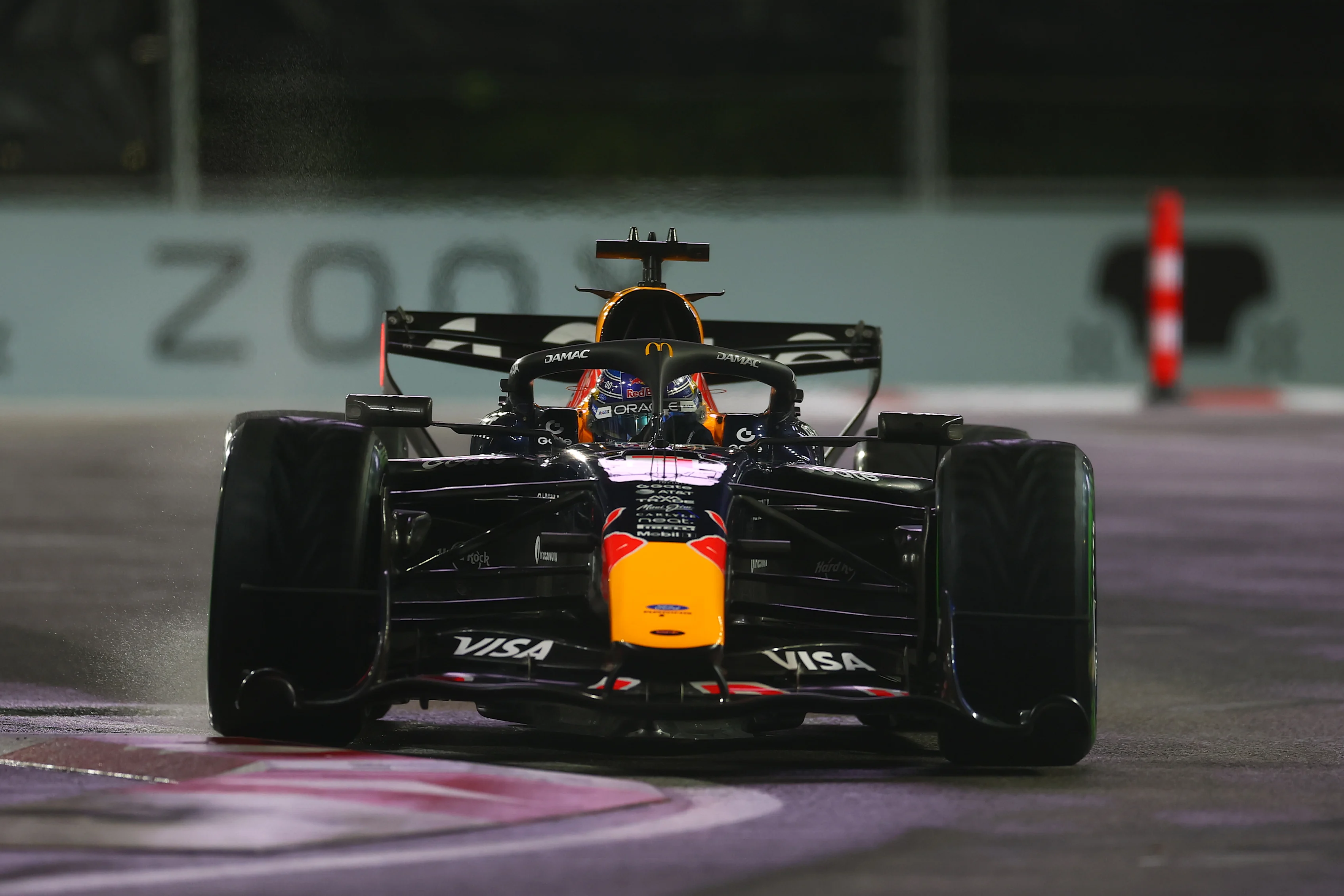
Las Vegas gave the teams almost no conventional Thursday baseline. There were no timed laps in the first session because of the wet circuit, and the second began with drivers balancing the risk of standing water against the need to gather meaningful information. On a street track, that is more than a nuisance: a mistake while exploring the limits can turn an already short weekend into a repair job.
Red Bull chose not to send Verstappen out immediately on full wet tyres. Technical director Pierre Wache later explained that the team wanted to check the car's systems and wait for a more useful window. The decision makes strategic sense if engineers believe conditions will improve, but it also means they are gambling on an uninterrupted opportunity later in the hour. That opportunity never arrived cleanly.
By the time the surface began moving toward intermediate tyres, the session was accelerating around the Dutchman. The pit wall had to react to a brief red flag caused by debris near the final corner. Drivers who had been accumulating laps could feel the grip come in and adjust their braking references. Verstappen was trying to join a moving experiment without the same number of data points.
He eventually recorded only nine laps, compared with 20 for Hadjar and 23 for George Russell. Those figures are not an equal measure of productive running; some laps are exploratory, others push laps, and traffic changes their value. Still, the difference in exposure matters. More circuits of a changing track generally mean more chances to check ride height, tyre response, brake temperatures and the moments at which electric power is delivered.
The official FP2 sheet put Verstappen 13th on a 1m 50.141s, while Russell's benchmark stood at 1m 47.272s. That gap of 2.869 seconds sounds brutal until the timing context is restored. A late run on a rapidly improving intermediate-tyre surface is not directly comparable with a run made earlier under different levels of water, even if both drivers are listed on the same result page.
GOATIFY
GOATIFY Formula 1
Practice is all about the right tyres and timing. Explore Formula 1 fan designs built for unpredictable race weekends.


Nor is a wet practice classification a reliable forecast of the Saturday finishing order. Fuel load, run plan, tyre age and battery state may differ. A driver can lose significant time when the system fails to deliver power as intended out of one slow corner, or when confidence in braking falls away at a single turn. Those shortcomings can be real without proving that one car is naturally almost three seconds slower.
What makes the day concerning is that the lost laps coincided with driver and team complaints. If Verstappen had run ninth, collected a full long-run sample and calmly declared the car manageable, a low ranking could be filed away. Instead, Red Bull left with less mileage than it wanted and a specific handling question to answer. It is the missing certainty, not merely the ranking, that will shape the team's work before qualifying.
That is also why the most valuable outcome of the final practice session will not necessarily be a headline lap. A sustained sequence with consistent deployment, predictable turn-in and comparable tyres would tell the engineers much more about whether the original problem has been isolated. Getting Verstappen comfortable enough to push without guessing at the car's response comes first.
Energy deployment and balance are two separate Red Bull headaches
Two different descriptions emerged from Red Bull's debrief: trouble with the car's energy management and a large problem with its balance. They should not be folded into one vague claim that the power unit was broken. Wache characterized the deployment issue as a matter of getting the systems to work together, then described the handling concern as a much bigger obstacle. That distinction is essential to judging the weekend.
Under the 2026 technical rules, electric power management is a central part of lap performance. Drivers and engineers must coordinate harvesting and deployment, particularly on a circuit that combines long full-throttle stretches with slow corners that determine the speed carried onto those straights. When delivery is inconsistent, a driver can feel short of acceleration even though the problem is not necessarily the combustion engine itself.
Las Vegas magnifies that kind of uncertainty because much of the lap rewards exit speed. If the car struggles to feed power consistently after a slow corner, the penalty can continue down a long straight. The stopwatch then shows a large loss that might misleadingly be diagnosed as simple lack of aerodynamic efficiency. Without sector traces and comparable operating states, observers should be wary of assigning a single cause to the result.
Balance is a different conversation. A car can deploy power cleanly and still leave its driver unable to trust the rear axle on entry, the front tyres at turn-in or the transition between braking and throttle. The wet session compounds those weaknesses: a narrow dry line, cool tyres and inconsistent grip can make a small change in setup or line choice feel enormous from the cockpit.
This is why a team cannot solve every balance complaint merely by altering its power-delivery map. Mechanical grip, aerodynamic platform, differential settings, ride characteristics and tyre preparation interact, and the right compromise for a wet track may not work on a dry one. Red Bull has to identify which symptoms arose from a temporary surface and which came from an underlying car behavior that will follow Verstappen into the next session.
GOATIFY
GOATIFY Formula 1
From energy deployment to the right rubber, F1 is a battle of details. Check out GOATIFY's original racing apparel.


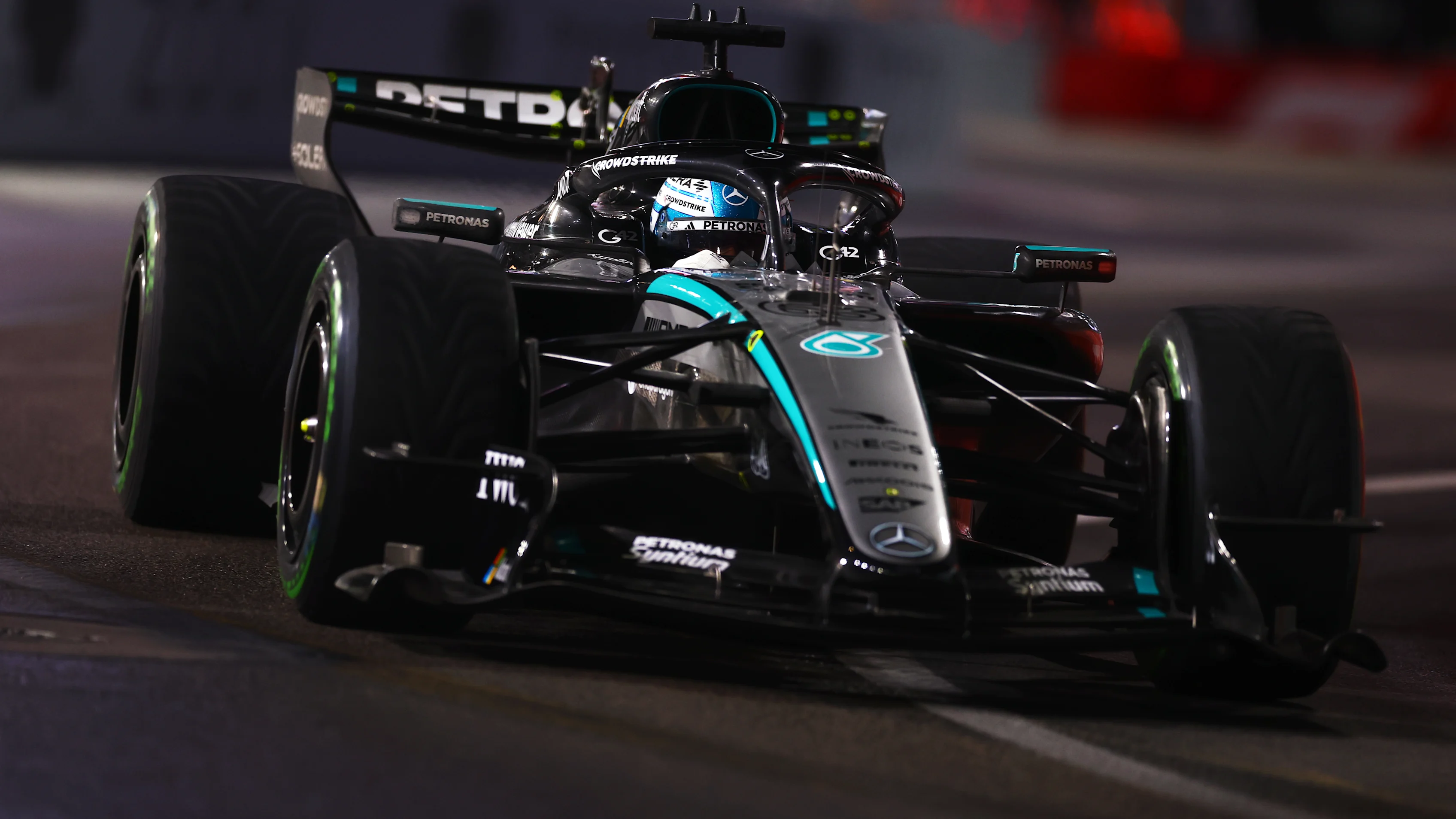
Russell's quick final lap illustrates another trap in the public discussion. Mercedes topped FP2 by 0.071 seconds from Pierre Gasly, but that is a measurement of a specific moment on intermediates rather than an answer to who owns the fastest dry race car. Its relevance to Red Bull is comparative: the benchmark kept moving as the track improved while Verstappen's already disrupted programme restricted his chance to respond.
Temperature also matters in a way a bare leaderboard never captures. Tyres need to be brought into a useful window and kept there, while braking and traction demands vary dramatically as water clears. A driver with confidence can add speed progressively. One who is uncertain whether the rear will follow the front may hold a margin, which can distort every subsequent conclusion about the raw pace available.
The quickest route to clarity is therefore a clean comparison, not an argument about where Verstappen should have placed. Engineers need to see stable battery behavior across consecutive laps, a repeatable response at corner entry, and a car that communicates grip limits early enough for the driver to attack. An improvement in only one of those areas would help, but it would not necessarily close the entire performance question.
Red Bull's technical staff have made the sensible point that a different tyre and a different track condition can reorder the picture. That is a reason to reserve judgment until FP3, not a guarantee that the handling will disappear. An issue which is hard to diagnose in rain can remain inconvenient when the asphalt is dry, especially if the fundamental balance window is small.
Hadjar's fourth place makes the Verstappen problem harder to dismiss
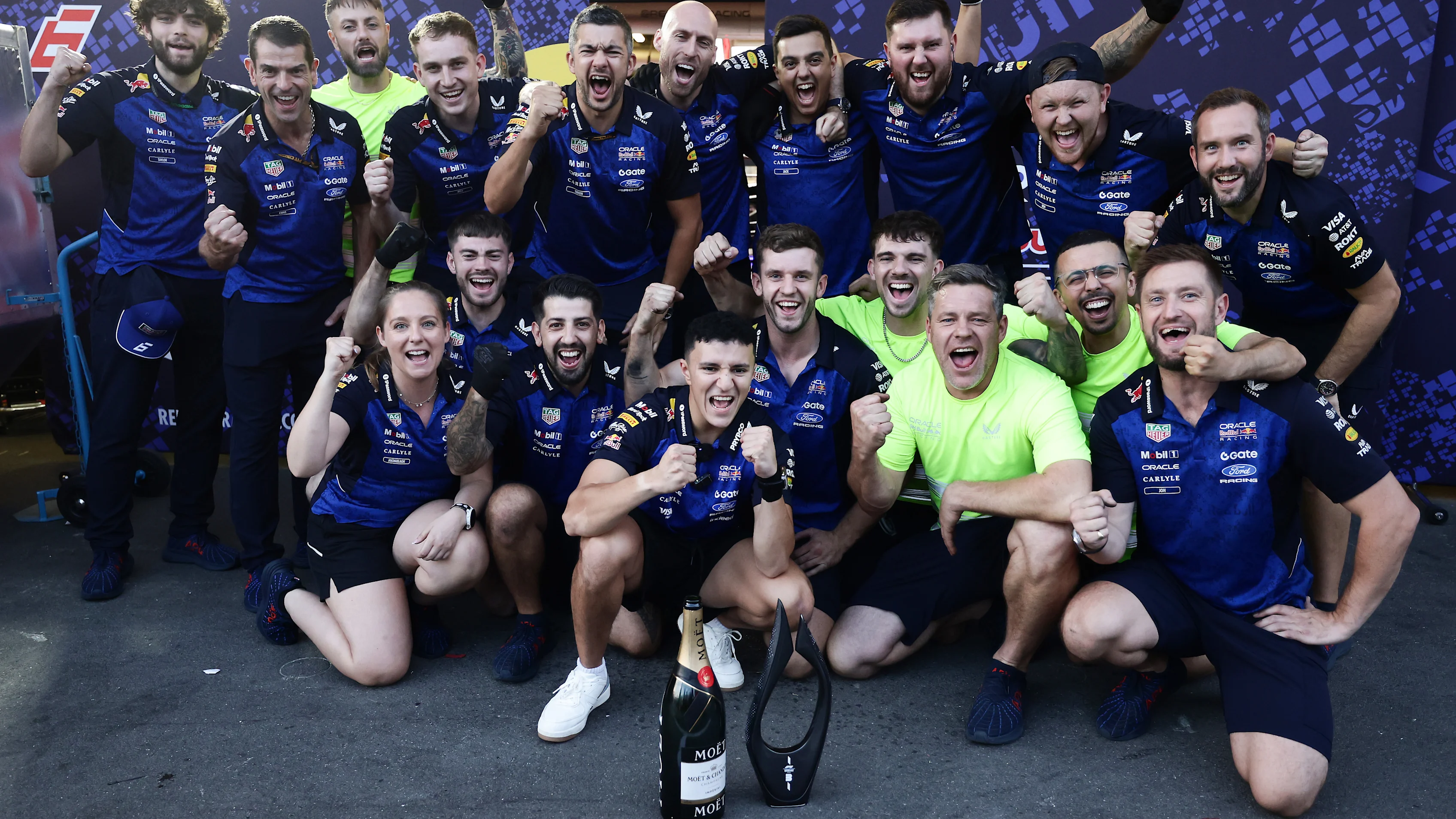
The other Red Bull was fourth. Isack Hadjar completed 20 laps, produced a 1m 48.407s and sat just behind Russell, Gasly and Charles Leclerc in the final order. On the face of it, that is a striking contrast with Verstappen's nine laps and 13th place. More importantly, the team reported that Hadjar was comparatively comfortable with the car in those conditions.
Hadjar's lap was 1.734 seconds quicker than Verstappen's official best, but using that as a clean head-to-head performance gap would be poor analysis. The two drivers did not have identical programmes or identical opportunities on the changing circuit. The Red Bull garage had deliberately delayed one driver, and the red flag disrupted the rhythm of the session. A difference in operating circumstances is already known, not merely an excuse invented afterward.
Even with those caveats, Hadjar's result matters. It is evidence that at least one RB22 could run competitively on the intermediate tyre while the track dried. The chassis concept was not automatically condemned to the bottom half of the grid by the rain. That helps narrow the engineering investigation: what made the car predictable for one driver, and what combination of timing, setup and systems made it so difficult for the other?
GOATIFY
GOATIFY Formula 1
Hadjar's strong run reminded everyone that team-mate battles never stop. Browse racing tees, hoodies and fan favourites.


Team-mate comparison is useful precisely because it can remove some of the broad variables affecting everyone on the grid. Both Red Bulls face the same venue, weather and core technical architecture. But it is not a laboratory test. Different setup decisions, a driver's preferred balance, tyre preparation and the order of laps can turn the same general package into distinct cockpit experiences. Engineers will want the traces rather than the rankings.
Hadjar has also shown growing maturity in his 2026 Red Bull role, including a podium earlier in the season in Azerbaijan. That history does not mean he was destined to beat Verstappen in Las Vegas. It does, however, make it reasonable to regard his feedback as substantial evidence rather than dismiss it because his more famous team-mate happened to struggle.
His comments after Thursday were upbeat about the feel of the circuit, which he compared to Baku for its long straights, slow-speed corners and low grip. That is an interesting description of a track where a driver needs a calm car on braking and the ability to put power down without hesitation. It aligns neatly with the qualities that appeared to be missing from Verstappen's late run.
There is a useful tactical problem for Red Bull here. If Hadjar's setup worked well enough to establish a solid baseline, the team has a reference point to investigate. But simply copying every choice between the cars may not make sense; a setup that suits one driver can still leave the other with the wrong front-to-rear balance. The important question is which characteristics are transferable and which are personal.
A second clean Red Bull session would settle much more than internet arguments about who 'won' FP2. If Hadjar remains comfortable while Verstappen continues to report major instability on comparable rubber, the balance concern grows. If Verstappen immediately regains pace once energy delivery and tyre preparation are sorted, the Thursday contrast will look much more like a distorted snapshot than a hierarchy shift.
Dry qualifying is the test Red Bull cannot explain away
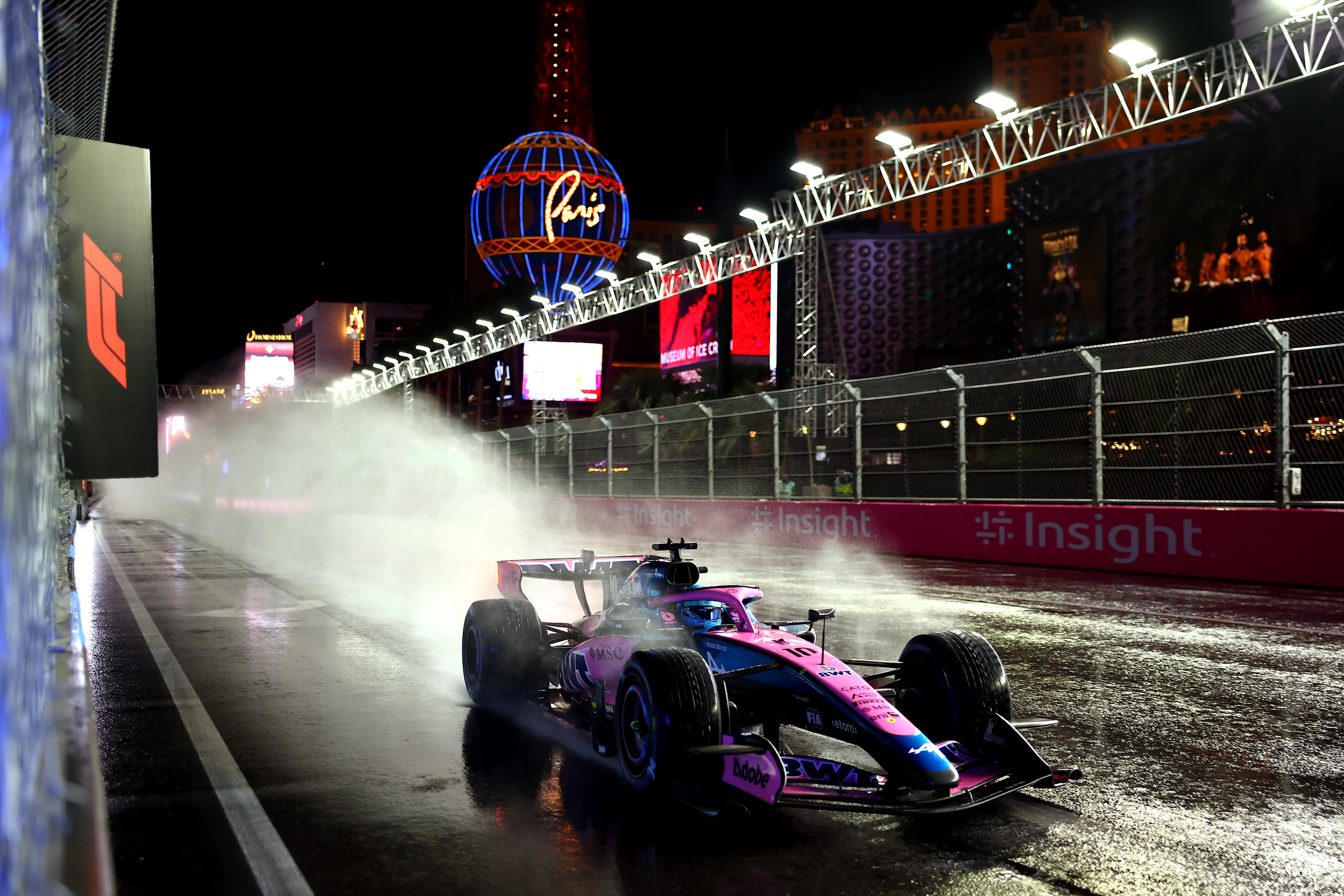
The next meaningful test comes under conditions expected to be much drier. Friday's third practice is scheduled for 16:30 Las Vegas time, with qualifying at 20:00, before the 50-lap Grand Prix on Saturday evening. Red Bull has one more practice hour to turn Thursday's incomplete evidence into a qualifying setup. The fact that the weather may change so much gives the team an opportunity, but also compresses its learning time.
The Las Vegas Strip Circuit is 6.201 kilometres long and carries 17 turns, with a distinctive mix of long straights, tight braking zones and slow corners. It punishes both excess drag and poor low-speed traction. A team can make a car more stable through setup decisions yet surrender time in another part of the lap if those changes come with a significant aerodynamic or mechanical compromise.
Verstappen has won twice on this circuit in its first three modern editions, in 2023 and 2025. That background speaks to the driver's familiarity with the demands, not to the current car's guaranteed suitability. The 2026 generation has different power-unit and chassis characteristics, and the kind of confidence that helped in one regulation era cannot simply be imported unchanged into another.
GOATIFY
GOATIFY Formula 1
Vegas qualifying could flip the entire grid story. Get ready for race night with GOATIFY Formula 1 gear.


Four signs are worth watching. First, does Verstappen take part promptly and complete a representative block of laps rather than sitting through the best of the running? Second, does the team confirm that its energy-management concerns have been resolved, with no repeat loss of expected power delivery? Third, is his braking and corner-entry behavior settled enough for clean, repeatable laps? Finally, is Hadjar's comfort replicated when both drivers are on similar programmes?
The outright FP3 order will be a clue, not a verdict. Teams often use the last practice session to test items that will not be visible to spectators, and fuel levels still muddy comparisons. A useful pattern across multiple sectors and laps will be more compelling than a single headline improvement. Red Bull needs evidence of a broader operating window, not just a one-lap rescue.
Qualifying then raises the stakes because the opportunity to correct the picture disappears much faster. A track with long straights still creates passing chances on Sunday, but traffic, tyre strategy and position through the opening corners can turn a poor grid slot into a costly constraint. Starting farther back than necessary would hand an additional job to the driver even if the car's underlying pace is repaired.
Russell's first-day pace is a reminder that Mercedes can be a serious reference in Las Vegas, while Gasly's second place showed how the intermediate conditions rewarded drivers and cars that found grip at the right moment. Neither result promises a dry pole battle featuring exactly the same names. But both demonstrate that other teams harvested useful laps while Red Bull was still collecting answers on one side of its garage.
Another important distinction is between being 'fixed' and being competitive. A smoother energy system might remove a visible malfunction without making the RB22 fast enough to challenge the leaders. Likewise, a more predictable rear end could help Verstappen attack while leaving questions about tyre life over a race stint. Red Bull needs to solve the reliability of the car's responses and then assess its ultimate speed honestly.
The best-case scenario is straightforward: Friday's running is cleaner, Verstappen and Hadjar converge toward a credible baseline, and the Dutchman can choose his qualifying risks rather than react to the car. The worrying scenario is just as clear: no obvious systems problem, but recurring balance complaints when the circuit is dry. That would suggest Thursday revealed a deeper weakness rather than merely delivering an unhelpful weather lottery.
Verstappen's 13th place was the most visible number of Thursday, but it was not the most revealing. Nine laps, interrupted deployment work and a driver who could not trust his car tell a more serious story than a wet-weather timing position ever could. Hadjar's fourth place reinforces that Red Bull has a useful benchmark inside its own garage, while leaving plenty of room for the conditions to have exaggerated the gap.
Friday offers the chance to replace speculation with comparable evidence. If the energy system behaves and Verstappen can attack the 17-turn circuit consistently, the Vegas alarm may fade quickly. If the car still moves outside his comfort window as qualifying approaches, Red Bull will not be able to blame every lost tenth on the rain.
GOATIFY
GOATIFY Formula 1
Explore GOATIFY Formula 1 shirts, hoodies, mugs and racing stickers for race-day fans.


















