

Mannarino Knocks Out Rublev — Duckworth Sends No. 2 Seed Packing in Almaty
GOATIFYThe Almaty Open lost two of its top four seeds in a single Wednesday session, and neither exit followed the script suggested by the rankings. Adrian Mannarino, 38 and ranked No. 79, beat fourth seed Andrey Rublev 6-4, 3-6, 6-3. James Duckworth then removed second seed Luciano Darderi 7-5, 7-6(7). For an ATP 250 tournament approaching its quarterfinals, those results did more than produce a pair of surprises: they changed who can realistically reach the weekend.
Mannarino's win was the more dramatic ranking mismatch. He stood 57 places below Rublev but had the better answers at the critical moments, particularly late in the third set. Duckworth, meanwhile, converted a tight indoor contest into a straight-sets victory with a serving display that left Darderi little room to recover. The two veterans now enter a draw that suddenly offers an unusually open route forward.
Here is how the matches turned, why the upsets are connected, and what the remaining contenders face next.
Mannarino controlled the margins against Rublev

The first clue arrived immediately. Mannarino broke Rublev in the opening game, forcing the higher-ranked player to chase a deficit before he had settled into the match. The French left-hander still had to defend that advantage. Five break points came and went against him during the first set, yet he protected the early break and took it 6-4. It was not a procession; it was an exercise in keeping one small edge alive long enough for it to matter.
Rublev responded with a 3-0 lead in the second set and eventually levelled the match at one set apiece. That swing showed why a victory over the former world No. 5 was never going to be straightforward. Rublev can turn a short run of clean strikes into a rapid scoreboard change. Mannarino needed to absorb those surges without abandoning the measured, early-contact tennis that makes him difficult to read on a quick indoor court.
The decider supplied the sharpest contrast. Mannarino did not have to overwhelm Rublev with aces. Match statistics credited the Frenchman with six, compared with 13 for Rublev, but he put 75 percent of his first serves in play and won 77 percent of those points. He converted two of nine break opportunities; Rublev managed one from six. Those are narrow differences over more than two hours, but they explain how the player with fewer free points can still own the important exchanges.
At 4-3 in the final set, Mannarino found the break that decided the contest, then served out the match. He won the final three games and finished 6-3 in the third. The finish mattered as much as the upset itself. A veteran facing a more explosive opponent must often survive the periods when the other player looks unstoppable. Mannarino stayed close enough to strike when the balance shifted back.
This was not a random burst of form. Mannarino beat Aleksandar Vukic in three sets earlier in Almaty, and earlier in October he knocked out top-ten player Flavio Cobolli in Shanghai. He also knows the Kazakhstan stop better than most: he won the title in 2023 when the event was staged in Astana and returned to the final in Almaty in 2025. That history does not guarantee another deep run, but it makes the 38-year-old a much more credible quarterfinal threat than his ranking alone suggests.
Rublev's defeat is a reminder that a first-round bye is not always an advantage at this stage of the calendar. Mannarino had already tested the court, the ball and the rhythm of competition; Rublev was playing his first match of the week. That is a plausible part of the tactical picture, not proof of why the Russian lost. The decisive evidence remains what happened on the court: Mannarino defended his early lead, recovered after the second set and took his late chance.

Duckworth delivered a second shock with his serve
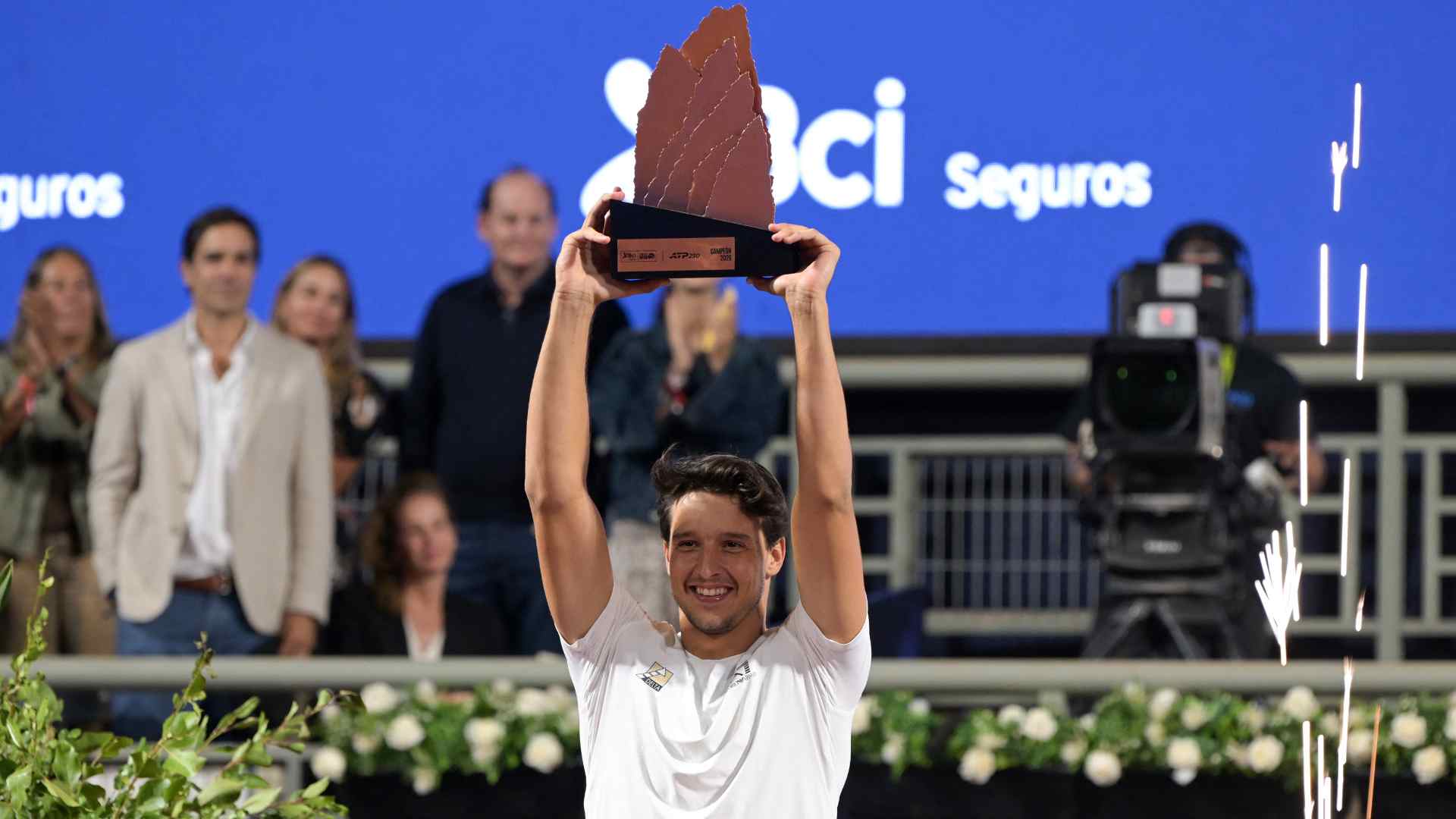
Duckworth's 7-5, 7-6(7) victory over Darderi was built around a different kind of control. The Australian struck 17 aces, won 88 percent of his first-serve points and did not face a break point until the second set. Those numbers describe a match in which the second seed had very few opportunities to take command on return. A single loose service game in the first set and a tight tiebreak in the second were enough to send Darderi home.
The upset also needs context. Darderi arrived as the No. 2 seed and the world No. 23, with a productive 2026 season that included another ATP title in Santiago. But a strong seed number cannot remove the problems posed by a confident opponent on indoor hard courts. Duckworth kept his own service games short enough to force Darderi to protect his serve repeatedly, then handled the pressure when the scoreboard tightened. The result was not a five-set epic or a late collapse; it was a straight-sets loss decided by a handful of points.
For Duckworth, the timing is significant. The 34-year-old had gone without a tour-level singles victory since defeating Matteo Arnaldi at the US Open in September. His 6-4, 6-3 first-round win over Miomir Kecmanovic in Almaty ended that run. Beating Darderi immediately afterward turned a small recovery into a quarterfinal appearance. The distinction matters: one win can restore confidence, but backing it up against a high seed provides stronger evidence that a player's level is returning.
Duckworth has had to rebuild repeatedly through injuries and operations during his career. His resilience is not just a convenient storyline. In a September interview, he discussed the importance of staying present during points and credited improvements in his physical preparation for a more reliable run of results. That background helps explain why a disciplined serving performance is meaningful at this stage of his career, even though it cannot by itself predict how he will play on Friday.
The next opponent is Stefanos Tsitsipas, who advanced by beating Kazakhstan's Mikhail Kukushkin 6-1, 6-2 in just over an hour. The Greek served eight aces and converted four break points, ending the final tournament of the 38-year-old home wild card's career. That sets up an intriguing contrast: Duckworth comes off a match in which his serve rarely came under threat, while Tsitsipas arrives after a dominant return performance against a different opponent.
The quarterfinal will test whether Duckworth can reproduce his first-serve percentage and protect second-serve points against a player capable of taking the racket out of his hands. It would be a mistake to treat Darderi's exit as evidence that Tsitsipas is now a comfortable favorite or that Duckworth has an easy path. The Australian earned his place by beating a top seed; the next round asks him to prove that the same level can survive another kind of pressure.

What the Almaty upsets change in the quarterfinals

With Rublev and Darderi gone, Almaty's bottom half looks different from the bracket that greeted players at the start of the week. Mannarino will meet qualifier Nikoloz Basilashvili for a place in the semifinals. The Georgian beat Facundo Díaz Acosta 6-2, 6-4 after previously eliminating Marin Čilić, so his path has involved more than simply benefiting from an opening in the draw. Both quarterfinalists are experienced players who know how quickly a tournament can change.
The matchup carries a recent reference point. Mannarino and Basilashvili met in Shanghai earlier this month, where the Georgian retired with Mannarino leading 6-3, 2-2. That unfinished contest is useful context, but not a reliable forecast. Basilashvili has since won matches in qualifying and the main draw in Kazakhstan, while Mannarino has just beaten a player ranked substantially above him. The most important question is which man can impose his preferred tempo without giving away the cheap service games that matter so much indoors.
The upheaval extends beyond those two headline results. Sixth seed Tomas Martín Etcheverry also fell, losing to Mattia Bellucci 7-6(5), 2-6, 6-4. Tomas Machac moved forward with a 6-2, 6-0 victory over local wild card Zangar Nurlanuly. Those outcomes underline that the tournament's later rounds are being shaped by a broad set of performances rather than a single surprise. The seeds who remain will need to respond to a field that has already demonstrated its willingness to attack favorites.
Top seed Daniil Medvedev remains a major name in the competition, while Alexander Bublik, Karen Khachanov and Tsitsipas give the event recognizable contenders even after Wednesday's exits. Khachanov opened with a 6-2, 6-4 victory over qualifier Rei Sakamoto. None of those results guarantees how the remaining matches will unfold, and the draw should not be reduced to a prediction that the highest-ranked survivor will collect the trophy.
For Mannarino, the opportunity is especially tangible. He is already a former champion at the tournament's predecessor venue, and a semifinal would extend a productive late-season stretch at an age when many players have stepped away from the tour. For Duckworth, a second consecutive win over a seed would deepen the case that his comeback is more than a short run of good serving. For the eliminated players, the lesson is harsher: even a high ranking and a first-round bye cannot protect against one strong opponent on the wrong day.
The ATP 250 title is still several matches away, and there are too many variables to crown a new favorite on the basis of one chaotic session. What can be said now is simpler and more consequential. Two established veterans have turned their form into genuine quarterfinal opportunities, and the Almaty draw has lost much of the certainty it seemed to possess 24 hours earlier.
Wednesday's two headline upsets were not identical. Mannarino found the crucial break late in a third set against Rublev; Duckworth protected his serve and settled a tight second-set tiebreak against Darderi. Yet they produced the same consequence: an ATP 250 event that suddenly gives two veterans a direct chance to reshape the closing week of the season.
Mannarino faces Basilashvili, Duckworth faces Tsitsipas, and the remaining seeds must navigate a draw that has already punished assumptions. Almaty has moved beyond a story about who was expected to win. The next question is which of the players who seized an opening can make it count.
Shop GOATIFY tennis products from the Tennis-filtered collection scope.

















