

Ohtani Avoids Surgery — But the Dodgers Have a Bigger 2027 Problem
GOATIFYShohei Ohtani will not need offseason surgery, and the Los Angeles Dodgers expect him back on the mound in 2027. That is the welcome headline from Andrew Friedman's season-ending assessment. It is not, however, a promise that baseball's most demanding job can resume on the same schedule that broke down this summer.
Ohtani finished 2026 with a pitching line that would be impressive for a full-time starter: an 8-2 record, a 1.79 ERA and 95 strikeouts in 85 2/3 innings. He also hit 30 home runs. Yet his final pitching appearance came on July 3, a series of knee and biceps problems disrupted his season, and his diminished production followed the Dodgers into a four-game NL Championship Series loss to Milwaukee. The issue facing Los Angeles is no longer whether its superstar wants to do both jobs. It is whether the club can create a sustainable plan that preserves both of them when the games matter most.
No surgery is relief, not a clean bill of health
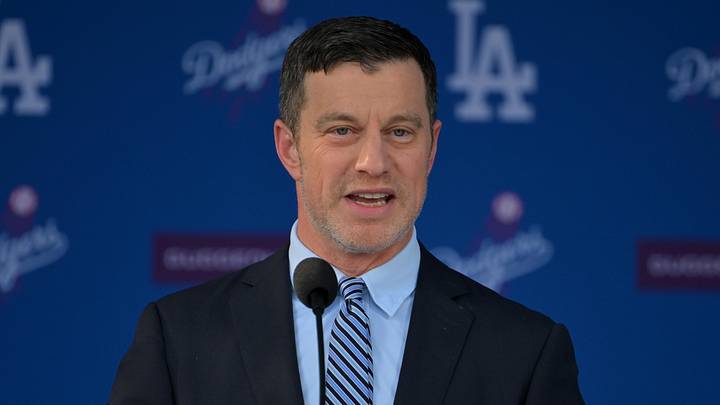
Friedman delivered two important pieces of information at the Dodgers' October 21 wrap-up: surgery is not currently planned, and the organization expects Ohtani to pitch next season. Those answers remove one major uncertainty after the two-way star acknowledged that he would need a thorough offseason assessment. They do not resolve the questions of innings, recovery time or how his pitching schedule will interact with his everyday hitting role.
Ohtani's problems were not confined to a single cleanly defined injury. His left knee troubled him intermittently, while right biceps discomfort became another obstacle as the summer progressed. Friedman described a pattern in which one issue improved only for another to demand attention. The immediate prescription is rest rather than a procedure, which is encouraging. It also means the club must learn from how the accumulated discomfort affected performance before declaring the problem solved.
That distinction matters because the Dodgers do not need to prove Ohtani can throw a baseball at an elite level. He already did that in the first half. They need to decide what evidence will be required before increasing his workload, how quickly they will respond to warning signs and whether a skipped start should be treated as a sensible investment rather than an emergency. None of those decisions can be settled by a reassuring October press conference.
There is also a human problem beneath the medical one. Ohtani is fiercely committed to playing, and stars often judge their readiness by what they can tolerate on a particular day. A contender needs a process that weighs those reports against the cumulative cost of pitching, batting, travel and recovery. If the Dodgers again allow each successful appearance to reset the conversation, they risk reaching September with an apparently available superstar who is not close to his best.
A 1.79 ERA hides how abruptly the pitching stopped

The numbers from Ohtani's 14 starts show why the Dodgers remain eager to put him back in the rotation. He struck out 95 hitters, walked 26 and allowed very little damage across 85 2/3 innings. A 1.79 ERA is not a marginal contribution from a celebrity occasionally taking the mound; it is frontline production. His presence can alter a postseason matchup because opponents must account for an elite bat and a high-end starting pitcher in the same player.
But the season's shape is more revealing than the final ERA. Ohtani's knee became an issue in June. By July 3, after his last start against San Diego, right biceps discomfort had joined the problem. He was scratched from further starts and never returned to game action as a pitcher. The Dodgers attempted a throwing progression in August, but the effort did not produce a sustainable return. The club eventually shifted its focus to preserving his bat.
The split within the pitching season deserves attention. Ohtani posted a 0.74 ERA in his first ten starts, then allowed 12 earned runs in 24 2/3 innings across his final four. That later stretch was still useful, but it was a meaningful departure from his early dominance and overlapped with the knee trouble. The lesson is not that every fluctuation proves an injury. It is that a staff with this much information should be able to detect when a player is moving away from his best version and investigate before the schedule forces its hand.
July 3 is now the date the 2027 plan must be built around. Los Angeles received almost three months of extraordinary starting pitching, but not a single postseason inning from Ohtani. A regular-season workload that maximizes starts in April and May yet leaves him unavailable in October is a poor bargain for a team whose season is judged by championships. His ERA explains why the Dodgers want him pitching again. The gap between his final start and the playoffs explains why a different management strategy is essential.

The bat cannot become collateral damage

For a conventional starting pitcher, managing fatigue is difficult enough. Ohtani's situation has another layer: reducing the pitching burden is supposed to protect a hitter who can transform the lineup every day. In 2026 he still finished with a .275 average, 30 home runs and 81 RBIs in 135 games, but those season totals conceal a painful late-year slide. A throwing buildup coincided with diminished offensive production, and by the playoffs he was no longer delivering his usual damage.
The Dodgers spent the second half trying to keep one part of his game available while rebuilding the other. He continued as designated hitter after his final start, then had periods of rest and an injured-list stint as knee and biceps problems persisted. In October the lineup questions became unusually stark. Ohtani was moved down the order during the NLCS, and the club even discussed whether he should sit. His three-run homer in Game 4 ended a long drought, but it could not prevent Milwaukee from completing the sweep.
It would be simplistic to claim that pitching caused every difficult at-bat. Hitters slump, and the Dodgers had other offensive problems. What matters is that the club cannot treat Ohtani's pitching schedule and hitting schedule as separate departments. A bullpen session, recovery day or physical setback has consequences for how he rotates, runs and generates power at the plate. Protecting his swing should be a central variable in any decision to increase his innings.
There is a strategic cost to getting this wrong. If the Dodgers must choose between a few extra regular-season starts and a healthier everyday bat, the answer may differ depending on the standings, available starters and time of year. That is not abandoning the two-way experiment. It is recognizing that the experiment only works when both halves reinforce each other. A 1.79 ERA means less if the price is a compromised hitter for the season's most important weeks.
The Dodgers need an October-first plan for 2027

Friedman has not announced a fixed 2027 pitching calendar for Ohtani. That is appropriate: the organization needs to assess his recovery before deciding how quickly to build him up. Still, the choices are clear enough. Los Angeles could start him in the rotation early with deliberate rest, delay his pitching debut until later in the season or use a flexible schedule that adjusts to his physical response. Each option trades some regular-season innings for a different level of protection.
A conservative approach is easier to justify because the Dodgers have invested heavily in starting-pitching depth. Yoshinobu Yamamoto, Tarik Skubal, Blake Snell and Tyler Glasnow were among the arms available in 2026, although the precise 2027 roster and health picture remain to be determined. The more innings the rest of the rotation can cover, the less pressure there is to demand a normal starter's calendar from the only player also expected to anchor the offense.
The most useful change may be procedural rather than dramatic. Establish clear checkpoints after starts and throwing sessions; allow planned skips rather than treating them as setbacks; and define what would trigger a pause before discomfort becomes a multi-month shutdown. Ohtani should have a central voice in that process, but the staff must be willing to make decisions he might not choose for himself in the heat of competition. An October-ready two-way player is the goal, not a perfect attendance record.
There is a risk at the other extreme. Holding Ohtani back too long could leave him underprepared for postseason pitching or force the Dodgers to rely more heavily on others in a difficult division race. The answer is not to promise that every start will be skipped or that he will only pitch in relief. It is to build enough flexibility into the plan that his workload can change without a crisis. The best evidence of progress next year will not be a dramatic Opening Day announcement. It will be a healthy Ohtani still capable of contributing on both sides of the ball when the postseason begins.

The Dodgers received the medical news they wanted: no surgery is planned, and Ohtani's return to pitching remains part of their 2027 vision. What they have not yet solved is the harder question of how to keep an exceptional two-way player effective over a full championship season. His 2026 ERA proves the talent is there; his July shutdown and uneven finish prove that talent alone cannot carry the schedule.
Los Angeles can turn this disappointment into a useful reset by valuing rest, communication and October availability as highly as individual starts. Ohtani does not need to stop being baseball's most unusual player. The Dodgers need to stop asking that unusual player to fit a workload designed for someone who only has one job.

















