

Lawson Keeps His F1 Seat. Racing Bulls Chose Stability Over Tsolov for 2027.
GOATIFYLiam Lawson could score another points finish and still face the same question: would Racing Bulls replace him with the next graduate from Red Bull's junior programme? On November 12, 2026, the team finally answered. Lawson and Arvid Lindblad will remain its Formula 1 race lineup for 2027, leaving rising Formula 2 contender Nikola Tsolov waiting for an opening.
The decision goes beyond two contracts. It rewards Lawson's performances after a turbulent spell at the senior Red Bull team, gives Lindblad another year with a known benchmark and places some of Racing Bulls' own championship priorities ahead of the familiar pressure to promote another youngster. With the team fighting for fifth in the constructors' standings, continuity has become a competitive strategy rather than the least imaginative choice.
Three considerations explain the call: the results that made Lawson difficult to overlook, the longer-term value of Lindblad's development and the stable leadership Alan Permane is building as the team prepares for 2027.
Why Lawson survived the Tsolov challenge
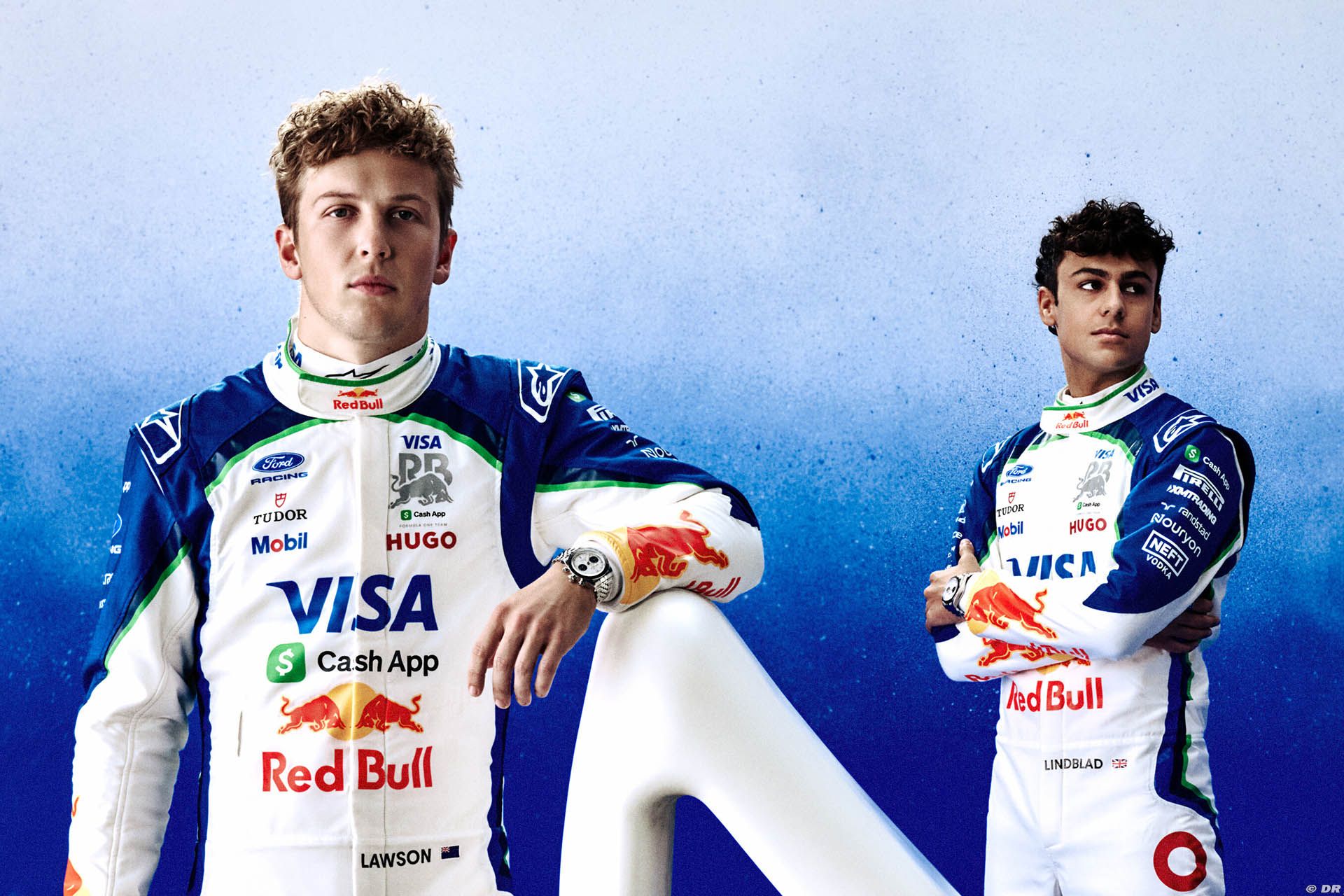
For most of this year, Liam Lawson did not have the security that his results appeared to warrant. Racing Bulls had two drivers regularly delivering points, but it also had another young prospect waiting for a promotion. The team's choice was not simply whether Lawson was quick enough. It was whether one more year of his experience served Red Bull's long-term interests better than placing Nikola Tsolov into Formula 1 immediately.
On November 12, that uncertainty ended. Racing Bulls confirmed Lawson and Arvid Lindblad as its 2027 drivers. The announcement keeps a pairing that helped lift the Faenza-based squad to fifth in the constructors' standings with the final three rounds approaching. For a team that traditionally serves as Red Bull's junior-driver launchpad, retaining both incumbents is an important declaration about what it values right now.
Lawson's case strengthened because he repeatedly delivered in circumstances where mistakes were particularly costly. He entered the campaign trying to recover from a bruising introduction to the senior Red Bull team in early 2025. Two races alongside Max Verstappen were not enough to establish himself there, and his return to the sister operation created the impression that another difficult spell might permanently close the promotion route.
The 2026 response was substantial. Lawson compiled 89 drivers' championship points by the time the decision was made, although that total includes points from a three-race substitute spell at Red Bull when Isack Hadjar was unavailable. The distinction matters: not every one of those points belongs to Racing Bulls' constructors' tally. Nevertheless, the overall output shows how consistently he has found opportunities to score, whether adjusting to a different car or fighting direct midfield rivals.
The late-season American sequence sharpened the comparison. Lawson delivered another seventh place in São Paulo after a strong qualifying weekend, extending a run of performances that left little room to argue he was failing to extract the car's potential. The Brazilian result came at a revealing moment: Racing Bulls was still being linked to Tsolov, and every good finish made an immediate driver change more difficult to justify.
That is not to say the choice was straightforward. Tsolov had earned serious consideration with his Formula 2 form, private F1 testing and an official practice appearance in Mexico City. Red Bull has historically preferred to move exceptional prospects quickly rather than allow a potential future star to wait indefinitely. From that perspective, keeping an established driver in the second team can look conservative, even when he is performing very well.
But the counterargument is stronger than it was at the beginning of the year. Lawson has become an unusually valuable reference point: he knows the organisation, has experienced both of its F1 teams, and has shown that his speed can survive the intense scrutiny surrounding a contract decision. Removing that benchmark could have made the 2027 car harder to evaluate and left a still-developing Lindblad alongside another newcomer.
GOATIFY
GOATIFY Formula 1
Liam Lawson's Racing Bulls renewal shows how much a season of hard-earned results can matter. Explore F1 designs while the 2027 grid takes shape.


There is also a human dimension. Lawson's season was being assessed under a very public threat of replacement. Rather than treating each race as a referendum on his future, he increasingly focused on execution: qualifying position, tyre management, clean racecraft and maximising the weekends when the car was genuinely competitive. The visible results gave the team evidence that could be compared with the promise represented by its junior programme.
Alan Permane's verdict effectively turns that evidence into a team-building decision. His view is that retaining Lawson alongside Lindblad offers the best balance of experience and ambition. It is not a rejection of Tsolov's potential. It is a conclusion that the two current drivers have already demonstrated a level of combined performance the team does not need to gamble away for 2027.
For Lawson, the deal changes the starting conditions of next season. Instead of spending another winter wondering whether he will be on the grid, he can contribute to development discussions with a defined seat and a familiar teammate. Racing Bulls can also start planning its next car around detailed feedback from two drivers who understand the 2026 machinery. Continuity does not guarantee faster lap times, but it removes one source of disruption that has followed Lawson through much of his F1 career.
Lindblad stays, Tsolov waits: the development trade-off

Arvid Lindblad's renewal is not a surprise in isolation. The teenager has taken on the demanding role of Formula 1's only rookie in 2026 and shown enough race pace and resilience to justify another season. The more interesting question is what Racing Bulls believes he will learn by remaining with Lawson instead of receiving a new, equally inexperienced partner.
Measured simply by championship points, the gap is considerable: Lawson's 89 to Lindblad's 38 at the time of the announcement. That comparison needs context. Lawson's total includes time with the senior Red Bull outfit, while Lindblad began the year learning circuits, race procedures and the subtleties of tyre management at F1 level. Comparing the numbers without acknowledging their different experience and opportunities would hide more than it reveals.
In his rookie campaign Lindblad has already shown he can convert useful grid positions into points, including a points-scoring debut in Australia and further strong finishes across the season. His learning curve has involved the normal fluctuations of a first F1 year, but the team has not needed to protect him from the demands of regular midfield racing. His 11th place in the drivers' standings demonstrates that he belongs in the discussion, even while his teammate remains a more established scorer.
The advantage of retaining Lawson is that the internal benchmark stays stable. A second-year driver can review the same types of corner entry, braking trace and race-stint behaviour against a reference he knows. Engineers can separate improvements in Lindblad's own driving from changes in the car more easily than if both sides of the garage were starting again. Feedback continuity also matters during the second year of F1's current technical regulations, when teams try to understand why one upgrade works and another does not.
Lindblad's longer-term trajectory remains tied to the senior Red Bull organisation. Hadjar already occupies the other Red Bull race seat alongside Verstappen, so there is no obvious immediate vacancy that requires Racing Bulls to accelerate its rookie into the main team. An additional year in the sister car can be viewed as preparation rather than stagnation. It offers a chance to turn promising flashes into a repeatable level of performance, especially on difficult weekends when the car falls outside the ideal window.
GOATIFY
GOATIFY Formula 1
With Lindblad retained and Tsolov waiting, the Red Bull driver ladder is still moving. Browse GOATIFY Formula 1 gear for fans following the next generation.


Tsolov, however, is the driver most directly affected. His Formula 2 campaign placed him firmly in contention for a Formula 1 debut, and his Mexico City FP1 run was not an empty gesture. The outing gave the team a fresh measure of his readiness, alongside the testing and simulator work already available through Red Bull's development system. Choosing Lawson now means the Bulgarian must wait for a new opening or a different route onto the grid; it does not prove the team has stopped rating him highly.
That distinction is central to the Red Bull model. Racing Bulls is simultaneously trying to score championship points and build drivers for another team. Those goals can compete. Replacing Lawson might create an immediate development opportunity for Tsolov, but it would also increase the amount of inexperience in the race lineup. Keeping Lawson can improve the environment in which Lindblad develops, yet it risks delaying the next graduate in the queue.
One season of waiting does not necessarily damage a prospect's prospects. Reserve work can involve meaningful simulator programmes, private testing in previous cars and further practice opportunities, although the team has not announced a complete 2027 assignment for Tsolov in this decision. What matters is whether that programme continues to create measurable progress rather than simply parking a quick driver on the sidelines.
The same question will follow Lindblad. He has earned another season but not a guaranteed promotion to Red Bull. The standard will rise in 2027 because the rookie excuse will no longer apply. Qualifying against Lawson, managing tyres over full race distances and avoiding mistakes in mixed conditions will be more revealing than occasional spectacular laps. His next step is to close the gap within the same team and prove he can deliver consistently enough to challenge for higher-level opportunities.
Keeping both drivers gives Racing Bulls a useful experiment: one established racer who has fought for survival, paired with a young prospect entering his second year. If both improve, the team can argue that continuity and development are compatible. If the results stagnate while Tsolov impresses elsewhere in the programme, the pressure for another change will return quickly. The 2027 lineup therefore settles the immediate contract question without ending the broader debate about how Red Bull should promote its talent.
Permane's long-term deal makes P5 and 2027 the real test

Driver retention is only one part of a broader Racing Bulls decision to stop treating every season as a reset. A week before the 2027 lineup announcement, the team confirmed a long-term extension for Alan Permane, keeping its team principal and sporting co-CEO in place through the end of 2031. Pairing that management stability with an unchanged race lineup gives the outfit more continuity than its driver-development identity has always allowed.
Permane's experience is particularly relevant to the challenge ahead. Before joining Racing Bulls in 2024 and becoming team principal in 2025, he spent decades at the Enstone operation through its various identities, working across engineering and sporting responsibilities. That background does not make success automatic, but it gives him an understanding of how to build repeatable processes rather than relying on a one-off result.
The immediate target is fifth in the constructors' championship. Racing Bulls entered the final three rounds of 2026 occupying that position, and holding it would represent its strongest finish under the current organisation's identity. It is easy to treat P5 as a minor achievement when Mercedes, Ferrari, McLaren and Red Bull are fighting for championships. For a midfield team, however, finishing best of the rest reflects operational execution over a full season: scoring on opportunity weekends, protecting points on difficult ones and limiting the damage from errors.
Both drivers have contributed to that campaign in different ways. Lawson offers the higher baseline and more consistent points threat; Lindblad adds a rookie whose speed has often allowed him to participate in the same midfield battles. A capable car helps, but a team only converts its potential into a championship position when qualifying, strategy, pit stops and race decisions work together often enough. That collective reliability is what the lineup announcement is designed to preserve.
GOATIFY
GOATIFY Formula 1
Racing Bulls is aiming to turn a top-five fight into sustained momentum. Explore F1 designs as the team sets its sights on 2027.


The timing of the decision also matters. F1's 2026 season introduced a major power-unit and chassis-rule shift, and development will continue into 2027 rather than beginning from a completely blank sheet. Engineers working on the next car benefit from two current drivers who can provide a comparison with the existing one. A rookie lineup might offer greater long-term theoretical upside, but it can also introduce more noise into feedback when performance is being measured in small differences.
Racing Bulls has a complicated technical and organisational position. It shares an ownership group with Red Bull Racing, yet it has its own championship ambitions and must compete directly against the rest of the grid. The senior team's needs can still shape how quickly a young driver moves through the programme. The choice to keep Lawson shows that the sister team currently has enough authority, or at least enough support, to prioritise a proven race pairing rather than manufacture a vacancy.
That does not mean Red Bull has abandoned its development role. The system still includes Lindblad, who has only just finished a rookie season, and Tsolov, whose Formula 2 results continue to demand attention. Nor does it mean Lawson has suddenly been promised a route back to the senior car. A one-year race-seat decision should be read as precisely that, not as evidence of an automatic promotion path or a long-term guarantee beyond the announced 2027 programme.
There is an important sporting test immediately ahead. Las Vegas, Qatar and Abu Dhabi remain on the calendar after the announcement, and the season is not complete simply because the driver lineup is settled. Racing Bulls still needs to defend its points advantage against its closest rivals. A strong closing run would validate the stability argument with a measurable championship outcome; a poor one would not erase the progress already made but would remind the team how thin the midfield margins remain.
For 2027, the most useful benchmark may be whether Lawson and Lindblad can turn an encouraging season into an established level of competitiveness. That requires more than the drivers repeating the same results. The car must evolve, the team needs to maintain clean execution and both drivers have to contribute enough that a single standout finish is not carrying the narrative. Finishing fifth once can be an excellent season; competing for that position regularly is closer to becoming a durable midfield leader.
The decision to favour continuity is therefore a calculated bet, not an admission that Red Bull's talent pipeline has stalled. Racing Bulls has chosen the evidence of a successful current partnership over the immediate temptation of another rookie debut. Lawson keeps the seat his driving earned, Lindblad gets a more stable second year and Permane gains a known pairing around which to organise the next step. The cost is that Tsolov must wait for his opening. Whether that trade-off is right will be judged by the races, not the announcement.
The 2027 lineup answers the contract question without closing the debate about Red Bull's development pipeline. Lawson has a seat he can prepare for without another winter of speculation. Lindblad gets the chance to build on his rookie season with a familiar teammate to measure himself against. Tsolov, for now, must find another way to demonstrate that his case deserves a Formula 1 promotion.
For Racing Bulls, the test will be whether keeping two known drivers turns a breakthrough campaign into sustained midfield competitiveness. Holding fifth place in 2026 would be a meaningful achievement. Repeating that level next year would strengthen Permane's argument that the sister team can develop talent without constantly rebuilding its racing operation. If the team falters, pressure to accelerate another junior will return. For now, performance and stability have won.
GOATIFY
GOATIFY Formula 1
Shop GOATIFY Formula 1 shirts, hoodies and racing stickers.


















