

Walker Has 872 Yards. Robinson Has 880. Only One Will Play Sunday.
GOATIFYAn eight-yard gap separated the NFL’s top two rushers going into Sunday. Atlanta’s Bijan Robinson had 880 yards; Kansas City’s Kenneth Walker III had 872. They were scheduled to share the field at Mercedes-Benz Stadium, a rare opportunity to watch the league’s leading ground-game producers test two very different offenses on the same afternoon. On Saturday, that comparison disappeared. The Chiefs ruled Walker out with a groin injury, a late reversal after he had been listed as questionable.
For Kansas City, the significance extends far beyond a missed individual matchup. Walker has been the central running threat in an offense that has recovered to 6-2, and his seven rushing touchdowns underline how much of the weekly scoring plan runs through him. The Chiefs are not simply deciding which reserve will take his carries. They must decide how to keep the threat of the run credible, how to protect Patrick Mahomes from an unbalanced offense and how to handle a running-back group that is suddenly thin.
Rookie Emmett Johnson moves toward his first major NFL assignment, with Jaydn Ott nursing a hamstring problem and former Falcons reserve Nate Carter newly elevated from the practice squad. The Falcons, 3-6, still have Robinson, their own centerpiece, available. That imbalance makes Sunday less of a rushing-title preview and more of a test of whether Kansas City’s offensive system can absorb the loss of one of its most productive players without abandoning the balance that helped build its record.
An eight-yard rushing race loses its head-to-head test

The numbers made the meeting irresistible before the injury announcement. Robinson entered the weekend leading the NFL rushing race with 880 yards. Walker stood second with 872, despite having played one fewer game. That eight-yard difference is narrower than a single healthy running back’s productive carry, and it captures how far Walker has transformed the Chiefs’ offensive profile during his first year in Kansas City.
Walker’s 872 yards have come on 159 attempts, averaging approximately 5.5 yards per carry, with seven touchdowns on the ground. Those are not empty volume statistics collected by a team trying to shorten every game. They describe a genuine explosive threat alongside Mahomes, whose own passing totals stand at 2,037 yards and 14 touchdowns. Opposing defenses have had to respect the possibility of a decisive run without relaxing their coverage against one of football’s most creative quarterbacks.
That value was visible in the Chiefs’ 35-12 victory over the New York Jets on November 8. Walker scored three touchdowns as Kansas City broke a two-game losing run. The win was important, but the balance of the attack was arguably more instructive. Reid could keep the defense uncertain about the next snap instead of placing an obvious passing burden on Mahomes whenever an early down became difficult. Walker made that uncertainty credible, not theoretical.
Robinson, by contrast, is still available to Atlanta. The Falcons can continue to build possessions around his vision, change of direction and usefulness as a pass catcher, while quarterback Michael Penix Jr. looks for openings created by defensive attention to the backfield. Robinson’s 880 yards have come on 169 rushes, also more than five yards per carry. The Chiefs suddenly need to invent a different backfield workload; the Falcons can keep the offensive foundation that they prepared during the week.
Team performance complicates the individual comparison. Kansas City is 6-2 and averages 25.3 points per game, while Atlanta enters at 3-6 and averages 20.9. The Chiefs have also conceded far fewer points on average. Those numbers make the visitors a stronger team on paper, but they do not cancel out Walker’s absence. A defense that could not afford to ignore his ability to turn an ordinary handoff into a long gain can now test whether his replacements demand the same attention.
GOATIFY
GOATIFY NFL
Explore GOATIFY NFL gear while the Walker-Robinson rushing race takes an unexpected turn.


Walker’s injury developed late in the week. The Chiefs had initially listed him as questionable after he experienced groin tightness, then removed him from consideration on Saturday. That confirms his status for Sunday, not a firm recovery timetable. It would be irresponsible to diagnose the severity of the injury or predict exactly when he will return from the public information currently available. Kansas City’s immediate task is managing one game without its most productive runner.
Atlanta’s defenders might reasonably be more aggressive against the replacement backs until Johnson or another runner proves otherwise. But overreacting carries its own risk. If the Falcons crowd the line on every snap, Mahomes has opportunities to punish the spaces they vacate. The tactical challenge is finding the balance between challenging an inexperienced runner and maintaining enough coverage discipline to survive the quarterback’s improvisation.
Robinson may extend his eight-yard lead significantly this week, but the rushing title will not be awarded at Mercedes-Benz Stadium. The immediate stakes are simpler: Kansas City wants to protect its place among the AFC contenders, while Atlanta needs its healthy star runner to translate yards into a badly needed win. The individual showdown is off; the chess match between the two offensive approaches remains.
Emmett Johnson has 111 rushing yards, and now a starter’s responsibility
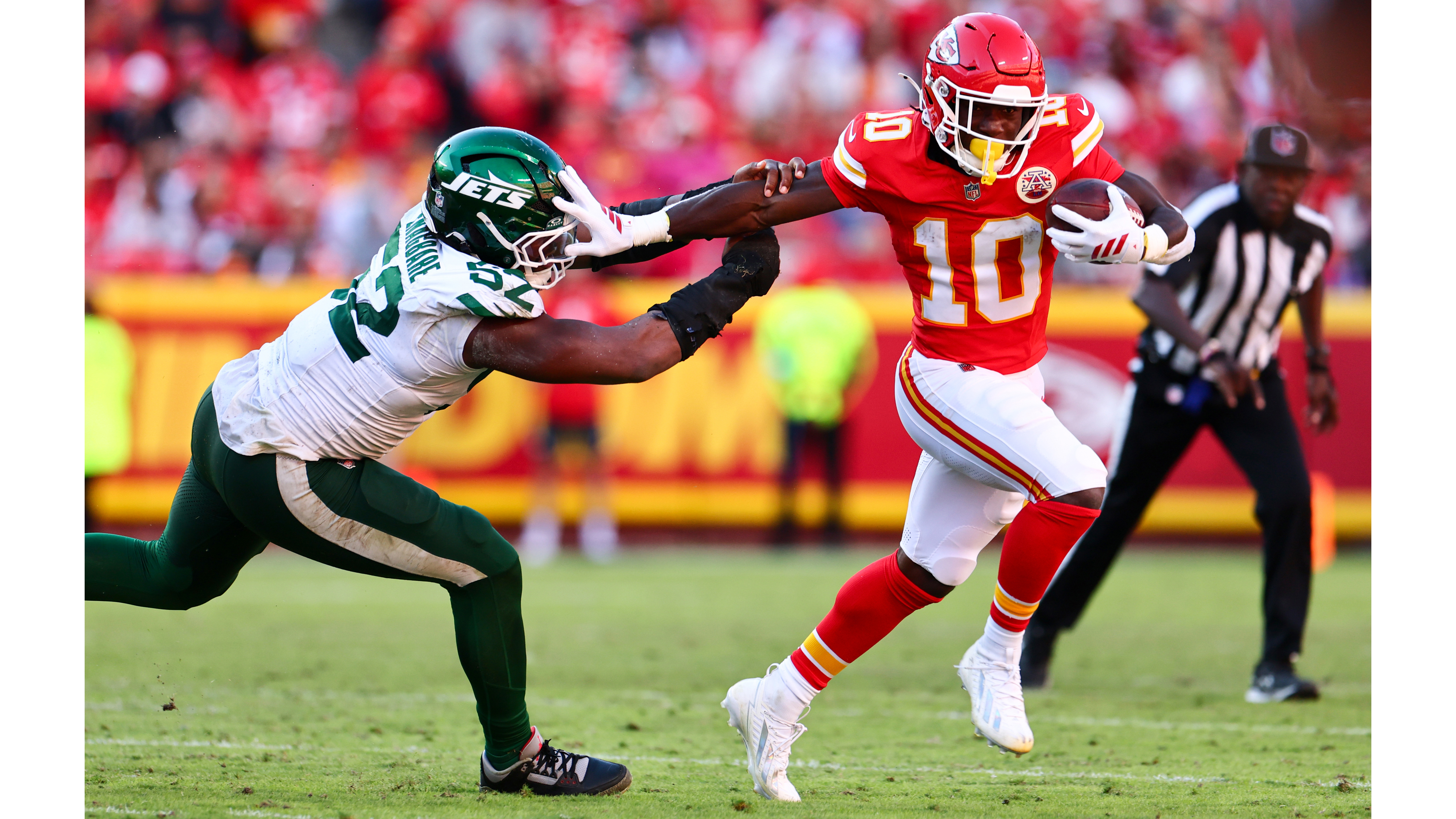
Emmett Johnson has shown useful flashes in a small NFL sample. The fifth-round rookie out of Nebraska has 26 carries for 111 yards and a touchdown, plus 14 catches for 237 yards and another score. His receiving yardage is especially eye-catching for a reserve running back. But that production does not establish that he has already been asked to perform Walker’s entire assignment for four quarters against a defense that has tailored its plan around him.
A backup’s efficiency is difficult to translate into a starting workload. Limited carries often come from selected formations and situations that suit a player’s strengths. Opponents may not devote much of their preparation to a runner who touches the football only a few times. They have not necessarily forced him to handle an exhausting sequence of protection checks, short-yardage plunges and changes at the line of scrimmage. Those are precisely the responsibilities that can turn a promising prospect into a dependable lead back.
Reid’s public confidence gives Johnson a meaningful starting point. The coach indicated that the rookie would have featured even if Walker were healthy, rather than treating him as an emergency name scratched onto the depth chart. There is a difference, however, between having a planned role and carrying the bulk of a rushing attack. Johnson’s 26 rushing attempts were spread across eight games. Sunday could demand a concentration of work he has not yet seen as a professional.
The receptions suggest one sensible solution. Mahomes can involve Johnson on swing passes, quick releases and carefully designed routes that allow him to make the first defender miss in space. Those touches function as an extension of the running game without assuming the offensive line will win every conventional rushing block. A six-yard catch on first down can be as important as a six-yard rush when a team is trying to avoid predictable third-and-long situations.
GOATIFY
GOATIFY NFL
Browse GOATIFY football designs as rookie Emmett Johnson steps into a much bigger role.
Protection is another test that casual box-score comparisons miss. Running backs sometimes have to identify a blitzing defender, communicate a change and make the right block before the pass can develop. Kansas City cannot simply give Johnson a massive playbook and expect him to execute every detail at Walker’s speed. A trimmed, well-practiced package could be a better option, especially early in a game when the Chiefs can see how Atlanta is choosing to pressure the quarterback.
Depth behind Johnson is the more immediate problem. Brashard Smith has been on injured reserve since October 24 with a hamstring injury. Jaydn Ott is also questionable because of a hamstring issue. Ott carried three times for 19 yards in mop-up action against the Jets, so he is hardly a proven high-volume alternative. His availability could still determine whether Reid has a credible second runner to rotate into a series or must make further adjustments.
Kansas City elevated Nate Carter from the practice squad on Saturday. Carter spent last season with the Falcons, appearing in seven games and carrying nine times for 60 yards, before Atlanta waived him and the Chiefs brought him aboard. Those modest NFL numbers should not be mistaken for Walker-level productivity. The elevation matters because he is a playable back who can cover substitutions, a sudden in-game injury and particular situations that might otherwise overload Johnson.
Wide receiver and returner Jacob De Jesus was elevated alongside Carter, illustrating the complexity of building an active game-day roster. Coaches must allocate places to rushing depth, receiving combinations and the coverage units that quietly influence field position. With recent arrival Josh Downs potentially available for his Kansas City debut, Reid also has to decide how much new material can be installed without making the offense harder to operate.
Johnson’s best measure of success will not be matching the league’s second-leading rusher in raw yardage. It will be whether he protects the ball, recognizes pressure, converts favorable looks and keeps Atlanta from assuming that every difficult down belongs to Mahomes. If he adds reliable catches and honest early-down running, the Chiefs can retain their shape. If the Falcons repeatedly stop him behind the sticks, the injury begins to change the entire game rather than just the names on the stat sheet.
Mahomes needs more than extra pass attempts to solve the problem
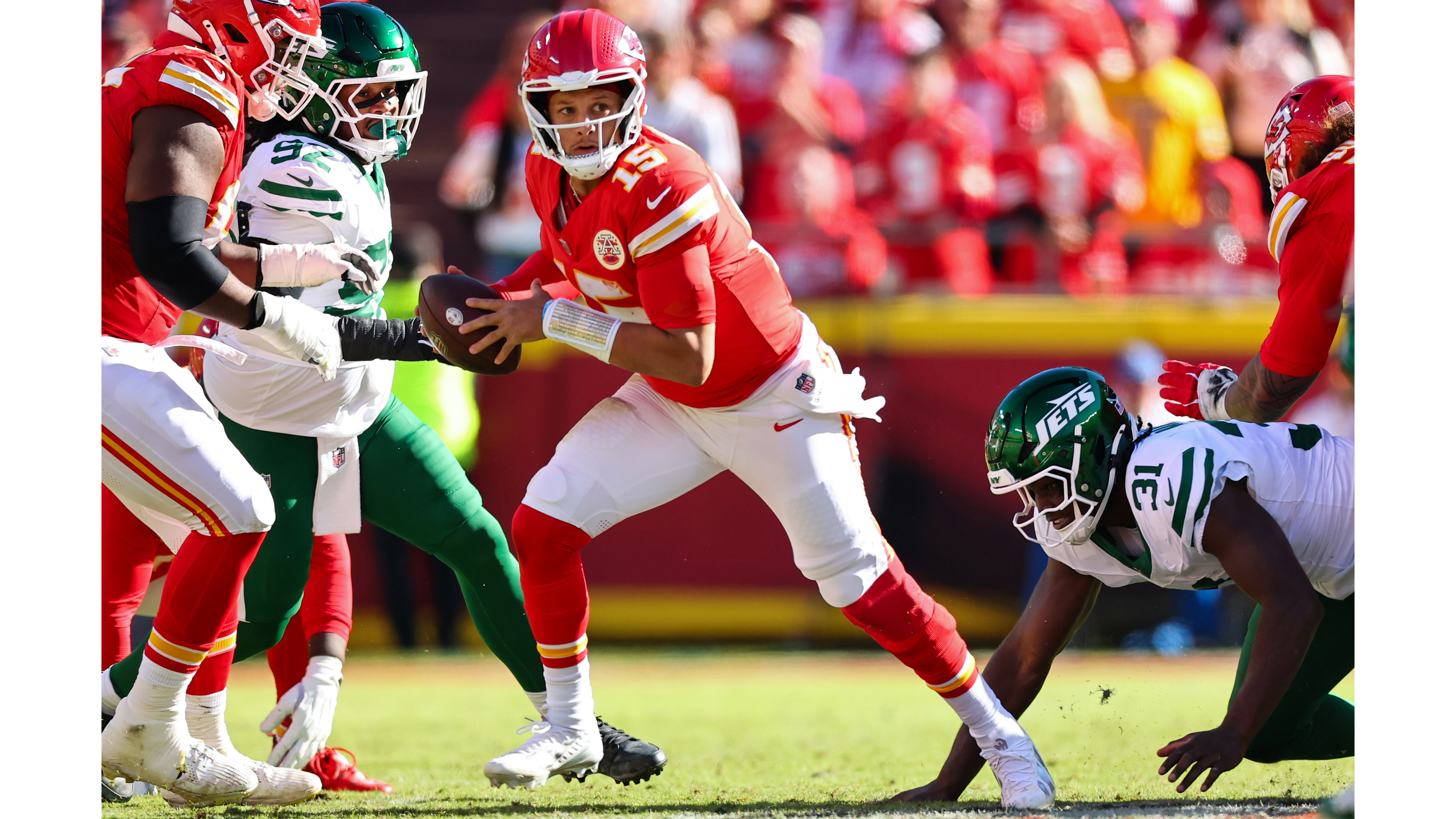
Patrick Mahomes remains the most important player in this matchup. Kansas City could lose its leading rusher and still possess the ability to rescue an ugly possession with an improvised throw. But the point of building a more threatening rushing attack was to avoid depending on that rescue plan every week. Walker’s absence creates an easy temptation to give Mahomes the entire problem. The more successful answer is likely to distribute it across protection, formations, quick throws and defense.
The first decision concerns how much Kansas City trusts its normal running concepts. If Johnson executes the basic inside and outside plays efficiently enough, Atlanta must continue to honor the possibility of a run on neutral downs. That supports play-action, buys time for receivers to release and creates uncertainty for defenders. If Kansas City abandons the ground game after a couple of frustrating early series, the Falcons can spend more of the afternoon targeting the quarterback.
A short pass can replace a rush in the statistical sense without replacing its full tactical benefit. A screen to Johnson that gains six yards behind clean blocking helps the Chiefs stay ahead of schedule. An emergency throw after a missed protection assignment is an entirely different event, even if both show up as completed passes. Johnson’s work when he does not touch the ball may therefore be as consequential as his eventual rushing total.
GOATIFY
GOATIFY NFL
Shop GOATIFY NFL styles while Mahomes and Atlanta prepare for Sunday's tactical battle.
Mahomes also has options away from the backfield. Travis Kelce remains a trusted target, particularly when the Chiefs need a completion through the middle. Newly acquired Josh Downs may add a fresh route-running element, although the staff has to be realistic about the time a newcomer has spent in the offense. A small group of well-executed concepts could be more valuable than an elaborate plan that asks too many players to master unfamiliar assignments in one week.
Atlanta has an obvious response of its own: give Bijan Robinson the ball and make the Chiefs’ offense wait. The Falcons’ star is not guaranteed to dominate a strong Kansas City defense, but productive rushing possessions can change the rhythm of a football game. If Atlanta avoids turnovers and keeps Mahomes watching from the sideline, a backfield shortage can become more damaging because Kansas City has fewer drives to compensate with explosive passing plays.
The defensive figures make this a real contest rather than a reflexive upset prediction. Kansas City has allowed 17.9 points per game, compared with Atlanta’s 24.8. The Chiefs have also shown they can generate pressure and disrupt opposing drives. Defensive tackle Chris Jones was expected to join the team separately in Atlanta for personal reasons, but he carried no game designation. His travel plan should not be turned into a false injury report or an assumption that he will miss the contest.
Atlanta has its own availability questions. The Falcons listed defenders James Pearce Jr. and Gervon Dexter Sr. among their questionable players, while returner Zachariah Branch was ruled out. Changes along the defensive front can influence how aggressively a team attacks the replacement Chiefs rushing group. Changes in the return game can also shift field position before the offenses take the field. Those variables do not erase Walker’s absence, but they belong in a complete assessment of the matchup.
Kansas City enters the game after beating the Jets 35-12, while Atlanta is trying to recover from a difficult run of results that has left it at 3-6. That difference in records reflects a broader gap in consistency, not a guarantee about Sunday. An underdog with a healthy star runner can control chunks of a game if the favorite is inefficient on early downs and leaves its own quarterback facing constant pressure.
Kickoff is set for Sunday, November 15 at 1 p.m. Eastern at Mercedes-Benz Stadium. The useful things to watch are Johnson’s first few ordinary carries, whether Ott can spell him, how often the Chiefs throw to their backs and how Atlanta chooses to defend Mahomes in longer-yardage situations. If Kansas City can keep those situations manageable, its normal advantage in quarterback play and defensive steadiness may remain decisive. If it cannot, Walker’s absence will have become much more than a single missing name.
Walker’s absence removes the cleanest individual storyline from Chiefs-Falcons: an 872-yard runner chasing an 880-yard leader in the same game. It replaces that storyline with a more complicated one. Kansas City has to demonstrate that the balanced offense it built around a powerful rushing threat remains functional when its most productive back is wearing street clothes.
Johnson does not need to become Walker for an afternoon. He needs to be trustworthy enough that Atlanta cannot dismiss the entire run game, while Mahomes, Reid and the defense carry the wider burden. Robinson still has the chance to demonstrate why he leads the league, and the Falcons have a home opportunity against a 6-2 opponent suddenly facing a thinner backfield. The result will hinge less on the abandoned rushing race than on which team can turn the available personnel into a coherent plan.
GOATIFY
GOATIFY NFL
Shop GOATIFY NFL and American football shirts, hoodies and stickers.


















