

Russell Won't Get Mercedes' Vegas Upgrade. The Grid Penalty Explains Why.
GOATIFYMercedes arrives at the Las Vegas Grand Prix with both 2026 Formula 1 titles secured and an unusual split between its two cars. New world champion Kimi Antonelli is set to receive the team's upgraded turbocharger. George Russell, fighting Max Verstappen for second in the drivers' standings, is staying with his existing specification. The difference is not a declaration that one driver deserves the faster machinery. It is a calculation involving component limits, a potential five-place grid penalty and an upgrade that Mercedes itself describes as offering only a modest expected benefit.
That decision creates a fascinating end-of-season test. Antonelli can gather competitive data from the new part without sacrificing his starting position. Russell cannot make the same change without paying a price on the grid. Meanwhile, Mercedes customer McLaren plans to use the turbo on both cars, even as Oscar Piastri faces a separate ten-place penalty for a new internal combustion engine. The same engine-development programme therefore produces different tactical consequences across the paddock.
With three rounds still to race, the important question is not simply whether the new turbo is quicker. It is whether the measurable benefit is worth the positions, risk and strategic flexibility that an installation might cost. Las Vegas, with its long straights and demanding cold-weather operating window, will put that calculation under the spotlight.
One turbo upgrade, two very different starting-grid costs
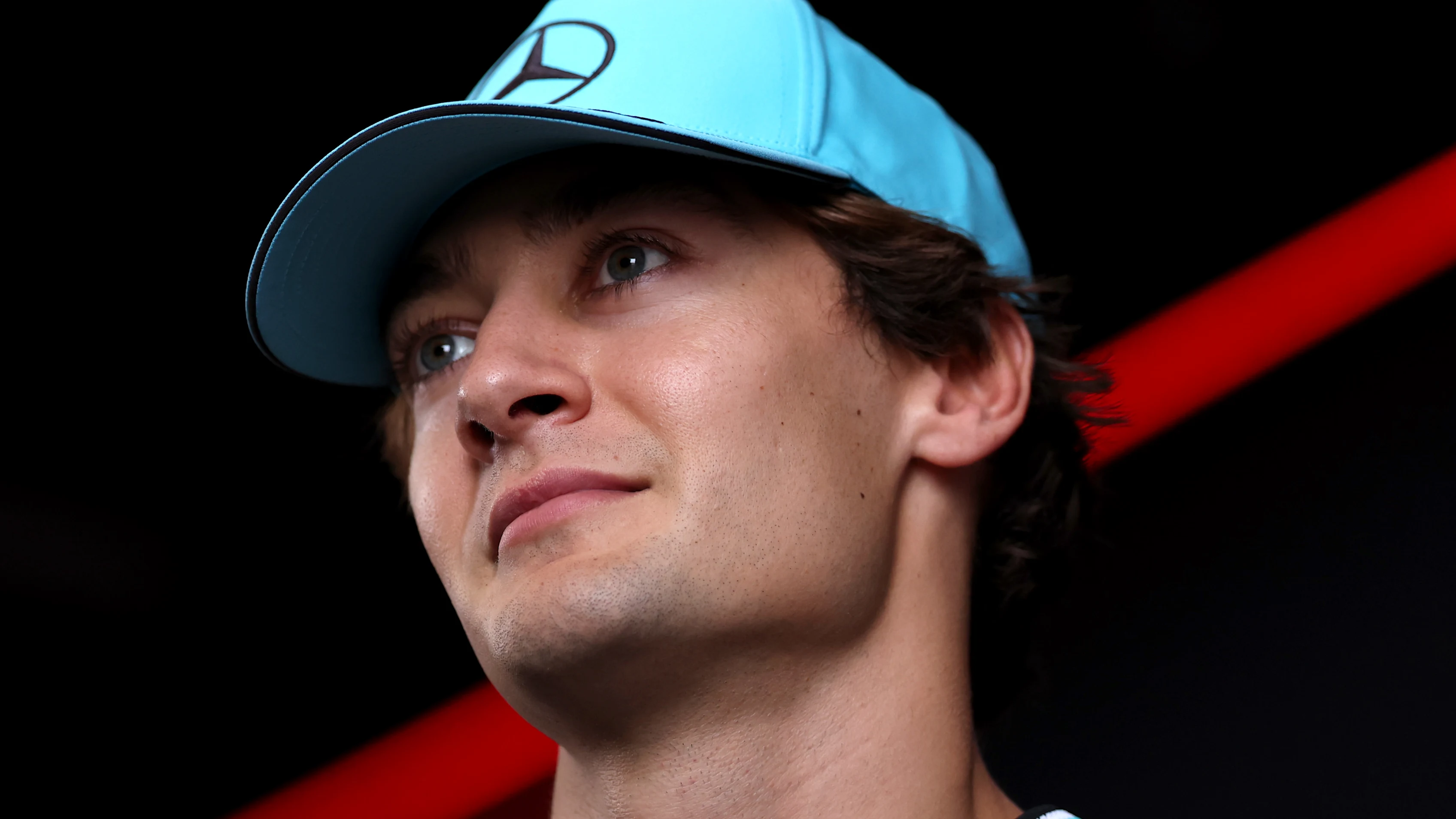
Formula 1's power-unit rules do not let teams replace major components without limit. Every driver has allocations for parts such as the internal combustion engine and turbocharger. Once a driver moves beyond the permitted number, taking another unit can incur a grid-place penalty. The restriction makes reliability and inventory management part of the competitive contest: a potentially faster component is not automatically the correct racing choice if fitting it damages qualifying position.
Mercedes is introducing its updated turbocharger through the Additional Development and Upgrade Opportunities mechanism, commonly shortened to ADUO. The official account says the upgrade is ready for Las Vegas and can be supplied to the works team and customers. Antonelli remains within an allocation that allows him to fit it without a grid sanction. Russell has already used five turbochargers. A sixth would bring a five-place penalty. That turns what might look like a routine engineering rollout into a driver-specific strategy decision.
The five places matter especially because Russell is not coasting toward an unchallenged finish. He enters the final three races with 262 championship points, 17 behind Red Bull's Max Verstappen on 279. Lewis Hamilton is only one point behind Russell, with Charles Leclerc and Lando Norris also within range. There are 75 drivers' points available across the remaining rounds. A driver who loses five starting spots before the lights go out can spend precious early laps undoing a disadvantage rather than applying pressure to an immediate championship rival.
Mercedes has not published a precise lap-time improvement for its new turbo in the material reviewed. Toto Wolff has indicated that the expected performance gain is relatively small and that protecting Russell's grid position is the higher-value option. Those two points belong together. If an improvement were overwhelming, the trade-off might be different. But without evidence of a large advantage, assuming that a newer component will compensate for five places would be an unjustified gamble.
That is particularly relevant at a street circuit. Las Vegas has major overtaking opportunities, but a pass still depends on relative pace, traffic, tyre temperature and the rival's ability to defend. A car starting behind several additional competitors may face dirty air, slower exits from corners or a strategically awkward first stint. A recovering driver can also become more vulnerable to incidents and pit-stop timing. None of those outcomes is certain, which is precisely why Mercedes is avoiding a guaranteed penalty to chase a relatively uncertain gain.
GOATIFY
GOATIFY Formula 1
One new turbo can cost five grid places. Find GOATIFY racing-inspired apparel for Formula 1's biggest strategic calls.


Russell won in Las Vegas in 2024, so the venue is not unfamiliar territory for him or the team. But that history should not be mistaken for a guarantee in a different 2026 technical era. The relevant benchmark is the present car against the present field. Protecting a clean qualifying opportunity gives Russell the simplest route to converting the pace he already has into a result; any extra performance would need to be large enough to overturn that logic before it becomes worth the grid loss.
Russell's real opponent is the points table, not Antonelli
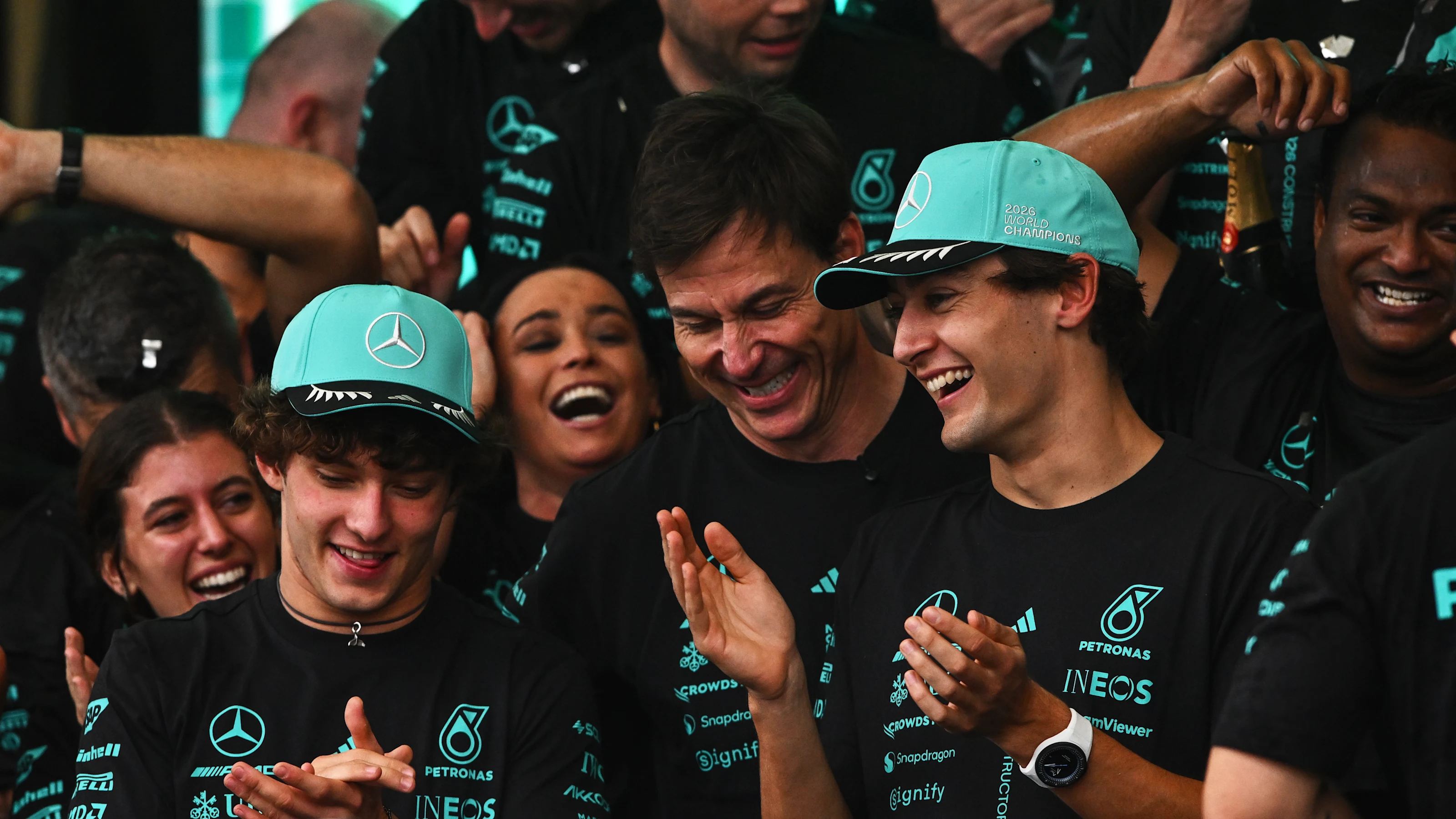
From outside the garage, giving one driver a new part while withholding it from the other can invite a simplistic question about favouritism. The sporting situation makes that framing misleading. Antonelli secured the drivers' championship in Mexico City and Mercedes sealed the constructors' title in Sao Paulo. Russell, however, is still trying to finish second overall. The team can pursue technical learning with one car and minimise championship risk with the other without contradicting its competitive priorities.
The arithmetic creates urgency. Verstappen holds second place on 279 points. Russell has 262, Hamilton 261, Leclerc 249 and Norris 246. The top five in that particular contest are covered by only 33 points. Even though the champion is out of reach, positions behind him are not fixed. A strong weekend can compress the chase; a poor qualifying result or avoidable penalty could let more than one rival benefit. Russell is simultaneously hunting Verstappen and defending against the cars immediately behind him.
That is why the points battle is different from a single-race experiment. If Russell gives up grid positions in Las Vegas and then encounters a safety car, tyre warm-up difficulty or a fast-moving midfield train, the outcome might not reward the technical change. Conversely, a clean start from near the front could preserve his ability to race Verstappen directly, even if the old turbo leaves a sliver of potential power-unit performance unused. It is a choice between a known sporting cost and a gain that remains to be demonstrated under race conditions.
Mercedes can also learn from the difference between the two cars without imposing a full controlled laboratory comparison. Antonelli's telemetry can show how the upgraded component behaves across straights, throttle transitions and changing temperatures. Russell's existing package supplies a reference from the same team and event, although differences in setups, traffic, driver inputs and component age will complicate any direct comparison. A headline such as 'Antonelli was faster' would not, by itself, prove that the turbo was responsible.
Russell's season is also an illustration of why a champion's team-mate can have a meaningful objective after the title is settled. Mercedes has already banked the two biggest trophies, but runner-up status still matters to the driver's record and to how an intensely competitive season is remembered. There is little incentive to jeopardise that chase purely for a symbolic declaration that both works drivers should have matching hardware. The team is evaluating the cost at the start of the race, not deciding which driver is valued more.
If circumstances change during the weekend, the underlying incentives still apply. Suppose the new turbo appears markedly stronger in practice: Mercedes would still need to weigh a five-place sanction against expected race pace, the chance of overtaking and how many points might be won or lost. Suppose instead the performance is almost identical: the conservative choice becomes easier to defend. Nothing in the pre-weekend announcement establishes that the team will reverse its plan, and there is no confirmed Russell penalty for this turbo as things stand.
Antonelli gets the track test Mercedes needs for 2027
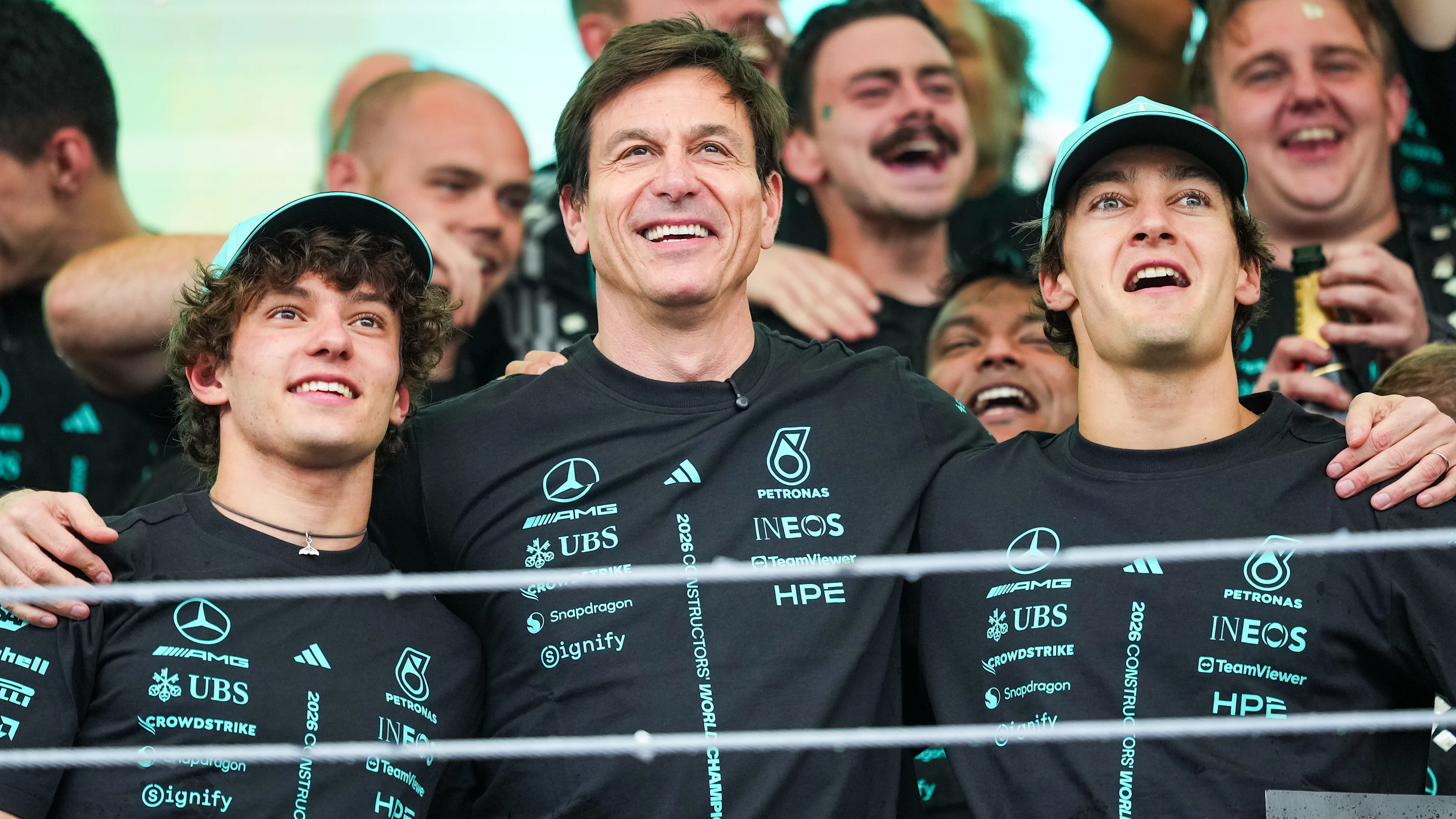
Antonelli's allocation allows Mercedes to introduce the new turbo without surrendering places on the grid. That changes the economic calculation completely. The same relatively small expected performance gain that looks unattractive with a five-place penalty can still be worth taking when the installation carries no such immediate sporting cost. Better yet, the team can collect genuine race-weekend information under conditions that are more demanding than a workshop or bench test.
GOATIFY
GOATIFY Formula 1
The battle for second is still on. Explore GOATIFY F1 fan favourites as Russell and Verstappen chase points.


The value of that information goes beyond a single qualifying lap. A power-unit component has to perform across different temperatures, loads and driving phases; it must also function reliably over repeated sessions. Las Vegas offers long periods of high-speed running linked by slower corners, while its night-time schedule can make air and track temperatures unusually low. Those characteristics give engineers opportunities to observe how the new specification behaves during acceleration, energy management and sustained running. The pre-race reports do not establish a particular horsepower figure or a guaranteed change in top speed, so none should be inferred.
Mercedes says the upgrade forms part of the work that will help refine its 2027 project. That distinction matters. Teams can use these remaining 2026 events to evaluate the direction of components and systems, but an observed gain on one weekend is not a complete verdict on next year's car. Future performance will also depend on aerodynamics, chassis behaviour, tyres, reliability and how the power unit is integrated. A useful test can be a success even if it barely changes the finishing order in Las Vegas.
The decision also underscores how Antonelli's title has altered the works team's short-term goals. The young champion has already done what no one can take away from him this season. He can now help evaluate equipment while still racing for victories. It would be wrong to frame his car as a laboratory machine with no competitive stake: Mercedes has won 12 grands prix in 2026, but only one of the last five, according to the official pre-race report. Restoring consistency against Ferrari, Red Bull and McLaren still matters to the organisation.
The important engineering question is whether the updated turbo behaves predictably, not whether it provides a dramatic sensation from behind the wheel. Teams examine performance trends across speed traces, operating conditions and run plans. They also need to distinguish a component's contribution from the enormous number of changing variables between laps. Antonelli's car may generate a useful data set, but the public should not expect a neat power-unit verdict from one television speed-trap reading.
None of this means Russell loses access to every future upgrade. The confirmed decision concerns this Las Vegas installation and the specific penalty implication attached to his component allocation. If the data proves valuable, Mercedes will have additional information for its broader development programme; if it proves marginal, the team will at least have tested the hypothesis in competition. That is a rational result for a championship-winning constructor with new targets already on the horizon.
McLaren exposes the other side of the gamble in Las Vegas
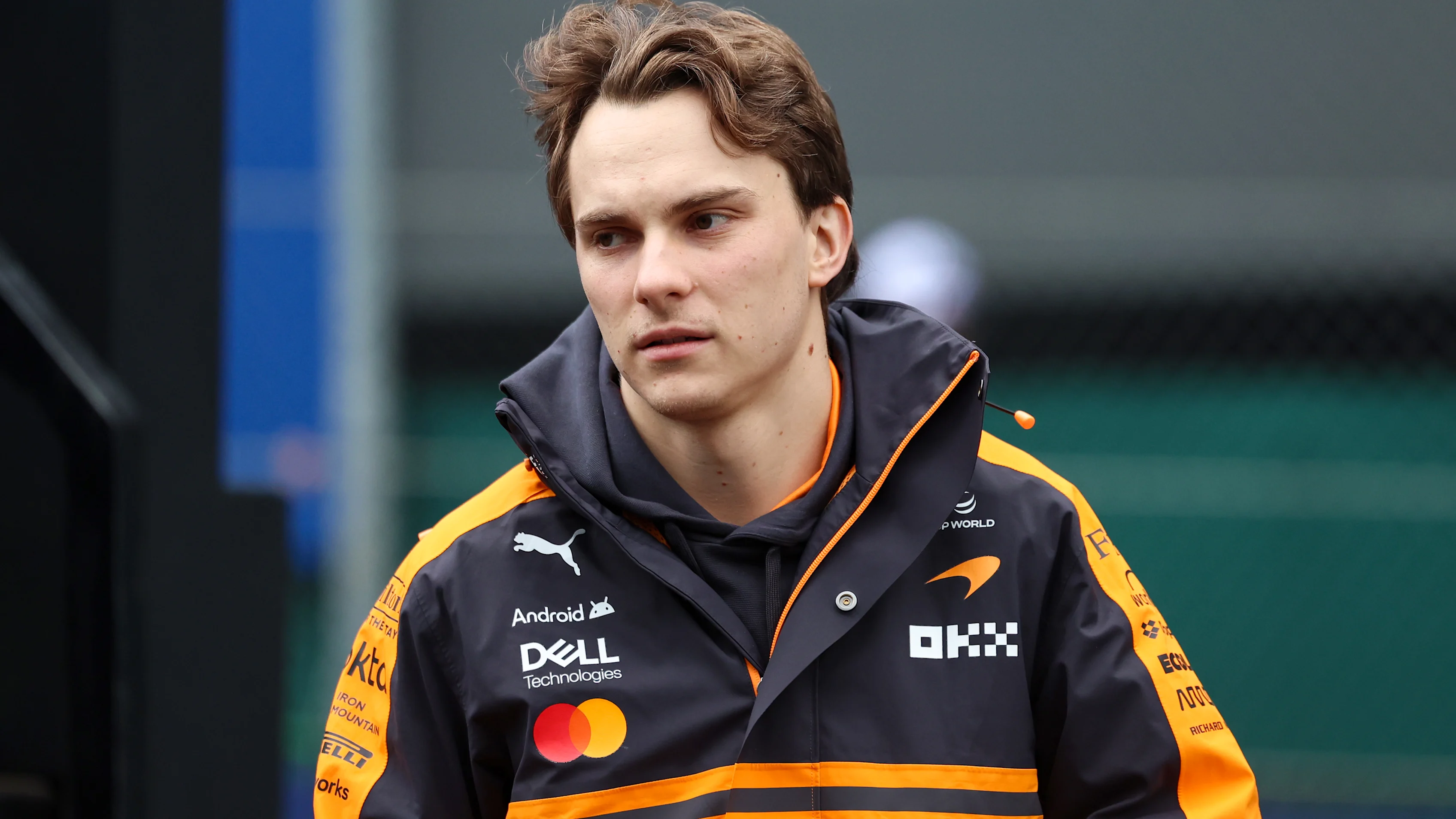
The customer-team comparison makes the allocation puzzle clearer. McLaren is also preparing to run the upgraded Mercedes turbocharger on both Lando Norris's and Oscar Piastri's cars. The team says neither driver will receive a penalty for that particular turbo change. McLaren is nevertheless facing a serious sanction on Piastri's side of the garage: a new internal combustion engine, introduced after a reliability issue, is expected to bring a ten-place grid penalty. That is a different component and a different infringement of the allocation limits.
Keeping those penalties separate is crucial. It would be inaccurate to say the new Mercedes turbo costs Piastri ten places, just as it would be inaccurate to say Russell has already been handed a five-place penalty. McLaren's engine decision has been reported as triggering the ten-place sanction; Mercedes is specifically avoiding the turbo-related five-place penalty on Russell's car by keeping him on the old specification. The distinction reflects the same rule framework producing very different choices as each car reaches a different point in its component life.
GOATIFY
GOATIFY Formula 1
Championships are earned on track and developed behind the scenes. Shop GOATIFY Formula 1 racing designs.


McLaren also has sporting and technical reasons to accept complexity. The team trails Red Bull by 17 points in the constructors' fight for third, with three races left. It is introducing aerodynamic parts, led by a new floor, and testing ideas aimed at reducing drag as it considers the direction of its 2027 car. The turbo is just one element in that development mix. A strong or weak race for Norris or Piastri cannot honestly be attributed to the power-unit change without more detailed comparison.
Las Vegas adds a particular twist. Long straights can make low drag and energy deployment valuable, yet the cold night conditions complicate tyre preparation and grip. A car that appears efficient in a straight-line measurement may lose time under braking or on corner exit. A driver recovering from a penalty needs passing pace across an entire stint, not just an impressive top-speed number. McLaren's ability to exploit the circuit's overtaking zones will therefore matter as much as the headline fact that new hardware has arrived.
There are several useful signals to watch once the sessions begin. Compare the Mercedes cars over multiple clean qualifying-style laps rather than picking one isolated sector. Watch whether Antonelli's new component runs reliably through extended sessions. Check if Russell can start close enough to Verstappen to make the points contest a direct fight. Follow McLaren's practice decisions on its new floor and drag solutions, and then look at Piastri's actual starting position after all grid penalties have been applied. These observations are more meaningful than assuming every upgrade automatically translates into a fixed number of places.
The most revealing outcome might even be quiet. If Antonelli runs the part smoothly, Russell keeps a competitive grid position and Mercedes obtains useful data without a costly incident, the split strategy will have served its stated goals. If the upgrade turns out to be much stronger than expected, questions about the missed opportunity on Russell's side will intensify. Until competitive evidence arrives, however, Mercedes' logic is grounded in the facts we already know: a five-place penalty was certain if Russell took a sixth turbo, while the extra performance remains a projection.
The Las Vegas upgrade story is not a contradiction inside Mercedes; it is the clearest demonstration of how Formula 1's component rules turn engineering progress into sporting trade-offs. Antonelli can run the new turbo without a grid hit and help Mercedes learn for 2027. Russell would pay five places to take the same step, so the team is protecting his pursuit of Verstappen instead. McLaren's decision to use the new specification on both cars, alongside Piastri's separate engine penalty, shows why no two garages face exactly the same calculation.
By the end of the weekend, the useful evidence will be on the timing screens and in the cars' reliability, not in the mere presence of a new component. Russell needs a starting position from which to chase second place in the championship. Antonelli needs competitive running that tells the team something credible about its upgrade. Mercedes is trying to get both outcomes without letting a small projected performance benefit cost a much bigger opportunity.
For viewers, a useful checklist will be the first clean long runs, qualifying gaps on comparable tyres, any component reliability bulletins and the starting grid after penalties. That sequence matters because upgrade narratives can be distorted by one speed-trap figure or an unusually good lap. A modest turbo improvement would not invalidate the decision to protect Russell's position, nor would an excellent Antonelli qualifying result automatically prove the turbo caused it. What matters is the full competitive trade-off from the opening practice session through the chequered flag, including whether Russell gains enough points on his nearest challengers to justify the conservative call.
GOATIFY
GOATIFY Formula 1
Discover six GOATIFY Formula 1 fan favourites before your next racing story.


















