

Roddick Questions Djokovic's Grand Slam Prep — Basel Is More Than a Wild Card
GOATIFYAndy Roddick is questioning Novak Djokovic's preparation for the Australian Open, not his ability to play elite tennis. Djokovic has accepted a wildcard for the Swiss Indoors Basel after initially indicating that Paris would be his next event. Roddick argues that a few additional competitive matches could matter when the 39-year-old faces the physical and tactical demands of a Grand Slam. Basel also offers valuable ranking points in the ATP Finals race.
Roddick discussed the decision on his Served podcast on October 19, with the story emerging on October 20. His concern is that the best-of-five format in Melbourne demands a different level of match conditioning from shorter tour contests. Djokovic arrives at this decision after winning Beijing and then losing to Hubert Hurkacz in Shanghai. The late addition of Basel therefore raises two linked questions: how much match play he needs, and whether the extra competition will help or hinder his preparations.
Roddick is questioning the preparation, not Djokovic's ability

Roddick's central argument is narrower than a claim that Djokovic can no longer compete at the top. Discussing the unexpected Basel entry on his Served podcast, he separated the Serbian's shot-making from the challenge of entering a Grand Slam without a substantial run of competitive matches. A player can look exceptional in an isolated indoor match and still face an entirely different physical assignment across two weeks of best-of-five tennis.
The distinction matters because Djokovic's career has been built partly on his ability to solve problems as matches develop. His return, movement and point construction remain formidable when his timing is sharp. But match rhythm is not just a matter of striking the ball cleanly on a practice court. It also involves recovering after extended rallies, resetting between difficult service games and reproducing the same decisions late in a match when the legs are heavier.
Roddick wondered whether the old approach of arriving with minimal match play can still produce a deep major run. He stressed that ordinary tour conditions are not the same as playing five sets in demanding outdoor heat. That is an observation about the format and workload, not a diagnosis of Djokovic's health. Basel could help build competitive rhythm; it cannot reproduce every demand of a Melbourne fortnight.
There is a useful contrast with the Serbian's recent results. Earlier in October, Djokovic won the China Open in Beijing, taking his career singles-title total to 102. Days later, Hubert Hurkacz beat him 6-4, 6-3 in Shanghai. One strong week and one abrupt exit do not settle whether he can win another major. They do show why Roddick is looking beyond isolated flashes of form toward the consistency required to string victories together.

The ATP Finals race gives Basel an immediate purpose
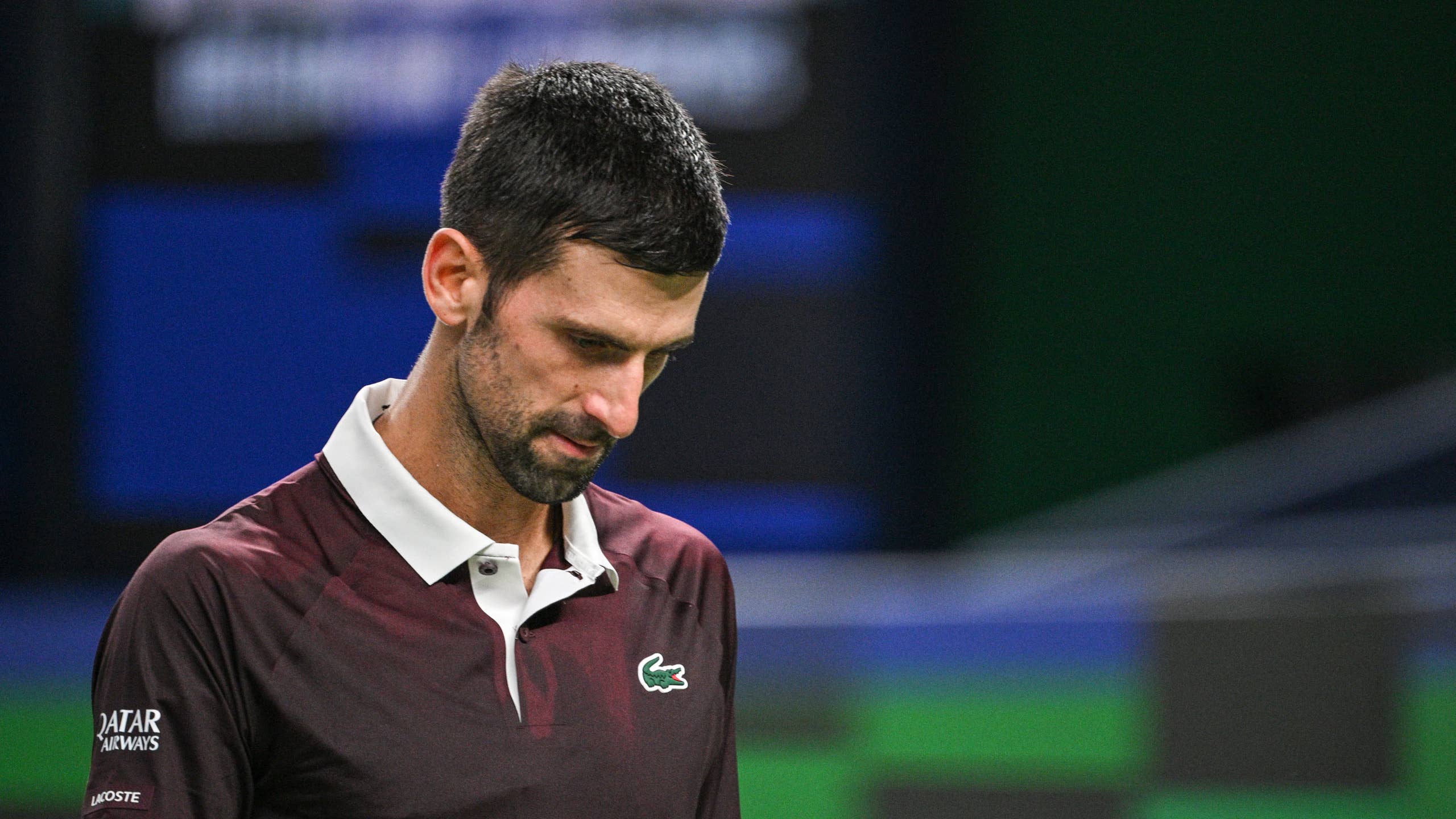
Djokovic's schedule has a short-term competitive explanation as well as a longer-term one. The Swiss Indoors is an ATP 500 tournament, meaning a champion can collect 500 ranking points. For a player outside the provisional ATP Finals places, that is a substantial opportunity before the Paris Masters. It also offers matches against a strong field rather than another block of training.
As reported on October 20, Djokovic stood 11th in the Live Race to Turin with 2,840 points, 319 behind ninth-placed Rafael Jodar. Those figures are a snapshot, not a guarantee about the final qualification line. Other contenders can add points, the field can change, and the race is decided by official qualification rules rather than a simple comparison with one rival. Jannik Sinner's early end to the season has complicated the picture, but it does not automatically turn ninth place into a confirmed berth.
Basel is therefore useful even if Djokovic does not win it. A semifinal or final could narrow a meaningful gap while giving him more live competition before Paris. Conversely, a long week could also leave him less recovery time between tournaments. The choice is a calculated trade-off between gaining ranking opportunities and managing fatigue at age 39.
His October sequence illustrates the dilemma. Beijing showed that Djokovic can still finish a title campaign, although Alex de Minaur retired in the final. Shanghai then ended early against Hurkacz, leaving fewer ranking points than he had hoped to earn on the Asian swing. The postponed Six Kings Slam exhibition removed another commitment from the immediate calendar, opening space for a tour event where the results actually count toward the ATP race.
That combination makes the late wildcard more understandable than it first appeared. It is neither proof of panic nor a declaration that the Grand Slams have stopped mattering. Djokovic is trying to keep two objectives alive at once: a return to the season-ending championship and a more credible competitive base for the next major. His results in Basel will help determine whether the gamble was worthwhile, but the mere decision to enter already tells us that the remaining weeks of 2026 are important to him.
Basel can supply match rhythm — but Melbourne remains a different test

There is a historical pull to Djokovic's return. He won Basel in 2009 by beating Roger Federer in the final, reached another final in 2010 and made the semifinals in 2011. His upcoming appearance will be his first at the Swiss Indoors in 15 years. Winning again would move him to 103 tour-level singles titles, level with Federer's career total and still behind Jimmy Connors' Open Era record of 109.
Those milestones create an appealing storyline, but the preparation question is more consequential. Basel and Paris are played over best-of-three sets. The Australian Open demands best-of-five matches and can impose more difficult weather conditions. A sequence of close indoor wins would demonstrate form, confidence and some recovery capacity; it would not, by itself, prove that Djokovic can handle several extended Melbourne contests.
That is why the number of matches matters as much as the result. A tight second-round win can expose different physical and tactical questions from a comfortable straight-sets victory. Repeated returns against elite servers, long baseline exchanges and difficult closing games provide feedback that even a high-quality practice block cannot perfectly simulate. The ideal scenario is enough competitive work to sharpen those responses without arriving at the next event exhausted.
Djokovic's 2026 US Open ended in the first round, a reminder that his reputation cannot win a major match for him. His Beijing title supplied evidence that the ceiling remains high. The challenge is to turn that ceiling into a reliable standard across consecutive rounds, particularly when opponents are younger and able to sustain pressure for hours. One extra event will not answer every question, but it offers evidence that another month away from the tour would not.
Roddick's comments should be read in that context. He is not predicting failure in Australia or dismissing a champion with 24 major titles. He is asking whether the schedule that once worked for Djokovic still gives him the best chance. The decision to play Basel suggests that Djokovic himself sees value in additional competition before the season is over. A strong performance there would not guarantee another major, but it could give him a better basis for deciding how much competitive tennis to play before Melbourne.

Basel is not a referendum on whether Djokovic can still produce brilliant tennis. His Beijing title already answered that question. The tournament offers meaningful ranking points and a chance to test whether more competition provides the match rhythm that Roddick believes will matter at the Australian Open.
There is no simple formula for a 39-year-old champion balancing freshness against competitive sharpness. Too few matches can leave timing untested; too many can make recovery the central problem. Basel and Paris should offer a clearer picture of how Djokovic manages that balance. For now, the important development is that he has chosen more competition rather than another long wait for a major stage.
Shop GOATIFY tennis products from the Tennis-filtered collection scope.

















