

Shakur Denies Sylve Talks. His WBO Title Deadline Is Still Real.
GOATIFYShakur Stevenson's next fight became a two-part story on November 21: a report linking the unbeaten champion to rising prospect Ashton Sylve, followed by Stevenson's own denial. That distinction matters. The rumored matchup is not confirmed, a title surrender has not been announced, and the boxer has directly challenged the suggestion that he is ready to give up his belt.
What has not gone away is the World Boxing Organization's mandatory process. Its November 30 purse-bid date for a defense against Raymond Muratalla puts a real deadline beside the rumor. Stevenson can reject a reported negotiation without making the business of holding the 140-pound title disappear. The more revealing question is what he does next: accept the required defense, negotiate a different approved route, or sacrifice the belt for a fight he believes is more valuable.
The denial is the news — and it narrows what can be said
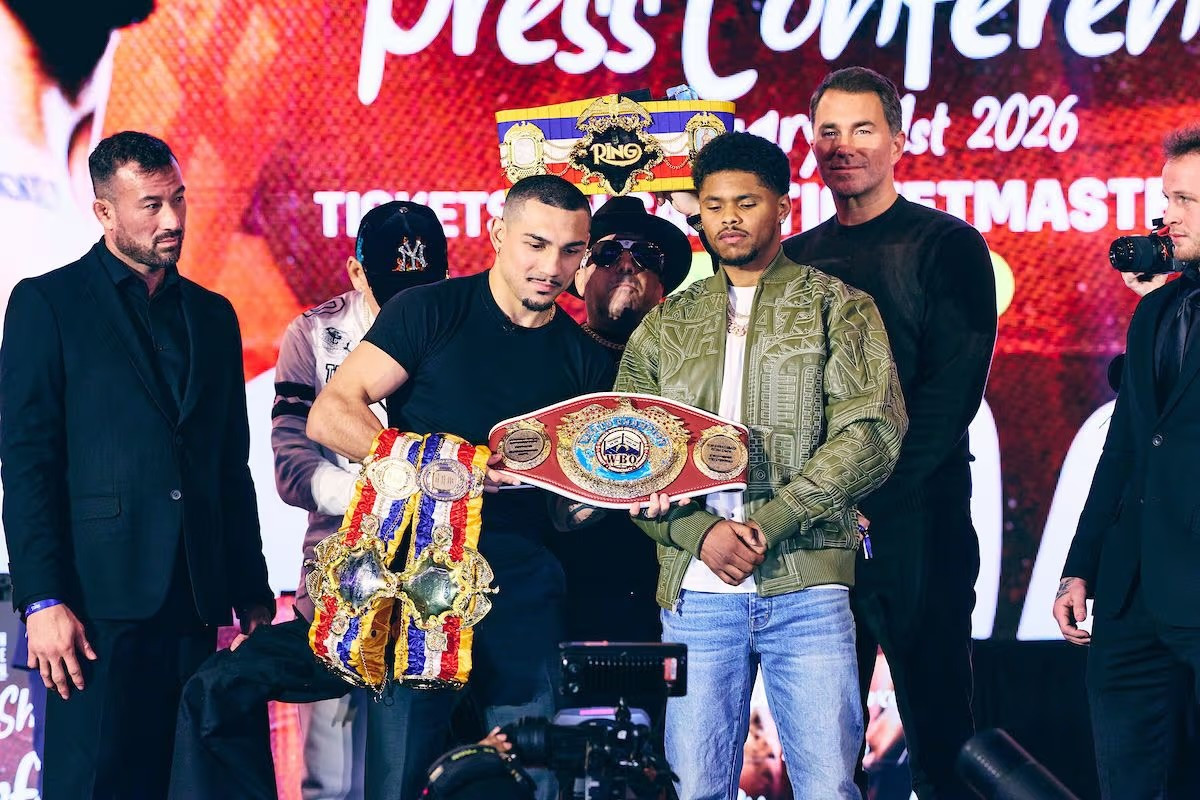
The first version of the story pointed toward an unusually bold piece of matchmaking. Stevenson, a four-division champion who has barely been touched at his latest weight, was said to be discussing a fight with Sylve, a 22-year-old prospect who has yet to crack a major governing body's top 15 at either lightweight or junior welterweight. It was an attention-grabbing pairing precisely because the usual world-title logic did not seem to fit.
Then the update changed the meaning of the report. Stevenson publicly denied the account and rejected the suggestion that he would simply relinquish his championship. That is not a formal fight announcement in the opposite direction; it is a direct rebuttal. Until a promoter, sanctioning body or the fighters publish terms, treating Stevenson–Sylve as agreed would turn a disputed rumor into a false fact. The distinction is especially important when every announcement can alter a mandatory contender's career.
Stevenson's position is not difficult to understand. He won the WBO 140-pound belt with his January victory over Teofimo Lopez and did it by imposing the rhythm that makes him so hard to defeat. The southpaw operates behind timing, distance and precise counters, forcing opponents to reset whenever they think a conventional exchange has begun. A title gathered through that performance carries both prestige and bargaining power. There is little reason to surrender it casually before the next opponent is established.
But public denials in boxing do not dissolve genuine scheduling conflicts. A fighter can dislike a rumor and still need to make a decision about the governing body's order. The WBO has set a process in motion, independent of the speculation around Sylve. Stevenson's rebuttal therefore changes the headline from an imminent switch to a set of unresolved options. The next credible development should be a formal purse bid, a negotiated agreement, or a ruling from the organization—not another social-media interpretation of an informal conversation.
There is also a difference between exploring possibilities and signing contracts. Managers routinely sound out opponents, broadcasters, venues and dates before finding a workable combination. An inquiry may never become an offer. Even if one side talks about a name, it does not establish the champion's assent. Stevenson deserves to be judged on the fight he eventually agrees to; the contender in the mandatory slot deserves the same clarity. Keeping that boundary intact is essential to evaluating what happens over the coming days.
GOATIFY
GOATIFY Boxing
The disputed Sylve report shows how quickly boxing narratives change. See GOATIFY boxing apparel and fan designs.


Raymond Muratalla and November 30 are the harder facts

Raymond Muratalla is not simply another fighter mentioned as an attractive opponent. The WBO has ordered a mandatory defense, with purse bids scheduled for November 30 after an agreement was not reached inside the negotiation period. In practical terms, a purse bid is the procedure used when authorized promoters cannot settle the financial or organizational terms of a championship contest. A winning bid can determine who gets to stage the fight and how the purse is allocated under the applicable rules.
That process matters because it takes some discretion away from the champion's matchmaking team. A voluntary defense is often assembled around the holder's preferred date, opponent and commercial partner. A mandatory challenger arrives with a formal claim that the sanctioning body is expected to administer. The champion can still negotiate, seek rulings or choose another career path; he cannot assume that an ordered defense is merely a publicity suggestion.
Muratalla's commitment makes the situation more pointed. He stepped away from the lightweight belt he held and moved toward 140 pounds in pursuit of this opportunity. That decision creates a tangible opportunity cost: giving up one established title position to challenge a boxer widely considered among the sport's best technicians. This is not a convenient name conjured to fill a press conference. It is a contender who has invested his own championship standing in reaching the front of the line.
Stylistically, such a fight would demand something different from a headline-grabbing spectacle. Muratalla's job would be to manufacture sustained pressure without walking onto Stevenson's counters. Stevenson's task would be to deny clean entries while finding enough offense to stop the challenger from dictating where exchanges occur. The central issue is whether Muratalla can force sustained work in the middle distance rather than simply following a moving target. Those questions give the mandatory genuine sporting value even if its box-office appeal differs from a super-fight.
None of this proves the belt will be stripped on November 30. A scheduled purse bid is not a completed disciplinary ruling, and a title can move through several procedural stages before a sanction is applied. The responsible way to describe the risk is conditional: rejecting or failing to complete required obligations can ultimately put the championship at risk, subject to the organization's decisions. The next step is observable, while the final consequence remains unsettled.
For Stevenson, the simplest response would be to make the defense happen, preserve his 140-pound position and then pursue bigger negotiations from a place of sporting authority. The alternative is to calculate that a different bout justifies a costly separation from the belt. Either approach could be rational. What is no longer persuasive is treating the calendar as if it has no leverage of its own.
Why Ashton Sylve became such a polarizing name
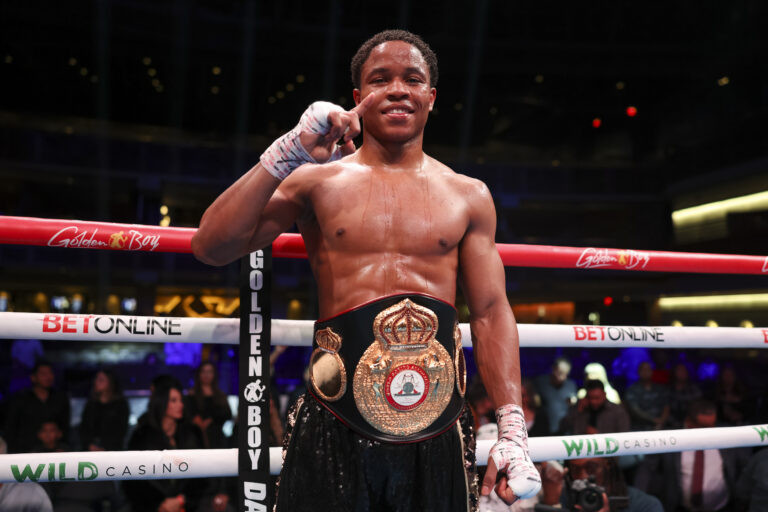
Ashton Sylve has the kind of profile that makes a matchup rumor travel fast. He is young, quick, confident and familiar to audiences beyond traditional boxing promotion through his earlier association with Most Valuable Promotions. Those qualities can create genuine interest without making him the leading contender for a champion's belt. That distinction explains both the curiosity and the backlash around the reported possibility of Stevenson facing him.
GOATIFY
GOATIFY Boxing
A mandatory challenger and a champion on the clock: explore GOATIFY boxing collection designs.
Sylve has already experienced the harsh side of being treated as a prospect who must win on schedule. His upset knockout loss to Lucas Bahdi punctured the idea of an uninterrupted climb, and he subsequently parted ways with MVP. He has since continued his career under the MF Pro banner. It would be unfair to reduce him permanently to one defeat: young fighters can develop significantly after a setback. It would be equally premature to promote him to a world-title level he has not yet demonstrated through the rankings or a run of victories over elite opponents.
His recent activity at 140 pounds, including a victory over former champion Joseph 'JoJo' Diaz, gives the matchup some plausible athletic logic. The disputed report nevertheless suggested the fight could be made down at lightweight, a class where Stevenson has also held a championship. That would change what the fight represented. If Stevenson fought outside the division of his current WBO belt, the bout would not automatically meet a 140-pound mandatory obligation. Weight, title status and sanctioning approval are not details that can be decided after the posters are printed.
On pure technique, a young contender can learn a great deal by sharing the ring with a defensive master. The problem is the cost of that lesson when it is delivered on a major commercial stage. Stevenson punishes rushed entries, reads predictable attacks early and can make a talented offensive boxer look hesitant. Sylve would need to impose speed and variety without allowing every combination to be answered by a precise counter. There is a route to an intriguing contest, but declaring the prospect ready to dethrone one of the division's elite would require evidence beyond potential.
There is also a matchmaking question that exists independently of either boxer. If a champion is required to face a ranked mandatory, scheduling an unranked prospect ahead of him inevitably invites scrutiny. Fans may welcome a fresh face, but the contender who followed the official path will reasonably ask why his opportunity should wait. That tension is not an indictment of Sylve. It is an argument for stating exactly what the sanctioning arrangement would be before claiming that a proposed bout solves the championship picture.
The real decision is how Stevenson wants to spend his leverage

Stevenson's problem is an unusually good one to have: several potential directions, each carrying a different kind of reward. He can defend the WBO belt and keep proving his superiority at junior welterweight. He can explore a fight at 135 pounds, where the physical and commercial calculations would differ. Or he can pursue the kind of name-versus-name event that creates a payday well beyond an ordinary mandatory defense. The mistake is assuming he can collect every benefit without accepting any trade-off.
His recent promotional history makes the choices harder to predict. The agreement with Zuffa Boxing ended before he took a fight under its banner. Stevenson said he wanted control of his future and the freedom to chase the largest bouts at 135 and 140 pounds. That freedom can improve negotiating flexibility, but it also leaves him responsible for matching an ambitious sporting plan with dates and opponents. Independence is valuable only when it produces actual contests rather than long stretches of speculation.
GOATIFY
GOATIFY Boxing
Prospect pressure and boxing's next generation meet here. Find GOATIFY boxing fan gear.
Gervonta Davis remains one of the most frequently imagined opponents because a meeting of such recognizable talents offers obvious public appeal. Devin Haney is another major name with whom Stevenson has publicly circled possibilities, although previous conversations about weight and contractual conditions have shown how difficult apparently obvious fights can be. Neither is an announced replacement for Muratalla, and no one should suggest that a single online exchange represents an agreement. These names are evidence of the champion's options, not proof of his next booking.
From a legacy perspective, the mandatory should not be dismissed just because it lacks the celebrity scale of a crossover spectacle. In an era when belts sometimes act as accessories to negotiations, a champion who meets a legitimate contender reinforces the value of his title. Stevenson has built a career around precision and risk control; Muratalla offers a test of whether those skills remain decisive against an ambitious boxer moving up with a clear objective. Winning that defense would create a stronger foundation for the next glamorous conversation.
From a business perspective, however, a title is only one asset. The champion's unbeaten record, technical reputation and drawing power can outlast any single sanctioning relationship. If an exceptional offer appears at another weight, giving up a belt could be a deliberate choice rather than evidence of fear. The fairness of that choice would depend on explaining it clearly, especially to the mandatory challenger whose opportunity hangs in the balance. Transparency cannot make every fan happy, but it can prevent an elective career decision from being confused with a canceled fight or an automatic stripping.
That is why the next official document matters more than the next viral post. A WBO update, confirmed promoter agreement or on-record announcement from both camps will tell supporters what Stevenson is actually committing to. Until then, his denial deserves to be taken seriously and his mandatory obligation deserves to be kept in view. The champion's status is secure today; whether he protects it, risks it or leaves it voluntarily will be a matter of actions rather than rumor.
The latest Sylve report produced a quick answer from Shakur Stevenson, but it did not resolve the real boxing question. The proposed fight remains unconfirmed and expressly disputed. The WBO's November 30 purse-bid process for Raymond Muratalla, by contrast, is a concrete milestone that can shape what the champion does next.
Stevenson has earned the right to consider fights of different sizes at different weights. He has not earned an exemption from explaining the consequences of that choice. For now, the sensible headline is not that a fight is signed or a belt is lost: it is that an unbeaten champion has denied one route while a mandatory deadline approaches.
The difference between a verified order and a disputed negotiation is not semantic. It determines whose career is on hold, which division the next contest occupies, and whether a championship can be retained. Official paperwork—not online certainty—will supply those answers.
GOATIFY
GOATIFY Boxing
Shop GOATIFY boxing shirts, hoodies and stickers.





















