Hidalgo Hit 500 Steals. The 2027 WNBA Draft Has More Than One Prize.
GOATIFYFive hundred career steals is the kind of milestone that makes a scouting room stop arguing about highlight clips and study the possessions between them. Hannah Hidalgo reached that number during Notre Dame's 108–84 victory over DePaul on November 14, scoring 31 points while adding seven rebounds, seven assists, four steals and two blocks. For a guard whose professional evaluation will inevitably include a discussion about height, the achievement is a reminder that she already changes games in ways the box score struggles to contain.
The 2027 WNBA draft conversation has a favorite name at the top: USC's JuJu Watkins, whose comeback from a serious knee injury has made an anticipated professional decision even more compelling. But a draft is not a one-player shopping trip. Sunday's November 15 lottery shapes which franchises get first access to an unusually interesting set of prospects, not which player is automatically the best fit for every rebuilding roster.
Hidalgo's record should therefore provoke a better question than whether she can beat Watkins for top billing. What sort of WNBA player can she become, what does the risk actually look like, and which lottery teams might value her particular ability to pressure a game on both ends?
The 500-Steal Milestone Is a Scouting Clue, Not Just a College Record
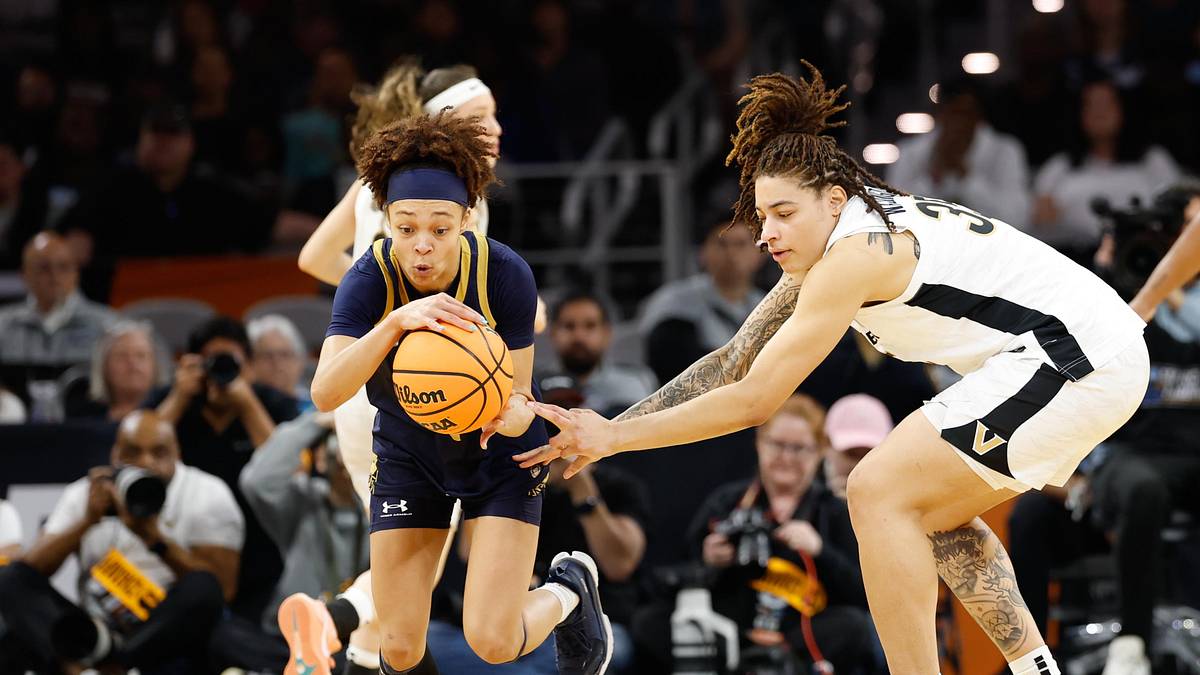
Start with what actually happened against DePaul. Notre Dame moved to 4–0, Hidalgo led the scoring, and her four steals took her to the 500-career mark. The official school recap credited her with 31 points and seven rebounds, while the full game report also recorded seven assists and two blocks. The combination matters because steals are only one outcome of a possession: the threat of the next one can force a handler into a rushed pass, a guarded sideline or an earlier shot than the offense wanted.
The larger historical distinction is even more striking than a round number. Notre Dame identifies Hidalgo as the first player in men's or women's college basketball to compile at least 2,500 points, 500 rebounds, 500 assists and 500 steals. That is not evidence that she will duplicate those averages in the WNBA. It is evidence that focusing only on her scoring would misunderstand the foundation of her college value.
Nor was the DePaul win merely a one-woman performance. Leah Macy scored 24, Jacy Abii 18, Madison St. Rose 16 and Anaya Hardy added 13 points and 16 rebounds. Notre Dame had built a 49–34 halftime advantage before DePaul pushed back in the third quarter. The Irish still found enough extra possessions and interior support to close out a 24-point victory. A scout evaluating Hidalgo's leadership should examine how often her pressure creates useful opportunities for teammates, rather than awarding every point from a turnover to the player who finished the play.
GOATIFY
GOATIFY WNBA
A record defensive milestone shows how a quick guard can transform a game. Explore GOATIFY's WNBA collection for basketball fan apparel and gifts.

Caitlin Clark G.O.A.T. - Greatest of All Sweatshirt
A basketball fan design for everyday wear.
Shop Now ↗

BALLERina Girl's Basketball Ballet Air Mug
Add basketball personality to your coffee break.
Shop Now ↗
BALLERina Girl's Basketball Ballet Air Sticker
Add basketball personality to your favourite gear.
Shop Now ↗

BALLERina Girl's Basketball Ballet Air Sticker
Add basketball personality to your favourite gear.
Shop Now ↗Her older defensive work reinforces the point. Notre Dame reported that she led the nation at 5.6 steals per game late in the 2025–26 campaign and had once recorded 16 in a game against Akron. It would be reckless to project those college rates directly into a professional league with bigger, more experienced guards. But the repeatability of her anticipation, quick hands and willingness to defend the entire possession is meaningful. It is a real on-court identity, not a reputation built from a single November stat line.
Can a 5-Foot-7 Guard Make Defenses Feel Smaller Than She Is?
Hidalgo is listed at 5-foot-7, and pretending that the measurement is irrelevant would be as lazy as pretending it defines her ceiling. Height can matter when a WNBA offense gets the matchup it wants. Taller creators can shoot over the top of small defenders; screening actions can force a smaller guard to absorb contact; and an opponent may deliberately station a big wing near the post to punish a switch. Those are concrete situations, not reasons to dismiss a prospect without watching film.
The more important distinction is between a defender who is small and passive and one who can alter the possession before the mismatch develops. Hidalgo attacks passing windows, closes space quickly and has the lateral speed to make an ordinary ball screen feel uncomfortable. Her steals do not automatically equal good team defense, because going for a gamble at the wrong time can put four teammates in recovery mode. The professional test will be whether she can maintain that disruptive aggression without overcommitting when the opponent is disciplined enough to read it.
WNBA coaching staffs would likely value her capacity to generate transition possessions. A clean deflection or a live-ball steal can save a half-court offense from needing to manufacture a difficult shot against a set defense. That is especially appealing to a young team still learning its offensive spacing. Yet it also introduces an important warning: stealing against a college ballhandler is not the same as bothering a veteran WNBA point guard who can see and punish the second defender.
Rebounding is another area where raw numbers need a second look. Seven boards against DePaul and a strong early-season college average are impressive for her frame, but the relevant pro question is whether she can box out, read the bounce and secure enough possessions against larger guards. Her competitive approach is evident; the translation will depend on technique and scheme. Teams should want the player who sets an aggressive defensive tone without requiring every other defender to cover for unnecessary risks.
Her strongest projection is not 'small guard who somehow survives.' It is 'pressure creator with a very specific set of advantages.' Drafting teams will have to decide how many of those advantages survive a league designed to take away a player's first move. A serious evaluation starts there.
GOATIFY
GOATIFY WNBA
Two different future star profiles make the 2027 WNBA draft conversation more fun. Browse GOATIFY's WNBA fan collection.


Caitlin Clark Golden Goose - WNBA Indiana Sweatshirt
A basketball fan design for everyday wear.
Shop Now ↗


Caitlin Clark Golden Goose - Women's Sticker
Add basketball personality to your favourite gear.
Shop Now ↗
Watkins Has the Star Ceiling; Hidalgo Has a Different Route to Impact
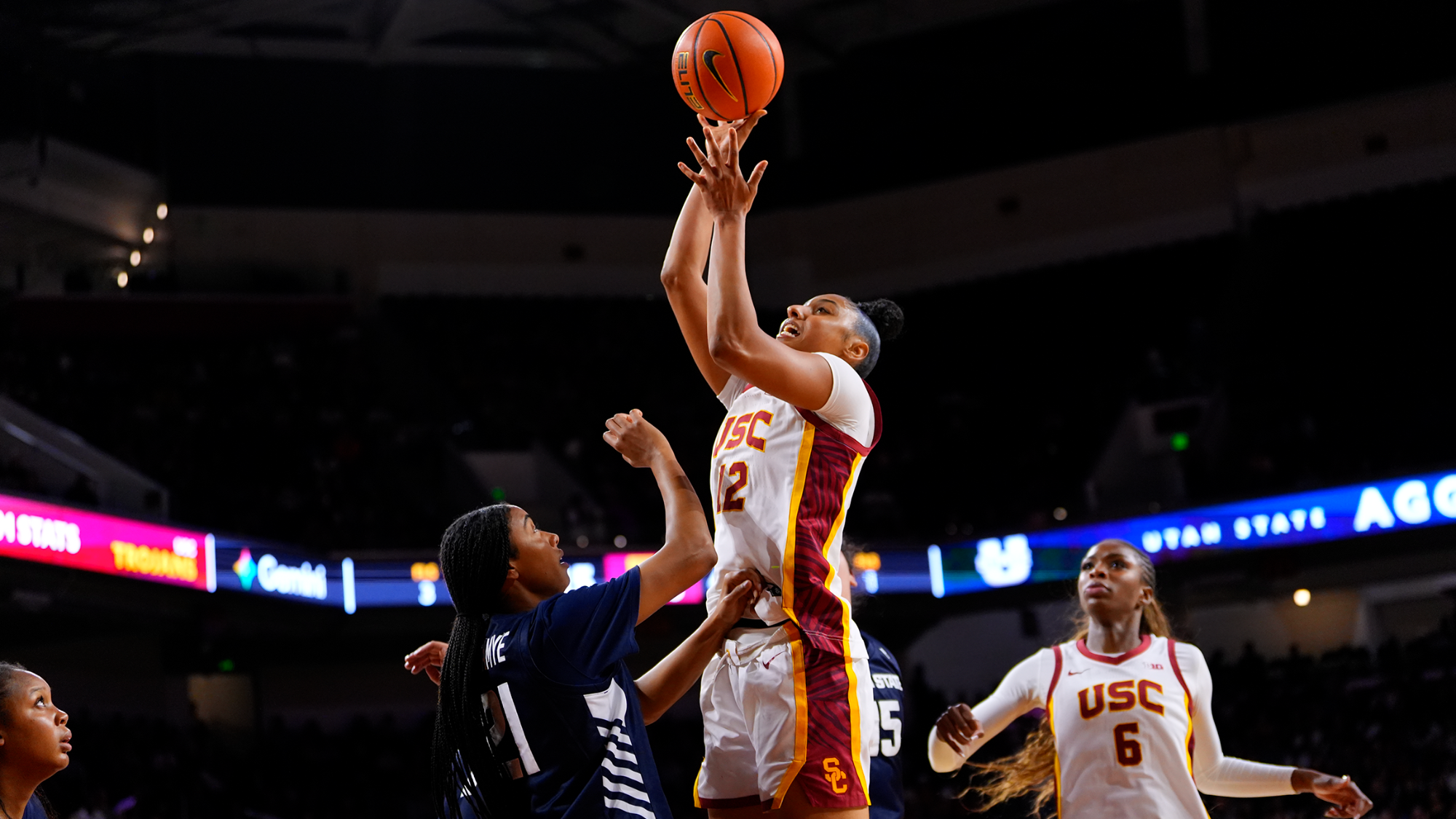
Watkins deserves the attention around the top of the 2027 draft board, but the comparison becomes useful only when it stops being a popularity contest. She is a bigger scoring wing with the potential to carry a difficult offensive possession when a team has run out of ordinary answers. Her return to USC after an ACL tear has added another evaluation layer: teams now have current film to see how she moves, absorbs contact and builds her rhythm after missing the 2025–26 season.
The early returns were attention-grabbing. USC recorded 21 Watkins points in its November 2 season-opening win over UNLV. In the November 8 home opener against Utah State, she followed with 32 points, 16 rebounds, six assists and five steals as the Trojans won 118–40. Those are not WNBA projections on their own, but they explain why a front office would be excited by her combination of scoring creation, size and recovering athleticism. They also explain why talking about Hidalgo as an alternative is different from arguing that Watkins is overrated.
Hidalgo's projected contribution follows a different path. She can speed a game up defensively, force turnovers and attack the seam once a defense is off balance. She can make a team more aggressive almost immediately. To become a reliable late-clock offensive star, though, she would need more than speed. Opponents will dare smaller guards to finish through bodies, punish one-dimensional drives and shoot efficiently when defenders go under the screen.
Her three-point shot is therefore more than a decorative percentage. Recent reporting points to a promising early 2026–27 sample after an inconsistent previous season. A few November games cannot settle the question; a multi-month shot profile, attempts off the dribble, catch-and-shoot mechanics and free-throw indicators will tell a more complete story. A WNBA team does not need Hidalgo to be its biggest guard. It does need her to be dangerous enough outside that defenders cannot simply erase her driving lane by backing away.
Most importantly, neither name is a guaranteed 2027 draftee at the time of the lottery. Eligibility and individual declarations remain decisions for the players. Watkins is a credible projected first choice, not a pick already made. Hidalgo has a real case near the top, not a signed professional destination. Evaluators who pretend those uncertainties have already been resolved are confusing a mock draft with an actual draft.
Houston, Toronto and Washington Need More Than a Winning Lottery Ball
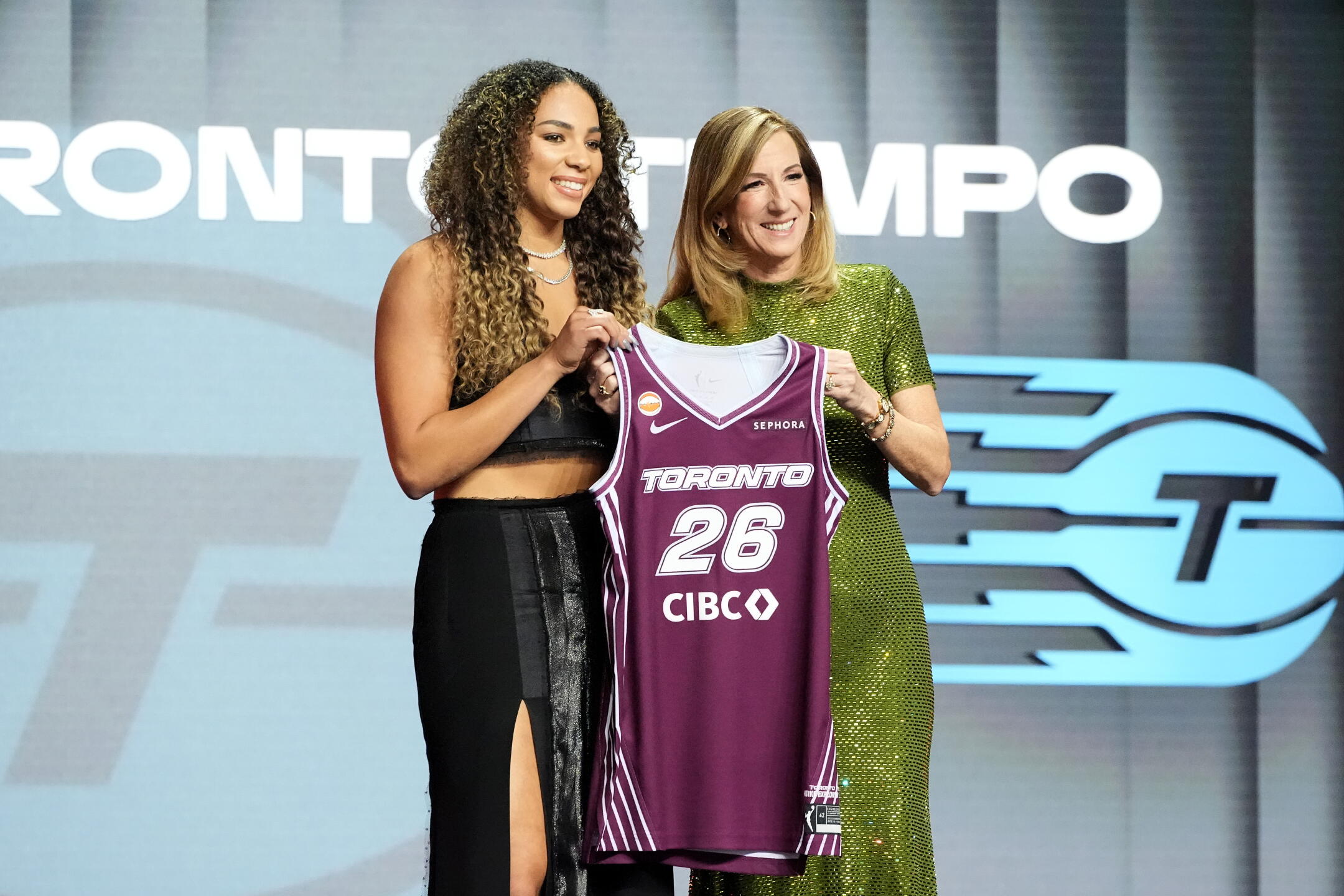
The lottery creates opportunity, not a single universal answer. The league's published 2027 odds give Houston and Toronto 329 of 1,000 first-pick combinations each, equivalent to 32.9 percent apiece. Washington owns Chicago's selection and has 16.1 percent. Seattle follows at 9.3 percent, Portland at 5.2 percent, and Los Angeles holds two entries combining to 3.6 percent. The drawing selects the first two places; remaining lottery slots then follow the applicable record order and tiebreak rules.
GOATIFY
GOATIFY WNBA
Houston, Toronto and Washington fans have plenty to debate before the 2027 draft. Find WNBA-themed shirts and gifts from GOATIFY.


Caitlin Clark G.O.A.T. - Greatest of All Sticker
Add basketball personality to your favourite gear.
Shop Now ↗

BALLERina Girl's Basketball Ballet Air Sweatshirt
A basketball fan design for everyday wear.
Shop Now ↗

Those numbers are more revealing when treated as a starting point rather than a script for what will happen. Houston, newly operating as the Comets after the Connecticut franchise's move, and expansion-era Toronto have very different histories but exactly the same top-pick odds. Houston cannot fall lower than third, while Toronto is assured at least fourth under the league's tiebreak formula. Neither guarantee tells either team what type of guard will best support its roster two or three seasons later.
Suppose a rebuilding franchise needs a primary creator who can draw multiple defenders at the end of a close game. Watkins's potential to generate her own offense may be the cleaner headline fit, assuming she is available and healthy. A roster already carrying ball-dominant scoring talent may instead put greater weight on a guard who defends at the point of attack, creates turnovers and moves the ball quickly. That is where Hidalgo's unusual résumé becomes more than a secondary prize.
Washington's position is especially interesting because the Mystics hold Chicago's pick rather than needing their own record to determine that lottery entry. Seattle and Portland could move up, and Los Angeles's two pick positions give it flexibility. None should make a prospect decision solely from the first number shown on draft night. The safer process is to evaluate offensive roles, defensive coverage, roster timeline and the actual draft declarations next spring.
An especially important distinction for readers: Sunday's lottery determines the draft order, not a commitment by Watkins, Hidalgo or anybody else to join the WNBA. The draft itself is scheduled for April 12, 2027. Between the two dates lie a college season, health developments, workouts, interviews and potential changes of mind. The next credible scouting conversation will be about how these players perform against stronger competition, not about making a November percentage the final verdict.
That makes Hidalgo's 500th steal timely. The league is choosing who has first choice, but teams should be building more than one credible plan. A second pick that brings a two-way identity can help a franchise as much as a marquee scorer selected first—provided the team understands exactly what it is buying into.
Hidalgo's latest game made a familiar college argument harder to ignore. Thirty-one points can be the headline, but the steals milestone, passing, rebounding and defensive pressure explain why she belongs in a serious 2027 WNBA draft conversation. Her size is a real variable, her developing perimeter shooting is a real variable, and neither should be waved away with a highlight reel.
Watkins remains an enticing projected top option, especially after showing she can produce again in USC's 2026 return. Hidalgo does not have to imitate her to justify an early selection. She has to show that her own high-energy game still creates more solutions than problems when the opponents become professional. That question will take months to answer. The November 14 evidence, however, makes one thing clear: whichever team misses the first pick will not automatically have missed the draft's only meaningful opportunity.
GOATIFY
GOATIFY WNBA
Shop GOATIFY WNBA products from the WNBA-filtered basketball collection.

Caitlin Clark G.O.A.T. - Greatest of All Hoodie
A basketball fan design for everyday wear.
Shop Now ↗

Caitlin Clark Golden Goose - Women's Sweatshirt
A basketball fan design for everyday wear.
Shop Now ↗BALLERina Girl's Basketball Ballet Air Sticker
Add basketball personality to your favourite gear.
Shop Now ↗
BALLERina Girl's Basketball Ballet Air Sticker
Add basketball personality to your favourite gear.
Shop Now ↗