

Fritz Won the Last Five Points. Stockholm Finally Gave Him an Indoor Title.
GOATIFYFor almost two hours, Taylor Fritz's first indoor title looked like a straightforward result that had somehow become an argument. The top seed had dominated the opening set, watched Thiago Agustín Tirante turn the final into a fight, and then reached the cruelest possible way to settle it: a deciding tiebreak. At 3–2 in that breaker, it was the Argentine who had the small advantage. Five points later, Fritz was the Stockholm Open champion.
The 29-year-old American prevailed 6–2, 4–6, 7–6(3) on Saturday, November 14, 2026, in the Royal Tennis Hall. It was his 12th ATP Tour singles title, his second of the season and, surprisingly for a player whose serve and clean ball-striking seem made for indoor hard courts, his very first trophy under a roof. The victory moved him from No. 10 to No. 9 in the rankings.
But the final deserves more than a sentence about a favorite doing his job. Tirante, contesting his first tour-level final, matched Fritz with attacking tennis and forced the world-class server to solve a closing-set problem without the comfort of a service break. The contrast between the players' second-serve numbers, and what happened when the match turned tight, explains why Stockholm mattered to both men.
The five-point escape: from 3–2 down to champion
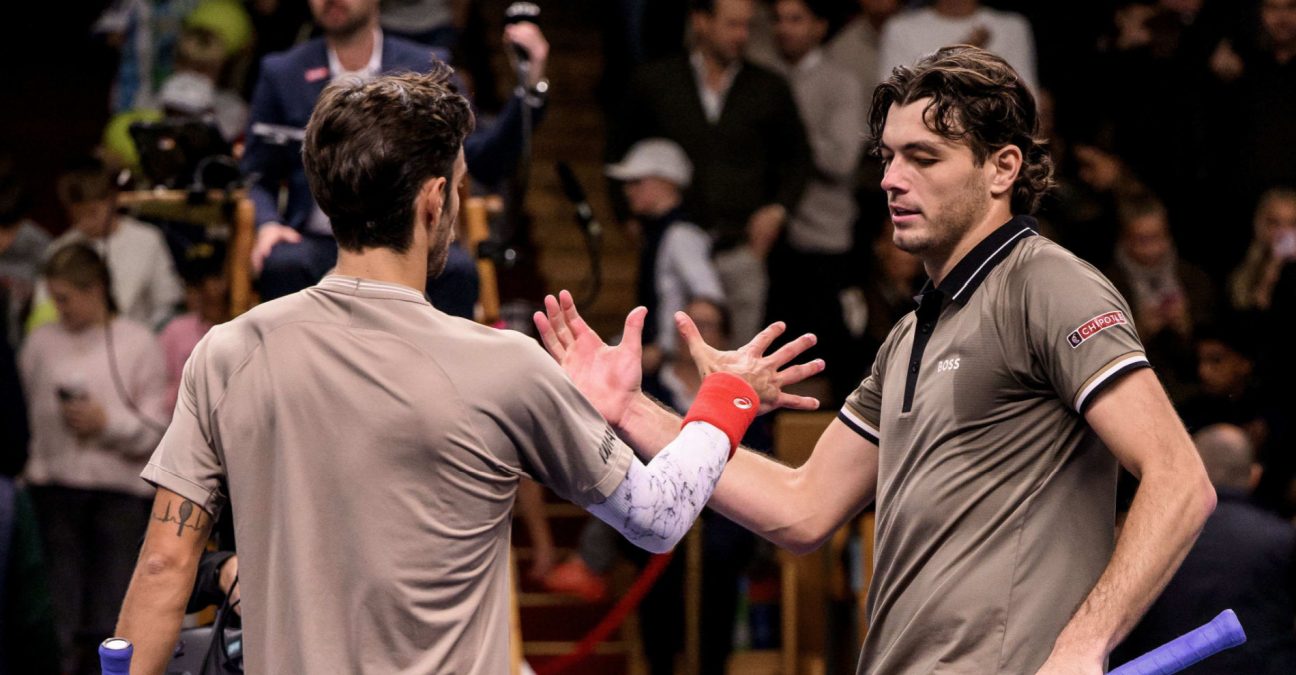
Fritz began the final with the initiative, not merely because he was the top seed but because the first few return games forced Tirante to defend the middle of the court. The opening exchanges were orderly until the fourth game, when the American broke for 3–1. With the scoreboard advantage in hand, he could play the shorter, more purposeful patterns that suit his game: strong first contact, a forehand that did not have to be spectacular, and pressure to make his opponent produce something special on second serve.
At 5–2, with Tirante serving, the first-set finish briefly became complicated. The Argentine saved one set point with a drop shot, a touch of improvisation that showed he had more than raw pace. Fritz found another opportunity and finished with a backhand down the line. The 6–2 opener looked decisive. Its danger was that a set can feel settled before the opponent has fully changed tactics. Tirante had been too restrained early, and the score gave him permission to start swinging.
That change was unmistakable in the second set. Tirante began finding more direct routes to winners, particularly as the set approached its middle games. Fritz, meanwhile, contributed three consecutive unforced errors in the service game that gave the Argentine the break for 4–3. The moment was revealing: an elite server does not need to collapse for a match to turn. Three poor balls in a row can be enough when the other player is beginning to believe his own groundstrokes can decide points.
Tirante served out the set 6–4. At that point, the numbers still suggested Fritz would be difficult to beat, but the psychological geometry had changed. The favorite had been forced to play a match rather than administer a routine victory. The outsider had tested his own attacking ceiling and discovered that Fritz could be hurried. Each new service game in the decider carried the same question: would one player's risk-taking finally create a break chance, or would the whole thing be squeezed into seven-point pressure?
GOATIFY
GOATIFY Tennis
The five-point finish was all pressure and precision. Explore GOATIFY Tennis designs while revisiting Fritz's closing-set comeback.


Neither man faced a break point in the third set. That is the detail that gives the deciding tiebreak its weight. There was no missed opportunity at 0–40 for the eventual runner-up to replay indefinitely; there was no long final-set return game in which Fritz established control. The players traded holds until a miniature match began at 6–6. Tirante went ahead 3–2 with a minibreak, at least briefly looking as if his greater willingness to attack would be rewarded.
Fritz then took the last five points. It is tempting to turn that sequence into a tidy claim about nerve, but five points cannot reveal every thought or intention. They do reveal that the American's game remained coherent under the sharpest pressure of the afternoon. He stopped the run against him, kept the returner engaged and closed the breaker 7–3 rather than waiting for the opponent to collapse on his own. The match ended after roughly two hours and twelve minutes, a final far more balanced than its opening set.
The broader statistical picture fits that story. Fritz served seven aces to Tirante's ten, won 76 percent of first-serve points to the Argentine's 74 percent, and held in 14 of his 15 service games. The decisive separation came after a missed first serve: Fritz won 23 of 31 recorded second-serve points, around 74 percent, while Tirante took 21 of 36, around 58 percent. That 16-point percentage gap offers a more durable explanation than saying the champion simply had greater desire. One player's vulnerable delivery was more reliably protected, particularly when the margins tightened.
Tirante made a first-final fight out of Stockholm
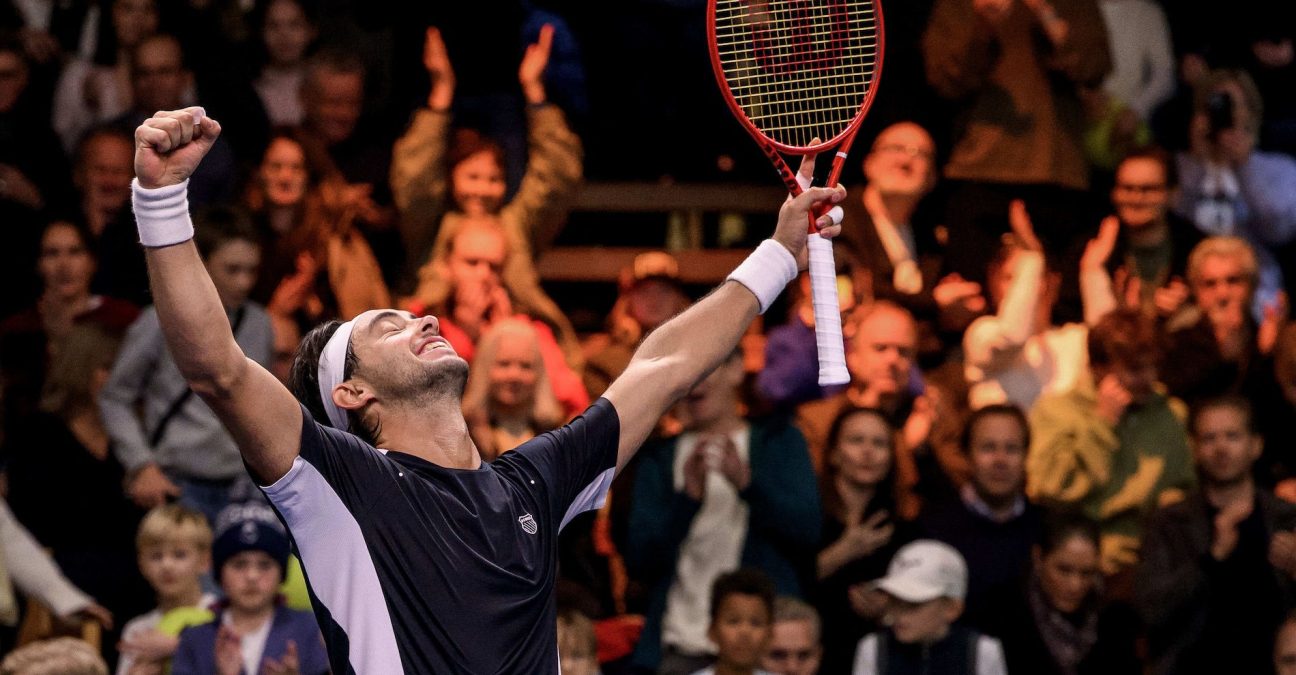
Thiago Agustín Tirante did not arrive in Stockholm with the résumé usually associated with an ATP 250 finalist. He entered the event ranked No. 51, having begun 2026 outside the top 100, and he was playing for a maiden tour-level title. He also was not stepping onto the court against an unfamiliar opponent. In August, he had beaten Fritz 7–5, 6–3 in Montreal. That previous result did not make him the favorite in Sweden, but it made the final less straightforward than a glance at the seedings suggested.
His progress through the draw showed several kinds of problem-solving. After a win over Jaume Munar and a walkover from Tomas Martín Etcheverry, he survived a three-set quarterfinal against qualifier Aleksandr Shevchenko. His semifinal against Alejandro Tabilo demanded another kind of composure: Tirante won 7–5, 7–6(1), despite failing to serve out the contest at his first opportunity. The big test was not whether he could strike winners indoors; it was whether he could maintain the quality of his decisions while carrying the emotional weight of a first final.
He gave Fritz a convincing answer for long stretches. Ten aces and 35 winners are substantial output in a match against a returner of Fritz's class. Tirante's forehand supplied much of the attacking momentum after the first set, and his willingness to take the initiative stopped the American from settling into an easy rhythm. A scoreline of 6–2, 4–6, 7–6(3) might suggest that the champion's level dipped for a set. That happened in individual moments, but it would shortchange the way the Argentine actively changed the shape of rallies.
There was, however, a bill for that aggression. Tirante committed 36 unforced errors, compared with 21 for Fritz. A player who hits 35 winners can afford more mistakes than a conservative opponent, but the calculation becomes less forgiving when 15 additional errors are paired with an inferior second-serve success rate. The final was not merely a case of power losing to percentage tennis. Fritz hit 22 winners himself. Instead, it was a case of one aggressive player having a slightly steadier baseline on which to build the next point.
GOATIFY
GOATIFY Tennis
Tirante's breakthrough showed the nerve behind an aggressive indoor game. Browse GOATIFY Tennis gear as the final's tactical swing comes into view.


Tennis GOAT Golden Racket & Ball Decal Sticker
Add tennis personality to your favourite gear.
Shop Now ↗

Tennis GOAT Golden Racket & Ball Crewneck Sweatshirt
A tennis fan design for everyday wear.
Shop Now ↗That distinction matters in a deciding set in which neither player earned a break point. Tirante did enough to stay level through six games apiece, and winning the first minibreak was a genuine achievement. But what worked to reach 3–2 could not carry him through the last five exchanges. Without point-by-point video analysis, no responsible reading of the scoreboard can assign all five to particular technical mistakes. The match statistics and overall patterns point to the same wider issue: sustaining initiative against Fritz while keeping the error count manageable was brutally difficult.
It would also be a mistake to describe Stockholm as a wasted week for Tirante. He had reached a landmark final and demonstrated that his Montreal victory over Fritz was not simply an isolated upset. The semifinal defeat of Tabilo and the third-set resistance against the top seed created evidence he can compete at this level on indoor hard courts, not just on familiar outdoor stages. The next challenge is repeating those standards in earlier rounds at bigger events, when there is no guarantee of a headline matchup to sharpen the focus.
Tirante has spoken publicly during this tournament about difficult periods in his relationship with tennis and his own well-being. Those remarks are his experience to describe, not material for diagnosing a player from afar. What the results establish is more concrete: a season that began outside the top 100 has produced a tour-level final and a ranking trajectory toward the top 50. Stockholm did not give him the trophy, but it gave him a performance and a body of match evidence on which the next season can be built.
Why the first indoor trophy changes Fritz's season

The obvious headline is that Fritz is an ATP champion again. The less obvious one is that an indoor title took this long. The American possesses the two weapons that normally travel well beneath a roof: a serve that can end points before a rally settles, and flat, repeatable groundstrokes that do not depend on a favorable breeze or slow court. Still, entering this week he had never converted an indoor final into a title. Stockholm closes that specific gap in his record rather than magically transforming him into a new player.
It also completes a late-season sequence that looked more frustrating than the final result might suggest. Fritz had made a career-best sixth final in 2026, but had already lost four finals this year. He had taken the title in Washington earlier in the summer, yet autumn had given him a steady diet of deep runs without a second trophy. In Lyon he lost a final to Lorenzo Musetti. In Stockholm, the same Italian was waiting in the semifinal, and Fritz produced one of his cleanest performances of the week to win 6–4, 6–2 in 63 minutes.
That semifinal mattered for more than revenge. Fritz converted three of four break points against Musetti and did not face a break point himself, according to the match statistics. It was a different form of authority from the final against Tirante, and seeing both versions in the space of two days is useful. Against Musetti, Fritz imposed a plan and never gave it away. Against Tirante, his plan was disrupted, then rebuilt under pressure. A player who wants to win on the sport's larger stages needs both capabilities.
GOATIFY
GOATIFY Tennis
Stockholm added a first indoor trophy to Fritz's collection and a new chapter to the ATP season. Shop GOATIFY Tennis designs inspired by the sport.


Tennis GOAT Golden Racket & Ball Crewneck Sweatshirt
A tennis fan design for everyday wear.
Shop Now ↗The route to Saturday was not without a scheduling wrinkle. Fritz beat Cameron Norrie 7–5, 6–3 earlier in the week and advanced beyond a scheduled quarterfinal when Holger Rune withdrew. There is no reason to treat a walkover as an earned on-court victory, nor to pretend it makes the title illegitimate. It simply meant the top seed reached the demanding semifinal and final with one fewer match on his legs. What he did against Musetti and Tirante still had to be settled across the net.
There was another recent near miss in Paris, where Fritz held two match points against Carlos Alcaraz before losing their quarterfinal. That defeat illustrates the difference between being able to match a leading player in passages and closing the moment when it arrives. Stockholm cannot erase Paris, and a 250-level final does not simulate every problem of a Grand Slam semifinal. Yet winning five straight points from a minibreak down against Tirante provided a small, specific response to the question that lingers after any missed chance: can Fritz still trust his decisions at the finish?
The victory was career title No. 12 and his second of 2026, extending his run of seasons with multiple tour trophies to five consecutive years, beginning in 2022. It also lifted him back to world No. 9. Those are meaningful measurements, but the ATP Finals situation should not be overstated. Fritz heads to Turin as the second alternate rather than a player guaranteed a place in the eight-man singles field. A ranking move and a reserve position are real consequences; automatic qualification is not.
Stockholm's own history helps frame the result. The tournament dates to 1969 and is played in the Royal Tennis Hall, one of the indoor venues most closely associated with the ATP calendar. Fritz became the 11th American man to win its singles championship. Tommy Paul had been the most recent American champion in 2024, while John McEnroe collected four Stockholm crowns across the 1970s and 1980s. That heritage does not add ranking points, but it explains why this particular trophy carries a character beyond its ATP 250 label.
Now the useful question is what Fritz takes into 2027. He has not suddenly solved every matchup with the players above him, nor is an indoor championship proof that a major trophy is imminent. But his best stretches this autumn have shown sustained service protection, an ability to beat accomplished opponents quickly, and a capacity to recover when a final stops following the script. The next improvement may come less from adding another highlight-reel shot than from applying those habits more often against the opponents who force him to hit one more ball.
Fritz came to Stockholm looking for a second title of the year and left with something he had never previously owned: an indoor championship. Tirante arrived for his first ATP final and came within a deciding-tiebreak lead of denying it. Both stories belong in the result. The 6–2, 4–6, 7–6(3) score shows how far the contest traveled from its one-sided beginning; the last five points show who found the finish.
For Fritz, the trophy is a useful ending to a difficult run of close calls, not a verdict on everything that comes next. For Tirante, defeat against a top-ten opponent after such a performance is evidence of possibility. Stockholm's final had a champion, but it also had two players with clear reasons to believe their next season can be better.
GOATIFY
GOATIFY Tennis
Shop GOATIFY tennis products from the Tennis-filtered collection scope.


















