Leeds Scored Four at Chelsea. Alonso Called the Blues Fragile.
GOATIFYChelsea led Leeds United 1-0 after 25 minutes on Saturday, November 21. Before the hour was out they were 3-1 down, and by the final whistle it was 4-1. Noah Okafor's two goals, Dominic Calvert-Lewin's penalty and Brenden Aaronson's late finish gave Leeds their first win at Stamford Bridge since 1999. It was a glorious afternoon for Daniel Farke and an unusually public examination of Xabi Alonso's side.
The manner of the defeat was more concerning than the margin. Emmanuel Emegha scored on his first Chelsea start, but the lead lasted less than three minutes. The hosts had the greater share of possession yet barely threatened James Trafford after falling behind. Leeds finished with 21 shots, eight on target and seven big chances. Chelsea registered three shots on target and no big chances, numbers that expose the difference between holding the ball and making it count.
A penalty decision against Morgan Rogers was contentious, and losing captain Moisés Caicedo to a back problem early in the first half was a real setback. Neither development fully accounts for Chelsea repeatedly losing second balls, failing to control direct attacks and responding so poorly to conceding. Alonso described his team's mentality as fragile afterward. The result poses an uncomfortable question: can he repair the structure as well as the confidence?
Chelsea's Lead Concealed Leeds' Early Warning Signs
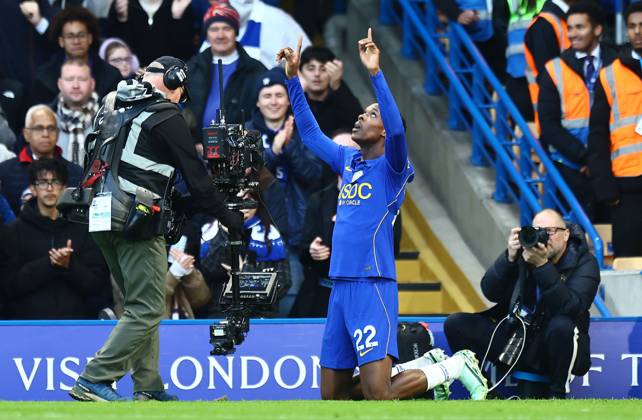
It would be unfair to pretend Chelsea did nothing well in the first half. There were stretches of deliberate buildup, a promising connection down their right involving Josh Acheampong and Estêvão, and an early sense that Emmanuel Emegha could offer something different. He was willing to challenge centre-backs physically, make direct runs and give his midfielders a passing target. For a player making his first start, that combination was encouraging. But the warning that mattered most came at the other end.
Before Chelsea scored, Dominic Calvert-Lewin had headed against the crossbar from James Justin's delivery. Leeds were finding ways to attack without requiring lengthy possession phases, using their front line to compete for direct balls and create a second contest close to Chelsea's penalty area. The strategy looked simple only because the players executed the supporting movements. Chelsea's defenders had to win more than one action to end an attack, and they were not always doing that.
The home team were disrupted when Moisés Caicedo sustained a back injury in an aerial collision and had to be replaced by Jordan Henderson in the 22nd minute. Caicedo's value is not limited to tackles. He closes spaces when attacks break down, provides a passing angle under pressure and helps other midfielders advance without exposing the defenders behind them. His departure mattered, although a top-level team should still be equipped to reorganise rather than lose its collective shape.
Three minutes later Emegha supplied the breakthrough. Morgan Rogers drove into space, evaded his immediate opponents and released the striker, who struck firmly with his left foot past James Trafford at the near post. For Emegha personally, a debut start and first Chelsea goal could hardly have been better scripted. But a goal is only an advantage when a side can manage what follows. Leeds immediately challenged that assumption.
Calvert-Lewin helped a forward delivery reach Okafor, who worked into the area despite Chelsea shirts nearby and steered a low finish across Emiliano Martínez. The clock showed 28 minutes, barely three minutes after Emegha's celebration. In that short interval Leeds had refused to treat the concession as a reason to retreat, while Chelsea's defensive recovery had looked uncertain. That difference in reactions became the theme of the afternoon.
GOATIFY
GOATIFY Soccer
Chelsea vs Leeds put every fan's nerves to the test. Explore GOATIFY Soccer matchday designs.

Christian Pulisic – Captain America Football Hoodie
A football fan design for everyday wear.
Shop Now ↗
American Youth Nursery Chelsea Parody Sweatshirt
A football fan design for everyday wear.
Shop Now ↗
American Youth Nursery Chelsea Parody Sticker
Add football personality to your favourite gear.
Shop Now ↗


Christian Pulisic – USMNT GOAT Muscle Shirt Tank
A football fan design for everyday wear.
Shop Now ↗Leeds continued threatening before half-time. Calvert-Lewin flicked another chance wide and saw a header saved, while Tarik Muharemović had a finish correctly ruled out for offside. At 1-1, Chelsea were still level on the scoreboard but not on the quality of the opportunities. A half-time adjustment could have changed the direction of the match. Instead the visitors returned from the dressing room with the same conviction and better execution.
Farke's Press and Second Balls Beat Chelsea's Possession

The most revealing part of this game was that Chelsea possessed the ball more often without controlling the contest. They had roughly 57 percent possession. Leeds, set up with three centre-backs and wing-backs advancing from the sides, regularly dictated where the dangerous challenges happened. Ethan Ampadu and Ao Tanaka kept the visitors organised in midfield, while Jayden Bogle and Gabriel Gudmundsson could attack wide spaces without leaving the back line completely exposed.
The plan involved aggressive pressing when Chelsea tried to build and a willingness to go long when the direct route was better. Calvert-Lewin provided a physical reference point, Okafor attacked the space around him, and the midfielders prepared for the next touch rather than assuming one pass would solve everything. A long ball or throw-in is not inherently crude. Used with preparation, it is a way to force defenders into awkward body positions and create a shot before the opposition regains balance.
Chelsea repeatedly struggled with those second phases. Winning the initial header did not always produce a safe clearance, and the spaces just beyond their defenders were vulnerable. Caicedo's early departure reduced the team's normal cover, but the pattern was more widespread than one missing player. Other midfielders were slow to establish secure positions after transitions, and Leeds were often the side moving forward when a loose ball appeared.
The chance profile provides stronger evidence than a possession graphic. Leeds finished with 21 attempts and eight on target to Chelsea's 14 and three. Their seven big chances compared with zero for the hosts. Expected-goals calculations differed slightly across reports but broadly favoured Leeds by around 2.5 to 0.6. Those are not the figures of a team that escaped with four goals from a couple of freak deflections. They indicate that Farke's players were getting to better shooting positions throughout the afternoon.
It also helps explain why Chelsea's expensive attacking options could not impose themselves. Cole Palmer and Morgan Rogers can be decisive when they receive the ball in useful pockets, and Estêvão can unsettle a defence facing its own goal. But they require progression into those areas and support when attacks turn over. If Leeds are first to recover the ball, a sequence that began with Chelsea possession ends with a visiting attack. Individual skill cannot solve a recurring collective problem every time.
Farke later expressed satisfaction with his players' intensity and the way their plan worked. The visitors pressed forward rather than waiting for Chelsea to make mistakes by themselves. That deserves full credit. Leeds also managed the emotions of the match: after going behind, they continued their usual movements; after equalising, they did not settle for a point. Ending a 27-year wait for an away victory at Stamford Bridge was a reward for clarity of purpose, not simply a good afternoon in front of goal.
GOATIFY
GOATIFY Soccer
Celebrate football's tactical battles with GOATIFY Soccer tees and fan gifts.

Kylian Mbappe – El Dictator Retro Soccer Sweatshirt
A football fan design for everyday wear.
Shop Now ↗
Second FC Arsenal Parody Football London Fans Tee
A football fan design for everyday wear.
Shop Now ↗
Second FC Arsenal Parody Football Decal London Sticker
Add football personality to your favourite gear.
Shop Now ↗
Second FC Arsenal Parody Football London Fans Hoodie
A football fan design for everyday wear.
Shop Now ↗
Kylian Mbappe France Euro 2024 Ninja Turtle Tank
A football fan design for everyday wear.
Shop Now ↗
Glazers Out Manchester United Fan Protest Mug
Add football personality to your coffee break.
Shop Now ↗The Handball Debate Cannot Explain the Second Okafor Goal

The moment that put Leeds ahead shortly after half-time will inevitably feature in arguments about the interpretation of handball. Jayden Bogle shot from inside the area and the ball struck Morgan Rogers high on the arm. Referee Michael Oliver awarded a penalty and the decision survived a video review. Chelsea could reasonably question aspects of proximity and arm position. Dominic Calvert-Lewin, however, had a more straightforward task: convert from the spot. He sent Emiliano Martínez the wrong way in the 53rd minute.
A disputed decision can influence confidence and momentum. It cannot be responsible for every action that follows. At 2-1 there was almost an entire second half remaining, and Chelsea still had enough attacking talent to produce at least one serious opportunity. Instead, Leeds were the side that looked more likely to score next. The visitors did not let the discussion about the referee disrupt the habits that had brought them level in the first half.
Five minutes later the third Leeds goal arrived from a situation Chelsea should have been able to defend better. A long throw created pressure; the initial clearance did not end the move. Ethan Ampadu returned the ball into the area, Rogers got a touch without properly removing the threat, and Okafor responded quickly. His close-range finish beat Martínez before the goalkeeper could reset. A defence that had already struggled with second balls was punished again by an opponent ready to attack the next contact.
Okafor's brace deserves detailed appreciation. The first was not merely a free hit in an empty penalty box: he moved into space among defenders, carried the ball under pressure and finished across the goalkeeper. The second required anticipation of a half-cleared sequence and a quick strike from a crowded area. Both rewarded a forward who read where danger would appear before others had completed their recovery. He was the sharpest finisher on the field because Leeds repeatedly gave him dangerous positions to exploit.
For Chelsea, the issue was not a single misjudged clearance but the support behind it. A defender can head a long ball away and still see the opposition recover it if midfield cover is absent. A full-back can advance to press only if somebody protects the space he leaves. Those responsibilities do not disappear because Caicedo is injured. They need to be assigned clearly to the players who remain on the pitch, particularly when an opponent is deliberately hunting second balls.
Alonso introduced attacking substitutes and Chelsea had spells of territorial pressure later on. Yet more possession did not become better chances. Leeds, now protecting a two-goal lead, could hold a more compact shape and ask Chelsea to produce an inventive pass or cutback rather than another hopeful circulation. The hosts struggled to find an effective final action. That is why the penalty should be regarded as one important incident, not the grand explanation for a three-goal defeat.
Alonso Called Chelsea Fragile. The Fix Has to Be Tactical Too

Chelsea continued chasing the match after falling 3-1 behind, but the attempts lacked the calm and precision needed to make Leeds uncomfortable. When the home side pushed forward, the visitors remained a threat in transition. Brenden Aaronson, who had replaced Okafor in the 73rd minute, ran onto Harry Wilson's pass and added the fourth in stoppage time. It was a difficult goal for Chelsea to concede because it came when the home crowd was already restless and the game had lost most of its suspense.
GOATIFY
GOATIFY Soccer
Support your sport through every comeback and upset. Shop GOATIFY Soccer apparel.


Lionel Messi - GOAT Soccer Crewneck Gift Sweatshirt
A football fan design for everyday wear.
Shop Now ↗
Trashford Marcus Rashford Manchester United Hoodie
A football fan design for everyday wear.
Shop Now ↗

Ousmane Dembele – Comeback GOAT Muscle Shirt Tank
A football fan design for everyday wear.
Shop Now ↗
Manchester United Ratcliffe Out, Glazers Out Mug
Add football personality to your coffee break.
Shop Now ↗Alonso's post-match remarks centred on the players' response to adversity. Calling his team fragile was a striking admission from a manager tasked with providing stability. There is a danger, though, in treating mentality as something entirely separate from coaching. Confidence depends partly on whether players trust their teammates' positioning, whether a misplaced pass leaves the team exposed and whether there is an organised route back into the match after conceding.
Chelsea's broader record makes the concern urgent. Five defeats in the opening 11 Premier League games had left them eighth, with 20 goals conceded. Those numbers can improve quickly, but they are not a small sample of one poor 45-minute performance. Four of the five defeats had reportedly come without João Pedro, which offers some injury context. It does not absolve the other players of protecting central areas, contesting aerial deliveries or creating better chances. Emegha's promising first-start goal showed that the attacking options are not all exhausted.
The most useful short-term changes are tangible rather than theatrical. On direct balls, make responsibility for the first aerial challenge and the second contact unambiguous. When wing-backs or full-backs go high, establish who covers behind them. If Caicedo is unavailable, use a midfield pairing with a shape suited to its actual strengths instead of expecting a replacement to perform his defensive recovery work in precisely the same way.
Chelsea also need more reliable attacking progression after setbacks. Palmer and Rogers are most influential receiving in connected positions, not trying to rescue a stalled move with an individual dribble against multiple defenders. Better spacing behind the ball would let Chelsea recycle attacks without handing opponents easy transition opportunities. The aim is not to eliminate risk, but to take risks in areas where teammates can respond collectively if the ball is lost.
The next test arrives away at Nottingham Forest on Friday, November 27. One controlled performance will not erase a 4-1 home loss, but it can demonstrate whether the team understands the pattern that undid it. The supporters booing after Leeds' fourth were responding not only to the result but to the absence of a convincing recovery. Showing organised defending, composure after a concession and the ability to create genuine chances would be a far better answer than a new post-match slogan.
For Leeds the lesson is more encouraging. Their setup made Chelsea work in exactly the areas where the hosts were weakest. Okafor scored twice, Calvert-Lewin helped connect the attack and converted his penalty, and Aaronson capped the performance. Farke's team rose to sixth and ended a remarkable Stamford Bridge drought. The visitors do not need Chelsea's failings to explain away their own quality: this was a disciplined and ambitious away win on its merits.
Chelsea lost to a Leeds side that was better prepared to contest the next ball and more ruthless when dangerous space appeared. The disputed penalty matters; so does Caicedo's injury. Neither changes the wider story that Leeds created the clearer chances and Chelsea's attacking possession seldom troubled the visitors once the match turned.
Alonso has identified the fragile response, but identifying a weakness is only the first step. The answer must be visible in second-ball positioning, defensive coverage, midfield support and chance creation. Until those improve, the club will remain vulnerable to every opponent capable of repeating Farke's plan. Leeds, meanwhile, leave London with four goals and a deserved landmark victory.
GOATIFY
GOATIFY Soccer
Shop GOATIFY soccer and football shirts, hoodies and stickers.

Championshit Tottenham Hotspur Parody , Sticker
Add football personality to your favourite gear.
Shop Now ↗
Bottlers FC Tottenham Hotspur Parody , Spursy Hoodie
A football fan design for everyday wear.
Shop Now ↗
GLINEOS OUT Manchester United Fans Protest Mug
Add football personality to your coffee break.
Shop Now ↗
Championship Tottenham Hotspur Parody , Sweatshirt
A football fan design for everyday wear.
Shop Now ↗