

Dallas Scored 51. Quinnen Williams Still Saw the Problem.
GOATIFYDallas scored 51 points, reached the end zone on its first six possessions and beat Tennessee by three touchdowns. It should have been an uncomplicated celebration. Instead, the Cowboys left AT&T Stadium on November 22, 2026 with two different stories: an offense that appeared impossible to interrupt and a defense that still had to explain how the Titans managed 30 points.
Quinnen Williams understood that contrast immediately. Dallas's disruptive defensive tackle produced two sacks and forced a fumble, but he was not interested in treating those highlights as proof that everything had been fixed. At 5-6, the Cowboys have a brief Thanksgiving turnaround to turn individual brilliance into consistent team performance.
Six Straight Touchdown Drives Made Dallas Look Unstoppable
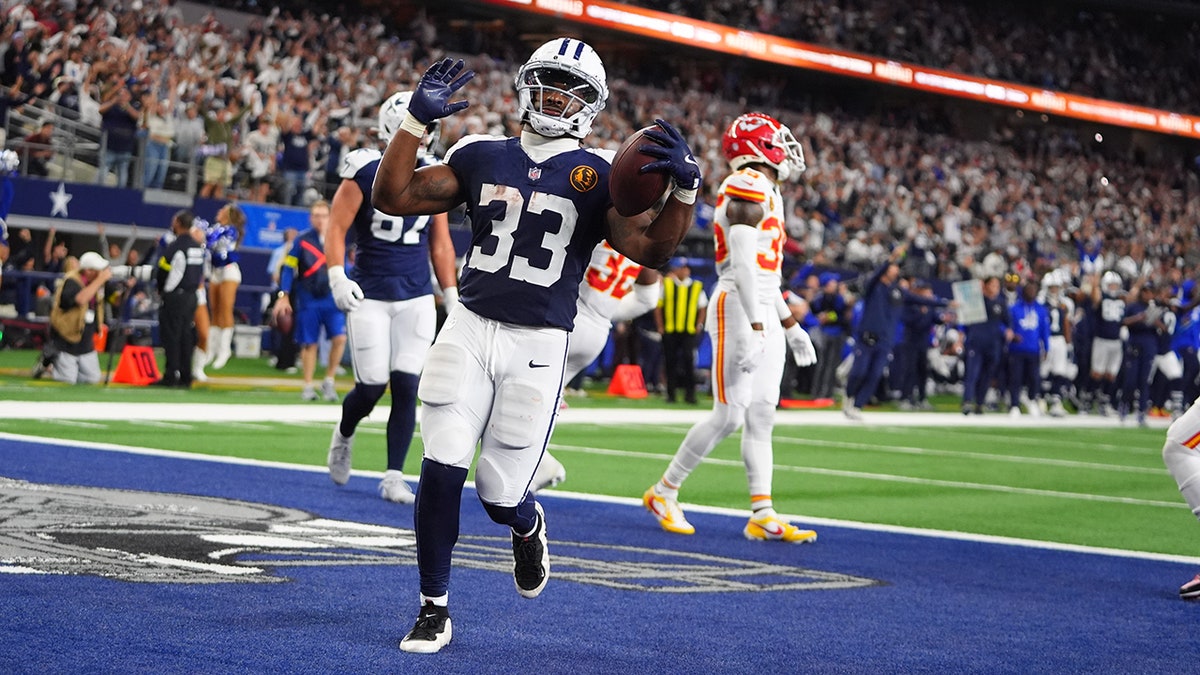
The most remarkable statistic was not the final 51. Dallas reached the end zone on its first six offensive possessions, a feat the club could not find in its tracking records going back to 1993. There was no sequence of punts separating its best moments. Every time Tennessee narrowed the margin, Prescott's group provided another answer.
Prescott completed 28 of 33 passes for 325 yards, four passing touchdowns and no interceptions. He also scored on a two-yard run. His 147.3 passer rating spoke to the blend of efficient decisions and repeated explosive gains; simply throwing often is not enough to create numbers that clean. At one stage he completed 19 consecutive passes, matching his franchise benchmark.
The pass protection deserves equal attention. Tennessee did not sack Prescott. That created a frustrating menu for the Titans: rush extra defenders and leave a receiver available for an early throw, or keep more players in coverage and give the quarterback time to find the weakest matchup. Dallas's offense appeared comfortable making either choice costly.
The opening possession was a 14-play, 73-yard drive that consumed more than six minutes before Javonte Williams scored from a yard out. KaVontae Turpin provided a 22-yard rushing touchdown on the next possession. Those scores mattered beyond their points. They made clear that Tennessee could not focus exclusively on preventing deep passes and ignore the rushing threat.
Williams finished with 67 rushing yards and two touchdowns, one on the ground and one as a receiver. Dallas totaled 155 rushing yards, giving the attack a balance that supported the passing efficiency rather than competing with it. When a back can block, catch a short pass and finish at the goal line, he offers options that are easy to overlook beside the receiver highlights.
Brandon Aubrey eventually kicked a 49-yard field goal when the touchdown streak ended. Later, Prescott found Brevyn Spann-Ford for another short touchdown after a defensive takeaway. Even without the six-drive history, the consistent finishing would have been impressive. The limitation is that a historically vulnerable Tennessee defense is not the final examination of how this offense performs under stronger pressure.
Lamb and Pickens Gave Tennessee No Comfortable Coverage Choice

A defense can sometimes accept one wide receiver posting a big number if the remaining passing options disappear. The Titans never received that bargain. CeeDee Lamb caught 11 passes for 132 yards and a touchdown, while George Pickens collected seven receptions for 102 yards and a score. The yardage was split across two serious threats rather than concentrated in a single mismatch.
GOATIFY
GOATIFY NFL
NFL fan collection following Dallas scoring-drive discussion.


Lamb controlled the first half, producing 103 of his 132 yards before the break. His eight-yard touchdown came when Prescott extended the play and found him near the back of the end zone. That type of improvisation is dangerous for coverage units: keeping a receiver contained for the original play design is not enough if he can find a second window while his quarterback escapes trouble.
Lamb also moved beyond 1,000 receiving yards for the sixth consecutive season. The milestone underscores the week-to-week reliability behind Sunday's flashier statistics. He has been an enduring volume option rather than a receiver who needs a perfectly designed shot play to influence an outcome.
Pickens provided the complementary threat. He had only 22 receiving yards by halftime but made a more substantial impact later, including a 31-yard gain and a remarkable 30-yard sideline catch. Tennessee had to worry about Lamb's movement and route timing without leaving Pickens isolated on the outside for large gains.
The broader effect was to simplify Prescott's decision-making. When one matchup was unfavorable, another could develop. The quarterback was rarely forced to hold the ball hoping for a low-percentage route to open. Dallas instead moved through extended possessions and punished defensive choices as they came.
Still, expectations require discipline. Tennessee entered the game with one win and a struggling defense. Two receivers topping 100 yards proves the Cowboys' offensive ceiling is considerable. It does not guarantee identical separation against defensive backs who disguise coverage, win at the line and generate pressure before routes develop.
Williams Created the Turnover. The Defense Still Allowed 30

Quinnen Williams supplied the clearest individual evidence of improvement. His two sacks were part of a five-sack Dallas afternoon, and his fourth-quarter strip-sack of Cam Ward produced a fumble recovered by Markquese Bell. Bell returned it 70 yards, handing the Cowboys a short field that led to yet another touchdown. A defensive tackle changing the scoreboard through pressure is exactly what Dallas needs.
Yet the opposing total remains stubborn: 30 points. Tennessee gained 346 yards and scored on several meaningful possessions. Tony Pollard ran for 110 yards during his return to Dallas. Ward threw for 248 and scored on a short run. Those numbers make the defensive performance difficult to describe as settled, particularly when the offensive side was producing so much protection.
The 59-yard touchdown to rookie Carnell Tate was especially telling. Tate caught the ball while falling, regained his feet before a defender touched him down and continued toward the end zone as defenders hesitated. The play was not just about losing a matchup in coverage. It was an example of how a lapse in awareness and finishing technique can transform an awkward catch into a huge score.
Mike Pettine was calling the defense after Christian Parker's difficult spell in that role. Five sacks and a takeaway are useful indications that the front can produce disruption. But a sack is one snap. The defensive test is whether the other snaps are managed consistently, especially when opponents stay ahead of the chains or force defenders to tackle in space.
GOATIFY
GOATIFY NFL
NFL supporter collection beside defensive analysis.
Williams' own postgame assessment emphasized accountability rather than self-congratulation. He recognized improved execution while acknowledging the points conceded. That is an important distinction: one player may win a battle repeatedly and still belong to a unit that fails to control drives. An impactful performance can coexist with a collective problem.
Dallas also enjoyed the luxury of a huge cushion. Pass rushers can attack differently when a rival has to chase the game. The harder test will come when the score is tied in the fourth quarter and an opposing offense needs only a field goal. Williams can provide negative plays, but the Cowboys need dependable coverage, run defense and tackling between his highlights.
Thanksgiving Demands Answers That 51 Points Could Not Provide

Dallas improved to 5-6 and kept its postseason ambitions alive, but the standings did not suddenly turn a team with six losses into an established contender. The Thanksgiving matchup against Philadelphia arrives quickly. A short week leaves limited time for installation and correction, so the quality of the adjustments matters more than the number of speeches delivered after a win.
For Pettine, the checklist should start with preventing explosive mistakes. The Titans' long scoring play illustrated how hesitation can undo otherwise positive defensive work. A few extra sacks cannot reliably compensate for a defense that occasionally loses track of when a ballcarrier is actually down. Tackling discipline and coordinated reactions are fundamentals, not optional details.
The offense has more encouraging habits to carry forward. Prescott's protection was coherent. Williams gave the offense useful early-down gains and receiving outlets. Lamb and Pickens offered different ways of beating coverage. Those elements can survive even when the historic rate of touchdowns does not. Dallas does not need six straight scoring drives every week to be competitive; it needs a repeatable way to avoid empty possessions.
That distinction also matters for the running game. Williams' value was not limited to the one-yard plunge or his touchdown catch. His usefulness in protection helped keep Prescott upright against pressure looks, while his catches made blitz-heavy tactics riskier. Stronger opponents will try to generate the negative plays Tennessee could not produce.
For the defense, the positives and negatives should remain separate. Five sacks and a forced fumble are genuine progress markers. Thirty points allowed and a 110-yard rushing game for Pollard are warnings. Calling the whole performance a breakthrough would ignore one set of facts; dismissing all the disruptive plays would ignore another.
The simplest future test is also the hardest: can Dallas win if Prescott produces two touchdowns rather than five? Can it protect a narrow lead without forcing its offense to answer another long score? Sunday demonstrated that this roster can produce remarkable offense. Thanksgiving will offer a sharper measure of whether it is learning to play more complete football.
Prescott's five total touchdowns, the twin 100-yard receiving performances and Williams' disruptive defensive afternoon were all real reasons to celebrate. Dallas controlled the scoreboard from the beginning and earned its 51-30 victory.
But the Cowboys cannot treat 51 points as their defensive plan. Williams understood that difference even after two sacks and a forced fumble. Before a short-week divisional test, the priority is making the ordinary defensive snaps as reliable as the spectacular ones.
GOATIFY
GOATIFY NFL
Shop GOATIFY NFL and American football shirts, hoodies and stickers.





















