

Hit for Contact Like Ichiro: A 30-Minute Barrel-Control Practice
GOATIFYIchiro Suzuki made hitting look like a conversation rather than a collision. A pitcher offered a location, the bat arrived there, and the ball often found grass. His record 262 hits in 2004 were not proof that every amateur should copy his leg kick or chase every pitch. They were evidence of an exceptional hitter who could judge a baseball, control the barrel and repeat difficult movements under pressure.
For a developing player, the useful question is not “How do I stand exactly like Ichiro?” It is “Which parts of contact hitting can I practice, measure and carry into games?” This guide builds a 30-minute session around balance, a controllable bat path, location-specific contact and decisions with two strikes. It is inspired by the skills Ichiro displayed, not presented as his personal training program. There is no special stance that guarantees his results, and the drills should be adjusted to a hitter's age, strength, mobility and coach's assessment.
Start with Ichiro's control, not his famous leg kick
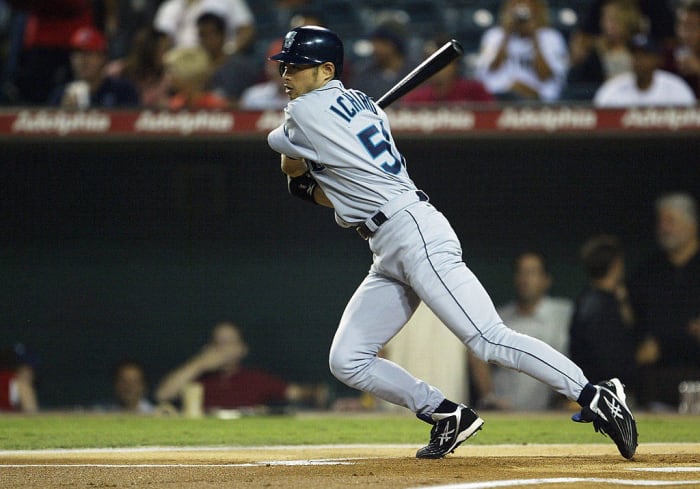
Start with the distinction between a recognizable style and a transferable skill. Ichiro's high leg lift, left-handed setup and unusual movement into contact belonged to a body that had trained those timings for years. His highlight reels invite imitation because the results are spectacular. But a young player who copies the visible leg kick without the timing that supports it may start moving the head, landing late and losing the strike zone. The goal is repeatable barrel delivery, not a perfect visual impersonation.
Check your balance first. Take five dry swings at half speed. Finish each with the chest facing the imagined flight path and hold the finish for two seconds. Can you stay upright without taking a recovery step? If not, shorten the stride or remove the leg lift temporarily. A smaller movement that allows the hitter to see the pitch is more useful than a dramatic load that steals time from the swing. Balance does not mean freezing the legs: the hips still rotate, the rear foot can release and weight can transfer as the hitter turns.
Next, separate getting the bat moving from getting it to the right place. A fast swing that repeatedly contacts the ball on the handle or the end of the barrel is not controlled contact. Move a tee across three realistic pitch locations. On the inside pitch, allow contact farther in front of the body and send the ball toward the pull-side half of the field. For an outside pitch, let the ball travel deeper and aim through the middle or opposite-field lane. The exact contact point depends on the hitter's size and mechanics; the relationship between pitch location and ball direction is the teaching cue.
GOATIFY
GOATIFY Baseball
Shop GOATIFY baseball shirts, hoodies and stickers.

Gold Baseball GOAT Dad Hat
A gold baseball GOAT design for ballpark days and everyday fan style.
Shop Now ↗


White Baseball GOAT Sticker
A white baseball GOAT decal for your bottle, laptop or game-day gear.
Shop Now ↗Use a simple target instead of relying on a coach saying that a swing “looked good.” Put two marked lanes on a practice net, one for hard contact up the middle and another for the opposite-field line drive. Record where the ball actually goes. A hitter who makes solid contact to all three tee locations with the same manageable stride is developing a skill that survives a moving pitch. Do not insist on pulling an outside ball just because a hard swing feels impressive.
The quiet skill is visual discipline. The eyes should have a stable opportunity to track the approaching ball. A partner can call “inside,” “middle” or “away” before a stationary-ball swing, then progress to soft toss. Make the hitter choose the correct lane before swinging. If balance collapses or the eyes lose the ball, reduce the pace rather than adding speed to hide the error. This is the part of the Ichiro model worth stealing: a hitter is adaptable because the setup leaves room for an adjustment.
The 30-minute contact-hitting circuit: tee, hands and three zones
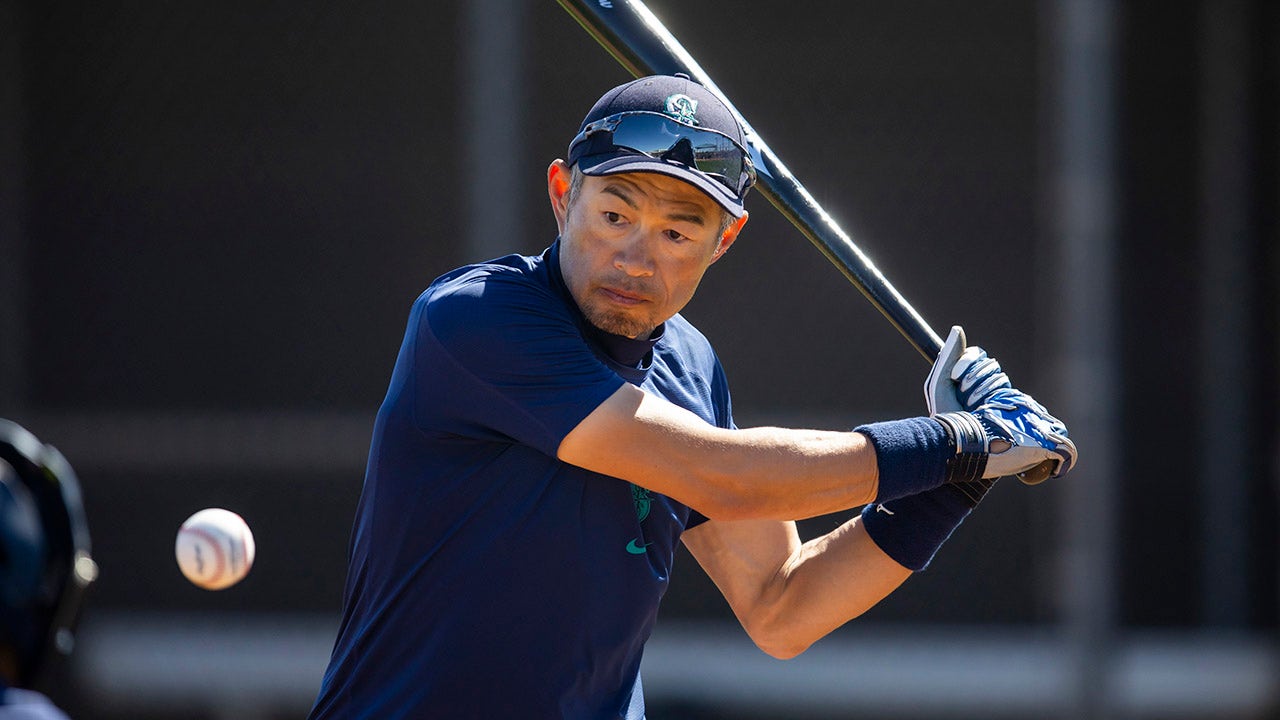
Build the session as four short stations, about five minutes each, with brief transitions. A tee, balls, a protective net and a partner are sufficient. The important variable is not the number of swings a player can accumulate; it is whether each rep tells the hitter something. Stop a station if form or attention fades. Young players should use appropriately sized bats, clear space around the swing and a trained adult supervising tosses.
Station 1 — balanced line drives (five minutes). Begin with a comfortable, normal stance and place the ball on a tee around mid-thigh to belt height. Make five swings at roughly 60% effort, aiming straight through the middle of the screen. After each swing, hold the finish for a moment. Move to five normal-speed swings only when the finish stays controlled. Track clean line-drive contact rather than merely counting balls struck. If a player can only stay balanced by locking the knees, encourage athletic movement and a quieter stride, not a rigid statue pose.
Station 2 — bottom-hand control (five minutes). USA Baseball's short-bat bottom-hand tee drill isolates the hand closest to the knob. With a lightweight short bat, the hitter uses that hand to send the ball on a line up the middle while the free hand rests across the front shoulder. Keep the front shoulder from flying open early. Use five deliberate repetitions, switch partners, then repeat if technique remains clean. Do not force a heavy full-length bat into one-handed work; the purpose is feel and barrel control, not grip endurance. This station helps a hitter notice when the lead side pulls away from the intended contact path.
Station 3 — top-hand direction (five minutes). The complementary USA Baseball short-bat top-hand drill puts the hand nearest the barrel in control. From a safe tee setup, use a light bat and aim for a line drive through the middle. The other hand can rest against the back shoulder or behind the back. Keep movements compact and let the arm extend naturally through the contact zone. Then take several two-handed swings and compare the result. One-handed drills are diagnostic tools, not a claim that hitters should actually bat one-handed in games.
GOATIFY
GOATIFY Baseball
Shop GOATIFY baseball shirts, hoodies and stickers.


White Baseball GOAT Dad Hat
A white baseball GOAT design for ballpark days and everyday fan style.
Shop Now ↗


White Baseball GOAT Sweatshirt
Rep baseball’s greatest with a white GOAT graphic sweatshirt.
Shop Now ↗
Station 4 — three-zone challenge (five minutes). Move the tee inside, middle and outside, five balls per position. Label the intended landing lane before each swing. The hitter's assignment is three different contact decisions with the same recognizable rhythm. Score a point for a ball struck cleanly into the planned zone, not for maximum distance. Keep the tee position and ball height safe and realistic, and flip the directional instructions for left-handed and right-handed hitters as needed. When accuracy is consistent, replace some stationary balls with controlled front toss from behind an appropriate protective screen.
Take an additional five minutes for an eight-to-ten-ball mixed front-toss round, and use the remaining time to log results and select one adjustment for the next practice. That fills the 30-minute block without converting every swing into a mechanical lecture. A player might improve from six clean contacts out of ten to eight, even if no ball travels farther. That is useful evidence of improved control. It is a practice score, not a forecast of batting average.
Make contact skills work when pitches move and counts change

A tee cannot change speed, miss a target or throw a breaking ball. Real at-bats therefore test a separate layer of contact hitting: deciding which pitches deserve a swing while the ball is moving. Keep the same goal of quality contact, but stop treating “touch the ball at any cost” as the definition of success. A weak roller on a pitch well outside the zone is not automatically better than taking a ball. In many counts, patience produces a more favorable next pitch.
One practical progression starts with a partner making controlled tosses to either the inner or outer lane. The hitter announces the lane before launch and aims accordingly. Next, add a take option: tosses intentionally outside a pre-agreed hitting area must be watched, not swung at. Finally, have the partner vary delivery rhythm slightly while staying within a safe, manageable speed. If the hitter starts drifting forward before the toss, return to slower work until the launch position can be repeated. The point is to connect recognition to the bat path.
With two strikes, narrow the decision rather than panic. A hitter might reduce an exaggerated leg lift, choke up slightly if it improves control, and focus on seeing the ball longer. None of those choices is compulsory for every athlete. A small change should solve a documented problem, such as being consistently late, rather than becoming an automatic superstition. Good two-strike contact can mean shooting a pitch the other way or keeping a difficult strike alive; the same swing should not become an excuse to chase a pitch the umpire would call a ball.
GOATIFY
GOATIFY Baseball
Shop GOATIFY baseball shirts, hoodies and stickers.


Gold Baseball GOAT Sweatshirt
Rep baseball’s greatest with a gold GOAT graphic sweatshirt.
Shop Now ↗
White Baseball GOAT Sticker
A white baseball GOAT decal for your bottle, laptop or game-day gear.
Shop Now ↗Build a game-like scoreboard for practice. In a round of twelve varied tosses, record four things: swings at pitches outside the agreed zone, clean barrel contacts, line drives to the selected lane, and balanced finishes. A high clean-contact count with constant chasing tells a different story from solid contact paired with disciplined takes. Compare each hitter against their own previous sessions; a taller older player and a smaller beginner should not be judged by one rigid distance target.
Use a short video from the side and another from behind the hitter, recorded with the camera safely outside the ball and bat flight paths. Compare setup, stride landing, head movement and contact location. Do not diagnose a swing from a single frozen frame. The ball's path and the player's repeatability matter more than whether the finish resembles a famous photograph. If a player has recurring pain, stop and involve a qualified coach or clinician instead of trying to muscle through it.
Ichiro's legacy offers a useful mental model here. His career was built on reading situations and making the barrel available, not on forcing every pitch over the fence. The lesson for an amateur is adaptable execution: find a stance that lets you see the ball, find a stride you can repeat, learn what different locations demand, and practice choosing not to swing. Controlled contact becomes valuable when it is paired with judgment.
For the first three sessions, change only one constraint at a time. Week one might emphasize tee-location accuracy; week two might add unpredictable inside and outside tosses; week three might introduce a swing-or-take decision. Keep your record sheet simple enough to use between rounds. If the quality of contact falls sharply when the partner varies speed, that is not failure. It tells you which skill has not yet transferred. Move back one progression and rebuild. The best practice challenge is difficult enough to reveal mistakes but manageable enough that the hitter can still learn from each attempt. A coach can also rotate a shorter bat in for slow technical reps before returning to the player's normal game bat. The result to chase is a dependable process, not a cosmetic copy of a professional hitter.
Run the four stations once or twice a week, keeping one simple baseline: clean contacts to the intended lane out of ten balls at a consistent speed. Add live variation only after that number becomes repeatable. Resist the urge to make every drill harder simultaneously; change one variable, such as location or toss timing, and see what the contact quality does.
Ichiro Suzuki's famous stance was his own. The more practical ambition is to develop your own repeatable way to arrive on time, stay balanced and meet the baseball with the right part of the bat. Better bat-to-ball skills are trained through thousands of meaningful decisions, not a copied leg kick or a promise that any drill will produce a Hall of Fame swing.
GOATIFY
GOATIFY Baseball
Shop GOATIFY baseball shirts, hoodies and stickers.


Gold Baseball GOAT Sticker
A gold baseball GOAT decal for your bottle, laptop or game-day gear.
Shop Now ↗White Baseball GOAT Dad Hat
A white baseball GOAT design for ballpark days and everyday fan style.
Shop Now ↗Gold Baseball GOAT Sweatshirt
Rep baseball’s greatest with a gold GOAT graphic sweatshirt.
Shop Now ↗





















