

Liam Draxl's Rapid Turnaround Gives Canada a Chance Against Czechia
GOATIFYLiam Draxl has taken an unusual route to the Davis Cup quarterfinals. On Sunday, he was competing for a Challenger title in Drummondville, Quebec. By Tuesday, November 24, he could be facing a top-15 opponent in Bologna, Italy, with Canada's hopes of a second Davis Cup championship on the line.
Canada meets Czechia at 4 p.m. local time in the opening round of the Final 8. The names at the top of the singles rankings make the Czechs the natural favorites, but Canada's recent history in this competition gives the matchup an intriguing dimension. Félix Auger-Aliassime is coming back from a knee injury, while Draxl arrives with considerably more recent competitive tennis behind him. Canada needs two points, not two players with superior rankings. How those points might arrive is the real question.
Auger-Aliassime gives Canada a chance at the top
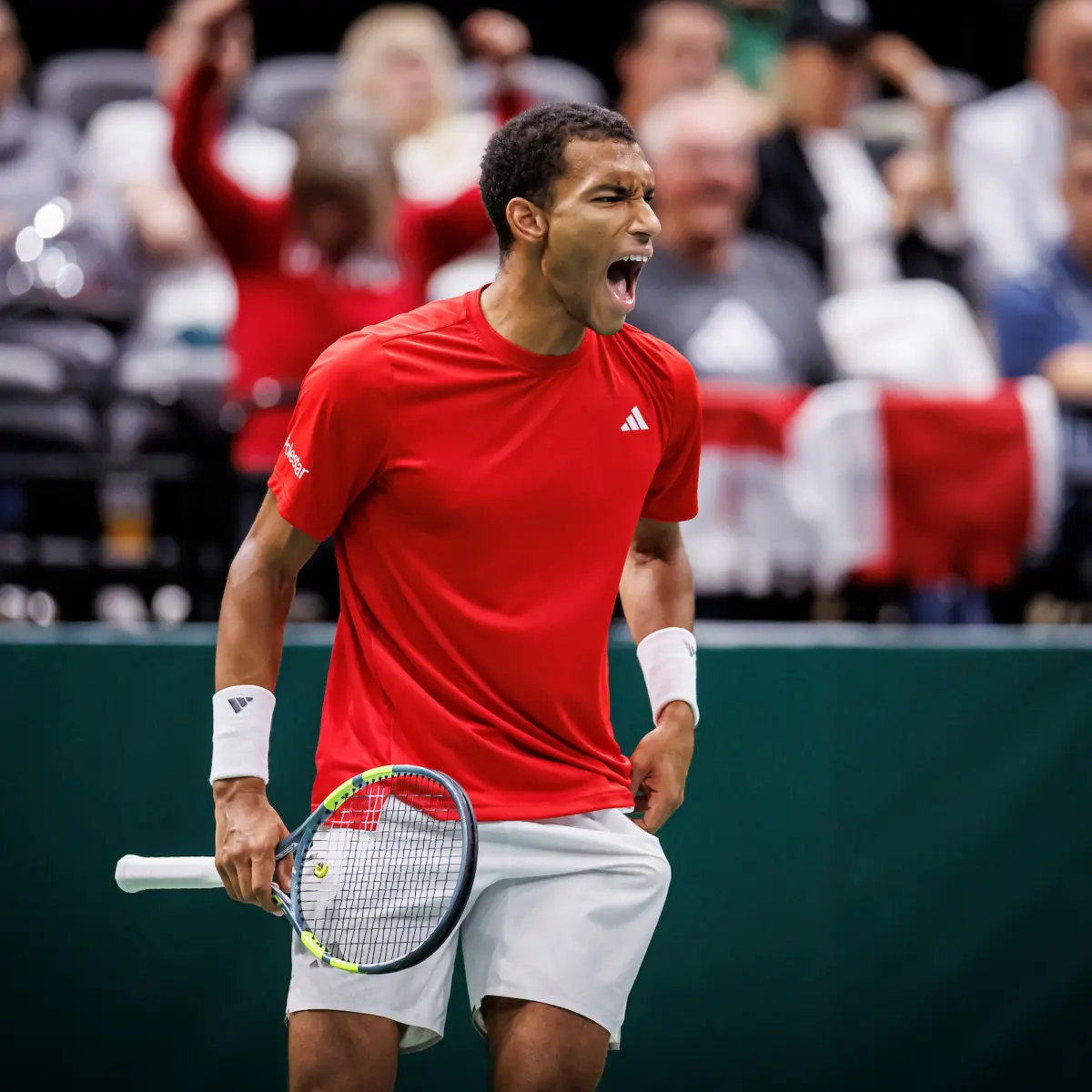
The best news for Canadian captain Frank Dancevic before the tie was that Auger-Aliassime described himself as ready to play. He had not competed since his retirement in Shanghai in October, but reported two weeks of full training. He had also been an alternate at the ATP Finals in Turin, a role that required preparing to compete without the certainty of getting on court.
That preparation matters, but it is not quite the same as completing a demanding singles match. Canada's first concern is whether its highest-ranked player can sustain his normal level through the changes of direction, long service games and repeated explosive movements that a difficult match demands. There is no reason to assume a physical problem will recur; there is equally little reason to pretend the interruption never happened.
Jiri Lehecka is a particularly interesting opponent if the expected singles lineups materialize. Ranked 14th entering the tie, he sits three places above Auger-Aliassime. Canada's leader has nevertheless won three of their four previous meetings. That record offers encouragement without making the result predictable. Both players have the weapons to control a quick exchange, and the quality of the return on the first few points of service games could prove crucial.
GOATIFY
GOATIFY Tennis
Show your love for tennis.


Tennis GOAT Golden Racket & Ball Decal Sticker
Add tennis personality to your favourite gear.
Shop Now ↗


Canada's September qualifying win against France offers a more useful illustration of its possible path than an abstract ranking comparison. Auger-Aliassime recovered from losing the opening set to Arthur Rinderknech and clinched the tie, serving 17 aces in his three-set victory. He did not need to dominate every stage of the match to get the result. His ability to find reliable points on serve gave him time to solve problems elsewhere.
In Bologna, a similar economy of effort could be valuable. A high percentage of effective first serves would reduce pressure on his movement and limit the number of return opportunities afforded to Lehecka. That does not mean trying to end every rally immediately. It means choosing the moments to attack rather than allowing the opponent to dictate the pace of every important exchange.
The other complication is that Canada's usual depth is not fully available. Denis Shapovalov and Gabriel Diallo are missing through injury. Alexis Galarneau provides experienced support, while Duncan Chan and Keegan Rice are younger members of the squad. Dancevic has options, but he cannot simply recreate the strongest Canadian lineup on paper. The responsibility resting on his leading singles player is substantial.
Draxl can make the second singles rubber matter
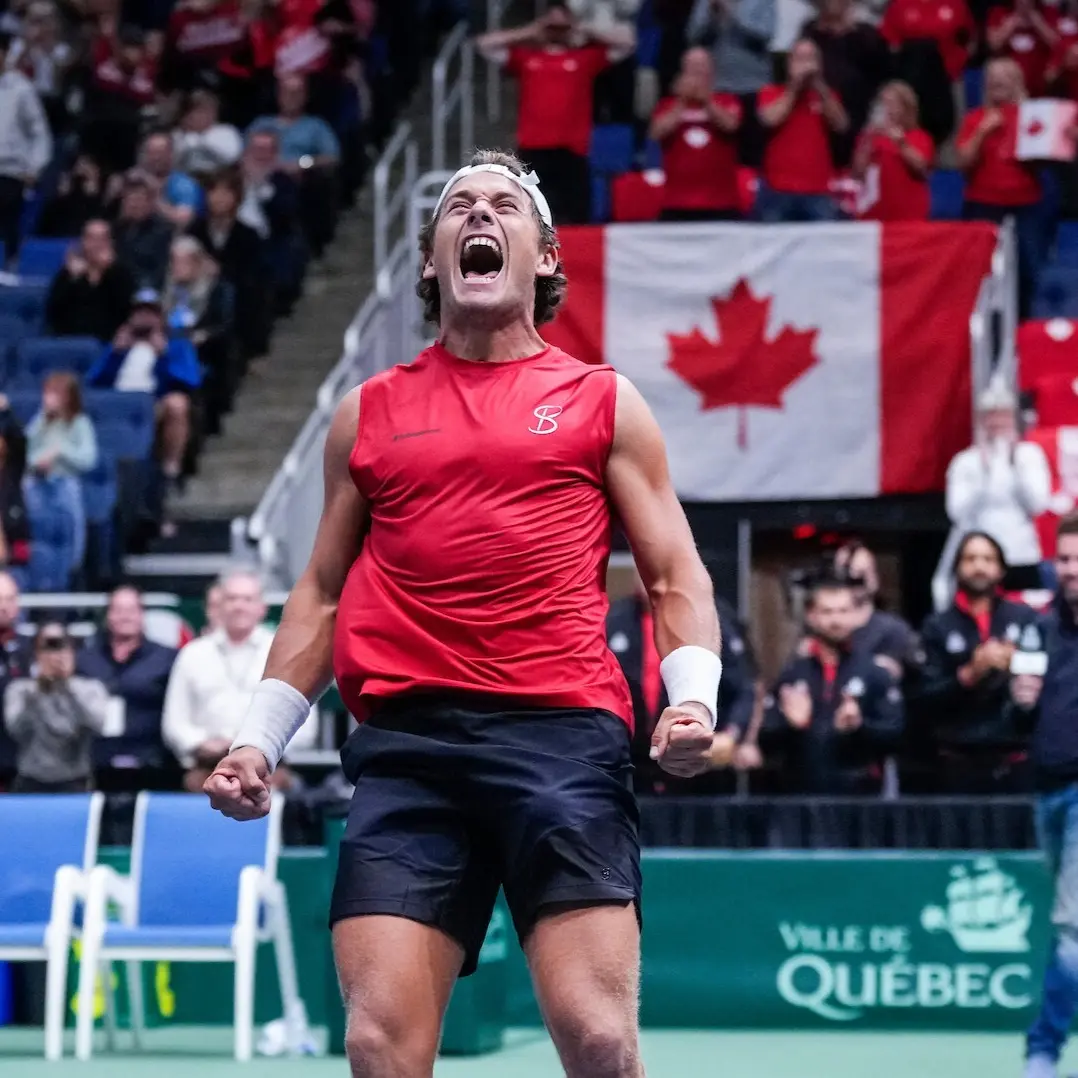
Draxl, meanwhile, has a different preparation problem. Instead of searching for competitive rhythm, he has to recover from a busy tournament and a transatlantic trip. His Drummondville run ended with a one-sided final defeat to Dylan Dietrich, but the matches that preceded it are more instructive when considering his role for Canada.
Against Daniel Milavsky, Draxl recovered from losing the opening set and won both subsequent tiebreaks. He then reversed another one-set deficit against Darwin Blanch before beating James Trotter in straight sets. Those results are not proof that he can beat Jakub Mensik, the likely Czech second singles player. They do show that he has been practicing exactly the kind of competitive problem solving that becomes important when a national team needs a point.
There is also an established Davis Cup precedent. Draxl has won all four of his singles matches in the competition. In September he beat Rinderknech in straight sets before a large Canadian crowd in Quebec City, despite the Frenchman being ranked more than 170 positions higher. His performance changed the balance of the qualifying tie, leaving France chasing the score instead of Canada.
GOATIFY
GOATIFY Tennis
Find gear for passionate tennis fans.


Tennis GOAT Golden Racket & Ball Crewneck Sweatshirt
A tennis fan design for everyday wear.
Shop Now ↗The setting is different this week. The advantage of thousands of supporters in Quebec is gone, and Draxl has yet to experience a Davis Cup away tie. Mensik, ranked 15th, is a formidable opponent with a powerful serve and the ability to put a returner under pressure quickly. Draxl cannot count on the same emotional momentum that helped him against France.
What he can control is the construction of his service games. Against a higher-ranked opponent, it is tempting to chase spectacular winners simply to demonstrate that the difference between the players is not as large as the rankings suggest. A more sustainable approach would be to protect his second serve, exploit manageable returns and extend games long enough to create uncertainty. A few difficult service holds can make a favorite feel the score in a short best-of-three match.
There is a structural advantage to staying competitive even if the second singles match ultimately goes against Canada. The quarterfinal is decided by two singles matches and, if required, doubles. A Canadian singles win anywhere in the order keeps the tie alive and moves the pressure onto both benches. Conversely, a straight-sets sweep in singles makes all the possible doubles combinations irrelevant. That is why the underdog match deserves as much tactical attention as the more glamorous contest between the team leaders.
Czechia has the more imposing pair of singles rankings and deserves to enter the quarterfinal as favorite. Canada has a player with a positive record against the likely Czech number one, a second singles option with a perfect Davis Cup record, and an experienced captain accustomed to making decisions in this format. Those are legitimate reasons for optimism rather than guarantees.
The winner advances to Friday's semifinal against either Italy or South Korea. For Canada, reaching that stage would require translating September's home success into a very different environment. Watch Auger-Aliassime's first few service games and Draxl's ability to settle into the match after his journey. Between them, those two details may tell us more about Canada's chances than the rankings alone.
GOATIFY
GOATIFY Tennis
Shop GOATIFY tennis products from the Tennis-filtered collection scope.


Tennis GOAT Golden Racket & Ball Crewneck Sweatshirt
A tennis fan design for everyday wear.
Shop Now ↗





















