Davenport Changed the Doubles Pair. Gauff and Townsend Clinched It.
GOATIFYThe United States needed one more point. Lindsay Davenport could have left her original doubles combination alone. Instead, on Sunday, November 22, she put Coco Gauff next to Taylor Townsend, the left-handed specialist who had just finished a superb doubles season. The decision gave a straightforward Billie Jean King Cup Play-offs tie an unexpected centerpiece: a singles superstar playing a relatively rare doubles match with one of the best net players in the world.
Gauff and Townsend beat Hungary's Anna Bondar and Dalma Galfi 6-4, 6-3 at Delray Beach Tennis Center. Their victory secured an unassailable 3-0 lead in the best-of-five contest and sent the Americans into the 2027 Qualifiers. Ashlyn Krueger then beat Adrienn Nagy 6-2, 6-1, turning the clinching 3-0 lead into a final 4-0 scoreline.
Those numbers look comfortable. The path was more interesting. A delayed Saturday put the United States ahead through Gauff and Ann Li, a late doubles adjustment changed the balance of Sunday's match, and a first-set deficit asked whether two players with limited shared court time could solve problems together. They did. The result was a national-team win, not a trophy, and the way they achieved it may matter more than the margin suggests.
Why Davenport's doubles switch made tactical sense
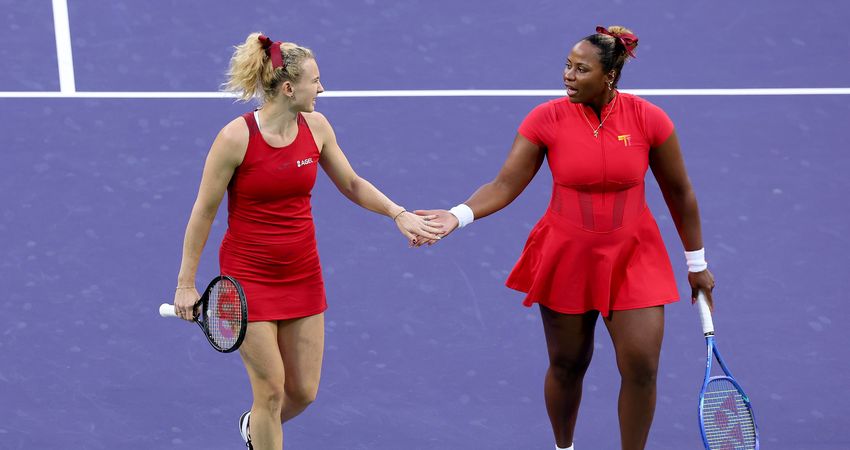
The doubles lineup initially pointed toward Townsend and Desirae Krawczyk. That would have been an entirely credible choice. Krawczyk is a proven tour doubles winner, and building a team around specialists usually makes sense when the deciding rubber could determine an international tie. Gauff was expected to carry the singles burden in her hometown; Townsend was the experienced player positioned to guide Sunday's doubles.
Davenport's decision was not simply a celebrity substitution. Gauff later explained that playing alongside Townsend had been the plan if the Americans managed to take both Saturday singles points. The five-and-a-half-hour weather interruption pushed the opening day's conclusion late, but the scoreline nevertheless produced exactly that condition. The United States entered Sunday ahead 2-0 and able to make the change without needing a desperate rescue.
There are several ways to read the choice. One is tactical: Gauff's baseline movement, return quality and ability to defend difficult positions can create time for Townsend to operate forward. Another is psychological: sending out the country's biggest singles name alongside an elite doubles player signals an intention to end the tie immediately rather than simply protect a lead. Neither approach guarantees success when a pair lacks regular match rhythm.
Townsend supplied the specialist's instincts
Townsend arrived with an outstanding 2026 doubles résumé, including major titles alongside Kateřina Siniaková and a WTA Finals triumph. She was ranked No. 2 in doubles when the American team faced Hungary. That background matters because doubles asks different questions from singles. A player may need to recognize an approaching interception in a fraction of a second, protect the middle, choose when to poach and make a partner comfortable with shared court positioning.
Those strengths are especially useful beside a player whose singles status can obscure her doubles history. Gauff has been a top-level doubles competitor, having played with Jessica Pegula, Caty McNally and other partners during earlier stages of her career. Yet her recent schedule has centered far more on singles, and she acknowledged feeling rusty. Her last doubles appearance before this tie came in Toronto in early August. Familiarity with the format is not identical to recent partnership chemistry.
The two Americans were not complete strangers as partners. They played together at Madrid in 2024, winning two matches before exiting in the quarterfinals. That small sample supplied some shared experience, but not the sort of established reflexes a weekly doubles pairing develops. Gauff had practiced doubles during the week, while Townsend had missed one practice day because of illness. A high-profile combination could still have looked awkward under pressure.
GOATIFY
GOATIFY Tennis
Explore tennis gear inspired by the doubles call.

Tennis GOAT Golden Racket & Ball Decal Sticker
Add tennis personality to your favourite gear.
Shop Now ↗


Tennis GOAT Golden Racket & Ball Crewneck Sweatshirt
A tennis fan design for everyday wear.
Shop Now ↗There was also an interesting contrast in playing styles. Gauff generally handles the kind of extended lateral coverage and heavy ball-striking that lets a singles player survive difficult points. Townsend creates angles and pressure with her left-handed serve, her touch and her positioning close to the net. Their strengths do not perfectly duplicate one another, and that is often the point. Effective doubles rewards complementary problems solved by two people, not simply a calculation of their combined singles rankings.
When the pair stepped on court at Delray Beach, the selection had to be judged by its tennis rather than the excitement of seeing two prominent Americans together. The first few games offered a reminder that the attractive idea still needed execution.
How a 3–1 deficit became the American clincher
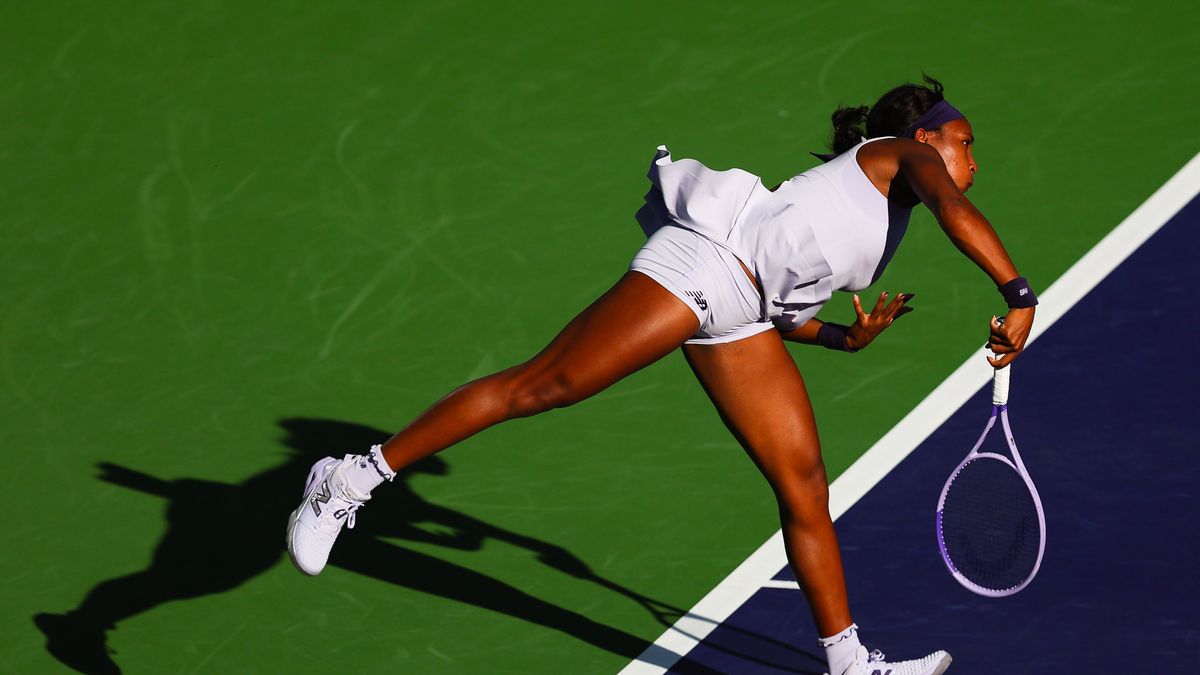
Hungary did not allow the new pairing an instant procession. Bondar and Galfi built a 3-1 advantage in the opening set, exposing the normal adjustment period that can appear when partners are still learning one another's choices. A singles player who covers the whole court differently must learn when to yield space, and the doubles specialist must decide which balls can be attacked without leaving a gap behind her.
The Americans answered by stabilizing the middle portion of the set. They won three games in succession to erase the deficit and reached 4-4 with a chance to take control. The key was not that every exchange suddenly became spectacular. It was that they stopped the early damage from multiplying, got their service games back under control and positioned Townsend to press at the net.
Two double faults did not become a collapse
At 4-4, Gauff had to negotiate a service game containing two double faults. That was precisely the kind of moment that could have changed the story. A break would have let Hungary serve for the opening set and forced the American pairing to confront an immediate scoreboard crisis. Instead, Gauff held. The game did not prove her serve had become flawless; it showed she could keep producing enough effective tennis while managing an imperfect sequence.
The next game delivered the break that mattered. With Galfi serving, Townsend put away an overhead on break point. It was an appropriate image for the entire tactical experiment: Gauff provided the broad coverage and shot-making, while Townsend finished the decisive forward play. The Americans took the set 6-4 and changed the emotional structure of the match. What had been an opponent's 3-1 opportunity became an American lead.
Statistics such as break points and service holds can conceal the way a doubles partnership changes its habits mid-match. The first set demanded not only shot-making but clearer coordination: who covers the line when the other player moves, how aggressively the returning pair advances, and when a strong server should accept a safer target. Nothing about the result requires imagining a perfect tactical transformation. It does show a pair capable of finding a winning pattern before time ran out.
The second set was cleaner. The Americans were never behind, and another break of Galfi opened a 5-3 lead. Townsend served out the match with a service winner, completing a day on which she held all five of her service games. That is one of the most telling details in the scorebook. Her dependable delivery created a stable platform for a partner who was relearning the rhythms of competitive doubles.
Townsend's left-handed patterns helped differentiate the Americans' service looks. A returner must adjust to different spins, angles and contact points, while Gauff's movement behind the serve gives the team another route back into a rally. The numbers cannot tell us every conversation between points, but they support the broader picture: Townsend's serving and finishing reduced the amount of uncertainty the partnership had to absorb.
GOATIFY
GOATIFY Tennis
Tennis fan picks for a hard-earned comeback.


For Hungary, the 6-4, 6-3 defeat should not be recast as a match without opportunities. Bondar and Galfi held a 3-1 first-set lead and had the chance to make an unfamiliar American partnership uncomfortable. They simply could not turn that early edge into a set, and once the Americans found a stronger rhythm, the room to recover narrowed quickly. The difference was the execution of several high-leverage games, not an absence of resistance.
Gauff and Li had already earned Sunday's freedom
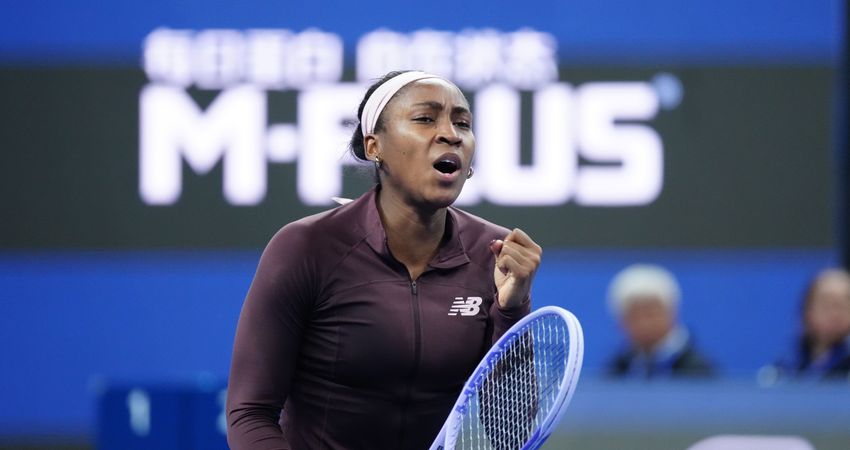
Sunday's decisive doubles would not have had the same freedom without Saturday's work. Gauff beat Dalma Galfi 6-1, 6-1 in the opening singles rubber, then Ann Li defeated Anna Bondar 6-1, 6-4 to establish the 2-0 lead. Those scorelines sound routine until the weather enters the picture.
Storms in South Florida repeatedly interrupted the opening day, including a long suspension during Gauff's match and a tornado warning in the area. She had already built a commanding position before the delay, but returning to a stopped match presents its own challenge. Momentum does not travel automatically across a five-hour interruption. Players must warm up again, reset their attention and avoid turning a nearly completed task into a much bigger ordeal.
Gauff's hometown context was real, but the result came first
Gauff grew up in the area and was playing in Delray Beach with family and local supporters able to follow the tie closely. It supplied an emotional frame that a neutral tournament week cannot quite reproduce. The home crowd could celebrate her singles victory and then watch her return the next afternoon in a different role. Yet the competitive significance remained simple: her first win created the platform for every later tactical choice.
Li's contribution was just as important to the arithmetic. As the second singles winner, she protected the Americans from entering Sunday tied at 1-1 or trailing. Against Bondar, she took the first set 6-1 before completing a 6-4 second set. That meant Davenport could give Gauff the doubles assignment with a two-point cushion and still have more singles available if the partnership did not work. Strong national teams benefit not only from headline stars but from players who deliver the second, less publicized point.
The long day also created a workload issue. Gauff had to finish Saturday after an unusual pause, recover, and be ready for doubles at 1:30 p.m. local time on Sunday. Nothing in the public record establishes that the change compromised her recovery or increased injury risk, and it would be reckless to pretend otherwise. It did create a practical test of readiness: whether a player could shift from the mental demands of a delayed singles win to the faster decisions of doubles the following day.
It is tempting to attribute every outcome to team chemistry, but preparation matters just as much. Townsend's own illness-related missed practice day did not stop her from serving well. Gauff's limited recent doubles schedule did not prevent her from holding at 4-4 with the first set in balance. Li's clean singles win limited the pressure on her teammates. Each element matters in a competition where one poorly managed rubber can change the meaning of the entire weekend.
The American captain deserves credit for using the options available rather than treating an initial lineup as immutable. The strategy worked here because the singles players earned flexibility on Saturday and the revised doubles pair executed on Sunday. A coach cannot make that plan look intelligent through selection alone. The players still have to win the points that justify it.
GOATIFY
GOATIFY Tennis
Browse tennis styles as USA builds momentum.


The 4–0 sweep secures Qualifiers, not the Finals
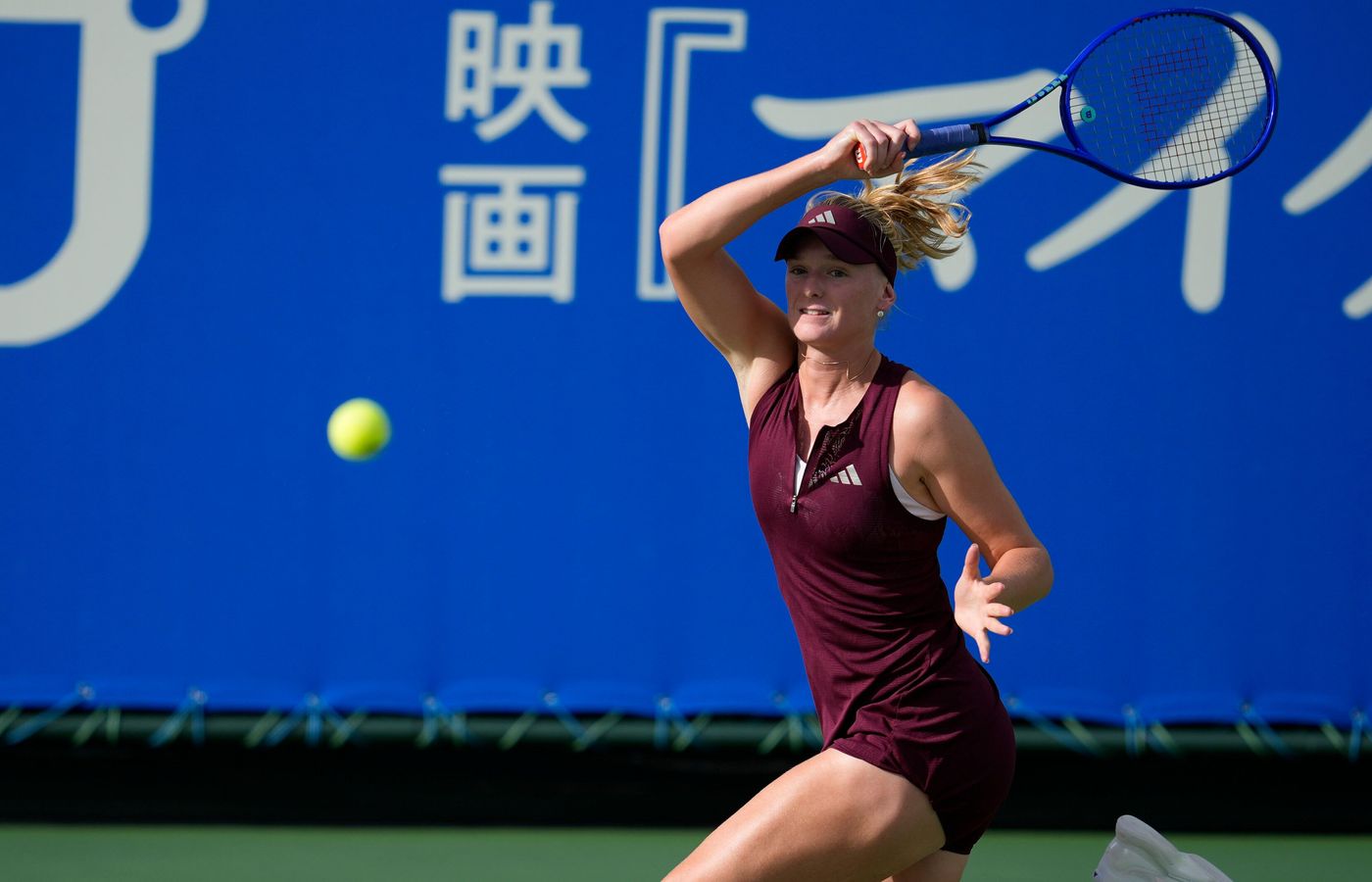
When Townsend served out the doubles, the competition's immediate question was settled. The United States had earned the third point required to win the tie. Krueger then completed the schedule with a 6-2, 6-1 victory over Adrienn Nagy, giving the Americans the final 4-0 result. The distinction between a 3-0 clinch and a 4-0 final score is small in conversation but important in an accurate recap.
The achievement secures a place in the Billie Jean King Cup Qualifiers in April 2027. It does not directly award the Americans a place in the 2027 Finals, nor does it give them the trophy they are chasing. They must clear another competitive stage before becoming part of the final field. That matters for a program with a record 18 titles: restoring access to the championship pathway is necessary, but it is not equivalent to regaining the championship.
A lineup experiment is not an Olympic announcement
Townsend spoke enthusiastically afterward about the possibility that she and Gauff could partner again, including a playful reference to the 2028 Olympic Games. The idea is intriguing because the pairing has obvious attractions on paper. Gauff brings elite singles movement and experience in high-level doubles; Townsend brings sophisticated net play and one of the game's most accomplished contemporary doubles résumés.
But an athlete's hopeful comment does not make an Olympic team official. Qualification, selection, health, form and competition schedules will all matter long before Los Angeles 2028. The reasonable conclusion from Delray Beach is narrower: Gauff and Townsend proved they could win a meaningful team doubles match despite an early deficit and limited recent time together. Whether the experiment becomes a regular partnership is a decision for another day.
For Gauff, the weekend also offered a reminder that her value to a national side is not restricted to singles ranking points. She won the first match, adapted when asked to play doubles and contributed to the clinching result in front of her hometown crowd. For Townsend, the match reinforced why doubles specialists can change the direction of a tie. Her service games and crucial overhead were not side details to the star player's appearance; they were central to the win.
For the wider American team, the contributions from Li and Krueger prevent the story from becoming a two-player victory parade. Li put the side in a position to experiment; Krueger finished the schedule emphatically; Krawczyk remained part of a roster whose depth gave Davenport options. A strong national team must be able to absorb lineup changes without treating the players left out of a particular rubber as irrelevant.
The 2027 Qualifiers will ask a fresh set of questions. The next opponent, surfaces and available roster could make a different doubles pairing preferable. The United States cannot assume a 4-0 home sweep will translate automatically into another victory against stronger opposition. What it can take forward is a proven ability to adjust a plan after a weather-disrupted opening day, with enough depth to make the adjustment credible.
Delray Beach gave the United States the result it needed and an unexpected doubles combination worth remembering. The Americans won the tie when Gauff and Townsend overcame an early 3-1 deficit to beat Bondar and Galfi 6-4, 6-3. Krueger's later singles win made the final margin 4-0. Li's Saturday point, Townsend's five held service games and Davenport's conditional lineup change all belong in the explanation.
The biggest lesson is not that two exceptional players should always share a court. It is that an international team can create useful options through good singles work, then trust the players to solve problems when the first plan changes. Gauff and Townsend may partner again. They may not. For now, they earned the United States its place in April's 2027 Qualifiers—and left a far more interesting question than the final score alone could express.
GOATIFY
GOATIFY Tennis
Shop GOATIFY tennis products from the Tennis-filtered collection scope.
Tennis GOAT Golden Racket & Ball Decal Sticker
Add tennis personality to your favourite gear.
Shop Now ↗Tennis GOAT Golden Racket & Ball Crewneck Sweatshirt
A tennis fan design for everyday wear.
Shop Now ↗