Stirling Knocked Out Jiri. The Belt Belongs to His Teammate.
GOATIFYNavajo Stirling's right hand landed with two seconds remaining in the second round at UFC Qatar, and the light heavyweight picture changed. Jiri Prochazka, a former champion renowned for making fights chaotic, was stopped in Doha on November 21. The undefeated Stirling had just beaten another former titleholder after dispatching Jan Blachowicz earlier in the year. A championship conversation was inevitable. The problem is that the man currently holding the belt is Carlos Ulberg, Stirling's friend and teammate at City Kickboxing.
That is a different kind of obstacle from a difficult opponent or a hostile crowd. Ulberg has helped Stirling prepare, and Stirling says his teammate wanted him to beat Prochazka. The two have discussed the prospect of fighting one another without publicly settling the matter. Coaches, medical timelines and a crowded matchmaking calendar now sit between a spectacular knockout and any actual title fight. There is no signed Stirling–Ulberg booking to announce. There is, however, a meaningful sporting case to examine.
The Doha result, Prochazka's recent setbacks and the training-room dilemma all deserve separate attention. Treating the story simply as an inevitable teammates' showdown would miss what Stirling proved — and how many decisions the UFC still has to make.
Two Seconds Left in Doha Changed Stirling's Place
Navajo Stirling did not need a five-round demonstration to change the light heavyweight conversation. He needed the last two seconds of Round 2 in Doha. At UFC Qatar on November 21, 2026, the undefeated New Zealander stopped former champion Jiri Prochazka with a counter right hand at 4:58. The finish improved Stirling to 12-0 as a professional and gave him seven UFC wins. Those numbers matter, but the bigger development is the quality of the opposition. This was his second consecutive victory over a former UFC champion, after he finished Jan Blachowicz in August.
The main event did not begin as a one-way exhibition. Prochazka presented the familiar difficulty of fighting somebody who changes rhythm, stance, entry angles and defensive posture in the same exchange. Stirling worked with kicks and measured punches rather than trying to win every second on volume alone. Prochazka had his own moments, including a hard right hand and a first-round sequence that briefly put Stirling down or off balance. Some contemporaneous accounts described that moment as a knockdown; others questioned whether the replay showed a slip. It is not necessary to resolve the disputed replay to understand the outcome. Stirling remained composed and found his decisive opening.
By the second round the contrast between the two men was clearer. Prochazka's offense becomes dangerous when he can force an opponent to react to his forward movement. Stirling made that invitation costly. Rather than swing blindly at an unusual target, he preserved his balance and waited for a defensible counter. When the former champion overextended late in the frame, Stirling slipped his attack and landed the right hand that ended the contest. The referee stopped it after follow-up punches. This was not a judges' decision and it did not require an imagined scorecard comeback.
There is a meaningful distinction between someone who can produce a spectacular finish and somebody who can create the conditions for that finish against an established contender. Stirling showed both in Doha. The performance was a continuation of his four-stoppage 2026 run, not a single highlight plucked from an otherwise unproven record. It demonstrated patience against a fighter whose style can bait opponents into reckless counters, and an ability to maintain concentration deep into a round without creating the impression of inactivity.
GOATIFY
GOATIFY UFC & MMA
Explore GOATIFY MMA gear alongside Stirling's dramatic knockout at UFC Qatar.

Rogainz Joe Rogan UFC MMA Martial Arts Sticker
Add MMA personality to your favourite gear.
Shop Now ↗
MMA GOAT Gold Middle Finger Fight Crewneck Sweatshirt
A MMA fan design for everyday wear.
Shop Now ↗


The result also made his matchmaking problem considerably harder. Beating Prochazka moves Stirling from the prospect discussion into immediate consideration for the top of the 205-pound division. He no longer needs a veteran opponent simply to validate that he belongs in the rankings. The UFC can argue over the exact order of contenders, but dismissing a 12-0 fighter with two consecutive victories over former champions would be difficult. A fighter can arrive at the doorstep of a title fight without being prepared for what is waiting behind that door.
In Stirling's case, that door is held by Carlos Ulberg, a champion who does not train across town or in another country. He shares the same City Kickboxing environment. The victory created a sporting argument for a championship opportunity at almost exactly the point where a personal and professional complication could derail it. That is why the story has already grown larger than the final punch in Qatar.
Prochazka's Second Knockout Loss Is a Tactical Warning

For Jiri Prochazka, Saturday's defeat is harder to file under the normal risks of being an aggressive finisher. It was his second consecutive knockout loss, both against fighters associated with City Kickboxing. Carlos Ulberg stopped him in April during their vacant-title fight; Stirling finished him in November. Losing to the champion and then to the champion's teammate is an awkward pattern, even though it does not establish that the two victors used identical game plans.
Prochazka's appeal has never been based on a conventional, tidy defensive stance. His unusual timing, spontaneous angles and willingness to fight while exposed have produced memorable wins and made him a dangerous assignment for opponents who insist on textbook exchanges. Those habits can also leave openings. A fighter who holds his hands low while altering distance must compensate with vision, reactions, positioning and an accurate assessment of when an opponent is ready to counter. Against a patient, technically disciplined striker, a single failure at that calculation can outweigh several minutes of good work.
That is the tactical significance of the Qatar finish. Prochazka could still connect. He could still force Stirling to think. What he could not do was turn a successful moment into uninterrupted control. The contest never became the kind of flowing collision in which Prochazka often looks most dangerous. Stirling's leg kicks, footwork and selective engagements kept the fight organized. The winning punch arrived when Prochazka tried to press a transition, not because the New Zealander spent ten minutes out-muscling him in a sustained brawl.
After the defeat, Prochazka acknowledged that he may have approached the fight with too much tactical restraint and too little pressure. That is an interesting diagnosis, because more aggression alone would hardly guarantee a different outcome. Charging harder at a counterpuncher can create precisely the opening that caused the stoppage. The task for his team is subtler: identify which patterns of attack can be entered safely, when to reset after throwing and how to mix pressure with the defensive responsibility that makes pressure sustainable.
A two-fight losing streak is not evidence that an elite athlete's career has ended. Prochazka remains a gifted, experienced former champion whose knockout record shows the danger he can bring into a contest. The trouble is what comes next. A further high-risk matchup against another disciplined contender could punish the same vulnerabilities before a corrected approach has been tested. A more measured opponent might allow a real demonstration of changed footwork, entries and defensive habits, but selecting that fight is the matchmaker's responsibility, not a verdict from the audience.
There is also a broader implication for Stirling's rise. A knockout over an underperforming former champion can be discounted if there are no other signs of elite ability. Stirling's trajectory offers more than that. His win over Blachowicz and his sustained undefeated run provide independent evidence, while the way he beat Prochazka illustrates a style that can trouble the division's established names. Two facts can be true: Prochazka needs to reassess, and the man who finished him deserves a serious title discussion.
GOATIFY
GOATIFY UFC & MMA
Browse UFC fan apparel while weighing the risks and rewards in Prochazka's fighting style.


UFC GOAT Gold Middle Finger Fight Decal Sticker
Add MMA personality to your favourite gear.
Shop Now ↗Ulberg Holds the Belt. Both Men Hold the Same Corner.
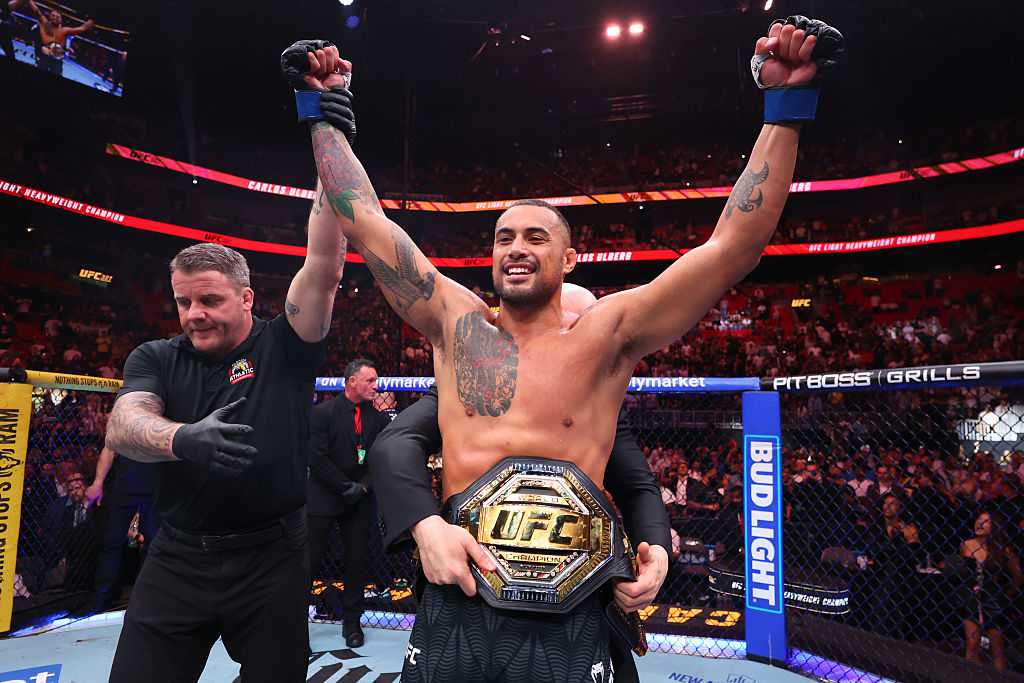
Carlos Ulberg is not simply another name on the champion's side of a possible title-fight poster. He is part of the same Auckland-based City Kickboxing team that helped Navajo Stirling build his undefeated record. Coaches can prepare one contender to overcome a familiar rival when their camps have never met. Preparing two people who have shared technical details, sparring rounds and training routines is a different kind of assignment. Neither athlete has to be an enemy for the professional conflict to be real.
Ulberg entered this conversation with a championship of his own. He won the vacant UFC light heavyweight belt against Jiri Prochazka in April 2026, and Stirling's November stoppage of Prochazka now links both men through a defeated former champion. That common opponent is a useful measure of their credibility but a poor shortcut to predicting which teammate would win. Their performances occurred in different fights, with different preparations and circumstances. Styles, fitness, tactics and championship-round experience are not interchangeable just because two bouts ended with knockouts.
The arrangement is complicated further by Ulberg's injury situation. Reports about his knee recovery mean no one should treat a meeting with Stirling as an agreed fight or put a definitive date on it. A contender winning on November 21 does not automatically force the champion into an immediate defense the following week. Medical readiness, the UFC's rankings and the organization's preferred title schedule all matter. Until the promotion announces an opponent and date, the sporting case for a match is distinct from the operational reality of making it.
Stirling's own description of the relationship undercuts the idea of a manufactured feud. Following the Qatar win, he said Ulberg had helped him prepare for Prochazka and had wanted him to knock the former champion out. They discussed the theoretical matchup before, by Stirling's account, without publicly committing to it. He described the situation as pressure for himself and the coaches, and said they would have to talk again. Those are not the words of a challenger issuing a personal ultimatum to the man whose belt he wants.
A training camp can manage such a conflict only if the athletes actually agree to a process. Separate sparring partners, individual tactical teams and clear boundaries around private training information are possible in principle, but none should be presented as an arrangement already chosen by City Kickboxing. The same coaches who helped both men reach the top would face a question about where loyalty and professional responsibility begin and end. Their answer matters as much as any promotional angle about two teammates facing off under bright lights.
It is also fair to ask what the fighters might lose by declining the matchup. An elite contender has a short window in which peak performance, momentum and an available title opportunity line up. A champion cannot indefinitely avoid credible opponents because they are friends. Yet forcing a particular contest before an injury recovery or a mutual decision could damage relationships and produce a compromised spectacle. The UFC may be drawn to the story precisely because it is difficult. That does not mean the difficulty has already been resolved.
GOATIFY
GOATIFY UFC & MMA
Shop GOATIFY UFC designs during the debate over teammates competing for a championship.

MMA GOAT Gold Middle Finger Fight Crewneck Sweatshirt
A MMA fan design for everyday wear.
Shop Now ↗Three Routes to a Title Shot — None Is Signed
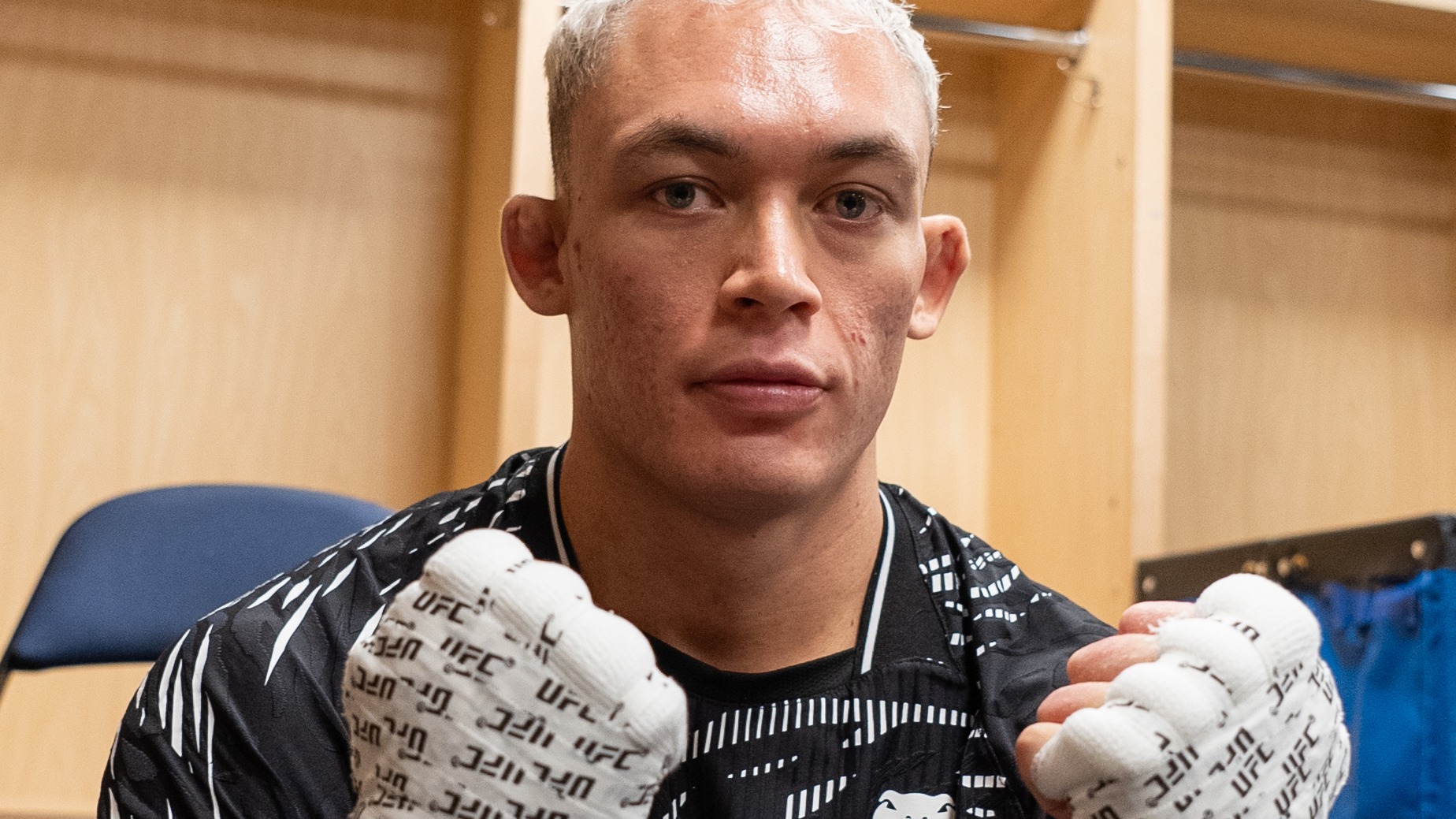
Stirling's performance gives the UFC several reasonable routes rather than one inevitable contract. The most direct is a championship fight with Carlos Ulberg when the champion is healthy and both men accept the matchup. It would reward an undefeated challenger who has finished two former champions in consecutive appearances, and it would test whether shared training knowledge offers an advantage or simply makes preparation more emotionally demanding. There is no announced agreement, however, and treating the title bout as confirmed would run ahead of the reporting.
A second route is a high-level contender fight while Ulberg's status becomes clearer. Stirling has already passed a demanding test against Prochazka, so another contest should offer genuine competitive value rather than return him to a generic prospect-building schedule. The organization could match him with another leading light heavyweight and use the result to sharpen its title order. That carries risk. A contender could lose his unbeaten record through an injury, an unlucky exchange or an opponent whose style exposes a weakness that two former champions did not.
The third route involves taking time to settle the teammate question before committing to either of those alternatives. Stirling and Ulberg know one another outside fight week. Their coaches have to consider the training structure, their relationships and the damage that a public disagreement might create. Stirling's postfight comments suggest discussions are necessary, not that everyone has already chosen a course. An eventual decision not to fight would create another matchmaking question for the UFC; it would not erase what Stirling achieved in Qatar.
Stirling also has a clear interest in bringing attention to combat sports in New Zealand. The appeal of staging a major event for a rising local star is obvious, particularly with another New Zealander holding the division's title. That makes a home-country showcase an attractive idea, not a licensed event announcement. Venues, television partners, opponent availability and the champion's recovery would all need to fit. A speculative homecoming is a story worth considering, but it should never be sold as though the promotion has already booked it.
Whatever comes next, the Prochazka victory needs to be judged on its own merits. Stirling handled an unpredictable former champion, chose his counters and ended the contest late in the second round. It was not an argument for instant greatness; one victory never proves every dimension of a fighter's game. But an undefeated record built through increasingly difficult matchups is a legitimate basis for a title discussion. The weakness of a division is not a prerequisite for an outstanding contender to emerge.
An intriguing rivalry can exist without hostility. If Stirling eventually challenges Ulberg, the story will be the tension between sporting ambition and years of shared work. If he takes another fight, the question becomes whether he can remain perfect against a different stylistic problem while waiting for his opportunity. And if the teammates find a way to avoid fighting each other, the UFC will have to determine how much that preference should shape a championship division. Stirling delivered the knockout. The promotion, champion and contender now have the harder decisions.
UFC Qatar established Navajo Stirling as more than a promising name. He beat an experienced former champion with discipline, a decisive counter and the composure to wait until the final moments of the second round. That performance strengthened the argument for a major fight, but it did not produce a contract, a confirmed date or an answer about his relationship with Carlos Ulberg.
For now, the most informative words are Stirling's own: he expects to discuss the question with his coaches rather than pretend that it has been settled. Ulberg's championship and recovery, the promotion's title plans and the preferences of both athletes will determine whether this becomes a direct challenge or another stage of Stirling's climb. The knockout is permanent. Everything after it is still a decision.
GOATIFY
GOATIFY UFC & MMA
Shop GOATIFY UFC and MMA shirts, hoodies and fight fan gear.
Rogainz Joe Rogan UFC MMA Martial Arts Sticker
Add MMA personality to your favourite gear.
Shop Now ↗