

Leclerc Hit Hamilton. Vasseur's Ferrari Problem Goes Beyond Ten Seconds.
GOATIFYTwo Ferrari cars were climbing through the field on Saturday night in Las Vegas. Then they fought each other, made contact and left their team principal explaining why a second teammate collision in three races could not be dismissed as an ordinary racing disagreement. Charles Leclerc's move on Lewis Hamilton at Turn 7 ended in a spin for Hamilton and a ten-second penalty for Leclerc. Hamilton recovered to seventh; Leclerc fell from sixth on the road to tenth in the classified order.
Fred Vasseur's frustration was not simply about the points surrendered in Nevada. Ferrari had already gathered the drivers for a reset after their Mexico City contact. The Las Vegas incident proved that agreement behind closed doors had not yet become a reliable decision-making habit inside the car. Leclerc accepted responsibility, while Hamilton wanted the clash dealt with internally. Neither answer gave the mechanics back the work they had invested in a recovery from a weak qualifying session.
The hard question is not whether Ferrari should ban racing between its drivers. Slipstream-heavy Las Vegas made rigid position-holding almost impossible. The question is whether a team can allow its drivers to compete hard while still insisting that one risky corner must not erase the performance of two cars. That is the tension Ferrari must resolve before the final two races of 2026.
Turn 7 Was an Overtake Ferrari Could Not Afford
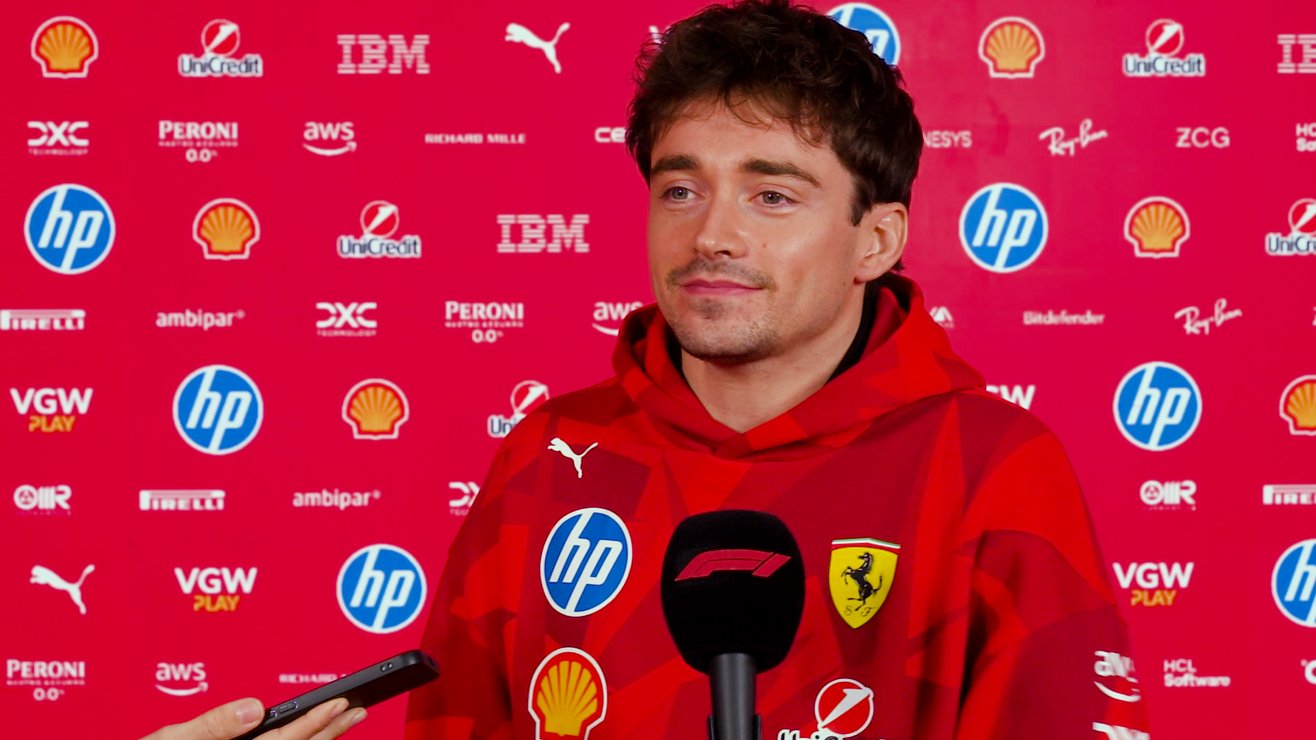
The turning point for Ferrari came at Turn 7 rather than at the finish line. Lewis Hamilton was fighting through traffic with a McLaren ahead, while Charles Leclerc tried to exploit an opening on the inside. Their cars touched, Hamilton spun and the argument immediately expanded beyond a local battle for sixth place. Every position the Ferrari drivers had gained after their disappointing qualifying session was suddenly vulnerable to an incident that did not involve any opponent directly striking a red car.
The stewards did not classify the contact as a symmetrical racing accident. In FIA Document 60, issued after the November 21 race, they concluded that Leclerc initiated the inside move from too far back and did not meet the relevant overlap criterion at the corner's apex. In their assessment, the front axle of car 16 was not at least alongside the mirror of car 44. On that basis they found Leclerc wholly responsible and imposed a ten-second time penalty. The published decision matters because it provides a measurable reason, rather than asking viewers to choose whichever driver they instinctively support.
Leclerc believed there had been space when he started the manoeuvre, especially given the cars and changing angles ahead of him. That does not necessarily make the decision irrational. The space a driver sees approaching a corner can shrink quickly as the leading car commits to its normal line. The relevant question for the overtaking driver is not simply whether an opening existed at the first instant of commitment but whether the car has earned sufficient position to demand that the leader leave it open through the apex. Ferrari cannot solve the problem by retrospectively claiming the gap was larger than the stewarding evidence found.
Accepting responsibility also has limits. Leclerc acknowledged the penalty, expressed regret for the team and said he wanted to examine what he could have done differently. Those are more constructive responses than pretending the collision never occurred, but they do not restore the positions lost by Hamilton's spin or cancel the result of the investigation. A driver can genuinely regret a move while still needing to change the decision-making process that produced it. The distinction is especially important inside a team that had discussed comparable behaviour only weeks earlier.
GOATIFY
GOATIFY Formula 1
Shop GOATIFY Formula 1 fan apparel and accessories as the Ferrari teammate debate continues.


The incident should not be exaggerated into a claim that the Ferrari teammates are unable to share a circuit. They have made clean passes and fought fairly on other weekends. Racing in Las Vegas was unusually sensitive to slipstream and energy deployment, so places could exchange rapidly and a car that backed off to protect an internal formation might immediately become vulnerable to a rival. That provides a reason to avoid simplistic 'hold position' orders, not an excuse for a late inside move without sufficient overlap. Risk management is still part of racecraft.
One further detail is easy to lose in the argument about blame: Leclerc crossed the finishing line sixth before the penalty was applied and ended tenth. Hamilton recovered from the spin and his separate sanction to finish seventh. The two Ferrari scores thus reflect different setbacks layered into a single evening. It is misleading to describe the ten-second penalty as the entire cost of the clash, just as it is misleading to blame that clash for every second lost earlier in the race. Untangling the setbacks is the first requirement for a serious review.
The fairest immediate conclusion is narrow and firm. The stewards assigned fault to Leclerc, their written reasoning explained why, and the driver accepted their decision. Ferrari's broader task begins where the officials' work ends: explain what a driver should do differently at a similar corner when the other red car is ahead, the slipstream is pulling him forward and there are championship points in front of both of them.
Hamilton's Seventh Place Hid a Far Messier Race
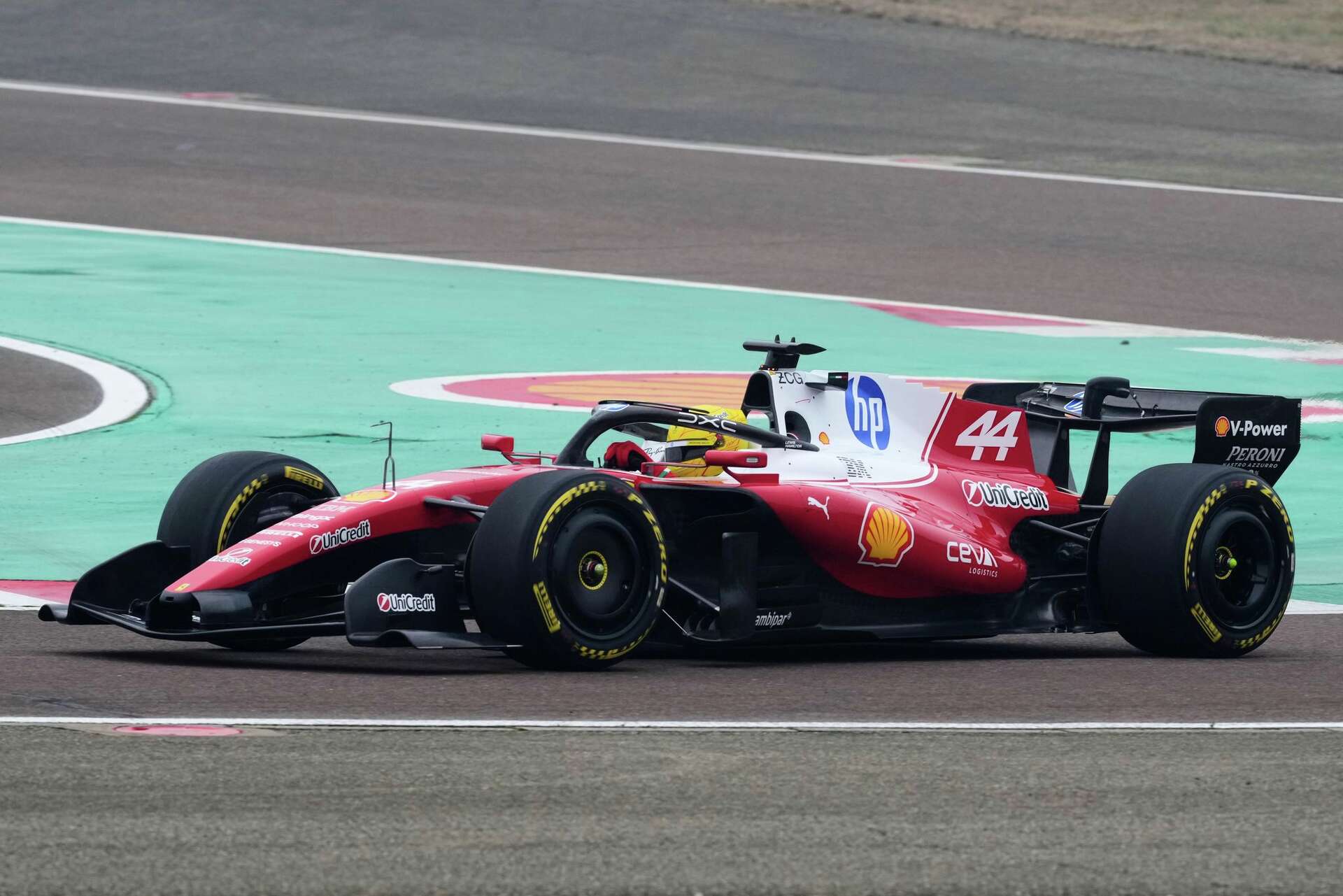
A quick glance at seventh for Lewis Hamilton and tenth for Charles Leclerc could suggest another Ferrari weekend defined by an uncompetitive car. The race was more complicated. Both drivers were eliminated in Q2, with Ferrari particularly unhappy about its speed on the long straights, yet each made progress in a Grand Prix where running in another car's slipstream could transform the order. Ferrari's underlying race pace was useful enough that Hamilton believed a podium had been possible. That makes the points lost through penalties and contact more painful, not less.
Hamilton's first problem was entirely separate from his teammate. While defending against Lando Norris at Turn 8, he left the track and retained an advantage. The officials issued a ten-second penalty. Hamilton considered it severe, but the recorded violation stood. It is important not to merge that incident with Leclerc's later penalty, because doing so would create a misleading explanation of Ferrari's result. One sanction concerned Hamilton's own conduct against a McLaren; the other concerned Leclerc's attempted pass on Hamilton.
Ferrari then faced a strategy problem under the Safety Car. The team elected not to bring Hamilton in with Leclerc at that moment, judging that stacking the two cars would complicate the stop sequence and hurt its options. Hamilton had to serve his existing penalty at his subsequent stop, dropping him deep into the midfield before he recovered. Strategy should be analysed as a response to a penalty and traffic, not condemned simply because the final classification looks disappointing. A split-second call made under uncertain track position is different from a driver choosing a risky line when another red car is directly alongside.
GOATIFY
GOATIFY Formula 1
Explore F1-inspired shirts, hoodies and stickers for every race-weekend comeback.


The 2026 machinery added another layer. Drivers were managing energy deployment, receiving and losing slipstream advantages, and attempting to time passes so they did not become sitting targets on the next straight. Those conditions make a rigid internal order especially costly. Vasseur later argued that instructing the Ferraris to remain in the same order for long stretches could allow other cars to pass them. That point is strategically plausible. It is also why Ferrari needed a shared threshold for contact risk rather than a vague promise to be careful.
Before the collision, the two Ferrari drivers had overtaken one another without incident. Hamilton's ability to climb back after his penalty was evidence of persistence and usable race pace, not evidence that the entire performance was clean. Leclerc's sixth place on the road also showed he could compete with the cars immediately ahead. Both truths matter. A team that was never competitive could at least blame raw speed; Ferrari had a more awkward dilemma because the cars appeared capable of a better outcome if the drivers and the pit wall had converted their moments properly.
The result elsewhere in the race reinforced the difference between pace and execution. Max Verstappen won, the McLarens finished second and third, and several drivers produced strong recoveries or lost ground in late battles. On a night full of reversals, Ferrari's internal contact was not just another passing attempt gone wrong; it was a squandered opportunity in a race that rewarded staying in contention until the final laps. Two scoring cars could have been a useful salvage operation after qualifying. Instead, the team faced questions about whether its drivers could reliably extract the points available.
That is the meaningful benchmark for the debrief. Ferrari should quantify how much the Hamilton penalty and subsequent stop sequence cost, what the Leclerc contact cost each car, and what the tyre and energy choices offered at the time. None of those questions requires pretending a hypothetical podium was guaranteed. The payoff from honest analysis is a sharper understanding of where speed was missing and where existing speed was wasted. Vegas exposed both problems, but the ones involving judgement are potentially more immediately fixable.
Vasseur Wants Respect, Not a Permanent Team-Orders Freeze
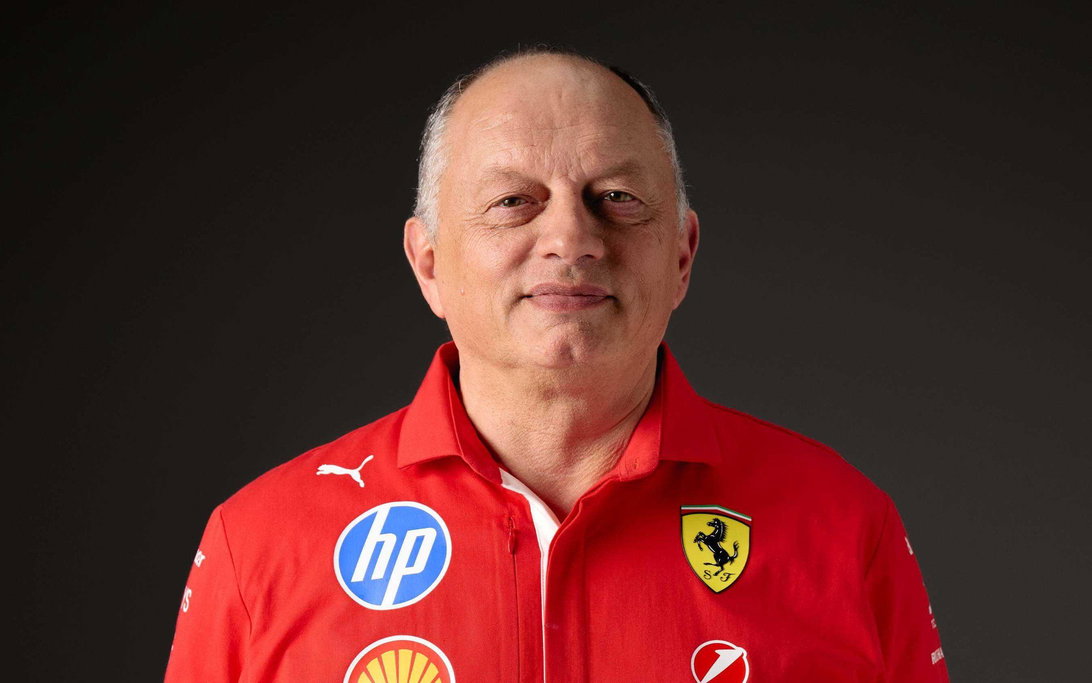
Fred Vasseur did not sound like a principal angry at ordinary wheel-to-wheel racing. He was angry that Ferrari had already confronted this exact category of problem and had then watched it return. The pair made contact in Mexico City, followed by a private meeting in Sao Paulo intended to settle their concerns. In Brazil their interactions had appeared more controlled. Las Vegas therefore challenged not merely the drivers' judgement but the usefulness of the process that was supposed to improve it.
Vasseur described the recurrence as unacceptable and put the responsibility back on the drivers. He made clear that apologising after contact did not turn the lost result into a misunderstanding that could simply be written off. The unusual post-race sight of the team principal calling Leclerc for a conversation before media duties underlined how seriously the team regarded the clash. The question behind that intervention is whether accountability can be made operational before the next incident rather than communicated only after it.
His refusal to support automatic team orders is the most revealing part of the argument. Drivers in a race with powerful slipstream effects cannot always remain in a formation without sacrificing places to rivals. If a Ferrari lifts off to maintain position, a competitor can use the draft to attack both red cars. A policy that tells Hamilton and Leclerc to stop racing would therefore create its own strategic vulnerability. Vasseur wants them to compete with judgement, and that is harder to define than a fixed order delivered over the radio.
GOATIFY
GOATIFY Formula 1
Bring a little racing energy to your everyday gear with the GOATIFY F1 collection.


An enforceable standard could nevertheless be clearer than a lecture about respect. A driver attempting to pass a teammate on the inside should satisfy the same corner-entitlement criteria the stewards apply to everyone else, and should be especially reluctant to gamble on an overlap that is marginal or disappearing. The leading driver should avoid gratuitous squeezing while still being entitled to a predictable line. Racing engineers can then review earlier side-by-side moments, the positioning at braking points and the times when a move is better postponed by one corner. Those are observable habits, not slogans.
Ferrari has evidence that intense competition need not become contact. Earlier in the 2026 season the teammates battled each other through parts of the Chinese Grand Prix, and Vasseur praised their professionalism after Hamilton reached the podium and Leclerc finished fourth. That performance is a useful comparison because neither driver's instinct to attack disappeared. They simply managed to separate an aggressive racing move from a potentially destructive one. Vegas was not proof that team orders are the only route to harmony; it was proof that the successful version of their racing has not yet become consistent.
Leadership still matters. Vasseur has known both drivers through long periods of their careers, but in the current Ferrari garage he is responsible for the entire workforce, not for protecting the ego of either star. Mechanics, strategists, engineers and factory staff can accept that a hard race sometimes goes against them. Repeated preventable contact inside the team is more difficult to explain because neither driver is a hostile opponent. The team must set boundaries without giving either one the impression that he is no longer allowed to compete for results.
The next meeting therefore needs less theatrical confrontation and more specific answers. What was the braking-point judgement at Turn 7? When did Leclerc commit, and what could Hamilton reasonably see? Was the radio warning actionable, or merely a generic instruction issued when the cars were already too close? What would the pit wall say in an identical situation next weekend? If Ferrari cannot answer those questions coherently, another apology will be a replay of the last one rather than a change of direction.
Qatar and Abu Dhabi Will Test Whether Ferrari Learned Anything

The final two races of the 2026 Formula 1 season, Qatar and Abu Dhabi, now offer Ferrari an unusually direct test. The team does not need to manufacture a diplomatic photo opportunity. It needs two cars capable of racing among other teams without triggering a second internal contest that carries more risk than reward. With the major championships already decided, every weekend is still useful for proving that a team can execute a race plan, bank constructors' points and take momentum into the winter.
Hamilton's performance in Nevada provides the more hopeful half of the picture. He worked past the consequences of a penalty and a disrupted race and still finished seventh. The team saw evidence that the SF-26 could compete more strongly on race day than its Q2 qualifying results implied. Leclerc's final classification was harsh, but he had also moved into a meaningful points position before his sanctioned manoeuvre. If Ferrari can retain that underlying pace and remove a few self-inflicted setbacks, the opportunity for more substantial results is real without requiring anyone to pretend the gap to the very front has vanished.
GOATIFY
GOATIFY Formula 1
Get ready for the final Grands Prix with GOATIFY Formula 1 fan favorites.


An internal driving standard has to survive the moments when those results are on offer. On a track where a tow enables a pass, the driver behind may feel that waiting one more corner is equivalent to giving a rival a free position. A team should not deny that calculation. Instead, its drivers must distinguish between a high-probability move that establishes overlap in time and a low-probability move whose success depends on the teammate abruptly abandoning the normal racing line. The second choice is usually more dangerous to the team than to an outside rival, precisely because both cars belong to the same garage.
The pit wall has a part in that decision too. Engineers know which car has better tyres, how much battery energy is available and whether a nearby opponent is about to threaten both Ferraris. There are circumstances in which letting the faster teammate through makes tactical sense; there are others in which a fair on-track fight is inevitable. What cannot be left ambiguous is the standard for contact and the consequences of failing to respect it. If a radio message arrives only when both cars are committed to a corner, the plan was already late.
Vasseur faces a communication problem as well as a racing problem. If he publicly singles out one driver after every mistake, the team can appear divided even when the technical debrief is constructive. If he describes every incident as normal competition, it becomes harder to convince the staff that recurring damage will not be tolerated. A useful middle path is to apply the same standard to both drivers, publish no unnecessary private details and measure the next race by actions instead of apologies. The goal is not to make the two personalities identical.
The championship standings add texture, although they are not an excuse for contact. Hamilton and Leclerc are both valuable Ferrari point scorers. With limited races left, Ferrari has little time to recover a squandered points haul from a weekend that had offered a better finish. A title fight may be elsewhere, but individual reputations, team bonuses, sponsor expectations and the work of the race crew are affected by the difference between a disciplined double finish and a pair of penalties followed by recriminations.
Ferrari does not have to choose between a culture of competition and a culture of accountability. It must make the two compatible. A clean on-track exchange in Qatar would be more persuasive than any carefully worded agreement made in Las Vegas. A strong, uneventful Abu Dhabi finish would show the lesson had lasted longer than one briefing. If another Ferrari winds up facing the wrong way after an optimistic inside move, the post-race explanation will have become painfully familiar. The next chapter is therefore not about finding a better speech from Vasseur. It is about giving him less reason to make one.
Vegas did not prove Ferrari lacks speed everywhere. Both drivers advanced after Q2 elimination, and Hamilton argued a podium had been within reach. What the weekend did prove is that encouraging one driver to take an ambitious inside line is not the same as encouraging good racecraft. The stewards found Leclerc had not established sufficient overlap; he accepted the sanction, and the team paid for it.
Ferrari now needs two things that sound less dramatic than another confrontation: a predictable standard for overtaking a teammate, and a way to check whether that standard survives the next stressful battle. Vasseur can be angry and still protect his drivers' freedom to race. He cannot accept a third episode in which the rules only become clear once a Ferrari has spun. Qatar and Abu Dhabi will show whether this time the conversation actually changes the behavior.
GOATIFY
GOATIFY Formula 1
Shop GOATIFY Formula 1 shirts, hoodies and racing stickers.


















