

Svensson Shot 29 Coming Home. His PGA Tour Card Still Isn't Safe.
GOATIFYJesper Svensson needed a week that could change his PGA Tour future. He opened it with a round that could change almost anybody's. The Swede shot an eight-under 64 at Sea Island on Thursday, November 19, to lead The RSM Classic by one. Seven back-nine birdies, a closing nine of 29 and an audacious approach across water on the final hole turned an uneven start into the best score of the day.
There is a dangerous temptation to describe that as a rescue already completed. Svensson entered the FedExCup Fall finale 135th in the standings. Full priority for 2027 is available to the top 100, not to the man who happens to lead on Thursday evening. His first-round position lifted his projected ranking into the qualification zone, but projections move whenever a competitor makes a birdie. Friday's course change, the 36-hole cut and two more rounds remain.
Max Greyserman and Garrick Higgo sit a stroke behind after matching 65s. Behind them, a tightly packed leaderboard contains players whose livelihood is being decided shot by shot. This is the unusual appeal of Sea Island: the trophy and the employment consequences are competing stories, and a spectacular opening act settles neither.
Seven birdies on the back nine made 135th look like 67th
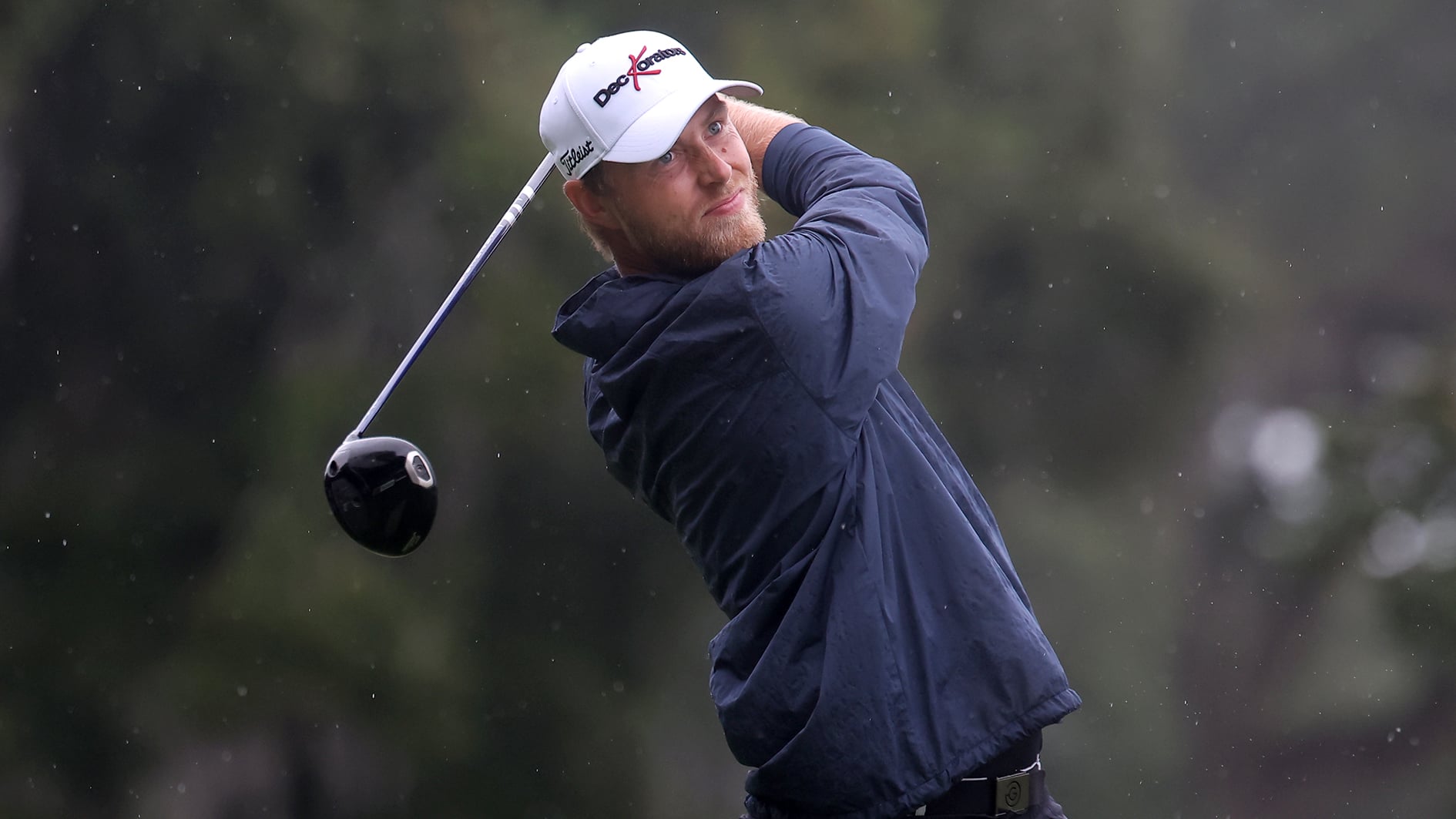
Svensson's card is more interesting than a simple total of eight under. He made two birdies across the first four holes, then gave both strokes back with a double bogey at the fifth. At that point, a nervous golfer trying to protect an uncertain tour card could have started treating every hole as a verdict. Instead, Svensson birdied the eighth and reached the turn only one under, with the most important golf of his day still ahead.
Then came seven birdies in nine holes. A back-nine 29 is striking in any professional round; producing it during the final FedExCup Fall event adds another layer of pressure. Svensson was not simply chasing a personal best. He was trying to move from the wrong side of a line that determines how often, and under what conditions, a player can start PGA Tour events in 2027. Every putt had the potential to become a different kind of opportunity.
His finish supplied the perfect visual. On the Plantation Course's par-five 18th, Svensson had 194 yards to the green, water in the way and a chance to make one more serious move. He carried the hazard, found the front portion of the putting surface and left himself an eagle chance. That putt missed. The tap-in birdie was enough for sole possession of the lead, a one-shot advantage over two players who had already completed their rounds.
The key to the stretch was not that the double bogey became irrelevant. A six on the fifth still counted. It was that Svensson refused to let a bad sequence dictate the next thirteen holes. Making the turn near the middle of a crowded field and finishing alone on top requires more than emotional resilience: it requires repeatedly putting the ball where an actual birdie chance exists, then capitalizing often enough that one disaster stops being the defining number.
GOATIFY
GOATIFY Golf
Svensson's brilliant back nine turns a nervous tour-card race into an opportunity. Explore GOATIFY golf tees, hats and game-day gear.


That difference matters for a player whose autumn has generated opportunities without many meaningful finishes. Svensson had made five cuts in fall events entering Sea Island but finished inside the top 25 only once. Consistency sufficient to collect weekend checks is not always enough to jump dozens of places in a season-long ranking. The cutoff rewards points, and points accumulate much faster near the top of a tournament than through a sequence of modest weekends.
After Thursday's play, a projected standing around 67th made the arithmetic appear wonderfully simple: keep going and earn a much safer 2027 schedule. The projection is useful information, but it describes a hypothetical tournament ending at that moment. No standings committee is issuing cards after the first 18 holes. When the rest of the field completes another 54, even a respectable finish can carry a completely different points value than the projected lead.
Svensson also has to navigate a course transition. His 64 came on Plantation, the par-72 track used alongside Seaside for the first two rounds. The leaders will not be playing a carbon copy of Thursday's setup on Friday. Changing wind, green angles and the relative scoring difficulty of the two courses all complicate the idea that an eight-under opener can simply be repeated. Protecting the lead may require a much quieter performance.
The most persuasive reading of the 29 is therefore neither a coronation nor a fluke. It demonstrated that Svensson can produce enough quality in a short window to transform his position in the tournament. The next task is to show that his decision-making can survive a different kind of stress: managing a lead, resisting the urge to calculate points after every hole and continuing to commit to shots when birdies become less plentiful.
Greyserman and Higgo reached 65 by opposite routes
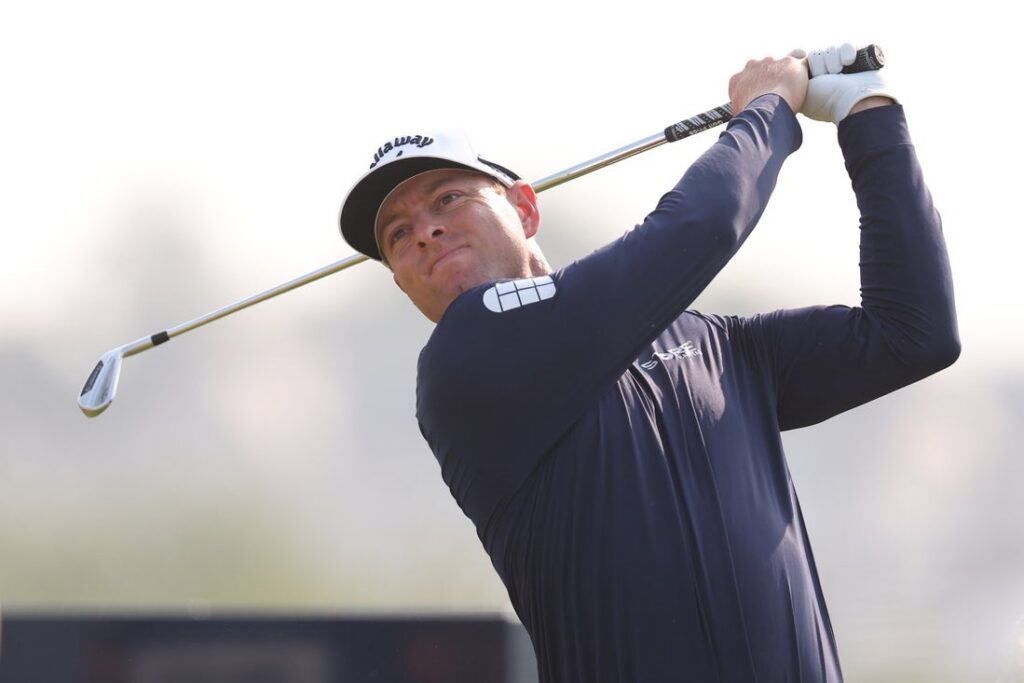
One shot behind Svensson, the scores beside Max Greyserman and Garrick Higgo look identical. The journeys to those 65s could scarcely be more different. Greyserman played a comparatively orderly round, building momentum with four birdies over his first eight holes and completing his Thursday with an eagle at the 18th. Higgo's card contained a double bogey, two eagles and the kind of late surge that can overturn a leaderboard in a hurry.
Greyserman entered the week 91st in the FedExCup Fall standings. That does not make his position completely immune to movement, but it gives his round a different strategic character. He arrived inside the top-100 threshold and can strengthen his standing with a high finish. A player sitting 91st does not need to attack every flag as if missing one birdie will end his season; he can choose the right moments to be assertive.
His closing eagle illustrated the distinction between patience and passivity. At Plantation's par-five 18th, Greyserman found a way to send a 207-yard approach to roughly eight feet. He converted, putting a three on the card and moving within one of the clubhouse leader. It was an aggressive shot produced from a playable situation, not a reckless attempt to rescue a round already in pieces.
GOATIFY
GOATIFY Golf
Greyserman's patient pursuit and Higgo's aggressive comeback show golf's different rhythms. Browse the GOATIFY Golf fan collection.
Greyserman's career has also demonstrated that regularly putting himself in contention is not the same as closing for a first PGA Tour victory. Five runner-up finishes since 2024 have given him considerable experience playing near the front, but the gap between threatening a trophy and lifting it remains real. The RSM Classic offers another chance to test the final-round skills that are difficult to simulate on a Thursday.
Higgo is confronting a more urgent arithmetic problem. He began the finale 175th in the standings, far below the top-100 line. A useful payday and a decent finish do little to erase that deficit. He needs something much closer to a career-altering week, which is why his 65 carried such a different emotional weight than Greyserman's. The chase for a tournament title and the chase for playing opportunities have effectively merged.
Higgo's front nine offered an argument for giving up on the day. A double bogey at the seventh could have swallowed a fragile round, particularly for someone with so much at stake. Instead he responded with an eagle at the eighth, kept generating chances and produced nine-under golf over his final eleven holes. Five back-nine birdies carried him toward the front before another eagle at the last completed a remarkable reversal.
Those two eagles sound like evidence of a golfer in total command, but the double bogey is part of the same evidence. Volatility is survivable when it is accompanied by enough chances to score. As the competition progresses to Seaside, the price of a careless error may increase. Higgo can make enormous gains quickly; he must also avoid needing a second extraordinary rescue just to stay in the conversation.
The contrast leaves the leading trio with different incentives. Svensson is staring at a full-status projection he did not own at breakfast. Greyserman is trying to turn an already competitive position into a genuine victory opportunity. Higgo is chasing the kind of week that could redraw the possibilities for his next year. The scoreboard shows 64, 65 and 65. The stories behind those numbers are not remotely interchangeable.
Sea Island has two scorecards and only one weekend course

The tournament's most important footnote is printed next to the players' scores. The RSM Classic begins across two Sea Island courses, Plantation and Seaside, before moving exclusively to Seaside for the weekend. Plantation is a par 72. Seaside is a par 70. A 64 beside a player's name does not automatically tell you how far under par he is, or how difficult his route was compared with everyone else's.
Svensson, Greyserman and Higgo all played Plantation on Thursday. Their totals of 64, 65 and 65 translated to eight, seven and seven under. Michael Thorbjornsen also shot 64, but he played Seaside, where that number was six under and therefore two shots behind the leader. Anyone ranking rounds by raw strokes alone would miss an essential part of the competition.
The overall opening-day scoring split reinforces the distinction. Plantation averaged about 69.88 shots, just over two below its par of 72. Seaside averaged roughly 69.63, only around four tenths below par. Both yielded low scores, but the softer scoring environment on Plantation gave the first-round leaders room to run. It would be misleading to imply everyone had the same opportunities under identical conditions.
GOATIFY
GOATIFY Golf
Sea Island demands patience and adaptable decisions. Discover GOATIFY golf-inspired apparel and accessories for the next round.
There is another ingredient: the weather. Sea Island's coastal setting can turn a seemingly open approach into an awkward calculation when the wind changes. Rain and gusts during Thursday's round made club selection more difficult, particularly for players attempting to judge carry over hazards. What the scores suggest about course difficulty should be interpreted as one day's evidence, not a guarantee that Friday will play the same way.
Thorbjornsen's round deserves attention precisely because it came from Seaside. A six-under 64 on that course left him in the crowded tie for fourth, with his ball-striking and close-range birdie chances offering a credible path toward the top. He did not need to match Svensson's seven-birdie back nine to post a performance of considerable value. His total is a reminder that scoring context matters.
Keith Mitchell also came through the tougher side of the draw, shooting five-under 65 at Seaside. Being several shots off the lead after Thursday does not necessarily mean a player is behind in the form that will matter on Sunday. Mitchell and others who have already handled Seaside have a different base of knowledge for the next two rounds. The first-day order may narrow once everybody has completed both courses.
Friday's rotation is therefore not a scheduling detail that can be ignored. The leaders face Seaside, while those who began there move to Plantation and may find a greater number of conventional birdie opportunities. A player starting three strokes behind could close the gap without suddenly becoming a better golfer overnight; the two-day aggregate is what eventually offers a more sensible comparison.
After the 36-hole cut, Seaside becomes the sole stage. That is when Svensson's tournament can turn from a birdie exhibition into a positioning contest. Keeping the ball in play, choosing which approaches deserve aggression and tolerating a quiet run of pars will matter. An eight-under Thursday is a formidable platform, but it is not a substitute for learning the rhythm of the course on which the title will be decided.
The real leaderboard is the moving line at 100

Ordinary tournament coverage is built around a single question: who wins? This event has another, less elegant question running beneath it: who will have a reliable place to play next season? The top 50 in the FedExCup standings had already secured full status. The top 100 after the Fall finale receive full status for 2027, while players finishing from 101st through 125th are left with conditional PGA Tour status and full Korn Ferry Tour status.
That hierarchy is not a semantic distinction. Full status shapes access to tournaments and, with that, the chance to earn more points and prize money. Conditional status means waiting for entries, planning around uncertainty and perhaps competing elsewhere to build a schedule. The effect can stretch beyond one golfer's calendar to his team, sponsorship planning, travel and the competitive decisions he makes over the winter.
Svensson's starting place of 135th made the task unusually steep. Leading an event on Thursday can produce a dramatic provisional leap; it does not bank enough points until all the rounds have finished. Higgo's starting place at 175th leaves him even further from the line. For him, hovering on the fringes of a top-20 finish would not necessarily alter his future. Both men have reason to compete aggressively, but neither can know Thursday night what exact Sunday score will be required.
GOATIFY
GOATIFY Golf
Every shot matters when the 2027 PGA Tour card line is moving. Celebrate the game with GOATIFY's golf collection.
The tension also affects golfers who started much closer to the threshold. Lee Hodges arrived 105th and opened with a 66 on Plantation, immediately improving his projected position. That is the compelling cruelty of the bubble: a single good day can change a player from outside to inside, while someone who began in a safer-looking spot can find himself watching a ranking number move in the opposite direction.
Early projections have also shifted the apparent positions of Chandler Phillips, Davis Thompson, David Lipsky and Christiaan Bezuidenhout. Those are not final standings or official declarations of status. They are calculations based on incomplete tournament results. By Sunday, a birdie on one part of the course can alter the projected outlook of several players nowhere near the group making it.
The simplest numerical target is 100, but the true problem is dynamic. As players move up and down the event leaderboard, the value of everyone else's projected finish moves too. There is no useful fixed score such as twelve under that automatically grants a tour card. Conditions, ties and where competitors finish combine to create a final points landscape. That is why obsessing over the overnight chart can become a trap.
It also explains why the final few holes at Sea Island may be more dramatic for a player finishing 28th than for the eventual champion. A short putt that separates 99th from 101st in the standings can change the structure of an entire season. The tournament trophy attracts attention, but the economy of professional golf also turns modest leaderboard places into extremely valuable outcomes.
What should fans watch on Friday? The two-course rotation first, then which players can improve without needing extraordinary scoring runs on every nine. For Svensson, maintaining top positions while moving to Seaside would make his opener more than a glorious afternoon. For Greyserman, a second clean round would keep a maiden win squarely in reach. For Higgo and the rest of the bubble, survival is not simply about avoiding disaster; it is about producing a finish substantial enough that the numbers finally work.
A 29 on the back nine and a one-stroke lead are a spectacular way for Jesper Svensson to open the final event of the PGA Tour fall. His 64 was not a guarantee of a card, but it was precisely the sort of result a player ranked 135th needed to create an opportunity that had been slipping away.
Greyserman and Higgo are too close, the two-course draw is too uneven and the ranking projections are too fluid for Thursday's order to be treated as a final answer. The leader faces a different course on Friday; the chasing players have their own reasons to push; the top-100 line will keep moving.
For now Svensson owns the round, not the season. The most revealing measure of his recovery will come after the fireworks, when he has to turn one brilliant stretch into a four-round result that lasts beyond Sunday's final putt.
GOATIFY
GOATIFY Golf
Explore six GOATIFY golf designs—caps, tees, layers and stickers—from the dedicated Golf collection before more stories.


















