

Tapia Says He's Ready. The Mexico Major Will Test That Claim.
GOATIFYAgustín Tapia has delivered the sentence padel fans wanted to hear before the Mexico Major: he considers himself ready to compete again. After the world No. 1 pairing withdrew from the Dubai P1 on medical advice, the Argentine says he is back to full fitness and expects to play in Acapulco. It sounds like a clean ending to a short injury scare. In reality, it begins a more complicated question about what an extraordinary season has cost him.
Tapia and Arturo Coello have already secured the year-end top ranking. They arrive at the final stretch with 13 Premier Padel titles in 2026, including October's Kuwait Major, and the chance to add to a run that has made them the standard every other men's pair must chase. The Mexico Major runs November 23–29, and the Barcelona Finals follow December 10–13. Those dates leave little space to test a recovering body away from tournament pressure.
There is an important distinction between a player declaring himself fit and a player proving he can manage repeated matches at full intensity. Tapia has offered encouraging news; neither a precise diagnosis nor an independent medical assessment has been made public. That makes the next two events an unusually revealing test of risk, ambition and what dominance looks like when the margin for recovery narrows.
Dubai Was a Warning, Not Proof That the Problem Is Solved

The first meaningful fact is not Tapia's latest reassurance but the decision he and Coello made on November 10. They pulled out of the Dubai P1 before starting their campaign, following advice from their medical team. That is a different situation from simply deciding to skip an event for scheduling reasons. It indicates that the people closest to the player saw enough concern to recommend removing competitive load. The public announcement did not explain the exact physical problem, and nothing disclosed since establishes its diagnosis or severity.
On November 17, Tapia described a body that had reached its limit while insisting he was ready for Acapulco. That combination is revealing. Players can feel much better after a break without yet knowing how their bodies will react to three or four matches compressed into a tournament week. Short explosive movements, braking into a corner, repeated overheads and recovery between sessions make elite padel a different test from an isolated training hit. A positive update should be reported as a positive update, not mistaken for a verified medical clearance.
The decision to miss Dubai was especially striking because of the pair's position. They had already secured the No. 1 finish after Kuwait and were defending their Dubai title from the previous editions. Their withdrawal also followed the absence of Alejandro Galán and Federico Chingotto, two players from the partnership most capable of disrupting them at the business end of a tournament. For a moment, Dubai's men's draw lost the regular top two teams, changing both the champion and the opportunities available to everyone else.
Juan Lebrón and Leo Augsburger ultimately won in Dubai, an outcome that illustrated the upside for contenders when the established leaders were not there. But it would be a mistake to treat a single open draw as a new hierarchy. The No. 1 partnership's season-long lead remained intact. The more useful lesson is that availability itself can change a tournament. When the top pair must manage health, the difference between entering, withdrawing and playing at less than full explosiveness becomes an important part of the competitive picture.
GOATIFY
GOATIFY Padel
Dubai's absence changed the title race; explore GOATIFY Padel apparel while the No. 1 pair prepares to return.


Tapia and Coello also had reason not to take a needless risk. The year-end ranking was already theirs; playing through an uncertain issue in Dubai offered limited strategic upside compared with arriving healthier for a Major worth more ranking points and a Finals appearance. An athlete can be ferociously competitive and still make a rational decision to protect the season's last two major opportunities. Missing a week does not diminish thirteen titles. It may be exactly what preserves the chance to win a fourteenth.
For now, the safe reading is narrow: Tapia is optimistic, Dubai was a genuine medical precaution, and Acapulco participation will provide the first tournament evidence of his recovery. Details beyond that remain unknown. Predictions about the nature of the injury, rehabilitation regimen or likelihood of recurrence would be guesses, not reporting.
Thirteen Titles Conceal the Cost of Staying at No. 1

The results are difficult to exaggerate. Reporting based on the International Padel Federation's November 16 data credits Tapia with 82 match victories against seven defeats in 2026, a winning percentage above 92 percent. Alongside Coello, he has collected thirteen Premier Padel titles. Those are not simply trophies earned in occasional peak weeks. They reflect a relentless habit of making the final rounds, playing more matches than most of the field and doing it against opponents who spend entire seasons studying how to stop them.
October's Kuwait Major captured the imbalance between the leaders and the challengers. Tapia and Coello defeated Juan Tello and Maximiliano Arce 6–1, 6–1 in the final, an emphatic result that also secured the pair's fourth consecutive year-end reign across their shared seasons at the top. The final score looks almost effortless on paper. The accumulated path to a Major final is not effortless, however. Every late-round run means another sequence of high-speed starts, awkward reaches, jumps and changes of direction, with flights and training folded between events.
The history makes this concern more than a one-week headline. Tapia previously discussed dealing with physical discomfort during the 2025 campaign. A photograph of him reaching across a court from that earlier season is a reminder of the mechanics that produce his brilliance: balance and explosiveness in unstable positions, followed immediately by another shot. None of this proves a connection between an old complaint and his recent Dubai withdrawal. It does show why repeated stress is a reasonable subject of analysis even when the medical specifics are private.
A player at the top of the rankings also faces a strange success penalty. The better a partnership performs, the longer each event lasts. A team eliminated in round two gets more days to recover than the team lifting trophies on Sunday. Multiply that across an international calendar and the difference in accumulated competitive exposure becomes considerable. Coello and Tapia have the best reason of anyone to trust their game, but their results do not grant immunity from fatigue.
One tempting reading of Tapia's comments is that he wants to equal the pair's fourteen-title 2024 haul, then potentially surpass it in Barcelona. That is a plausible sporting motivation because the 2026 tally currently stands at thirteen. It should not become a demand that they chase the statistic at any cost. The trophy count is meaningful because it measures dominance over a season. If the pursuit of one more trophy undermines the final event or a healthy start to 2027, the arithmetic becomes much less attractive.
GOATIFY
GOATIFY Padel
Thirteen titles demand repeatable excellence. Browse GOATIFY Padel gear for match-day supporters.
Their more durable advantage is strategic rather than purely physical. Tapia's improvisation and defense-to-attack transitions work with Coello's imposing reach, positioning and finishing power. They rarely need both players to produce spectacular winners on the same point. That partnership structure may help manage energy better than a chaotic, high-risk style, but it cannot replace recovery. The relevant question is not whether a healthy Tapia can dominate; thirteen titles already answer that. It is whether he can reproduce the same movement under tournament stress after a health-related pause.
Acapulco Tests Movement, Match Rhythm and a Dangerous Field
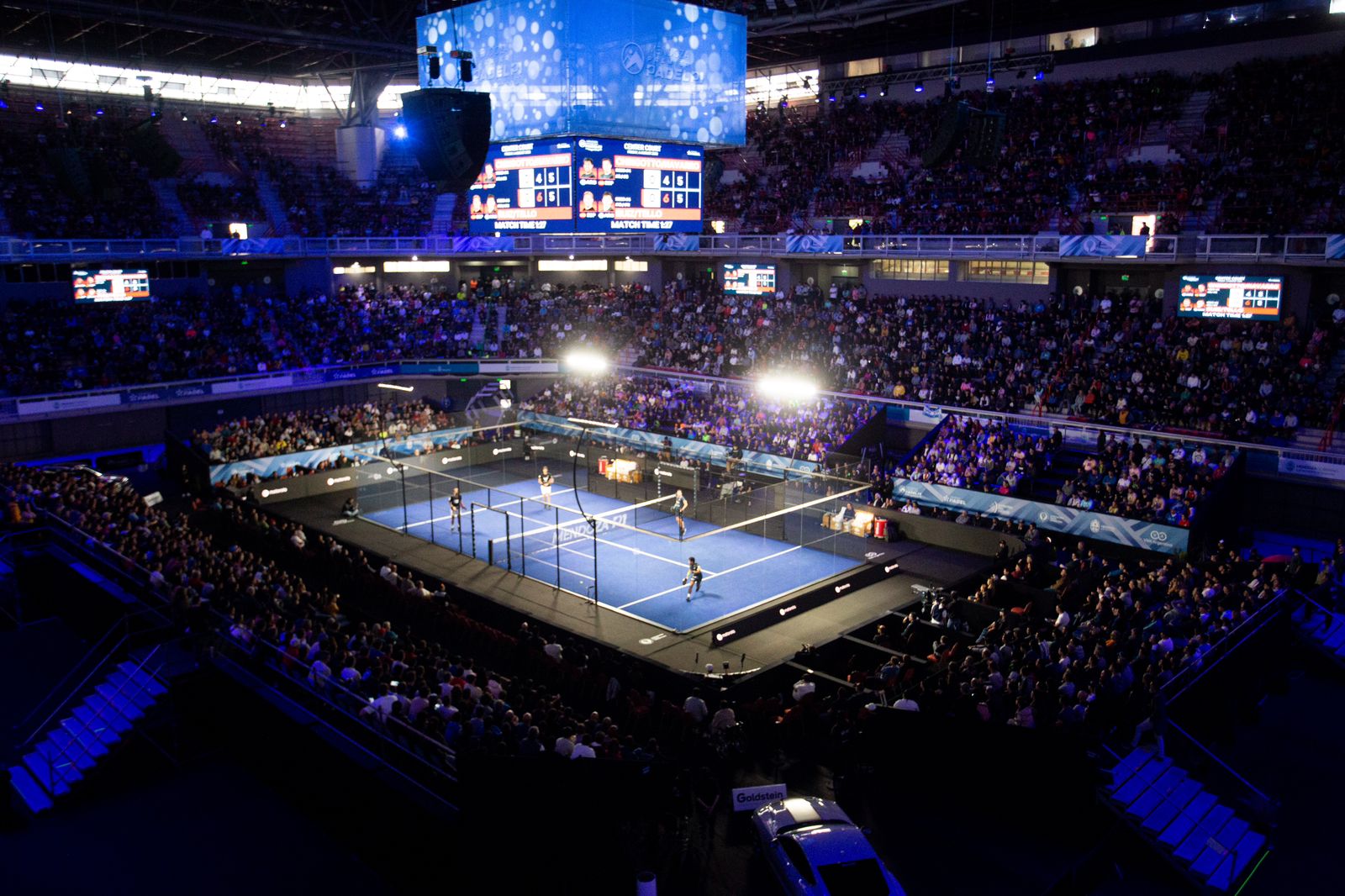
The Mexico Major is scheduled for November 23–29 in Acapulco. It is not a gentle exhibition designed around a returning champion. The draw will contain players with different motivations: some chasing a late-season title, some trying to lock in places at the Barcelona Finals and some simply sensing a rare opportunity if the favorite is short of rhythm. The tournament's Major classification makes the stakes substantial even though Tapia and Coello no longer need points to defend the top position.
There are several things worth watching that an opening-match victory alone cannot settle. How freely does Tapia accelerate into the back corners? Does he take his usual opportunities to counterattack from difficult positions, or play a slightly more conservative ball? Can he maintain shot quality deep into long games rather than only during an early surge? None of those observations constitutes a medical diagnosis. Together they can show whether his competitive movement has returned to the level that made this pair dominant.
The pairing's advantage has rarely depended on a single pattern. Coello can impose himself at the net, but his effectiveness is multiplied when Tapia turns defensive balls into unexpected chances to attack. A half-step of hesitation can alter a passing angle, force a safer lob or offer opponents more time to recover position. Against lesser resistance, that may barely affect the scoreboard. Against one of the tour's aggressive teams in a semifinal, several such details can become the difference between a routine hold and a break.
Lebrón and Augsburger's Dubai title adds intrigue without making them the default favorites in Acapulco. Their title came in the event the top two regular pairs missed, and the two are dangerous precisely because they can inject pace and physicality. Galán and Chingotto's availability is also a matter for confirmation rather than assumption after their own recent absence. A credible preview must avoid building a dream final around a pairing before entry and fitness are established. The live draw, once official, will matter more than projected brackets.
This is also a useful time to separate two different achievements. The year-end No. 1 finish is already settled, an endorsement of the pair's consistency across months. Winning the Mexico Major would be a fresh tournament achievement under new conditions, especially after the Dubai withdrawal. Their supporters understandably want both, but one does not invalidate the other. Should Tapia return and lose early, it would be a disappointing result, not proof that the previous thirteen titles were somehow overstated.
A measured return can be successful even without a trophy if it establishes that Tapia can compete freely and leave the event ready for Barcelona. Conversely, a dramatic victory followed by renewed physical limitations would complicate the schedule. The best outcome is not merely to survive Acapulco. It is to emerge from it with dependable match fitness and enough recovery room to approach the final week of the season on their own terms.
GOATIFY
GOATIFY Padel
Acapulco promises a high-pressure comeback. Discover GOATIFY Padel fan shirts and accessories.
Barcelona Makes the Comeback About More Than One Trophy
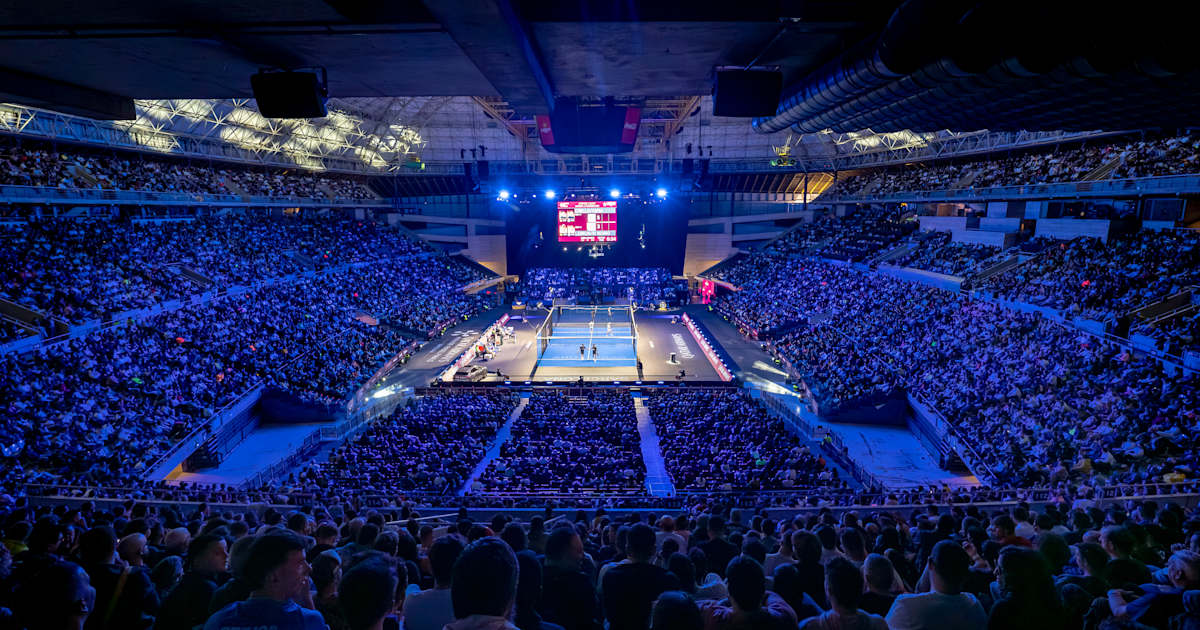
The calendar turns quickly after Acapulco. Barcelona's season-ending Finals run December 10–13 at the Palau Sant Jordi, creating roughly eleven days between the Mexico Major's scheduled final and the opening of the next showcase. That window includes travel, recovery, practice and whatever care is necessary to keep a player feeling confident. For an athlete who recently withdrew on medical advice, the compressed turnaround is not a footnote. It may be the most important hidden variable in the whole comeback.
Tapia and Coello are trying to defend the Finals title they won in 2025 and become the first men's partnership to win consecutive editions of the Premier Padel Finals since the event's introduction in 2024. There is a difference between that ambition and an already secured result. They can chase the distinction, but the title will be earned only on court in December. With the number-one ranking locked up, Barcelona offers legacy rather than a rescue operation for their season.
The city is also preparing for a larger audience story. Organizers say they hope to eclipse the single-day record of 16,920 spectators registered in Buenos Aires during the 2026 P1 semifinals. Barcelona previously drew 15,779 for the 2023 World Padel Tour Finals semifinals, then attracted more than 50,000 visitors across the four days of its 2025 Finals, according to organizer figures. A historic arena photograph captures the scale of a Finals crowd but should not be confused with an image from the forthcoming 2026 competition.
That commercial and cultural expansion increases the attention on the stars. Tapia has spoken of his attachment to Barcelona, where he has lived for several years, while the local crowd will also have Ariana Sánchez and Andrea Ustero to follow in the women's draw. The event is selling an international spectacle and a connection to the city. Yet the popularity of a tournament does not eliminate the basic constraint that elite players must arrive capable of producing their best tennis-like, high-speed padel under intense physical demand.
There is a wider lesson here for the circuit. Padel's global reach means the schedule is no longer a sequence of neighboring European stops. Major tournaments, different climates and long-haul flights are an impressive business story and a harder recovery problem. Winning more than almost anyone else leaves less downtime, not more. Sport administrators can celebrate record crowds and new markets while still confronting the cost of keeping their biggest names healthy enough to appear.
The tempting headline is a simple comeback: Tapia returns, wins Mexico, wins Barcelona, sets another record. That path remains possible. The more convincing story will be whether he can choose the right balance of intensity and restraint, with Coello helping maintain their tactical identity. If they finish 2026 healthy and competitive, the partnership's dominance will look deeper than the collection of trophies. It will show that even the most relentless winners know when the next achievement depends on recovering first.
Tapia's update is promising, and there is no reason to dismiss a player's own confidence about returning. There is also no basis for pretending that confidence is the same as a documented diagnosis or a completed competitive test. Dubai showed the limits of a long season; Acapulco will show more about his readiness under pressure; Barcelona will reveal whether the pair can sustain it.
The No. 1 ranking is safe. The fourteenth title, a possible new season mark and a second straight Finals crown are still to be earned. What happens next should be judged not only by how many trophies Tapia and Coello lift, but by whether the final two events leave their best partnership ready to keep winning beyond 2026.
GOATIFY
GOATIFY Padel
Shop GOATIFY padel products from the Padel-filtered collection scope.


















