

Zverev Is 7–0 Against Shelton. Turin Exposed the Real Gap.
GOATIFYBen Shelton arrived in Turin with a serve that can make the scoreboard move faster than an opponent can settle into a return position. Alexander Zverev arrived with something less theatrical and considerably more useful: a repeatable answer to almost every part of Shelton's game. On Tuesday, November 17, the contrast became impossible to ignore. Zverev beat Shelton 6-2, 7-6(4), booked the first singles semi-final place at the 2026 ATP Finals and pushed a striking head-to-head record to seven wins from seven matches.
This was not an afternoon when Shelton forgot how to serve. The American hit 15 aces, one more than Zverev, and saved two dangerous break points late in the second set. Yet he still lost in straight sets. That is the uncomfortable story behind the score: a world-class weapon can rescue individual points without solving the patterns surrounding those points. Zverev owned enough of the exchanges, protected his own delivery and forced the contest to be played on terms Shelton did not particularly like.
The result also put the rest of the John McEnroe Group on notice. Zverev advanced with a match to spare, while Shelton's route was left dependent on his final round-robin meeting with Rafael Jodar and the evolving group arithmetic. Instead of declaring one player finished or the other unbeatable, the more interesting question is exactly where the gap appeared—and whether the same blueprint can survive the semi-finals.
The opening breaks turned Shelton's pace into a chasing game
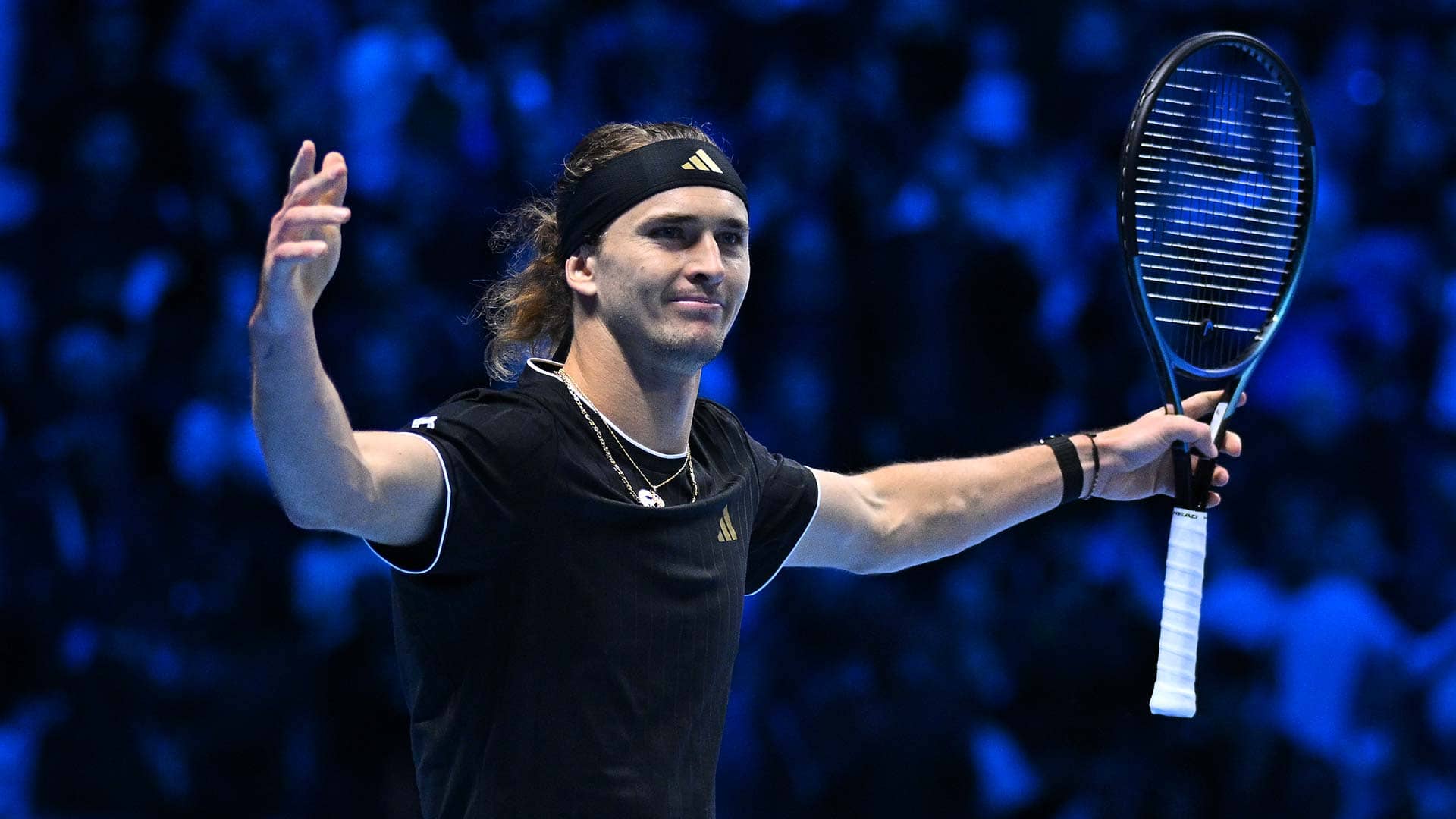
There are two very different ways to win a first set against a player who can serve through trouble. One is to survive a succession of close games and steal a late return opportunity. The other is to take away the comfort of an opening service hold before the opponent has established any rhythm. Zverev chose the second path in Turin. He broke Shelton in the opening game and then again in the fifth, building a 4-1 lead before finishing the set 6-2. For a matchup advertised as an examination of huge serving, that early scoreboard separation changed the entire argument.
Breaking early does not automatically mean a returner has decoded every serve. It does mean the server must begin asking harder questions. Instead of stepping to the line at 2-2 with a blank scoreboard, Shelton was playing from behind while Zverev could move through his own service games without chasing a deficit. Every American hold was useful; no individual hold could erase the break already conceded. This is why the opening game mattered far beyond its point total. It turned a match between two big hitters into a contest where only one of them was forced to search for a new pattern.
Shelton's left-handed delivery can produce difficult trajectories and short returns, but pace alone is a partial solution. A returner who gets enough rackets on the ball and then tolerates the next exchange removes some of the automatic reward. Zverev's strength here is not merely standing far enough back or possessing a long reach. It is combining that coverage with the ability to send the next ball to a position that requires another deliberate shot. A server who expects a quick finish can find himself defending the third strike instead. That is a tactical interpretation of the outcome, not a claim that a complete shot-by-shot chart was published.
The head-to-head figure—seven victories to none after Tuesday—makes this pattern worth treating seriously. One match can be decided by a tight breaker, a temporary injury or a particularly hot serving day. Seven meetings spanning different weeks are harder to explain with one lucky afternoon. Their most recent earlier encounter had been the 2026 US Open final, another Zverev win. That history does not establish a permanent ceiling for Shelton; it does put a burden on any proposed adjustment. Simply serving faster or hitting more winners is not a convincing plan unless it changes how frequently Zverev can build return pressure.
GOATIFY
GOATIFY Tennis
Shop GOATIFY tennis products from the Tennis-filtered collection scope.

Tennis GOAT Golden Racket & Ball Crewneck Sweatshirt
A tennis fan design for everyday wear.
Shop Now ↗


Tennis GOAT Golden Racket & Ball Decal Sticker
Add tennis personality to your favourite gear.
Shop Now ↗

The first set also underlined a psychological advantage without requiring us to pretend to know what either player was thinking. Zverev did not need to take exceptional risks once he had created daylight. Shelton had to decide how much to press against an opponent whose own service games were proving exceptionally secure. The result was a first set that looked lopsided on paper, even though the underlying players remained capable of producing enormous shots. In high-level indoor tennis, early scoreboard control often buys freedom to choose the next tactical question. Zverev bought that freedom almost immediately.
Fifteen Shelton aces could not buy enough return pressure
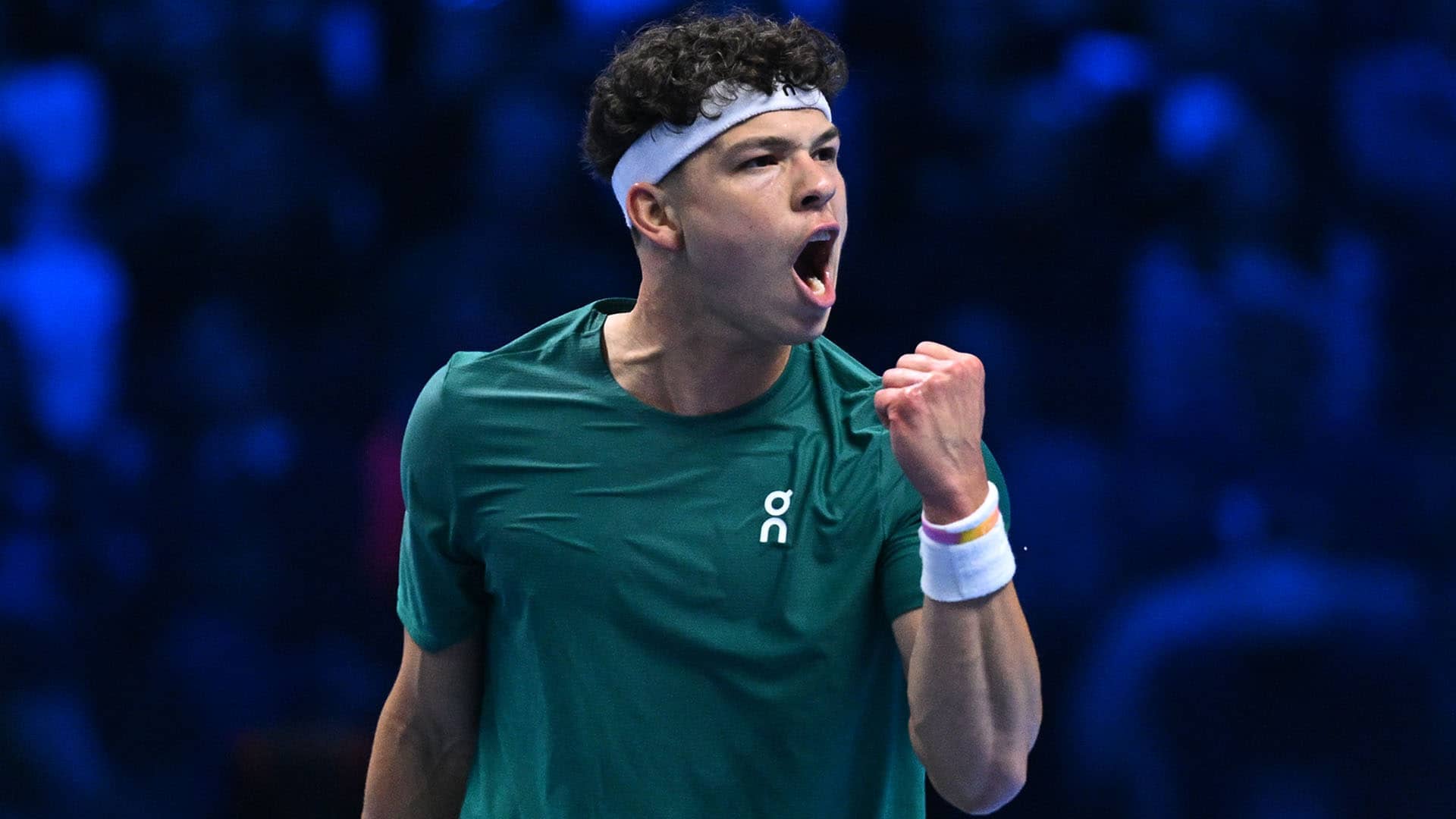
The easiest statistic to misunderstand from this match is the ace count. Shelton hit 15, while Zverev hit 14. If aces were the whole story, the contest would look like a near-perfectly balanced exchange of unreturnable serves. Instead, Zverev won 47 of the 57 points played on his own serve—more than four in five—and surrendered only ten service points across a one-hour, 34-minute match. The German was not just matching Shelton's spectacular deliveries. He was keeping almost every return game too short for the American to apply sustained pressure.
This matters because holding serve and disrupting an opponent's serve are related but separate skills. Shelton could create free points when he served. What he struggled to do, for much of the afternoon, was force enough messy points when Zverev served. That asymmetry gives the more consistent server freedom on the scoreboard. One player can hit a brilliant ace to escape trouble, yet the other can move through two uncomplicated service games and arrive at the next return opportunity with less accumulated strain. Aces count individual points; they do not explain who owns the pressure in the match.
To Shelton's credit, the second set was not a repeat of the first. Serve dominated as the score tightened and the American had to resist a major danger at 4-4. Zverev reached 15/40 on Shelton's delivery, creating two break points that, if converted, would have left him serving for the match. Shelton answered with an important volley and then an ace, escaping the danger and holding to move ahead 5-4. Those were genuine pressure plays. They are evidence that Shelton can respond when the situation becomes acute, not that he has already solved the larger matchup.
The difference appears in what followed. Saving two break points kept Shelton alive but did not provide an advantage against Zverev's serve. The set went to a tie-break, where Zverev kept his nerve and finished the victory 7-4 with a forceful forehand passing shot. One can debate the best tactical choices in a few points without losing the broader picture: the German could play a controlled service-set structure, absorb an opponent's escape act, and still be the player who executed at the finish line. That is a difficult combination to dismantle with a single highlight.
Shelton's developmental question is therefore more precise than a generic demand for better consistency. Can he pressure Zverev's second serve often enough to earn more neutral or attacking starts? Can he keep rallies from becoming sequences in which one explosive forehand must rescue a defensive position? Can he use return placement and first-ball discipline to make Zverev experience the same kind of jeopardy Shelton faced at 4-4? These are scouting questions, not assertions that Tuesday's match supplied a comprehensive tracking dataset. The published service-point total is strong evidence of the problem; the solutions still have to be tested on court.
That distinction also explains why the 7-0 record should not be reduced to a personality story. No one needs to assume fear or a mental block to see why Zverev keeps getting opportunities in this pairing. It is entirely possible for Shelton to be brave on the biggest points and still lose the structural contest. In Turin he demonstrated both traits at once: the nerve to save dangerous break chances and an inability to turn that resistance into repeated pressure on the other side of the net. The next breakthrough will require more than another bag of aces.
GOATIFY
GOATIFY Tennis
Shop GOATIFY tennis products from the Tennis-filtered collection scope.


Fils made the group race uncomfortable again
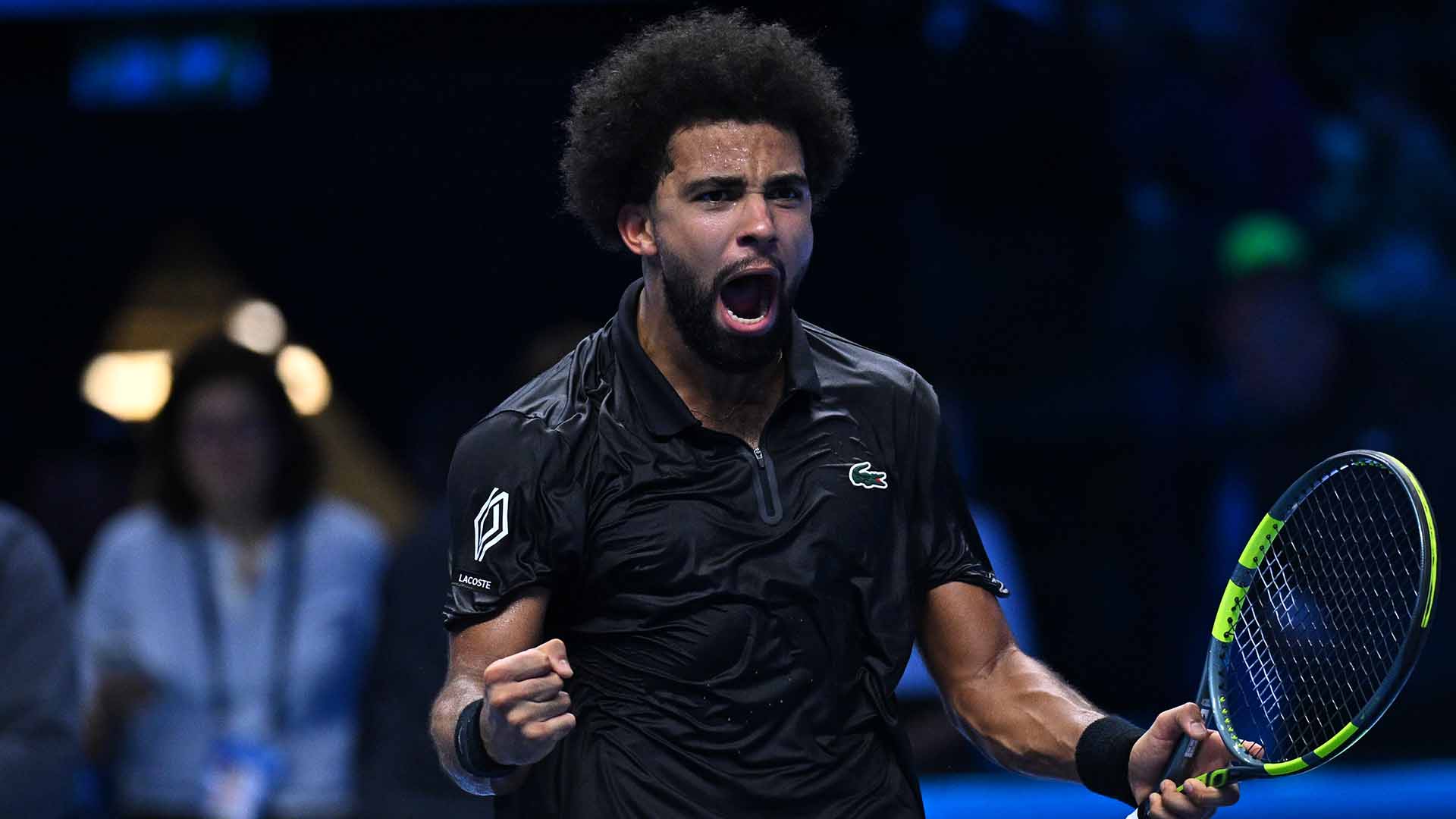
Zverev's straight-sets victory was not the only match that changed the feel of the John McEnroe Group on Tuesday. Earlier, Arthur Fils recovered from a set down against Rafael Jodar to win 4-6, 6-2, 6-2. The Frenchman had lost his opener to Shelton and needed a response to give himself a meaningful opportunity in his final round-robin match. He delivered one, turning an uneven start into a convincing finish and leaving Turin's remaining group equations more interesting than a simple glance at the top seed would suggest.
The sequence is worth recounting because it provides a useful counterpoint to Shelton's loss. Fils had chances in the first set against Jodar but could not capitalize. Jodar then broke at 5-4 to take the opener. Rather than allow that disappointment to dictate the rest of the afternoon, Fils produced a stronger second set, hitting seven winners in that set and finding more consistency from the baseline. Jodar's physical difficulties also became part of the contest; he required two medical timeouts. It would overstate the evidence to attribute the entire comeback to just one tactical adjustment when fitness became an important variable.
Fils finished the match in one hour and 52 minutes. The win was his first at the ATP Finals and made him the first French men's singles player to win at the year-end championship since Jo-Wilfried Tsonga in 2011. Those are meaningful milestones for a 22-year-old competing at a career-high No. 7. He had reached Turin after winning titles in Barcelona and Cincinnati during 2026, while also missing the Australian Open and Roland Garros because of injury. His campaign has contained both impressive progress and interruptions, which makes the prospect of another pressure match a particularly useful test.
That test comes against Zverev on Thursday. The German has already secured a semi-final place, so his immediate qualifying pressure is different from that of his French opponent. But the match still has competitive value: Zverev can maintain momentum, test alternative return patterns and refuse the temptation to treat his last group match as a formality. Fils, by contrast, gets a direct look at the best-controlled service performance in the group. A strong attacking afternoon against Jodar does not guarantee the same opportunities against Zverev, who conceded only ten points on serve against Shelton.
For Shelton, Thursday's meeting with Jodar is the urgent assignment. The American entered Tuesday unbeaten after edging Fils on Sunday, but the defeat to Zverev left him at 1-1. Jodar stood at 0-2 after losing to both Zverev and Fils. Any assessment of who can claim the remaining semi-final berth must respect the tournament's round-robin tiebreak procedures and the actual results still to be played. It is enough, for now, to observe that Shelton's 15 aces have not settled his fate and that Fils has made the closing day matter. A great service game can win points; an entire tournament requires adjustments from match to match.
A semi-final berth is secured; a title is not
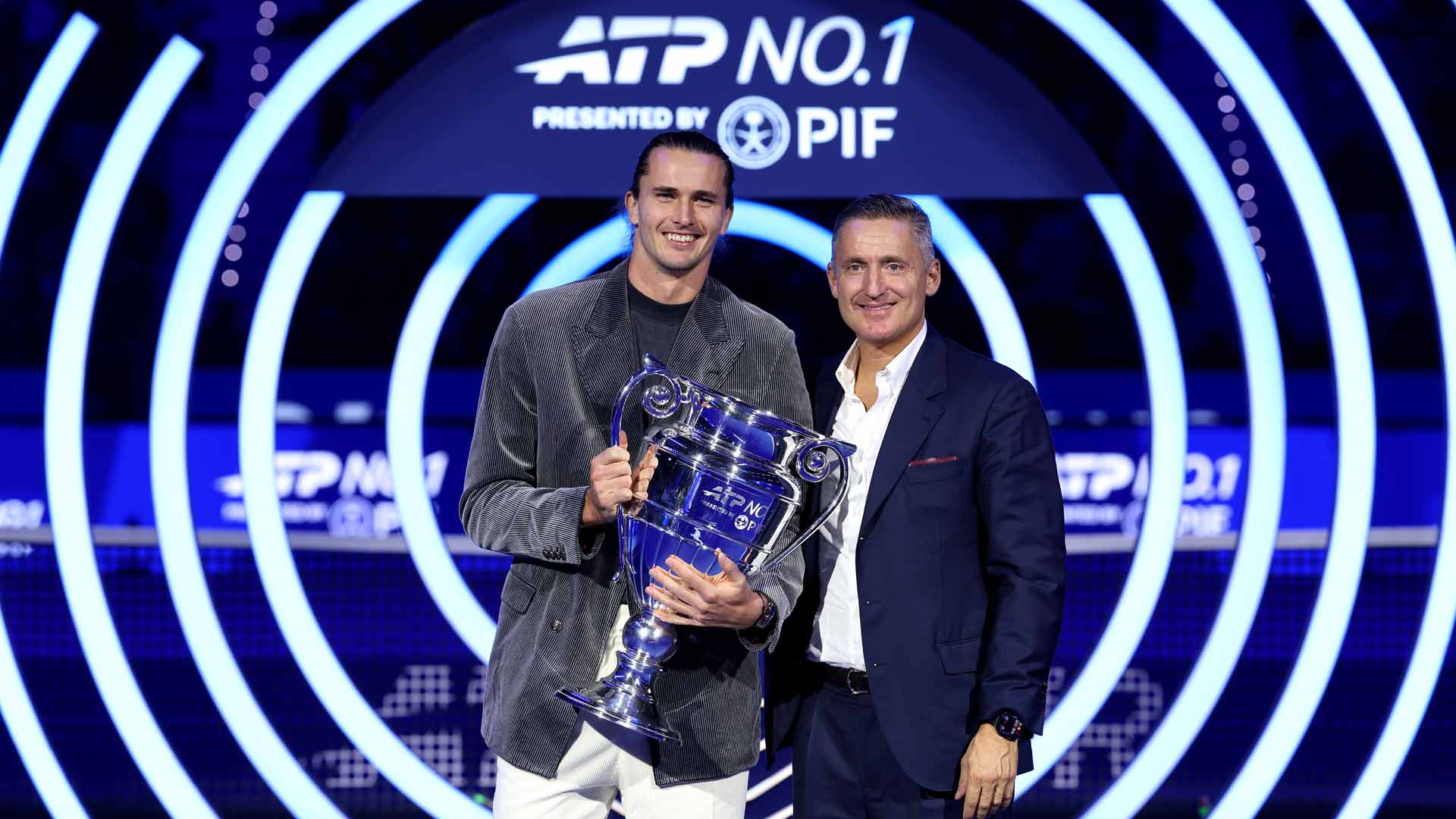
Zverev's achievement is larger than one productive Tuesday but smaller than a championship. He entered the season finale as the ATP world No. 1 and received the year-end No. 1 trophy in Turin before beating Shelton. The German has two prior ATP Finals titles, won in 2018 in London and 2021 in Turin. His latest semi-final qualification is the fifth of his career at this event, after runs to the last four in 2018, 2019, 2021 and 2024. That history matters because the tournament forces elite players into difficult matchups without the gentler early rounds available at a Grand Slam.
GOATIFY
GOATIFY Tennis
Shop GOATIFY tennis products from the Tennis-filtered collection scope.


Tennis GOAT Golden Racket & Ball Decal Sticker
Add tennis personality to your favourite gear.
Shop Now ↗There is a temptation to interpret a 7-0 head-to-head as proof that Zverev can simply cruise whenever Shelton is across the net. Tuesday's second set argues against that complacency. At 4-4, Shelton managed to save two break points and briefly turn the pressure back toward the German. A few execution errors from Zverev could have extended the match into a third set where a big server becomes particularly dangerous. The difference was not the complete absence of risk; it was the way the top seed kept his own service rhythm and then executed in the breaker despite those missed opportunities.
A semi-final opponent could force a different calculation. Some elite returners do not merely block back the first delivery; they attack early enough to change the direction of a rally before Zverev can establish his preferred position. Others can vary pace and height, preventing a familiar baseline exchange from repeating. None of these possibilities guarantees a loss. They do, however, underline why the published 47-of-57 service-point figure should be understood as an excellent performance in one specific matchup rather than a prediction that every opponent will face the same ten-point ceiling on return.
There is also a mental distinction between qualifying early and finishing the week as champion. Zverev has secured the option of looking beyond the group stage, yet he still has to play Fils and then win high-pressure elimination matches to collect a third year-end title. An early berth allows him to plan, but it does not award a free pass through opponents or reduce the quality of the remaining field. Momentum is useful only if the same disciplined choices reappear in the moments when the scoreboard no longer offers a cushion.
For Shelton, the record is both a warning and a practical checklist. The 2026 US Open final defeat was not a one-off; Turin extends the pattern. More force on serve is not obviously the missing ingredient when he has already produced 15 aces. Better return depth, more consistent first shots after the serve, and smarter selection of moments to approach may offer a more promising route. Those are hypotheses for future meetings, not claims of an agreed coaching plan. Until he creates sustained uncertainty in Zverev's service games, even spectacular saves risk becoming isolated scenes in another defeat.
That is the dividing line the rest of the week will test. Zverev has shown he can keep the score under control against a high-powered opponent and stay calm when the closest set becomes dangerous. Whether he can reproduce that balance against every remaining challenger is still an open question. The difference between a secure group-stage performance and a trophy-winning campaign is usually the ability to solve more than one style of opponent. Turin has established the first answer; it has not yet supplied the last one.
The headline is seven wins without a defeat, but the useful lesson is smaller and more precise. Zverev turned a potentially volatile matchup into one with a predictable structure: serve efficiently, prevent the American from collecting too many free looks on return, make Shelton play one extra controlled ball, and avoid handing the pressure back after a narrow escape. Even when the second set became tight, Zverev found a way to own the moments that determined its outcome.
Shelton still has a path forward. Fifteen aces and two saved break points are evidence of elite weapons and competitive resistance, not evidence of helplessness. His problem is connecting those weapons to enough return pressure and stable rallies to change the shape of this particular matchup. Thursday's meeting with Jodar gives him another tournament opportunity, not an instant answer to seven consecutive defeats by the same opponent.
For Zverev, qualification is an achievement and a checkpoint. The real measure of his Turin performance will come against opponents able to challenge his service rhythm and extend him in the rallies that Shelton could not consistently control. The first semi-final place is secured; the title still has to be earned.
GOATIFY
GOATIFY Tennis
Shop GOATIFY tennis products from the Tennis-filtered collection scope.


















