

When Should You Regrip Golf Clubs? The 40-Round Rule Isn't Enough
GOATIFYYour clubheads can look immaculate while the part you actually hold is quietly wearing out. A golf grip loses texture slowly, not in a dramatic failure. One round it feels familiar; a few months later you are squeezing harder in the rain, wiping your hands between every shot or fighting a driver that seems to turn at impact. Buying a new club is a costly response to a problem that may live in the last ten inches of the shaft.
The familiar advice is to replace grips once a year or after about 40 rounds. That is a useful inspection reminder, not a universal expiration date. Range sessions, hand pressure, sweat, storage, material and even which clubs you practice with can change the calculation. A neglected wedge can need attention while a rarely used long iron remains sound. The better question is not simply how long a grip has been fitted, but whether it still gives you predictable friction, a secure fit and the freedom to hold the club lightly.
The 40-Round Guideline Is a Starting Point, Not a Stopwatch
The annual rule exists for good reason. Sweat, skin oils and sunscreen accumulate, and heat and sunlight gradually alter the feel of rubber. Even a grip that has barely been swung can harden in storage. At the same time, a golfer who plays twice a week and visits the range between rounds may create far more contact and twisting than the calendar implies. Manufacturers commonly use roughly 40 rounds or one year as a practical maintenance interval. That recommendation is useful because it forces a regular inspection before the grip becomes visibly damaged.
But a 'round' is a poor unit if all your practice time goes through one club. Forty sessions with a wedge can put considerably more wear on that particular handle than forty actual rounds do on a seldom-used hybrid. The driver and wedges may need replacement ahead of the full iron set. A golfer hitting balls several days a week should inspect the clubs used most often, rather than treating all thirteen conventional full-swing grips as if they age equally. It is perfectly reasonable to refresh a single heavily used club first, provided its replacement still feels compatible with the rest of your set.
Climate shifts the timetable too. Humid hands and wet-weather play demand dependable surface friction; frequent cleaning and exposure to moisture can reveal deterioration sooner. Grips left in a hot car or in strong sun age differently from those stored indoors. Conversely, an occasional golfer with properly stored, pliable grips may get more useful life than a rigid yearly schedule suggests. A calendar reminder should prompt a closer look, not automatic spending.
GOATIFY
GOATIFY Golf
If your clubs have passed the 40-round checkpoint, give your golf setup a fresh look beyond the grips.


Make a simple log in your phone: date fitted, club, model, grip size and roughly how often it sees action. Check high-use clubs each month or before major competition, and inspect the complete bag at the start of your main season. If a grip has reached its expected interval but remains soft, patterned and secure after cleaning, its condition deserves more weight than the date. If it shows a real safety or traction failure well before a year, waiting for an arbitrary anniversary is the wrong decision.
Five Warning Signs Your Hands Notice Before Your Score Does
First, watch for shine. A grip that once had a matte, patterned surface can develop polished patches under your thumbs and fingers. That smoothness may appear only on the upper hand or on the side most affected by your hold. A little discoloration alone does not necessarily make a handle unusable, but loss of the original surface texture and persistent slipperiness are more meaningful. Compare the club to a newer grip of the same model if possible; your hands adapt to gradual wear remarkably well.
Second, feel for hardening. Press and flex the grip gently. An aged rubber compound may feel unusually rigid rather than resilient. Different models are intentionally made with different firmness, so compare like with like; a firm cord grip is not automatically worn because it feels less cushioned than a soft wrap. However, a grip that has become hard, shiny and slick after cleaning has a stronger case for replacement. A noticeably compressed thumb groove or a flattened contact patch is another indication that its shape has changed through repeated use.
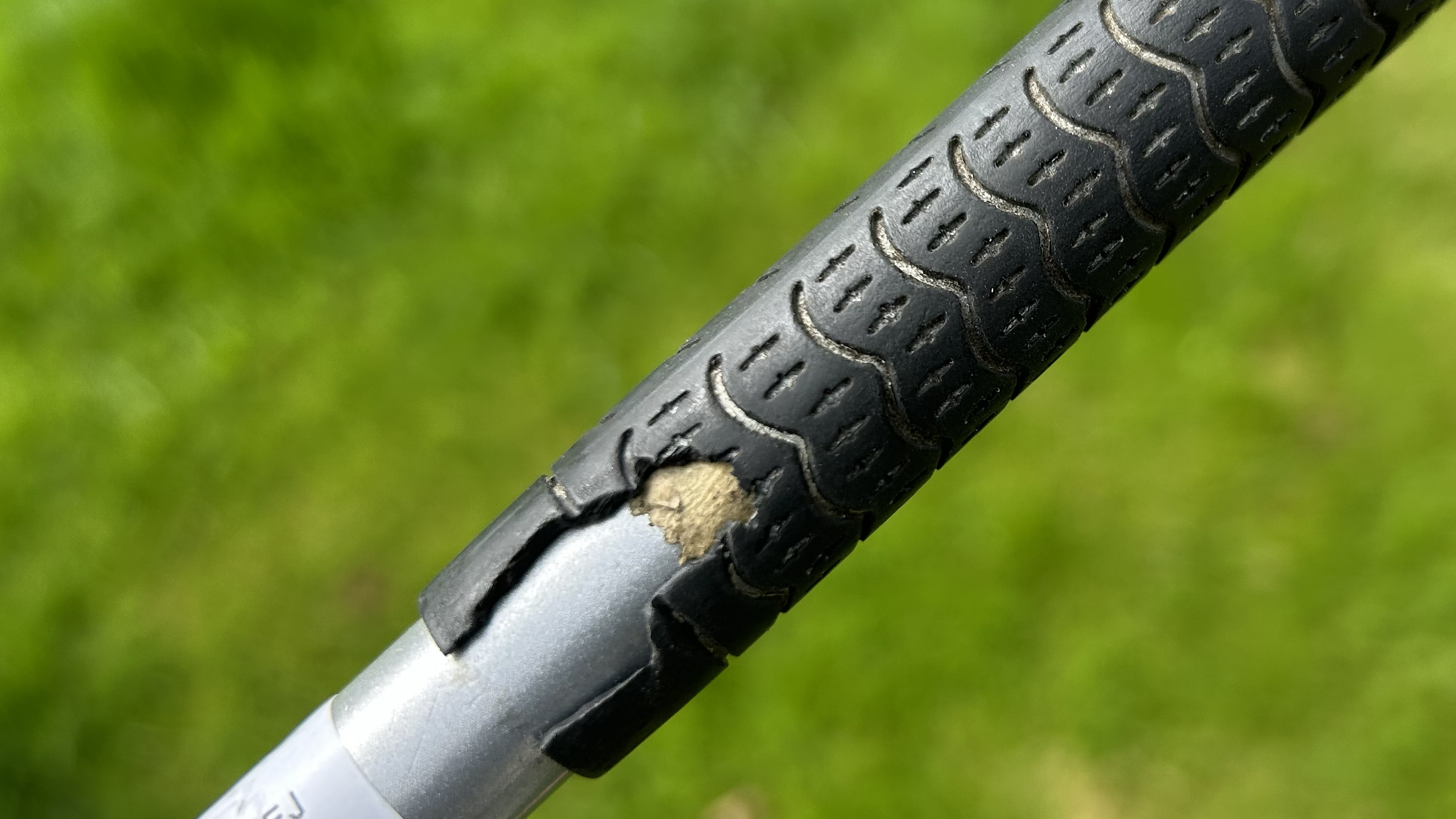
Third, inspect the structure. Cracks near the cap or along the body, peeling surface layers and material crumbling away are obvious reasons to retire a grip. Do not try to rescue a split handle with improvised adhesives or tape. Surface damage and an insecure bond are separate issues, but both undermine the basic function of a grip: letting you swing without wondering whether the club will stay in place.
Fourth, pay attention to the swing. Have you started gripping tighter just to prevent movement? Do you repeatedly dry your hand on a normal day, or feel the club turning in a wet glove? Excessive hand pressure may also come from nerves, a poor grip size or technique, so a slick sensation is not a complete diagnosis on its own. Still, persistent slipping with an otherwise normal hold is a strong warning. A rubber grip that physically rotates on the shaft is more urgent: stop using that club until a technician checks the adhesive bond and reinstalls or replaces it.
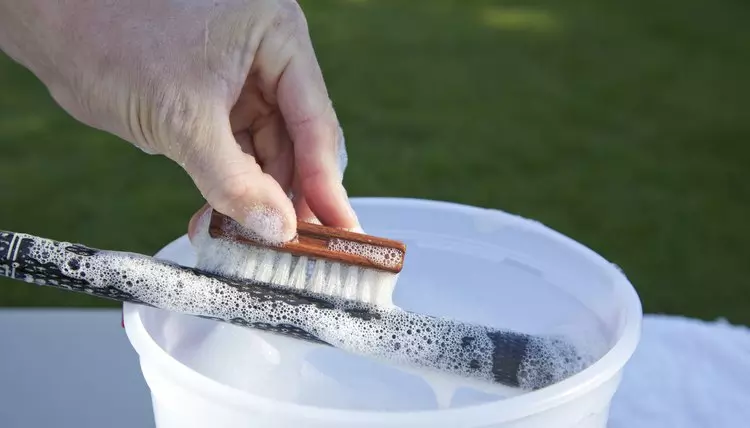
Fifth, try a controlled wash. When surface oils are the culprit, the grip may feel much better once cleaned and completely dried. When it stays polished and hard after that, more scrubbing will not rebuild missing texture. The useful test is a secure, light-pressure hold during a few gentle practice motions, not an aggressive full-speed swing to find the failure point.
GOATIFY
GOATIFY Golf
Worn grips are worth catching early. Explore GOATIFY golf apparel for your next round.
Clean First, Then Decide Whether the Size and Material Still Fit
Cleaning gives you a fair baseline before spending money. For most conventional rubber grips, start with mild soap, lukewarm water and a soft brush or cloth. Work around the textured grooves to lift dirt and skin oils, rinse without soaking the open end of the shaft, then towel dry and let the grip dry completely. Always follow the specific maker's care instructions: wrapped synthetic materials, certain soft compounds and putter grips may need gentler handling than a tough rubber grip. Strong solvents or abrasive cleaners can damage finishes, so the safest general rule is to use the least aggressive method that restores the original feel.
If the handle feels properly tacky again, continue using it and monitor how long the improvement lasts. If the effect disappears almost immediately, that is a clue the problem is no longer just dirt. Do not mask a structural crack or loose fitting with grip sprays. Routine cleaning is maintenance, not a substitute for replacing rubber that is physically worn through.
Replacement is also the best moment to reassess size. Standard, midsize and jumbo labels describe different diameters, but the correct size depends on how the club sits in your hands, your comfort and how much grip pressure you need. Someone who feels crowded and buries their fingertips deeply into the palm may prefer testing a larger profile. Someone who struggles to control a very thick handle may prefer moving the other way. These are starting observations, not a universal fitting formula; hand dimensions do not automatically dictate an ideal result. Try a few sizes on actual clubs before committing to a complete set.
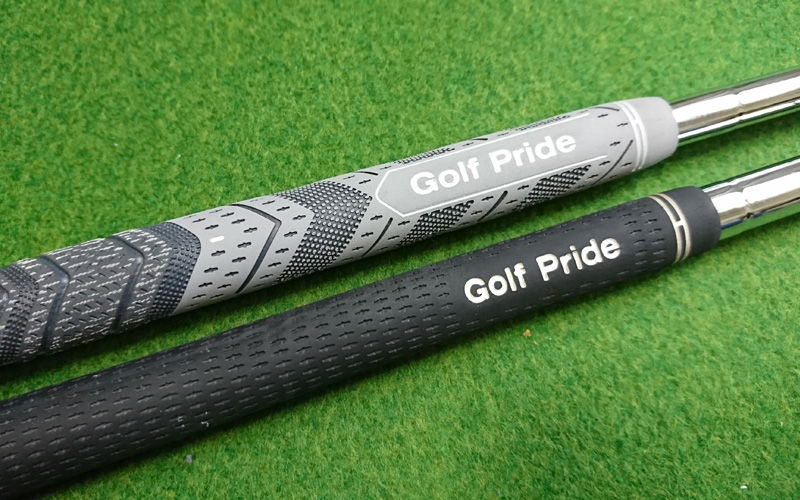
Material and texture matter just as much. Smooth-feeling soft compounds can be comfortable in dry conditions but may wear or feel different when wet. Firm rubber patterns and corded upper sections can add traction, though some golfers find coarse textures harsh on bare hands. Reduced-taper designs change the lower-hand diameter; alignment ridges add tactile feedback. None will cure a fundamentally poor swing, and there is no reason to replace a grip you like merely because a new release looks more technical.
Keep the putter in a separate category. Its grip has different shapes, hand positions and loads, and it may last longer than your wedges or require replacement sooner if the outer surface degrades. Check whether all your clubs currently have consistent thickness; mismatched sizes can be intentional, but they should not result from years of random one-off replacements. The smartest update is a grip specification you can repeat: model, diameter, reminder alignment if used, and preferred feel in dry and damp hands.
Regrip at Home or Pay a Shop? Make the Change Safely

Regripping is accessible as a home workshop job, but it deserves care. You need a correctly sized replacement grip, appropriate double-sided grip tape and installation solvent, a protective rubber shaft clamp or suitable holding fixture, a collection tray and a safe cutting tool. Some systems use alternative installation methods; do not mix instructions across products without checking compatibility. If you are new to the process, beginning with an inexpensive steel-shafted iron rather than your most valuable graphite driver is a sensible way to build confidence.
GOATIFY
GOATIFY Golf
Grip feel matters from first tee to final putt. Find GOATIFY golf styles for practice and play.
Secure the club so it cannot move, with its head protected. Carefully remove the old grip. A hooked blade should be drawn away from your body; on graphite shafts, take particular care not to cut or scrape the shaft fibers. Remove old tape and adhesive residue without gouging the shaft. Apply the recommended tape in the intended length and configuration, close the butt end as directed, and thoroughly wet the tape and inside of the new grip with the appropriate solvent. Slide the grip on promptly and in one controlled motion, pushing it fully home against the shaft butt.
Before the installation sets, align any logo or molded reminder ridge relative to the clubface, and confirm that the grip is straight without unwanted twists. The drying interval depends on materials, product and conditions. Follow the manufacturer's stated wait rather than assuming every solvent system is ready immediately; Golf Pride's general guidance advises at least four hours before play or practice. Never rush onto the course with a grip that could rotate during a full swing.
A professional shop may be the better option if you lack a safe clamp, use expensive graphite shafts, want to experiment with tape layers or require precise reminder-ridge alignment across a set. Prices vary by grip model, region and labor, so compare the total installed cost rather than the unit price alone. A shop can also check whether the existing grip has merely become loose and whether an incorrect shaft or grip diameter is contributing to the problem.
There is no need to replace the whole set at once unless the same condition affects the whole bag or you want a consistent fit. Prioritize the grips on your driver, wedges and practice favorites, then test a fresh handle in a few controlled sessions. If your hands relax and the club no longer feels slippery, you have fixed the connection without changing the expensive part of the equipment. If the shots still misbehave, the next step is instruction or fitting—not a claim that new grips alone can guarantee lower scores.
The best time to regrip is before traction or fit becomes a distraction. Put a 40-round or annual inspection on your calendar, but let real signs—persistent slickness, hardening, cracks, compression, unexpected twisting and changing grip pressure—make the final decision. Clean and dry the handle first; compare it with a healthy grip; then replace the worn clubs or refit the whole set if that genuinely suits your game.
It is a small maintenance choice with a straightforward goal: a club that stays secure while your hands stay relaxed. Your swing still has to deliver the shot. Your grip should not be the part that gets in its way.
GOATIFY
GOATIFY Golf
Shop GOATIFY golf shirts, hoodies and stickers.





















