

Rousseau Hit 10 Sacks. Buffalo's Offense Still Left Points Behind.
GOATIFYThe Buffalo Bills are 9–1, owners of six consecutive wins and an increasingly stubborn defense. On Sunday, November 22, they beat the Miami Dolphins 26–9 without conceding a touchdown. Greg Rousseau recorded two sacks, reaching ten for the season, and Miami's short-handed offense never found a sustainable answer. The result was comfortable enough on paper. Watching Buffalo's own possessions was a different experience.
Josh Allen threw for 304 yards and a touchdown, yet also surrendered two interceptions late in the first half. The Bills entered Miami's red zone five times and emerged with only two touchdowns, relying on Tyler Bass to convert four field goals over the course of the game. Against a team that finished with just 185 yards, Buffalo could get away with that imbalance. Against the Kansas City Chiefs on Thanksgiving, the margin for mistakes may be much smaller.
There were genuine offensive achievements amid the frustration. James Cook extended a record-setting run of 75-plus rushing yards and a touchdown in the same game; Khalil Shakir crossed the hundred-yard mark receiving; and a surprise fake punt rescued a possession. All of them contributed to the lead. But the defining question after this AFC East win is whether Rousseau's surging defense has become Buffalo's greatest strength, or whether its recent dominance is covering a dangerous tendency to leave points on the field.
Rousseau reached ten sacks, but the larger story was Miami's lack of answers
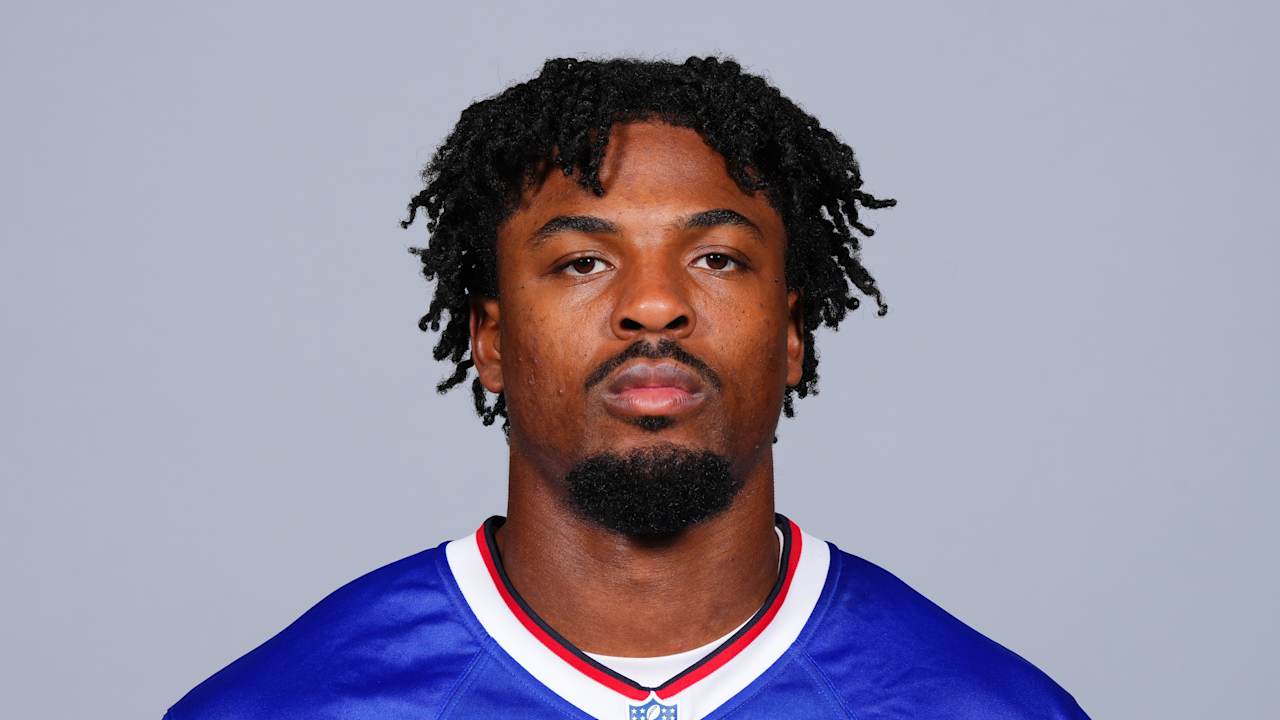
Greg Rousseau's second sack of Kyle McCord was not a decorative statistic added after the result was settled. It arrived before halftime, when Miami was still searching for any dependable way of moving the ball. Both of the outside linebacker's sacks came in the first half and took eight yards off the Dolphins' progress apiece. The first broke an early possession before it could establish momentum; the second prevented Miami from turning a Buffalo mistake into the sort of field position that can suddenly tighten a divisional game.
Ten sacks through his first ten games of 2026 is a career high for Rousseau, reached before Thanksgiving rather than after a full season. The milestone matters because it is occurring in a different defensive environment. New coordinator Jim Leonhard moved Rousseau from his familiar defensive-end alignment into an outside-linebacker role, creating different angles for a long, powerful pass rusher. The number change to 15 also makes older Bills photographs in number 50 a poor representation of this particular season. The new role has been productive, although ten sacks by itself does not prove that the entire defense is impossible to attack.
What made Sunday's performance convincing was the support around those individual wins. Miami managed only 38 total yards and two first downs in the first half. McCord eventually completed 12 of 33 passes for 102 yards and an interception. Across four quarters the Dolphins totaled 185 yards and ten first downs. Those numbers point to a repeated breakdown in normal drive-building, not one unlucky play or a single missed opportunity near the goal line.
Every Buffalo mistake threatened to become Miami's opening
The defense faced its most revealing situations when its own offense supplied the opposition with a fresh chance. Josh Allen gave the ball away on consecutive late-first-half possessions, yet the damage was contained. A short Miami drive after the first interception still required a 52-yard Daniel Carlson field goal. Damar Hamlin then intercepted McCord just before the break after Buffalo's second turnover. The Bills went to halftime ahead 20–6 when a less organized defense might have allowed the game to become a one-possession affair.
GOATIFY
GOATIFY NFL
Find Buffalo football fan designs as Rousseau's 2026 pass rush keeps quarterbacks under pressure.


There was another warning in the third quarter. Miami put together three quick gains to reach Buffalo territory, including a 24-yard Ollie Gordon II run and a completion to Malik Washington. The visitors still could not finish the job: three incompletions inside the ten forced a 27-yard Carlson field goal. That is the distinction between giving up occasional yards and allowing an opponent to recover the game itself. Dee Alford's breakup on fourth-and-two from the Buffalo 30 later removed another chance to keep a possession alive.
Buffalo's touchdown-free stretch reached 228 minutes and 18 seconds, dating to November 1 against Baltimore. It is a legitimate accomplishment. It is also worth noting the context: the Bills' past four victories had come against backup or third-string quarterbacks. Rousseau and his teammates deserve credit for doing what they could against the opponents available, but the proper next question is whether the same communication and finishing ability survives a much more difficult quarterback matchup.
Allen threw for 304 yards and still exposed the one flaw Buffalo cannot carry forward
On a conventional passing line, Josh Allen's afternoon was productive: 27 completions from 45 attempts, 304 yards and a four-yard touchdown to DJ Moore. On the scoreboard, Buffalo won by 17 points. Both figures are real, but neither explains why a home crowd could be nervous while facing a one-win opponent with a depleted offense. Five trips inside Miami's 20 produced only two touchdowns and three field goals. The Bills did enough to control the result, yet repeatedly stopped short of turning field position into its maximum value.
The touchdown throw showed what the offense can look like when its timing is precise. Moore crossed the back of the end zone from the right side and found room for Allen's pass. The sequence followed a tempo-driven drive in which the Bills had moved the chains through different situations and forced Miami to defend the whole field. Later, Cook's one-yard rushing score made it 20–3 and gave the impression the game might be settled before halftime. The two interceptions that followed exposed the danger in assuming a lead can protect every subsequent decision.
One of those interceptions came when Allen's arm was hit as he attempted a pass, a relevant distinction from simply misreading a stationary defender. The next, on a late-half throw over the middle, was a different kind of mistake. Sorting those plays into separate causes matters because the corrections differ. Improved protection or an earlier release might help with pressure-induced turnovers; a better decision about the available route and game situation is required when a pass is thrown into coverage. The fact that both were intercepted within the final two minutes made the stretch especially wasteful.
A winning offense can still have a finishing problem
Tyler Bass converted field goals from 43, 54, 40 and 28 yards. The points were necessary, and the 54-yarder came from a drive rescued by a brave fourth-down fake punt. Yet four kicks and a stalled series are not a substitute for repeatable touchdown production. When a team asks its defense to protect possessions that begin in scoring range but end with three points, it increases the number of opponent drives that still have meaning. That may be manageable against McCord's Dolphins; it is a far less comfortable strategy against an efficient attack.
Bass also missed from 54 yards, ending a long sequence of makes. One miss should not erase the value of the points he did supply, just as two interceptions do not cancel the positive passing plays Allen delivered. The useful evaluation is how often the offense creates clean down-and-distance, maintains composure after penalties and gets a favorable matchup at the decisive moment. Buffalo moved the ball well enough to produce a three-hundred-yard passer. The remaining work is making those yards correspond more reliably with touchdowns.
GOATIFY
GOATIFY NFL
Explore NFL fan gear while weighing Buffalo's offense against the red-zone decisions it still needs to fix.
The third-quarter offensive penalties that pushed the Bills back out of comfortable scoring territory were another example of avoidable leverage. Against a stout opponent, a hold or false start can undo several successful completions. The Bills survived because a defense led by Rousseau kept responding. A stronger version of Buffalo is one that combines Allen's explosive ability with fewer possessions thrown away after the chains have already moved.
Cook's remarkable rushing streak and Shakir's yards kept Buffalo moving

James Cook finished with 89 yards on 22 carries and a one-yard touchdown. For a runner with explosive speed, a four-yard average might look routine on a highlight sheet. In this game, the repeated gains mattered more than any one breakaway run. Buffalo needed possessions to last, third downs to be manageable and the ball to stay away from Miami after the two Allen turnovers. Cook provided a dependable option for doing that, even when there was no wide-open running lane waiting.
The touchdown also extended an unusual run of consistency. Cook has now scored a rushing touchdown and exceeded 75 rushing yards in nine consecutive games within the same season. That is a new single-season benchmark, surpassing the eight-game marks associated with some of the NFL's great workhorse runners. The broader all-time consecutive-games record contains a different detail: Terry Allen reached ten such games across the 1995 and 1996 seasons. Comparing those streaks without acknowledging the season boundary would overstate what was actually broken on Sunday.
Cook's first 75-plus-yard outing in this streak did not guarantee the next one; the accomplishment rests on solving nine separate opponent plans, different line play and different game scripts. On Sunday, his one-yard score came at the end of a possession sustained by multiple useful completions and intermediate conversions. Running into the end zone was the last action, not the sole reason Buffalo had arrived there. The touchdown gave Allen's offense something it badly needed: a successful red-zone finish rather than another long Bass attempt.
Shakir supplied the passing game's most reliable surge
Khalil Shakir caught five passes for 101 yards. Two specific gains explained why those catches were more than an end-of-game total. After an early fourth-down conversion, Allen found Shakir in space near the sideline for a 32-yard gain. In the third quarter, the receiver turned a bootleg connection into a 38-yard advance, then contributed shorter catches that helped restore field position after the Bills had hurt themselves with penalties. Those plays are valuable because they rescue drives at moments when another incompletion would mean a punt or a difficult kick.
Moore caught eight passes for 91 yards, including the game's touchdown reception from Allen. That balance prevented the offense from relying entirely on a single target, even though the finishing problem persisted. Buffalo can threaten through Cook's rushing, Shakir's run-after-catch skill and Moore's route work; the question is whether those threats stay coordinated closer to the end zone, where passing windows compress and a defense can devote more attention to specific routes.
The overlooked contribution was special teams. Facing fourth-and-eight on the Bills' 34, punter Tommy Doman took the snap, looked downfield and threw to tight end Keleki Latu for 30 yards. The play eventually produced Bass's 54-yard field goal. Calling that clever is easy; understanding its risk is more important. Failure would have handed Miami the ball in attractive position. Success bought a score and maintained control of field position. Buffalo's offense was imperfect, but the combination of a reliable back, a productive receiving pair and one unconventional conversion supplied the margin the defense was protecting.
The Chiefs will test whether Buffalo's defensive dominance is portable
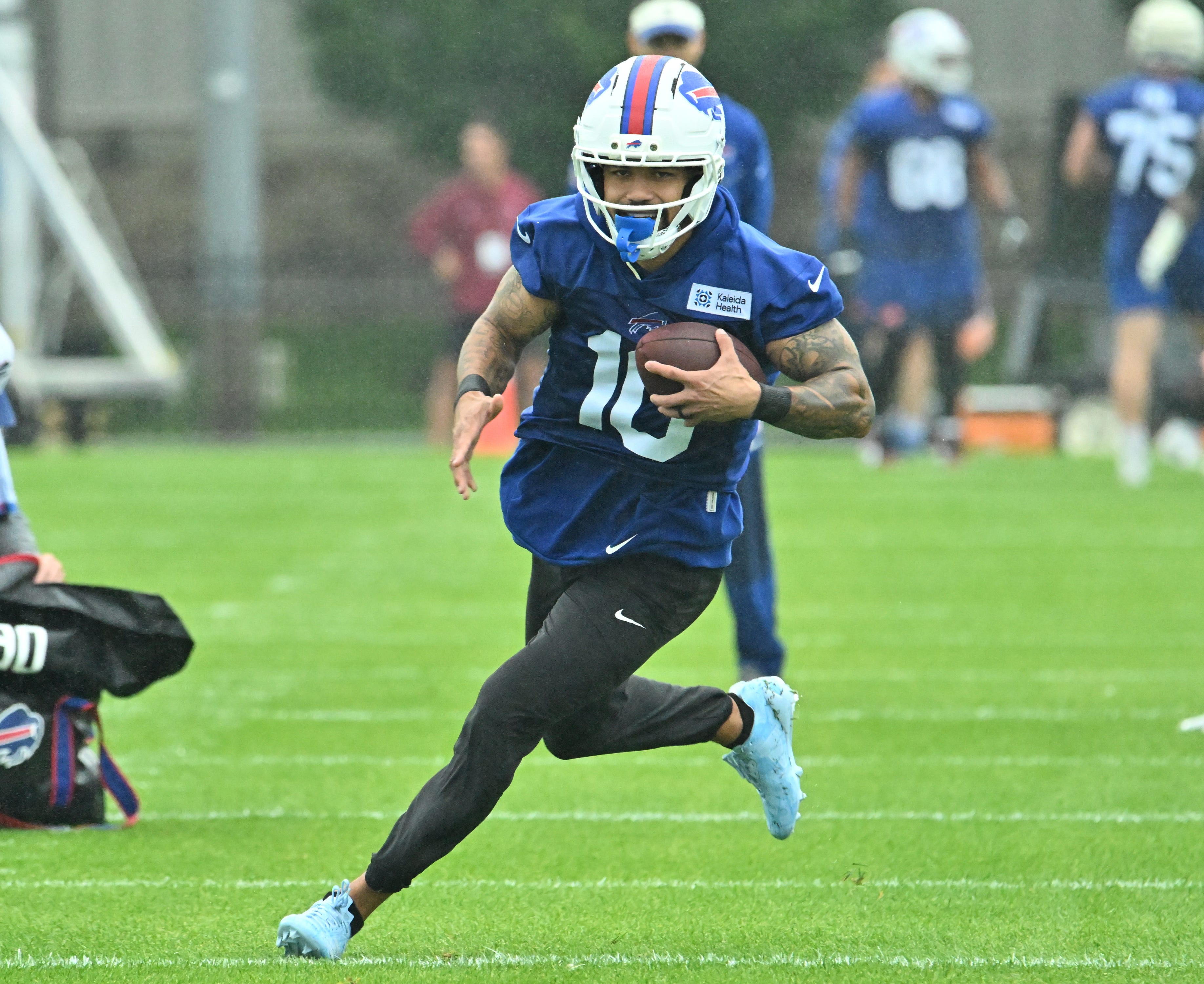
Buffalo's next opponent changes the standard of evidence. On Thursday, November 26, Kansas City visits for an 8:20 p.m. Eastern Thanksgiving kickoff. The Bills will arrive at 9–1 after six straight victories. That record has real weight in the AFC race, but the immediate test is less about how many consecutive wins are printed on a schedule and more about whether the things that worked against Miami can be repeated when the other offense can punish a single wrong adjustment.
GOATIFY
GOATIFY NFL
Browse football apparel and accessories as Cook and Shakir help Buffalo sustain its winning run.
The Dolphins had to start Kyle McCord because Malik Willis was unavailable. Their passing game produced only seven first-half yards and never entered a consistent rhythm. That does not mean Rousseau's pressure or Hamlin's interception were unearned; it means the sample includes an opponent whose alternatives were limited. Kansas City's offense presents a much more demanding assignment. A pass rush that disrupts a backup's timing is only part of the solution when a quarterback can identify pressure, exploit the space it vacates and string together conversions.
For Rousseau the question becomes how to produce pressure without leaving the rest of the defense exposed. His 2026 move to outside linebacker under Jim Leonhard has generated excellent sack production, but opponents can respond by directing help toward his side, changing protection and forcing secondary rushers to win. Buffalo's linebackers and defensive backs have to understand the coverage behind those calls; the four-man rush cannot simply expect two clean sacks every week. Against Kansas City, one hurried pass is useful only if the next passing lane is defended.
The red zone is an offensive concern, not a cosmetic statistic
Allen's 304 passing yards will not be the number Kansas City's defensive coaches study most carefully. They will examine why Buffalo sometimes sustained a drive and then finished it with a field goal, and why two consecutive late-half decisions became interceptions. A shorter turnaround leaves less time to install a completely new plan, making execution of familiar plays particularly important. Buffalo does not need to become conservative to improve. It needs to reduce the chances it gives away while retaining the run-pass flexibility that makes Allen difficult to defend.
Cook's streak provides a natural starting point, but his yards-per-carry against Miami show that a touchdown can coexist with resistance between the tackles. The Chiefs may challenge Buffalo to gain the same tough yards without allowing Shakir to create 30-plus-yard chunk plays. If the offense responds by depending on Allen to manufacture every third down, the risk of pressure and risky throws increases. Efficient first-down gains, clean protections and well-timed intermediate routes are more sustainable answers than asking an MVP-caliber quarterback to escape a problem on every series.
Buffalo's six-game run can be viewed in two ways that are both true. The Bills have developed a defense capable of rescuing games when the offense falters; that is a substantial asset in a long season. They have also offered recent evidence that the offense can be dragged into inefficient red-zone sequences and avoidable giveaways. The Dolphins result did not resolve that tension, because Miami could not exploit it. Thanksgiving is the first immediate chance to discover whether the defense is creating genuine championship-level insulation or merely enough comfort to disguise mistakes that tougher teams will not forgive.
Rousseau did not merely reach a round number. His ten sacks are a genuine 2026 breakthrough in a new defensive role, and the Bills' collective effort left Miami without a touchdown for another Sunday. Cook's rushing consistency, Shakir's explosive catches and Allen's ability to move the ball made the victory possible even when the offense lacked precision near the goal line.
The next step is to stop treating those qualities as substitutes for one another. Buffalo should be able to both rush the passer and finish red-zone possessions; it should be able to produce chunk plays without handing opponents the ball. Miami never found the offensive tools to punish the gaps. Kansas City, arriving on November 26, offers a much more revealing measurement. The Bills have earned their 9–1 start. What they do with that foundation now matters more than how easy 26–9 looks in the standings.
GOATIFY
GOATIFY NFL
Shop GOATIFY NFL and American football shirts, hoodies and stickers.





















