Will Lee Forced Two Fumbles. Carolina Took Control of the South.
GOATIFYIn a game with seven lead changes, the decisive play was not the winning kick. It was a rookie defender refusing to concede a touchdown even when the runner appeared to have won the race. Carolina beat Baltimore 35–33 on Sunday, November 22, 2026, and emerged with a two-game NFC South lead. The obvious numbers were Bryce Young's 254 passing yards and two touchdown throws, Chuba Hubbard's 120 rushing yards and two touchdowns, and Ryan Fitzgerald's 37-yard field goal with 1:44 remaining. Yet the play that gave those numbers room to matter came from cornerback Will Lee III.
Lee dislodged the ball from Justice Hill near the Carolina goal line, turning a dangerous Baltimore advance into a touchback. He forced another fumble later and helped create Tyrel Dodson's game-ending interception. It was the sort of defensive contribution that changes a game without adding points to its own team's scoreboard. Carolina needed every bit of it against a Ravens offense that finally found explosiveness but could not protect the advantages it created.
There is also a wider story here. Carolina is 5–5, not an unstoppable contender, and Baltimore is 4–7 despite having enough talent to create a 33-point afternoon. The division table made Sunday's result much bigger than one chaotic home win. Understanding why starts with the ball that never reached the end zone.
Will Lee's goal-line punch-out turned a touchdown threat into nothing
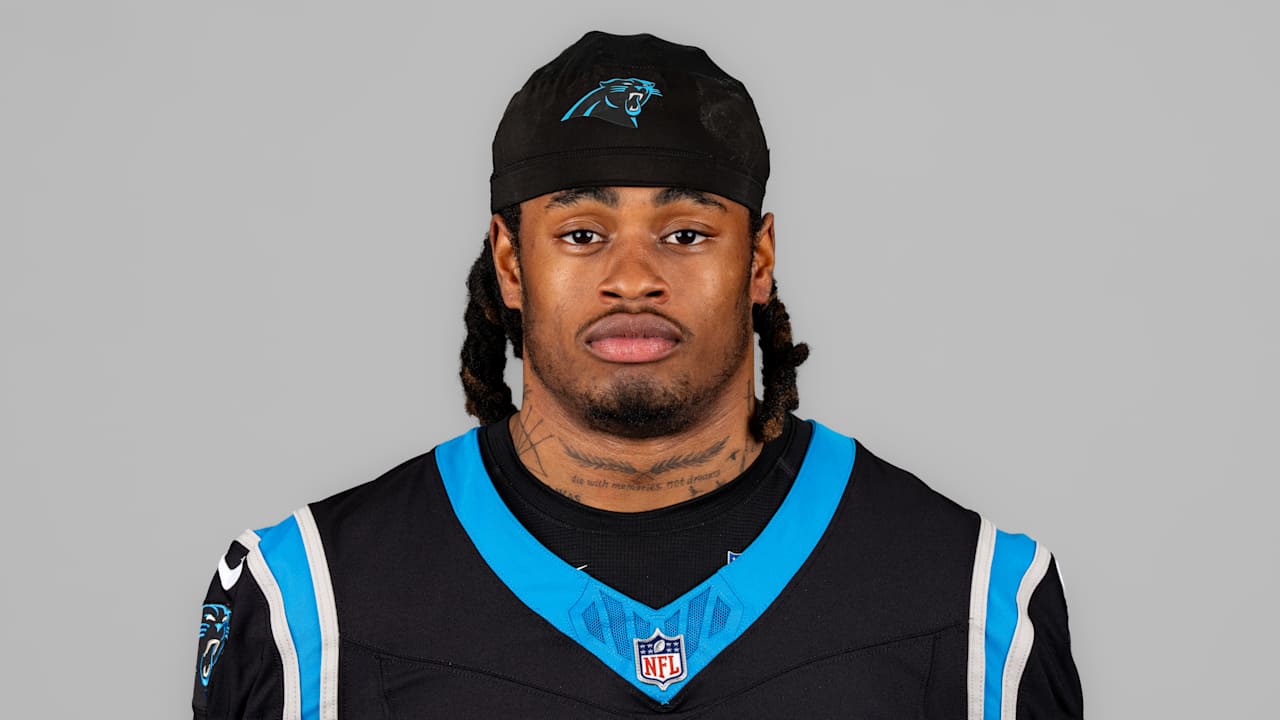
Justice Hill had produced the type of run that makes a defense look beaten before the whistle. He gained 36 yards and was almost at the goal line when Lee closed on him from behind. Hill could see the touchdown in front of him, but carrying the ball through the final stride still mattered. Lee attacked the exposed football, the ball came out and crossed the back of the end zone, and Carolina was awarded a touchback. Baltimore had turned an explosive offensive play into zero points and a change of possession.
A touchdown from that position was not technically inevitable; football has a long history of goal-line tackles and penalties. Nevertheless, the value of the turnover was enormous because the Ravens had moved the ball into scoring position and had a realistic chance to build their lead. A routine stop would have kept Baltimore with the ball. A tackle after the goal line would have meant six points before the conversion. The forced fumble erased both paths, and the rule on a loose ball leaving the opponent's end zone supplied an unusually strong reward for the defender's effort.
The difference between chasing a runner and chasing the ball
Lee did not need a spectacular leap, an elaborate blitz call or a teammate to hold up Hill. His intervention was about angles and awareness: pursue the runner until the play is finished, notice which arm is protecting the football, and attack a narrow window before the runner crosses the plane. The Panthers were already dealing with a Baltimore attack that had scored through both conventional and inventive plays. One turnover at the goal line let them survive a sequence in which their own defense had largely been stretched.
GOATIFY
GOATIFY NFL
Shop GOATIFY NFL fan gear for supporters who notice every game-changing defensive play.


The rookie's second forced fumble came against Derrick Henry early in the fourth quarter. That one had a different shape. Henry is a physical runner who can turn ordinary contact into several more yards; creating a loose ball against him is hard even for experienced defenders. Lee's disruption denied Baltimore another clean possession and helped explain why Carolina's defenders were still in the game despite the volume of points being scored. The two takeaways were not interchangeable. One stopped a likely score on the brink; the other interrupted a drive in a half when field position and possession were becoming more precious by the minute.
And Lee still had a decisive contribution in reserve. Baltimore trailed by two late, so one completed pass and a field-goal opportunity might have changed everything. Jacoby Brissett threw down the right side with the clock nearly exhausted. Lee got a hand to the ball, and Tyrel Dodson collected the deflection for an interception with 33 seconds left. Dodson's catch appears in the interception column. Lee's influence shows up only when the play is watched rather than skimmed as a line of statistics.
That is why focusing entirely on the final 37-yard kick would miss the most distinctive part of the victory. Fitzgerald converted the advantage that the offense had constructed. Lee helped ensure the opponent could not immediately take it back. Carolina did not suddenly become a dominant defense; allowing 33 points rules out that claim. But it manufactured three moments of control in a game where extended control was otherwise almost impossible to find.
Young and Hubbard found another answer every time Baltimore led
Young's 254 yards and two touchdown passes matter because they arrived in a game that offered very little protection against a single mistake. Carolina even conceded a safety during the wild opening half. The Panthers could not simply retreat into a conservative script and assume the defense would take care of the rest. Baltimore repeatedly generated big plays and carried a 26–22 lead into the break. Carolina had to keep scoring without letting the urgency produce reckless possessions.
Young gave the Panthers both conventional quarterback production and the capacity to use unexpected designs. One of Carolina's scoring plays involved a trick-play sequence that ultimately finished with a touchdown pass to Mitchell Evans. Another Young touchdown went to Tetairoa McMillan. Those completions were useful for more than the scoreboard; they forced Baltimore to respect the pass rather than loading every defender into the box against Hubbard. Carolina kept finding ways to ask the Ravens to defend the full width and depth of the field.
Pressure is not measured only by yards
The closing drive showed the other side of a young quarterback's job. Baltimore had retaken the lead 33–32 on Derrick Henry's 15-yard touchdown run with 6:32 remaining. Young did not need an impossible highlight or a desperate fourth-down heave. He needed to move the ball into a range where his kicker had a realistic chance. That requires managing the clock, taking what the defense permits, and trusting that moving the chains is more useful than hunting one dramatic completion.
Fitzgerald then made the 37-yard kick to restore a 35–33 advantage. The result did not become safe at that moment; 1:44 was still enough time for another Baltimore drive. But the sequence demonstrated something Carolina badly needed to show: the offense could respond after surrendering another lead. A team chasing a division title cannot wait for every game to become comfortable. It has to win the ones where its best players are asked to perform under the least forgiving circumstances.
GOATIFY
GOATIFY NFL
Find GOATIFY American football styles to celebrate crucial fourth-quarter drives.
Hubbard supplied the balancing force. His 120 rushing yards came on a heavy 27-carry workload, and he scored twice. The volume matters almost as much as the yardage. A runner willing to absorb that many carries helps an offense avoid becoming predictable when it has to protect its quarterback or shorten a late-game possession. Hubbard had also carried 27 times in the previous week's win over New Orleans. Two consecutive games with that workload say more about Carolina's trust in its running game than any single explosive dash.
His production also placed him alongside Christian McCaffrey in a narrow franchise category: at least 1,000 scrimmage yards and 10 touchdowns through the team's first 10 games. It does not make Hubbard and McCaffrey identical players. It does illustrate how central Hubbard has become to the 2026 attack. Carolina has a quarterback who can operate from different looks and a back capable of wearing down a defense without needing to score on every carry. Against Baltimore, that combination gave the Panthers enough offense to survive the kind of game in which a normal afternoon would not have been enough.
The important distinction is between winning because everything works and winning despite a lot going wrong. Young and Hubbard did not erase the safety, the kick-return touchdown or every failed snap. They kept producing enough usable possessions to ensure that Lee's turnovers would matter at the end. That is less tidy than a blowout, but for a team trying to put distance between itself and its division rivals, it is a valuable ability.
Baltimore scored 33, but its mistakes kept handing Carolina a lifeline

For Baltimore, the final score presents a cruel puzzle. An offense that had failed to top 20 points in any of its previous five games scored 33. The Ravens gained 338 yards before halftime and generated a spectacular 52-yard touchdown connection from Brissett to Rashod Bateman out of a trick-play sequence involving a direct snap to Henry and pitches in the backfield. Dontez Walker added an 86-yard kickoff-return touchdown. Those are not the ingredients of a team incapable of creating big plays.
Yet Baltimore also produced almost every category of costly giveaway. Lee forced the Hill touchback near the goal line. Henry lost a fumble. The Ravens muffed two punts. Brissett's late pass became Dodson's interception. The giveaways had different mechanics and occurred in different phases of the game, which makes them harder to dismiss as one bad decision by one player. The pattern was broader: the Ravens could win space or create momentum, but they struggled to finish possessions and protect the value they had already earned.
Henry's late touchdown could not rescue an unstable afternoon
Henry's 15-yard scoring run with 6:32 left should have been a defining moment for Baltimore. It handed the Ravens a 33–32 lead, their latest advantage in a game that had repeatedly swung between the teams. Henry finished with 94 yards on 13 carries. His eventual exit for a concussion evaluation complicated the closing stages, but the central problem had already appeared: a lead was not secure because the Ravens had given Carolina too many chances to answer.
GOATIFY
GOATIFY NFL
Browse GOATIFY NFL gear for fans who track turnovers and division races.
Brissett completed 24 of 37 passes for 276 yards, a touchdown and an interception. A quarterback can put together a productive statistical line and still leave with a loss when the team's mistakes pile up across offense and special teams. That is not an argument that Brissett played a flawless game. It is a reminder that his numbers alone cannot explain an opponent scoring 35 or the repeated field-position swings that changed which side was defending a lead.
Even Carolina suffered a painful goal-line moment. Hubbard was stopped on a fourth-down rush near the end zone, a play that showed Baltimore's defense could still make important individual stands. The contrast was that Carolina eventually turned its late opportunity into a field goal, while the Ravens saw an even more promising attacking run end with the ball rolling out of the end zone. In a two-point game, that asymmetry is enough to make every missed chance feel enormous.
Jesse Minter's team has now lost six consecutive games and sits at 4–7. The one-touchdown magic trick is not a stable strategy for reversing that situation. Kick-return scores and clever backfield designs can be weapons, but they cannot excuse ball-security lapses or repeated short-field opportunities for an opponent. Injuries add another layer of concern: Henry required a concussion evaluation, Trey Hendrickson exited with a knee injury, and Roger Rosengarten also suffered a concussion. The Ravens have to assess availability as well as execution before facing Houston.
Carolina's advantage is tangible but not decisive. At 5–5, it is two games ahead of Tampa Bay, Atlanta and New Orleans, with seven regular-season games remaining. Other NFC South results helped create that gap. The Panthers also have a direct opportunity to reinforce it when they play in Tampa Bay on November 30. What Sunday showed is not that Carolina has solved every weakness; it is that the team can steal a result from disorder and emerge with a stronger position than its record alone suggests.
If Baltimore wants a lesson from the game, it is this: 33 points are not a shield against losing possessions. If Carolina wants one, it is that effort away from the football can be as consequential as the quarterback or running back making the final scoring play. The decisive exchange was not the loudest one. It was the moment Lee reached out, knocked the ball loose and refused to let the opponent's near-touchdown become an actual one.
The Panthers' 35–33 victory will be remembered as a Bryce Young and Chuba Hubbard result, and both earned the attention. But it also belonged to Will Lee III: two forced fumbles, a crucial goal-line touchback, and a deflection that produced the last interception. Fitzgerald's 37-yard kick decided the final lead change, not the whole story of how Carolina reached it.
For the Panthers, the immediate reward is a two-game NFC South cushion. For Baltimore, another explosive performance dissolved into a sixth consecutive defeat. When those teams review the film, they will find their explanations in opposite places: Carolina in the small defensive interventions that preserved opportunity, and Baltimore in the chances that vanished before they could become points.
GOATIFY
GOATIFY NFL
Shop GOATIFY NFL and American football shirts, hoodies and stickers.