

Chennedy Carter Can Still Score. Three WNBA Teams Face Different Questions.
GOATIFYChennedy Carter is one of the most difficult free agents to assess heading into the 2027 WNBA season. Her ability to get past the first defender and finish in traffic is precisely the sort of offensive skill that teams spend years searching for. Yet Las Vegas waived her in July, leaving another chapter of her WNBA career unresolved. A November 23 analysis identified Chicago, Indiana and Washington as potential destinations, but none should be interpreted as a reported signing or negotiation.
The distinction matters because the basketball case is genuinely interesting without assuming a deal is imminent. Carter averaged 17.5 points for Chicago in 2024, then returned to the league with the Aces in 2026. Her full Las Vegas stint produced 12.2 points per game, according to reporting at the time of her release. That is a useful scoring contribution for a reserve guard. The question is not whether she can create offense, but which team has the right structure to benefit from it consistently.
Chicago knows what Carter can do
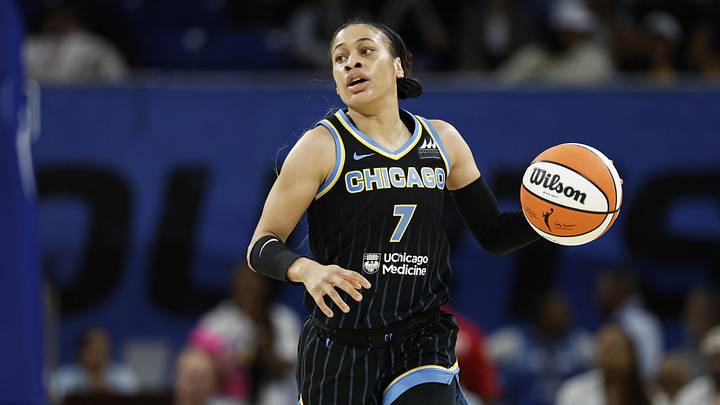
Chicago is the clearest historical comparison. Carter's 2024 season showed that she could handle meaningful possessions and remain productive when opposing teams were prepared for her. The Aces' official career summary records 20 starts in 33 appearances, with 3.1 assists alongside her scoring. Her ability to manufacture a good attempt from a possession that has stalled would still have value for the current roster.
The difference is that the Sky have a different set of priorities now. Sydney Taylor offers perimeter scoring, while Kamilla Cardoso gives them a substantial interior target. A Carter signing would have to complement those players rather than simply recreate the conditions that existed two seasons ago. Carter attacking a rotating defender after a Cardoso screen is an attractive option. A possession that ends with two guards waiting for their turn to isolate is not.
There is also a developmental opportunity cost. Chicago needs to learn which of its younger players can be reliable primary initiators, and it cannot do that if a veteran monopolizes the ball. If Carter returned, the useful approach would be to design clear minutes for her to handle the offense, particularly when a starting guard sits, while maintaining roles for the other creators. Her presence could lift the floor of a second unit without forcing Chicago to abandon its longer-term evaluation.
GOATIFY
GOATIFY WNBA
Represent your favorite WNBA team with GOATIFY.


BALLERina Girl's Basketball Ballet Air Sticker
Add basketball personality to your favourite gear.
Shop Now ↗

Caitlin Clark G.O.A.T. - Greatest of All Sticker
Add basketball personality to your favourite gear.
Shop Now ↗
BALLERina Girl's Basketball Ballet Air Sweatshirt
A basketball fan design for everyday wear.
Shop Now ↗
BALLERina Girl's Basketball Ballet Air Sticker
Add basketball personality to your favourite gear.
Shop Now ↗Familiarity is not proof of renewed interest on either side. The Sky would need to believe that a new arrangement would work better than merely relying on the memory of her impressive individual scoring season. The basketball upside is clear enough to merit consideration, but the role would need to be defined before any commitment.
Indiana needs more than another scorer
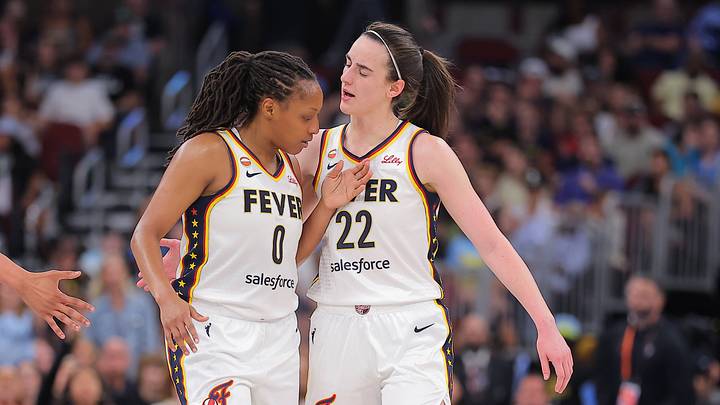
Indiana presents a different challenge. Any evaluation starts with Kelsey Mitchell's future, because a potential opening in the backcourt would depend on what happens in free agency. If Mitchell remains with the Fever, Carter would be more naturally considered as additional depth. If she leaves, Indiana would need to assess how much of her scoring and off-ball threat could realistically be replaced.
Carter's acceleration would be an appealing complement to Caitlin Clark's passing range. Clark can force defenders to pick her up well beyond the three-point line, which opens lanes for teammates who can attack a closeout or run ahead in transition. Carter's value would be greatest when she can exploit that disrupted defensive shape, rather than requiring the entire half-court offense to be reorganized around her.
That is not the same as replacing Mitchell's particular skill set. A guard who scores by breaking down a defender with the ball provides a different form of pressure from a shooter who can threaten the defense while somebody else directs the offense. Indiana has to account for the quality of the possessions that Clark creates even when she is not taking the shot. Lineups need enough spacing to keep help defenders from sitting in the lane.
Defensive balance matters just as much. If the Fever use roster resources on another perimeter creator, they need reliable defensive options elsewhere. A competitive team should ask whether a proposed addition solves its biggest lineup problem or merely adds another strength to an already productive area. For Indiana, Carter is an interesting conditional option, not a reason to assume Mitchell is departing or to neglect a complementary defender.
GOATIFY
GOATIFY WNBA
Discover GOATIFY basketball fan apparel.

Caitlin Clark G.O.A.T. - Greatest of All Sweatshirt
A basketball fan design for everyday wear.
Shop Now ↗
Caitlin Clark Golden Goose - Women's Sticker
Add basketball personality to your favourite gear.
Shop Now ↗


Washington must protect its young core's development
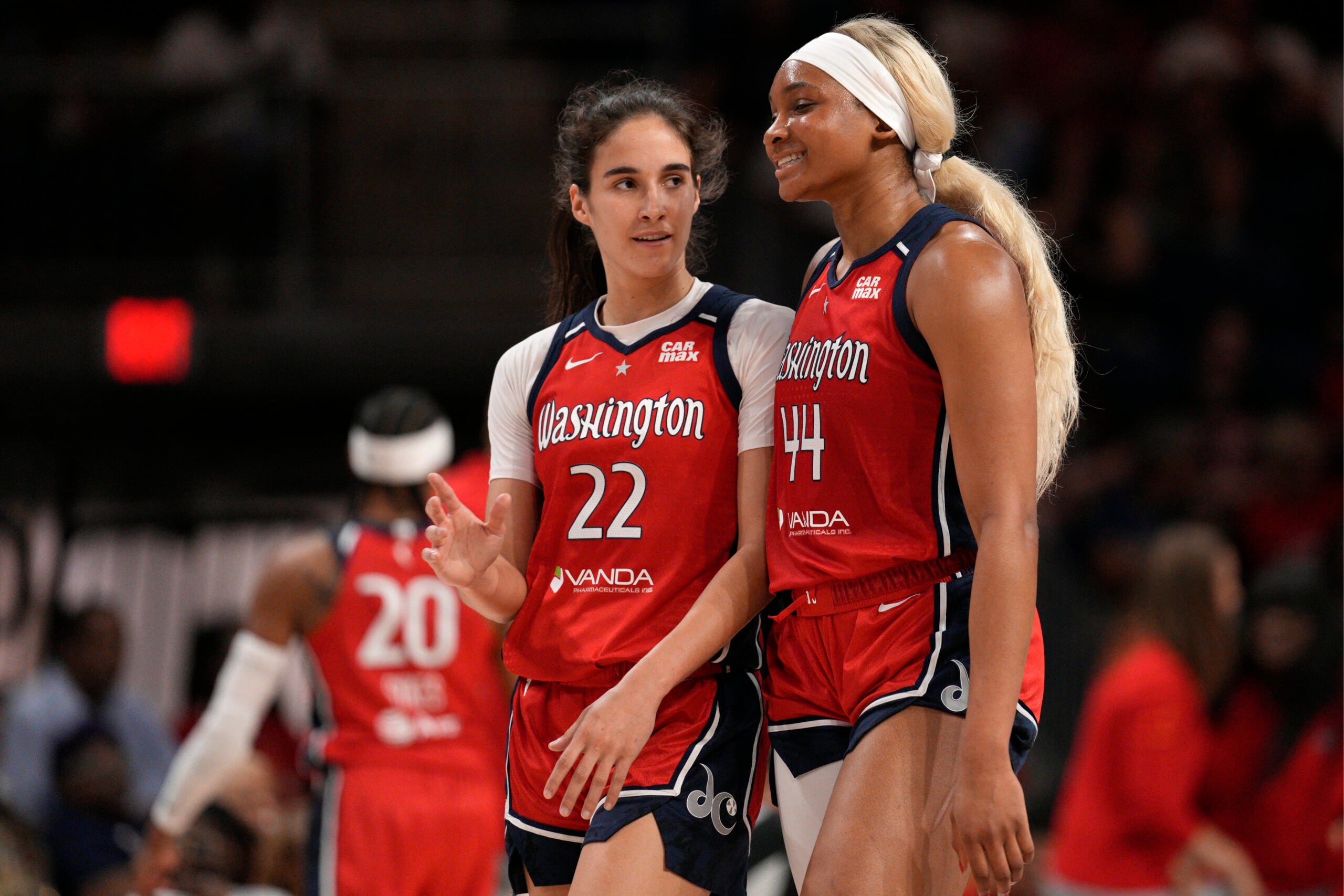
Washington offers a third kind of fit. Instead of returning to a former team or filling a vacancy on a star-driven offense, Carter could help bridge the gap between a promising young group and a team capable of winning difficult playoff possessions. Sonia Citron and Kiki Iriafen earned All-Star selections as rookies in 2025, a striking sign of the foundation that Washington has assembled. Their continued progression should shape the franchise's next addition.
A downhill guard could make life easier for both. A defender stepping into Carter's driving path creates a passing window to a rolling big or a wing on the perimeter. That means Citron and Iriafen would not have to initiate every possession themselves. In games where opponents take away the first action, Washington could turn to a more experienced scoring guard to put pressure on the paint.
However, adding a veteran creator is only useful if the established young players continue receiving important touches. Washington's coaching staff would need to distinguish between short stretches that demand immediate scoring and the longer developmental work of helping its core read defenses. The ideal arrangement would make Carter an additional tool, not the default solution to every broken play.
Compared with Chicago or Indiana, the Mystics' appeal is the possibility of carving out a specialized role without expecting Carter to reproduce an entire former backcourt. But there is no confirmed offer from Washington, and the organization has other ways to reinforce its roster. A decision should be made on fit, availability and the expected rotation, not on the appeal of a high-profile comeback alone.
The common requirement across all three destinations is a clear job description. Chicago has a proven historical example, Indiana has a potential backcourt vacancy, and Washington has a young core that could use another source of paint pressure. None of those possibilities is a confirmed move. Carter's next WNBA opportunity, if it comes, should be judged on the minutes she would actually play and the teammates around her, not simply the scoring numbers that make her a compelling offseason discussion.
GOATIFY
GOATIFY WNBA
Shop GOATIFY WNBA products from the WNBA-filtered basketball collection.

Caitlin Clark Golden Goose - Women's Sweatshirt
A basketball fan design for everyday wear.
Shop Now ↗


BALLERina Girl's Basketball Ballet Air Sticker
Add basketball personality to your favourite gear.
Shop Now ↗

















