Larkin Finally Got Montreal. Detroit Got the Future.
GOATIFYOn November 22, 2026, the Montreal Canadiens ended the Dylan Larkin saga with an enormous deal that will be debated long after the first goal he scores in a new uniform. Montreal secured the thirty-year-old center from Atlantic Division rival Detroit, while the Red Wings received Kirby Dach, Samuel Montembeault, prospect Michael Hage and four draft selections, including two conditional first-rounders. Picks also moved back to Montreal. This is not a simple star-for-prospect swap; it is two clubs deciding to value completely different kinds of hockey time.
For the Canadiens, the calculation is immediate: Nick Suzuki no longer needs to be the only center opponents must plan around, and Larkin's history of thirty-goal seasons gives their top six a proven second engine. For Detroit, the calculation is more difficult and more distant. The former captain had requested a trade, been removed from the captaincy and then suspended without pay after declaring he would not continue playing for the team. Keeping an unhappy star was not an ordinary option for a club already struggling in the standings.
There are three questions beneath the shock of the names. Did Montreal pay too much for a player whose salary will remain on its books for five more seasons? Did Detroit obtain enough quality rather than merely an impressive quantity of assets? And what actually changes on the ice for teams that remain direct divisional competitors? The answers require looking beyond the first photo of Larkin in a Canadiens jersey, which had not yet appeared when the trade was announced.
Dach, Montembeault, Hage and four picks: the price is the story

Montreal did not obtain Dylan Larkin by tossing Detroit an expendable depth player and a distant draft selection. It surrendered a forward who once looked capable of becoming a cornerstone, a goaltender with substantial NHL experience, one of its most promising prospects and four draft choices. Two of those choices are conditional first-rounders. There is a reason the transaction shook the Atlantic Division: Montreal traded several different types of future flexibility for one established center it expects to improve the present team.
The official package gives Detroit Kirby Dach, Samuel Montembeault, the rights to Michigan center Michael Hage, a conditional first in 2027, a conditional first in 2029, a second-rounder in 2027 and a fourth-rounder in 2028. Montreal receives Larkin along with Detroit's 2028 second-round and 2027 third-round picks. Later on the same night, Montreal dealt that acquired 2028 second-round selection to Anaheim for Detroit's 2027 second-round pick, which the Ducks already held. The timing matters. That later swap is a separate move and should not be accidentally counted as extra compensation Detroit sent directly in the Larkin transaction.
The two first-rounders dominate the price discussion, but the protections are important. Reporting indicates that both are top-10 protected; their value therefore depends on Montreal's actual finishing positions and the exact conditional mechanisms. A protected first is a meaningful asset, not a guarantee that Detroit lands a top-five selection. Likewise, describing the trade as merely four players and six picks makes it sound balanced in headcount while concealing the larger point: Montreal gave up an enormous portfolio of optionality for one high-end center with a sizable existing contract.
GOATIFY
GOATIFY Hockey
Explore GOATIFY hockey designs while digging into the trade that changed two Atlantic rivals.


Dach is an unusually interesting part of that portfolio. The former third-overall pick has talent, size and experience in the middle, but injuries and inconsistent production prevented him from completely filling the second-line role Montreal needed. At the time of the trade he had two goals and six assists in 22 games during the 2026-27 season. The Canadiens are not receiving a guaranteed career year from Larkin in return for a guaranteed future star in Dach. They are exchanging an uncertain younger contributor for a much more established, expensive player whose ability to deliver now has been proven repeatedly.
That distinction also explains why the decision was not simply about whether Larkin is the best player in the deal. He plainly has the most complete NHL track record of the moving pieces today. The harder question is how many future NHL seasons, cap options and potential trade assets a club should sacrifice to gain an immediate competitive edge. If Larkin improves Montreal's top six and gives the team a real second scoring line, the cost will seem like the price of ambition. If the jump is smaller than expected, all those outgoing assets will make the same deal look much more severe.
Suzuki and Larkin give Montreal two centers opponents must respect

The most persuasive argument for Montreal is less glamorous than the blockbuster label: the Canadiens now have Nick Suzuki and Dylan Larkin available to anchor separate lines. Suzuki already supplies dependable high-end production and leadership. Larkin gives the coaching staff another player who can skate through the middle, support defensive responsibilities and finish opportunities at a level the team has struggled to get consistently from its second center. For a club hoping to survive multiple difficult postseason matchups, that kind of depth can be more important than adding a specialist scorer.
Montreal entered the deal at 14-6-4, among the better teams in the Atlantic, while Detroit sat at 8-12-3. Those records do not guarantee a playoff result, but they clarify the strategic direction. Montreal is buying from a position of strength and aiming to turn regular-season progress into a deeper run. Detroit is accepting the reality that it needs a different long-term construction. Larkin is not joining a team that needs him to carry every offensive possession; in theory, he is joining one that can share the heaviest assignments instead of giving them to the same center every night.
The speed is an important part of that wager. Larkin can turn ordinary puck recoveries into controlled attacks and pressure opponents before they settle into defensive coverage. He has scored 30 or more goals in six NHL seasons, including each of the previous five, which makes his finishing record more credible than a short burst of hot shooting. He also brings international experience from the United States' gold-medal run at the 2026 Winter Olympics. Those achievements do not promise instant chemistry with unfamiliar wingers, but they show the breadth of work he can perform in games against strong opposition.
GOATIFY
GOATIFY Hockey
Browse GOATIFY hockey gear as Montreal tests its new one-two punch at center.
There is also a power-play argument. A second center who can gain the offensive zone and create threats through the middle can change how opposing penalty killers allocate attention. Montreal has lacked consistency on the man advantage this season, and simply rolling the same struggling look again would not solve that. Larkin might help redistribute touches and make second-unit minutes dangerous. However, it would be premature to assign him an exact unit, line combination or scoring projection before coaches actually deploy him. A transfer is not the same as a demonstrated fit.
The contract makes this bet more complicated. Larkin is thirty and has five seasons left on his eight-year, $69.6 million deal, with an annual cap hit of $8.7 million. That buys Montreal predictability, but it also limits flexibility if the player's prime years do not line up with the team's best championship window. Suzuki's established role gives the Canadiens a cushion against needing a heroic turnaround from their new addition. The contract still demands that Larkin remain a genuine top-six difference-maker for years, not merely supply a compelling first-week storyline.
For now the cleanest test is practical: can Montreal spend more of each game with an effective center on the ice, especially against opponents that load their strongest defenders against Suzuki? A balanced roster can win with a less spectacular individual performance if it creates consistent pressure in more shifts. Larkin's arrival offers that possibility, but the proof will come in line chemistry, five-on-five chance quality, special teams and playoff deployment, not the size of the transaction announcement.
Detroit's best asset may be a Michigan center who has not played an NHL game
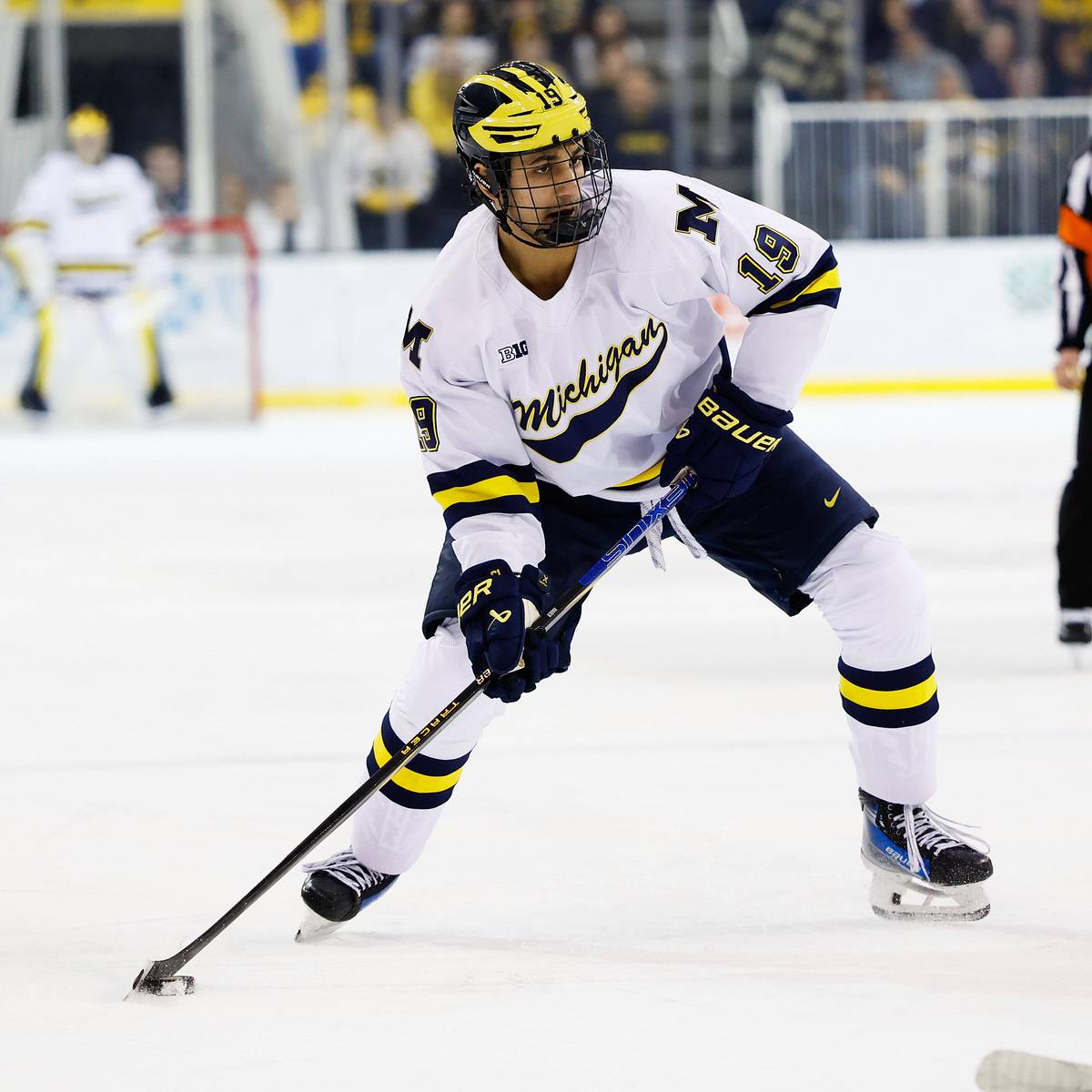
Michael Hage is the name that gives Detroit fans a reason to look beyond the immediate sting of losing their former captain. He is twenty, still unsigned at the NHL level and playing at the University of Michigan, but his production is no hypothetical highlight reel. Hage has 26 points in 13 games this NCAA season, including 21 assists, and entered the deal leading the college scoring race. The Canadiens drafted him twenty-first overall in 2024. Detroit is acquiring his rights and his upside, not a player who is already guaranteed to take over Larkin's minutes on opening night.
That distinction should shape every argument about who won the trade. It is fair to value Hage's ability to distribute the puck, read the ice and progress as a center. It is not fair to slot him automatically into a first-line NHL role or award Detroit a future All-Star before he has signed, developed and faced the league's much faster defensive pressure. Prospect evaluation is probabilistic. A strong junior and collegiate scoring record improves the odds, but even talented young centers can require years of adjustment.
The personal geography makes this exchange even more unusual. Larkin grew up in Michigan, played for the Wolverines and spent his entire NHL career with the Red Wings before this move. Hage is also developing in Ann Arbor. Hockey fans can enjoy that symmetry without mistaking it for evidence that one college star will automatically replace another. Larkin was a fifteenth-overall pick who went on to score 278 goals and 649 points in 818 games for Detroit. Hage's career total will be determined by what he actually becomes, not by the familiarity of the college crest on his jersey.
GOATIFY
GOATIFY Hockey
Find GOATIFY NHL designs for fans tracking Detroit's next era.
Detroit's two conditional first-round picks give it more shots at the top end of future drafts. The additional second and fourth add opportunities to fill supporting roles or serve as future trade chips. That is why the value of the package will be spread over several seasons and possibly several organizations: some picks could become players, some might be moved, and some prospects may fail. The quantity matters because Detroit cannot know in advance which bet pays off. It also means a definitive winner cannot be pronounced just because the transaction chart looks full.
There is a harder emotional reckoning. The 2026-27 Red Wings were already under pressure after a decade outside the postseason. Larkin requested a move during the summer, lost the captaincy in September and stopped playing in late October, leading to an unpaid suspension. None of that changes the hockey value he provided across eleven seasons. But it reduced the usefulness of simply keeping him on the roster, especially once the relationship became public and the team had to decide whether it could realistically restore him to the lineup.
Interim general manager Shawn Horcoff also faces other unresolved roster questions, including the situation involving unsigned defenseman Simon Edvinsson. Acquiring Hage and picks will not solve those tonight. It does give Detroit several routes forward instead of requiring one frustrated player to be the centerpiece of a team that no longer had his full commitment. The trade is therefore a rebuild move with a choice attached: develop these assets patiently, or use them to accelerate a different roster on a new timeline.
Montembeault's uncertain future shows why both teams carry risk
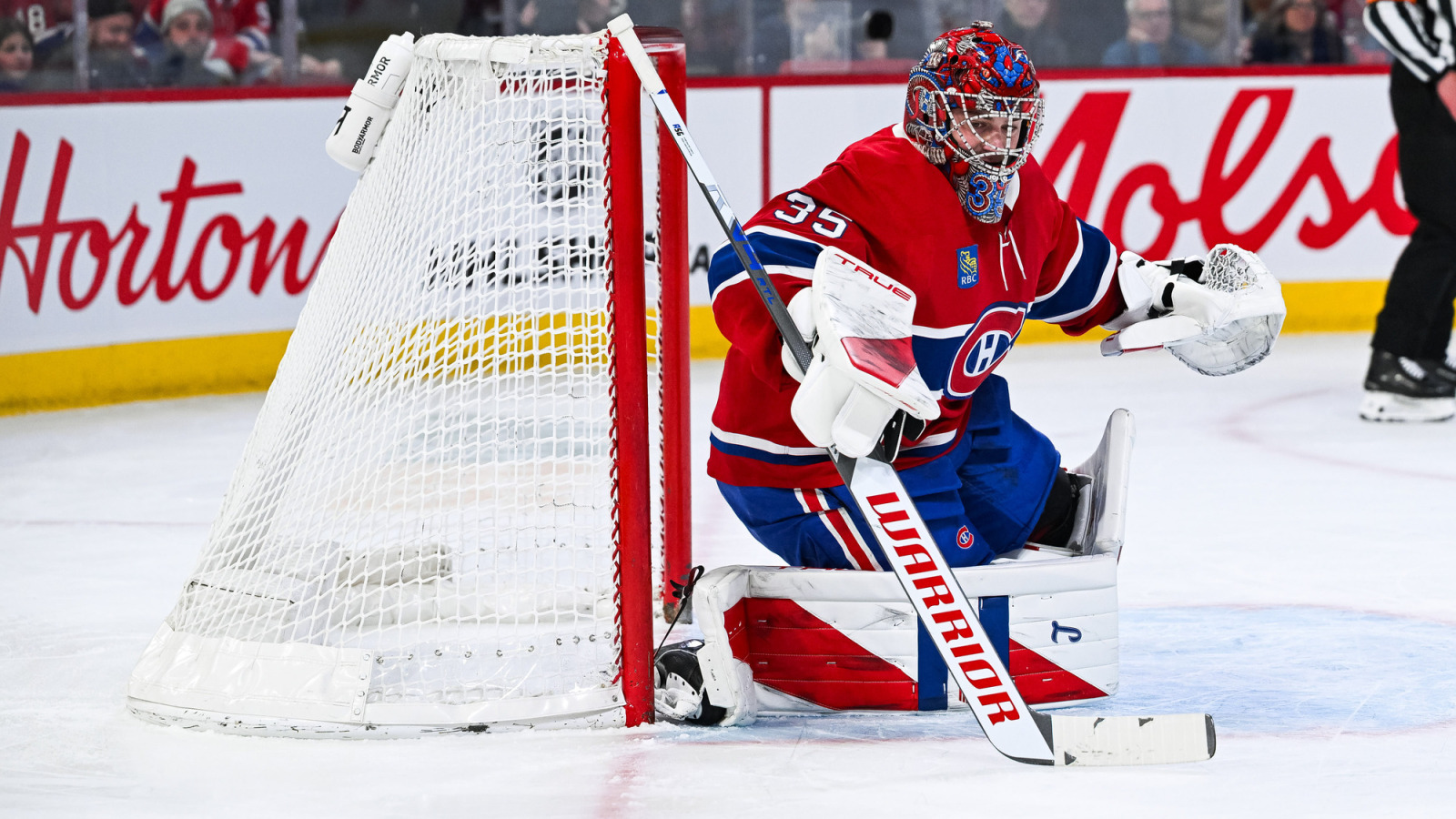
Trading Samuel Montembeault is easy to overlook when the same deal contains Larkin, Hage and two first-round picks. It should not be. A club's goaltending decisions often affect the rest of the roster more sharply than an extra depth forward, and this particular player's recent situation contains genuine uncertainty. He has not appeared in an NHL game this season after suffering an undisclosed practice injury in early October. His 2025-26 numbers were also difficult: a 10-8-4 record, 3.43 goals-against average and .872 save percentage in 25 games, 23 of them starts.
For Montreal, that makes the outgoing asset different from a locked-in starter at the top of his game. The team is trading a goaltender who has experience and past value but whose current health, form and role remain unsettled. Detroit might benefit if he recovers and returns to useful NHL play. It might also be receiving a short-term reclamation project with little control beyond the current season, because his three-year contract runs out at season's end. The headline package is undeniably deep; not every piece within it has the same floor.
Dach is similarly not a finished answer for Detroit. At twenty-five he has enough remaining runway to improve, but health concerns and a record of interrupted development make a dramatic breakout less certain than a draft-night pedigree might suggest. Detroit can afford to give him a different role or more patient evaluation if it chooses. The Red Wings also need to decide what they want out of these two NHL veterans, because their value may be very different from the value of Hage and conditional future firsts. One part of the haul is about immediate competence. Another is about where the franchise could be two or three seasons from now.
GOATIFY
GOATIFY Hockey
Explore GOATIFY hockey favorites as two Atlantic rivals weigh the risks of this blockbuster.
Montreal, meanwhile, takes on the risk that comes with paying a long-term contract while spending future assets in the same move. Larkin's $8.7 million cap hit is manageable when he is performing like a strong second-line center, less comfortable if injury or age eventually narrows his contribution. He does not have to score forty goals to justify the trade, but Montreal will need to see meaningful advantages in matchup depth and postseason minutes. In a cap league, the opportunity cost of an expensive veteran is never only the number on his contract; it is also what cannot be added when another need appears.
Because the two teams share the Atlantic Division, the stakes are unusually visible. Each regular-season meeting invites a comparison between Larkin's current value and the assets he replaced. The Red Wings will hear about Hage's college point totals while the Canadiens will hear about every Larkin scoring streak or quiet week. That is dramatic, but an unhelpful way to judge a multi-season transaction. A protected first is not a useful NHL player until Detroit drafts or trades it; a second-line center cannot single-handedly guarantee playoff series wins. Most of the outcome will not be knowable for quite a while.
The near-term checklist is clearer. Montreal should be judged on whether the new center creates a more difficult top six and whether its remaining goaltending depth remains steady. Detroit should be judged on whether it can integrate Dach and Montembeault sensibly, nurture Hage without rushing him and use its draft capital intelligently. The deal may improve both teams for different reasons, or both may discover the parts they gave away were harder to replace than expected. What it cannot be reduced to is a single opening-night scoreboard.
The easy verdict is that Montreal acquired the best current player and Detroit acquired the most future options. Both descriptions are true, but neither is an adequate final judgment. Larkin is a reliable NHL scorer who could make an already competitive Canadiens team materially harder to match against. Hage and the picks could help Detroit establish a new foundation, but they are promises that still have to be developed into tangible wins.
The context makes the deal larger than its trade chart. Larkin's departure ends an increasingly painful relationship with the franchise that drafted him and leaves Detroit with a chance to set a new course. Montreal, by contrast, is accepting the pressure that comes with trading high-upside youth for a veteran expected to help now. Both organizations have surrendered something difficult to replace: one gave up its most established center, and the other handed over years of potential reinforcements.
So the real contest begins after the transaction. Montreal must turn the Suzuki–Larkin combination into repeatable advantages, while Detroit needs to turn its collection of prospects, players and selections into a roster with a path back to the postseason. The trade might be remembered as the Canadiens' breakthrough or the Red Wings' reset. The first important measurement is not who made the louder announcement. It is which team develops a coherent plan from what it received.
GOATIFY
GOATIFY Hockey
Shop GOATIFY NHL and hockey shirts, hoodies and stickers.