

Gasly Cut Power for 45 Laps. Alpine Still Finished Fifth and Sixth.
GOATIFYPierre Gasly spent most of the 2026 Las Vegas Grand Prix with a fast car he could not run at full power. That is a more interesting story than fifth place on the results sheet might suggest. On a night when positions changed constantly and energy use mattered almost as much as outright pace, Gasly's Alpine could mix with the leading teams. Yet he was instructed to reduce power to keep temperatures under control for roughly 45 of the 50 laps.
The discovery came after the November 21 race: Gasly believed a podium was possible, but was prevented from using his most aggressive settings for most of the contest. Even so, he finished fifth and Franco Colapinto sixth, bringing Alpine 18 points. Both drivers mattered. One managed an unexpected thermal restriction while fighting the front-runners; the other turned an ugly opening stint on used soft tyres into a strong recovery on mediums.
Las Vegas therefore delivered Alpine two kinds of evidence: encouraging pace and a very specific engineering question. The temptation is to declare a podium stolen. The more useful approach is to examine what is confirmed, what remains a plausible counterfactual and what the team must learn before Qatar.
Gasly reached the podium fight, then had to protect the engine
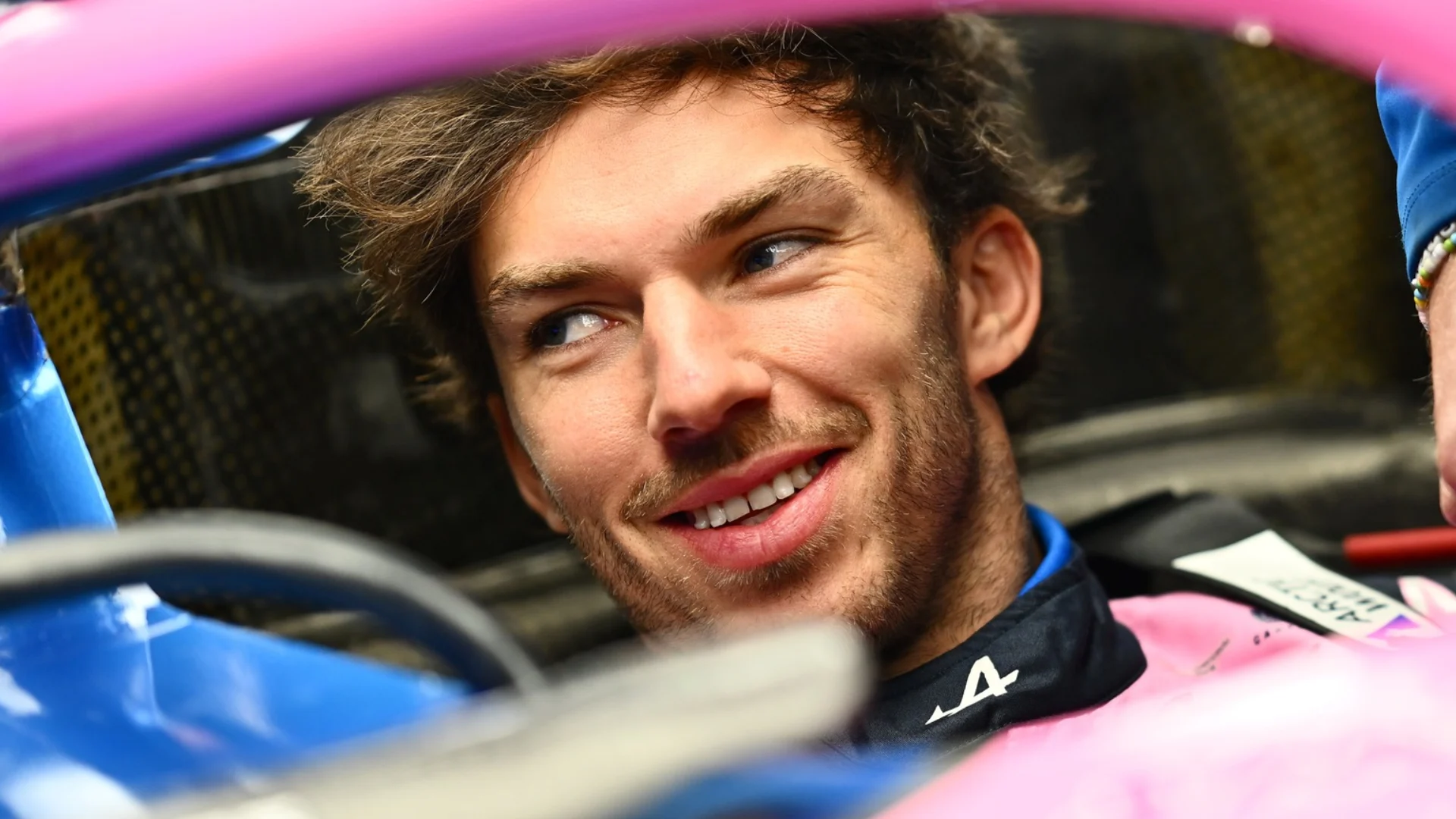
Gasly's fifth place was a strange combination of success and frustration. He was in the argument near the front, at times working his way up to third, yet he could not treat the power available from the Alpine as something he was free to use whenever a rival came into range. The restriction had appeared when his race was beginning to look most promising. According to the driver, rising temperatures prompted the team to instruct him to turn the power down, and the problem remained a factor for approximately 45 laps. That is almost the whole distance at Las Vegas.
The scale of the problem changes how the finishing position should be assessed. A car that is simply too slow can occasionally steal track position with an unusual strategy, but it will generally struggle to defend that position when the faster rivals arrive. Gasly was describing something else: competitive speed that was intermittently inaccessible. In his account, moving to the most conservative setting immediately cost him two places, and he estimated the slowest mode could cost more than a second per lap. Those were the driver's observations, not a verified, constant deficit on every lap; traffic, tyre grip and electrical deployment also changed the gaps.
The team could not just grant his request for maximum performance and assume the temperature warning would disappear. Thermal limits exist to protect hardware and reliability, and a single retirement could have turned what became ten points into none. At the same time, a Grand Prix driver stuck in a fight with top teams will naturally want to spend every available fraction of performance. The resulting conversation between cockpit and pit wall is the tension at the centre of this race, rather than a simple story of Alpine getting its settings wrong.
GOATIFY
GOATIFY Formula 1
Explore GOATIFY Formula 1 gear as Gasly's extraordinary Las Vegas drive unfolds.


Gasly said the more aggressive setting became available again only for the final two laps. On the last lap he briefly moved ahead of Kimi Antonelli, only for the Mercedes to come back past, leaving Gasly fifth. The exchange illustrated both the potential and the limitations of extrapolating from a brief burst of speed. We know he could still compete directly with a front-running car late on. We do not know how his tyres, strategic options or the race around him would have evolved if the power unit had run unrestricted throughout.
That is why a possible podium deserves to be discussed as a live opportunity, not a result retrospectively awarded to Alpine. Gasly had the track position and confidence to believe it was there. The car's operating restriction clearly affected what he could attempt. But the final order also depended on rivals and on an unusually volatile race. The correct conclusion is powerful enough without inventing an alternate podium ceremony: the team scored heavily while carrying a limitation that prevented its lead driver from using all the performance he believed was available.
Las Vegas turned slipstreaming and cooling into opposing demands
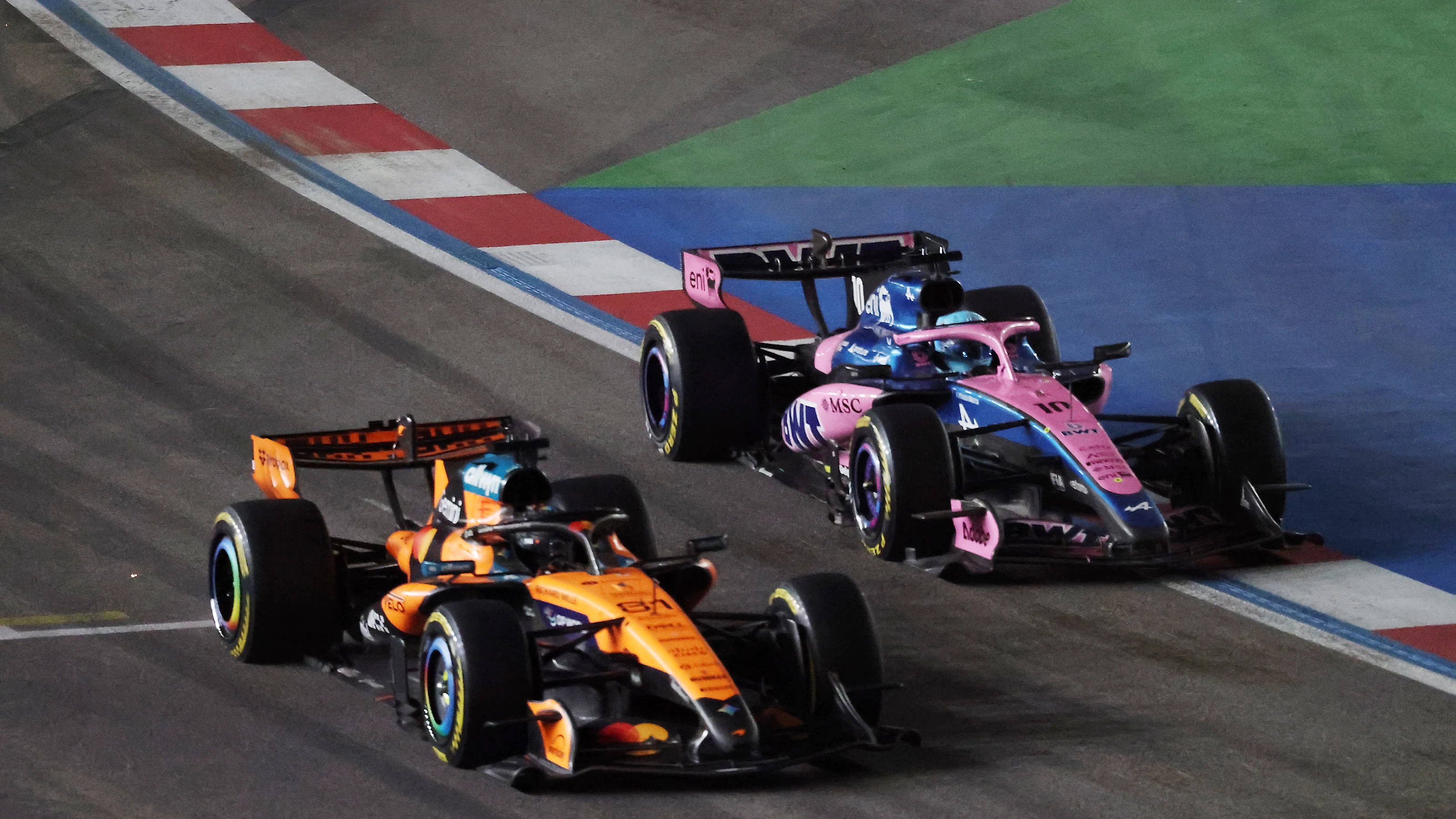
Las Vegas created a specific kind of race in which the aerodynamic benefit of following another car and the energy available for the next straight could overturn positions over and over. The long straights rewarded low drag, while the 2026 power-unit rules gave drivers another set of choices about harvesting and deploying electrical energy. Being ahead at one corner did not necessarily mean being better placed for the following straight. Those dynamics made the Grand Prix exciting, but also complicated any judgement of a car's underlying pace.
For a driver managing temperatures, the same circumstances can be awkward. A slipstream can be an attacking opportunity, helping a car close the gap before the braking zone. Yet following closely may also reduce the clean airflow available to some cooling systems. Whether that specific mechanism caused Alpine's issue has not been established publicly, so it should not be offered as a diagnosis. What Gasly did confirm is that he sometimes had to leave space even when he was able to stay on the gearbox of the rival ahead. His immediate race objective and the instruction to manage the machinery were pulling against each other.
The distinction is more important than it sounds. Normal tyre management may involve backing away for a few laps to prevent a slide and preserve performance for a later attack. Here, the consequence was potentially a change in power-unit settings that made it harder both to catch a car and to defend from one arriving behind. A driver can make an aggressive move to take a position and then be forced to reduce output at exactly the point when another driver is trying to take it back. That produces a contest that does not look like a conventional sequence of clean overtakes.
Gasly compared the shifting field to a cycling peloton: drivers were sometimes trying to remain in the pack and save resources for the next sprint. The analogy is useful without being literal. Formula 1 teams cannot simply calculate an ideal draft as if the power unit were independent of temperature, deployment and reliability. For Alpine, the central trade-off was not only how much pace the car could produce, but when that pace was available and how much could safely be sustained.
GOATIFY
GOATIFY Formula 1
Browse F1 racing designs while exploring the art of following, overtaking and managing pace.


The track also made the night's result less portable to the rest of the calendar. A strong performance here does not guarantee a similar showing on a circuit with longer loaded corners or a very different temperature profile. Nonetheless, getting an Alpine into repeated battles with McLaren, Mercedes and Ferrari was meaningful. The car, the driver and the pit wall had to keep finding usable opportunities. Las Vegas magnified the constraints, but it also revealed that Alpine had enough speed to make those constraints matter.
Colapinto transformed a miserable first stint into sixth place
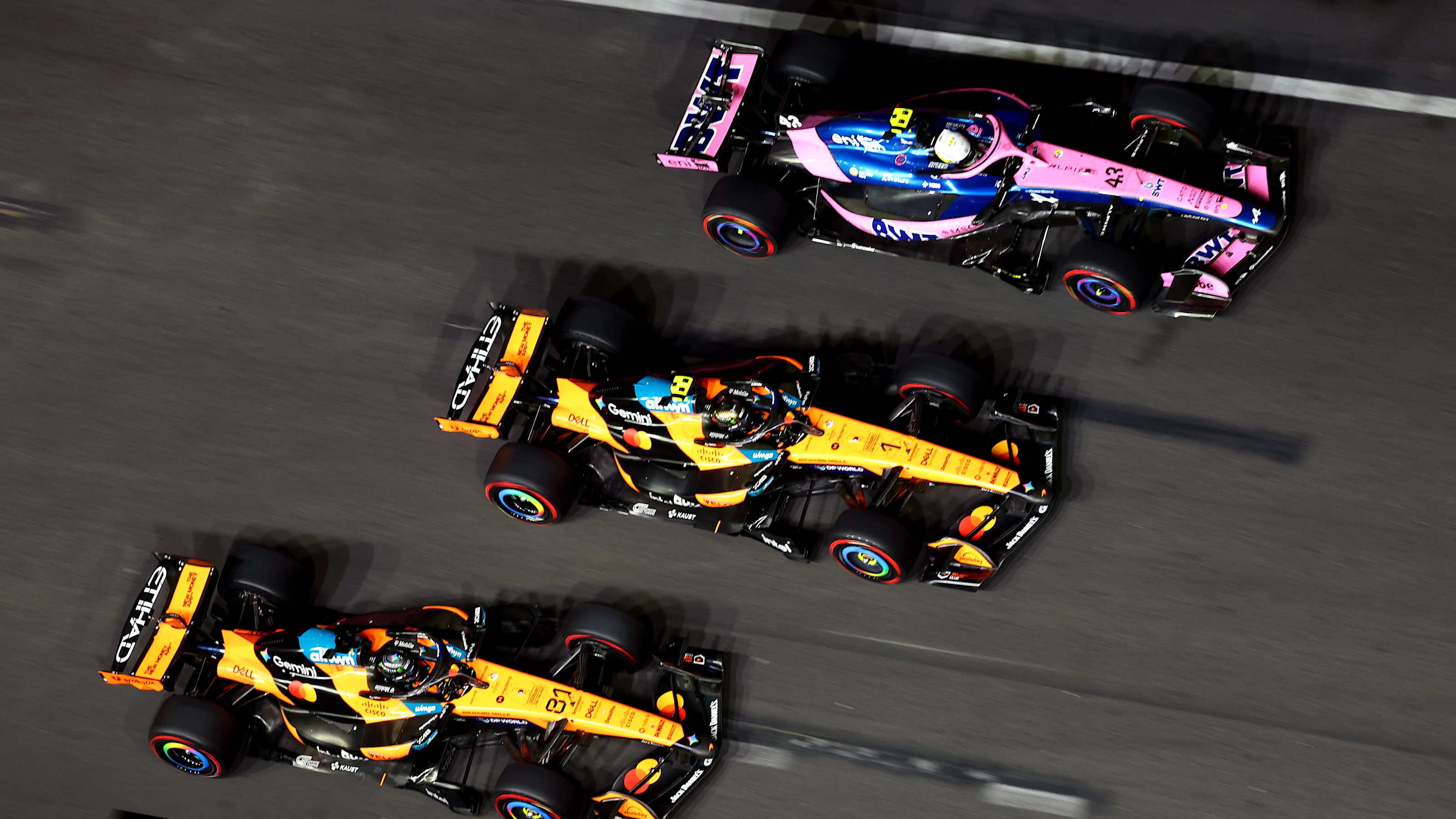
Gasly's remarkable engine-management story should not obscure the eight points earned by Franco Colapinto. Sixth place was especially valuable because his first stint threatened to turn the evening into a missed opportunity. Colapinto reported that the used soft tyres he began on, carried over from qualifying, offered little grip. Instead of joining the clean battle near the front, he fell back and had to spend the next phase of the race trying to repair his position. In a field where passing opportunities were plentiful but being trapped in a weak operating window could be costly, that was not a small problem.
The change came when he fitted new medium tyres. Colapinto described a major improvement in available grip and said the car became competitive enough for him to execute overtakes. This is a useful lesson in how easily a results sheet can flatten the story of a race. The same driver in the same car can appear uncompetitive in one stint and convincingly quick in another because of the condition and behaviour of the tyres. It would be misleading to frame this only as a victory for a particular tyre compound; the comparison Colapinto made was between used qualifying softs and a fresh set of mediums.
A recovering driver still needs to make use of the available speed. Las Vegas demanded decisions about traffic, deployment and track position every few corners. Colapinto had to pick opportunities without letting the tyre recovery become an invitation to overdrive. As the order reshuffled, he moved forward and finished just one position behind his teammate. The difference between a strong finish and an expensive error could have been remarkably small, particularly in a race where rivals regularly repassed after a seemingly successful move.
Colapinto's performance also made the weekend more convincing for Alpine as a team. One car scoring ten points can be dismissed as an exceptional drive or a lucky sequence of circumstances. Adding eight more points in the other car demonstrates that the team's competitiveness was not confined to one side of the garage. That does not eliminate the effects of a circuit that rewarded certain car characteristics, and it does not remove the thermal problem on Gasly's side. But it turns the result from an individual surprise into a meaningful constructors' haul.
An 18-point total is an actual, measurable achievement. Gasly's hypothetical podium is not. Keeping those categories separate helps readers understand the significance of the race without overstating it. Colapinto made the right kind of recovery after a bad beginning, Gasly extracted a fifth despite operating constraints, and Alpine left Nevada having placed both cars in positions normally occupied by more heavily favoured teams.
GOATIFY
GOATIFY Formula 1
Discover GOATIFY Formula 1 apparel for fans who appreciate hard-earned comeback drives.


Eighteen points change the mood, not the engineering to-do list
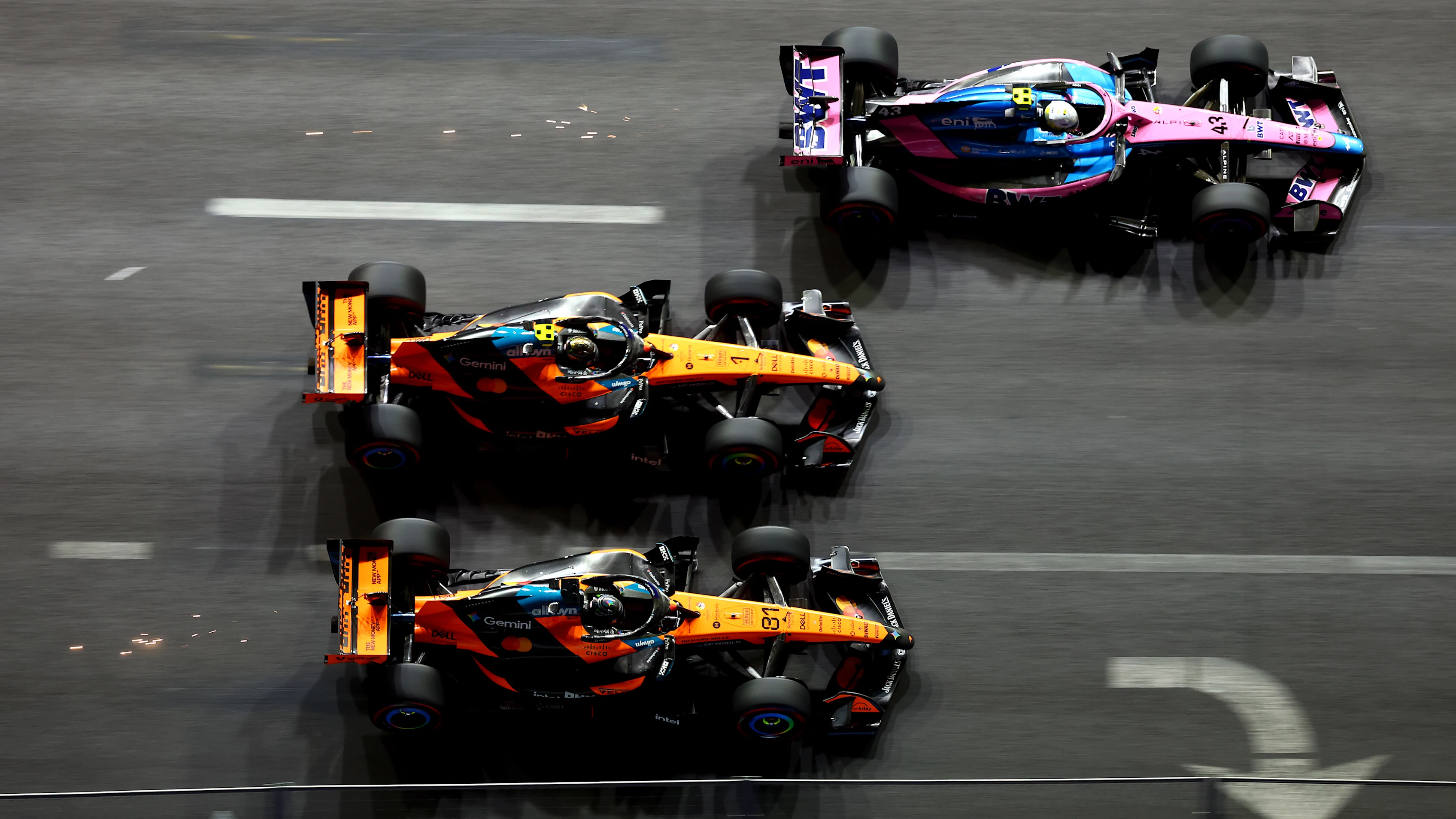
Every big result creates two different kinds of pressure. The drivers want to celebrate what they accomplished, and the engineers are expected to explain why an opportunity was not even bigger. In Alpine's case, that division is unusually clear. Fifth and sixth at Las Vegas is a genuine achievement, especially after the team's harder weekends. But a car that requires a prolonged power reduction because temperatures are climbing cannot be treated as a finished package simply because it still crosses the line high in the points.
The immediate question is technical, and the available evidence does not resolve it. Gasly described the power-management instruction and how much he felt it compromised his race. He also made clear that the cool conditions made the overheating unexpected. That establishes a symptom and a problem worth investigating; it does not identify a specific failed component, cooling aperture, sensor or setup mistake. The team will need its own data to reconstruct how temperatures changed under different power modes and while following other cars. Guessing at a broken part would add drama while removing accuracy.
The next races also demand caution from anyone announcing that Alpine is suddenly a regular podium contender. Las Vegas gives teams long straights, cold conditions and a distinctive traffic pattern. A circuit such as Lusail in Qatar asks different questions of its cars and tyres, including sustained cornering loads. A particular aerodynamic or energy-management strength can be amplified at one venue and less useful at another. That does not diminish the Nevada result; it limits how confidently the pecking order can be projected into the next weekend.
Colapinto's side of the garage offers a more encouraging, repeatable lesson. His recovery depended on recognising that the first set of tyres was not delivering and exploiting a better set later. Identifying where a race is being lost and then making productive use of the remaining laps is a skill the team can bring to every event. Gasly's result supplies a parallel lesson: performance only has value when the car can run in the settings necessary to defend and attack at the right time. Together those experiences should sharpen the team's planning, not merely inflate expectations.
The most convincing case for an Alpine step forward will therefore be consistency rather than a single spectacular scoreboard. If the car can offer competitive pace at a contrasting circuit without a prolonged cooling restriction, this double top-six finish will look more like evidence of genuine progress. If Vegas proves unique, it will still have been worth 18 points and a useful case study in extracting a result while the car was not operating as intended. Both are substantial accomplishments without the need to claim that a podium was guaranteed.
Alpine did not need a hypothetical podium to make Las Vegas a success. The team took 18 real points, its drivers finished fifth and sixth, and both competed with cars normally expected to operate further up the field. Gasly's claim that he could have achieved more is credible, but a result that never happened cannot be presented as certain.
The unresolved piece is technical. The reason for the prolonged temperature restriction has not been publicly established. If Alpine can understand that limitation while retaining the tire decisions and race execution that helped Colapinto climb back, this weekend can become a useful turning point. If not, it will remain a spectacular reminder of how much pace a car can possess without always being able to use it.
GOATIFY
GOATIFY Formula 1
Shop GOATIFY Formula 1 shirts, hoodies and racing stickers.





















